23 October 2026, 14:38
Loading...
Fukushima Daiichi at the start of 2026
Vladimír Wagner
8 February 2026, 08:02
Over the past year, the discharge of tritiated water continued successfully. This made it possible to dismantle tanks at several locations and free up space needed for facilities supporting work to decommission the damaged reactors. A second sample of corium was taken from the core of reactor 2. Another breakthrough was the start of the process to restart the Kashiwazaki-Kariwa 6 boiling water reactor on 21 January 2026. The reactor belongs to TEPCO, which also owns Fukushima Daiichi. Japan is thus continuing its return to the development of nuclear energy.
A year ago, the latest overview in our long-running series on the status of efforts to address the consequences of the accident at the Fukushima Daiichi nuclear power plant and developments in Japanese nuclear energy was published. This overview examines progress in addressing the consequences of the accident in 2025. As described in the previous overview, the third phase of decommissioning the damaged plant began in 2024.
Discharge of tritiated water
The successful start and progress of tritiated water discharges is making it possible to gradually free up tanks for dismantling. It should be recalled that water used for cooling or entering the affected parts of the plant as groundwater must be treated. The ALPS (Advanced Liquid Processing System) is used for this purpose and can remove almost all radioactivity except tritium. The heavy isotope of hydrogen cannot be chemically separated from the light one and remains in the water.
A total of up to 1.3 million tonnes of tritiated water accumulated in around one thousand tanks. Discharges of tritiated water into the ocean began in August 2023. Everything is proceeding relatively slowly, as the total annual amount of tritium discharged must not exceed the levels reached by Fukushima Daiichi during normal operation. The parameters of discharged water and concentrations of tritium and other radionuclides in the surrounding ocean are monitored under the supervision of the IAEA and fisheries organisations. Information from the IAEA is published on dedicated pages. Ongoing data on samples monitored by Fukushima Prefecture authorities are available on the website dedicated to its reconstruction. They show that the environmental impacts of the discharge are negligible.
During 2025, a total of 54 600 m3 of contaminated water was due to be discharged in seven releases (the 11th to 17th rounds of discharge). One cubic metre of water equals one tonne. This water contained a total tritium activity of 15 TBq, while the annual limit is 22 TBq.
The large number of tanks requires long-term regular inspections and maintenance. Despite the relatively slow discharge of tritiated water, some tanks have been emptied and are beginning to be dismantled. This is contaminated material and must therefore be handled appropriately. The first space to be freed was in the area designated E, where facilities will be built to support the removal and processing of core debris from unit 2.
Next to this area are the J8 and J9 areas, where tanks were also gradually emptied. Work began in the J9 area as early as July 2024, when residual contaminated water was removed, while from 4 February 2025 the interconnecting pipework between the tanks was removed. Dosimetric measurements confirmed that radiation levels inside the tanks were comparable to background levels. Dismantling of the tanks themselves began in mid-February 2025 and continued throughout the year. The tanks were cut into pieces, placed in special containers and then transferred to a dedicated storage facility north of units 5 and 6. The freed-up space will be used for facilities supporting the removal of melted core debris from unit 3.
The tanks are cut into pieces small enough to fit into special containers with a total height of around 6 m. These will be used to transport and store the waste generated from the tanks. Each tank required 3.5 containers. There were 12 tanks in the J9 area, requiring 42 containers. Dismantling was completed in September 2025.
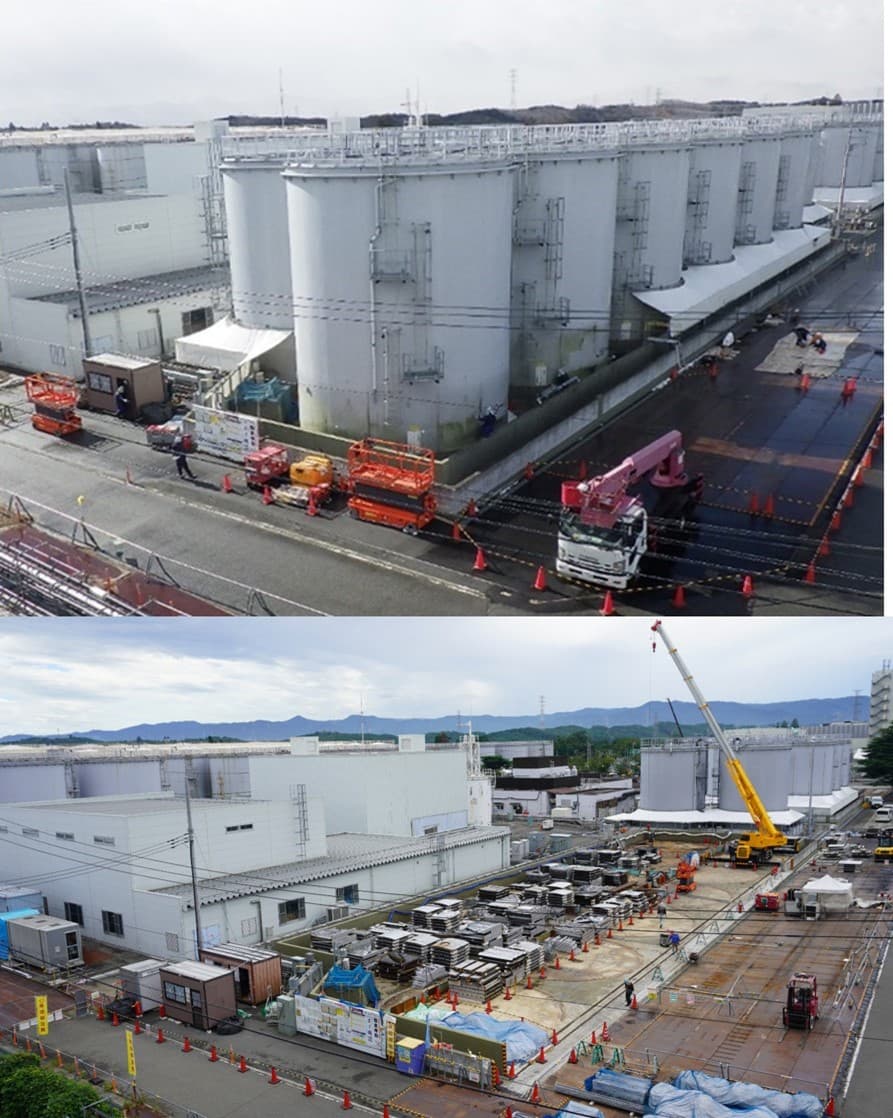
The J9 area before and after the tanks were dismantled (source: TEPCO)
Work on unit 1
Work continued on the new cover for unit 1. It is due to be completed at the end of 2026. It will enable the removal of rubble from the upper floors. It is also one of the conditions for beginning removal of spent fuel from this unit's fuel pool in 2027. Completion of fuel removal is not expected until 2031. Another key requirement for this work is the removal of pipework from the shared gas-filtration system for emergency venting of units 1 and 2. The very high, lethal dose rate at the base of the shared ventilation stack makes all work in its vicinity extremely difficult.
Preparatory work continued for venting the heat exchanger. Radiation levels are very high here, and pieces of melted core debris may have reached the area. During venting through ventilation pipework on the fourth floor, it is necessary to ensure that hydrogen does not build up to concentrations that could cause an explosion with oxygen.
An inspection of the torus-shaped suppression chamber is planned for 2026. This is part of efforts to optimise water management and reduce the high water level in the containment.
Pairs of seismometers were installed on the first and fifth floors of the unit 1 building. They will monitor the building's stability and resilience throughout work to remove fuel from the pool and remove the damaged reactor core debris.
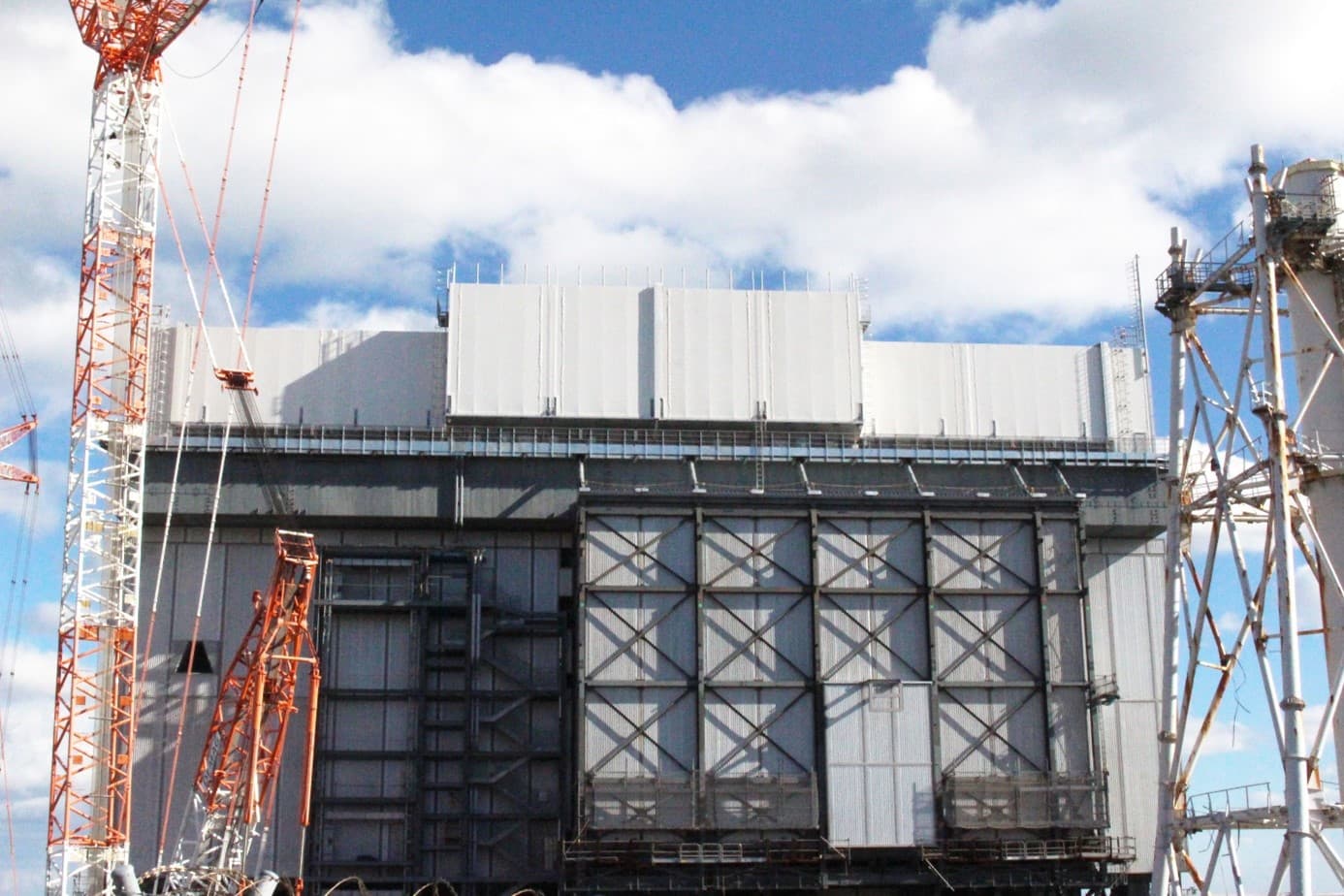
Large segments being installed on the new upper cover of unit 1 (source: TEPCO)
Work on unit 2
The first sampling of corium from reactor 2 using a special arm known as Robot Telesco in November 2024 was described in detail in the previous overview. The sample was transported to the JAEA Oarai Nuclear Engineering Institute laboratories in Ibaraki Prefecture, and the first analysis results have already been published. It was a very small sample, measuring 9×7 mm, highly irregular in shape and containing a number of cavities. Electron microscopy and X-ray spectrometry identified the presence of uranium, nickel, iron and zirconium. Good homogenisation was observed, suggesting that the material may even have vaporised before transitioning to a solid phase. It is assumed to be a mixture of material from fuel assemblies, mechanical structures and minerals from seawater. The material is much harder than expected. Laser cutting or use of a high-pressure water jet is therefore being prepared.
A piece of the sample was crushed and subjected to highly detailed analysis. At the same time, a second sampling was successfully carried out in April 2025, with the sample dispatched from the damaged plant to specialised laboratories on 25 April for detailed analysis.
Preparations are now under way to move to larger, gram-scale samples of materials from the containment. This requires completing the development of larger sampling equipment and ensuring larger access openings. The equipment is being tested at research laboratories in Naraha, and the first sampling could take place as early as the second half of 2026. “Wet” vacuuming is to be used to collect small fragments and dust.
Work is continuing to prepare for the removal of fuel assemblies from the unit 2 pool. The start is expected this year or next year.
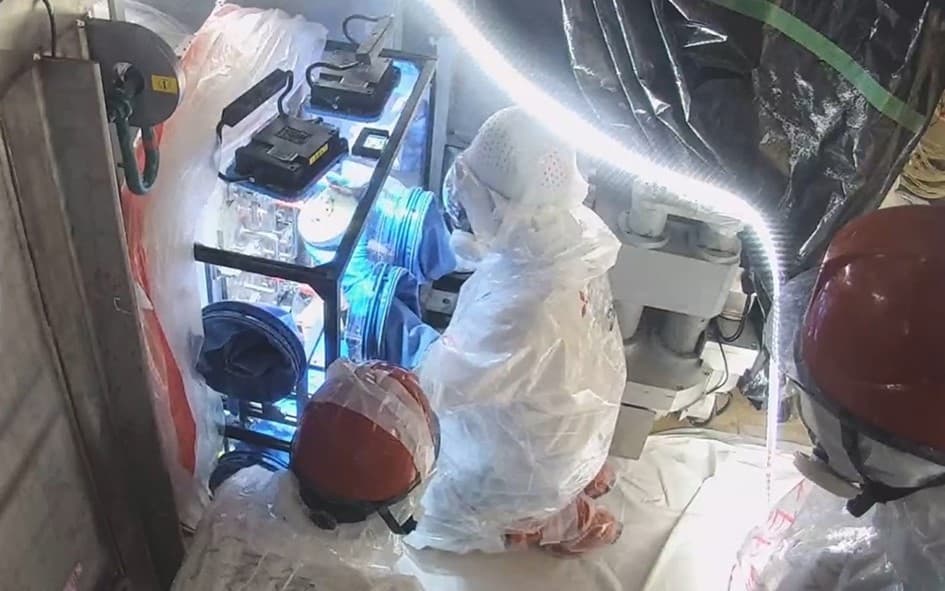
Work during the second sampling of corium from unit 2 (source: TEPCO)
Work on unit 3
Unit 3 is expected to be the first where removal of damaged reactor core debris will actually begin. Conditions here are the best of the three damaged reactors. Work is therefore under way to prepare the methodology for extracting the damaged core debris. Routes are being sought through which pieces of solidified melt can be removed. At the same time, work is under way to improve the radiological conditions, which would enable activities inside the unit building, and to strengthen the structural and seismic resilience of its structures.
Work is also under way here to remove hydrogen from the torus-shaped suppression chamber. A nitrogen atmosphere is used in the containment to prevent the formation of an explosive mixture with oxygen. In October 2024, the hydrogen level was low enough that it was no longer being displaced, and extraction pumps were gradually installed to pump the remaining hydrogen out of the suppression chamber.
For the shared ventilation system of units 3 and 4, dose rates proved to be relatively low. Measured values were around 0.5 mSv/h, which is very low compared with the situation at the shared ventilation system of units 1 and 2. This should also simplify work on this unit.
At unit 4, work began to remove heavily contaminated equipment from its spent fuel pool. This work should continue until 2030, followed by draining and drying of the pool. Between 2025 and 2030, the spent fuel pool of unit 5 should be emptied. This had been awaiting available capacity for dry storage.
The removal of spent fuel assemblies from pools is critically dependent on sufficient containers for dry storage and available space in dedicated dry storage facilities. Production of the required containers should be completed in 2026, and the interim dry storage building should be completed in 2030. By 2035, a building enabling dry storage of all fuel assemblies from the shared wet storage facility at the plant should be completed.
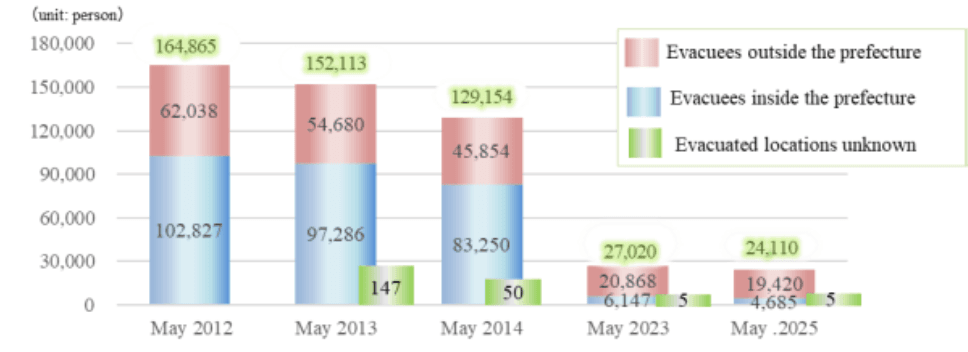
Development in the number of people evacuated as a result of the Fukushima Daiichi accident. Red denotes evacuees temporarily living in Fukushima Prefecture, blue those temporarily living outside their home prefecture, and green those whose temporary place of residence is unknown (source: Fukushima Prefectural Government).
Revitalisation of affected areas
Intensive decontamination of the most affected areas and revitalisation of reconstruction hubs in six towns and villages containing the most severely affected zones is continuing. The gradual return is now proceeding more slowly, as revitalising heavily contaminated areas and coastal areas severely devastated by the tsunami is very challenging. A number of commercial and community centres in reconstruction hubs have been completed.
Around 24 000 evacuees remain unable to return to their homes. In six local administrative areas, the population is still less than half of its original level. However, people are also returning to the towns of Okuma and Futaba, where the power plant is located. In Okuma, the number of returnees has already exceeded 10% of the original population.
Nearly a quarter of residents have returned to Tomioka. In my book on the Fukushima Daiichi accident, I included a profile of farmer Naoto Matsumura from Tomioka. He remained on his farm during the evacuation and cared for his own animals and those of his neighbours. He still looks after the remaining cattle and other domestic animals. One visible change at his farm is the installation of extensive photovoltaic fields. He now also has neighbours, as several, mainly older, residents have returned even to this part of Tomioka.
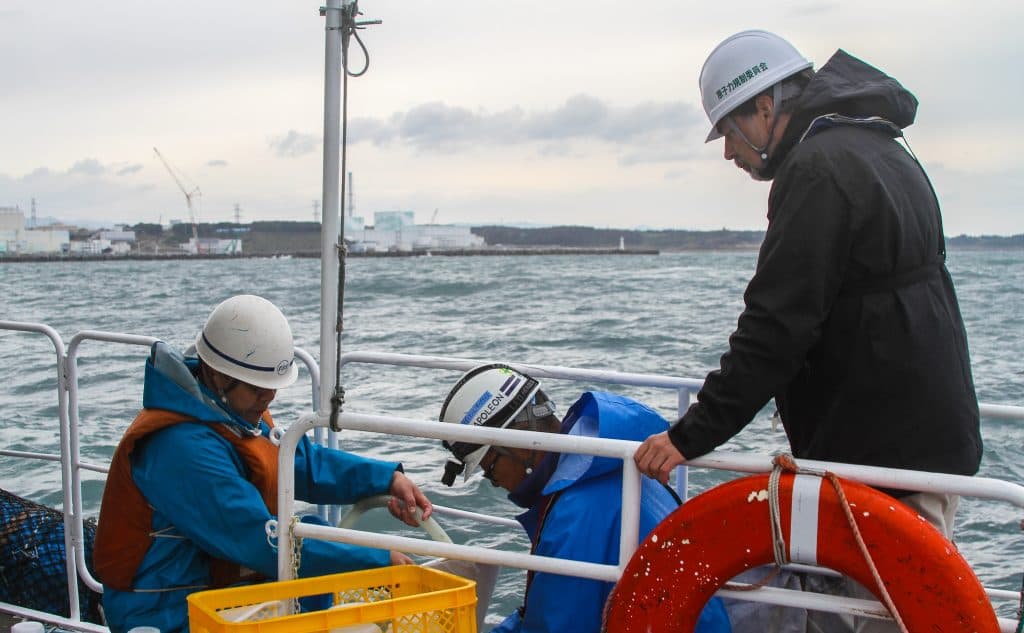
Independent food testing remains highly valuable for local residents. One of the largest civic laboratories measuring samples for citizens is in the city of Iwaki. It now has thirteen permanent employees and currently also has boats used to collect and test ocean water samples during tritiated water discharges. The dominant share of food and fish samples was below the detection limit of the instruments in 2025. The exception is mushrooms collected in the wild. As is also the case in Czechia as a result of the Chernobyl accident, caesium-137 activity is found in them.
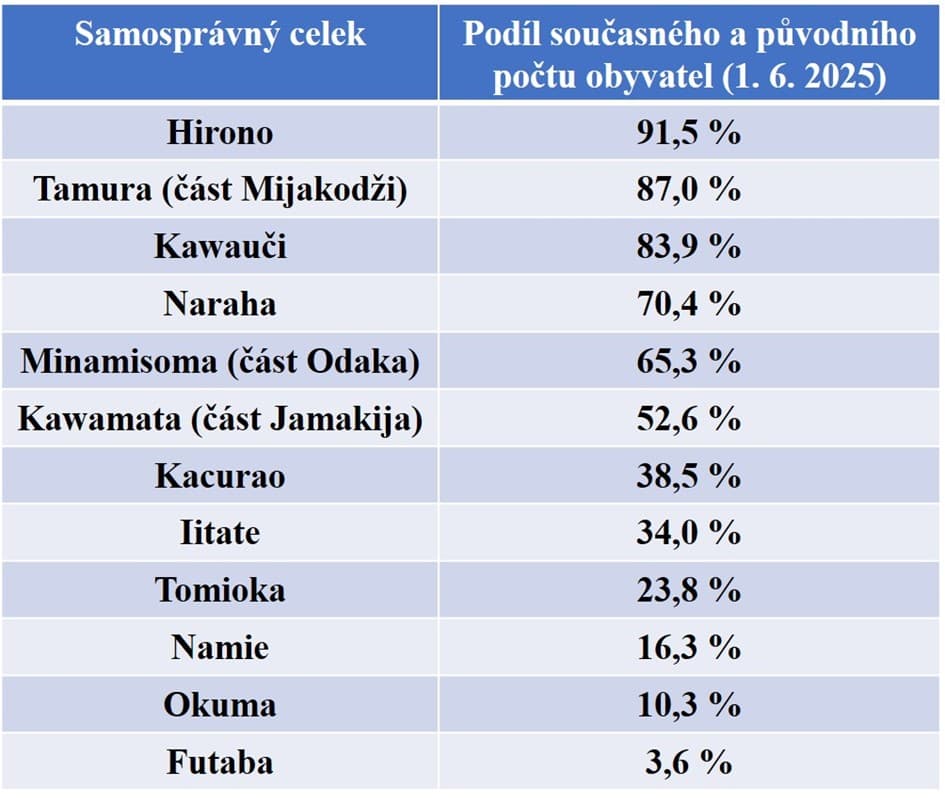
Situation regarding the return of residents to evacuated areas (source: Fukushima Prefectural Government)
Laboratories in China and South Korea are also involved in testing samples collected during water discharges. The transparency of the entire process and the results, showing that all water, fish and algae samples from the nearby ocean have tritium and other radionuclide activity levels far below health limits and consistent with background levels, are helping reduce distrust of local food products. This is why almost all countries that had imposed restrictions on imports of food from the area have lifted them. Taiwan, South Korea and Russia still maintain restrictions on selected products. China still has more extensive restrictions, but it too is gradually lifting them on the basis of its own experience monitoring the ocean near Fukushima. The local fishing industry and exports of its products are therefore recovering. However, it should be stressed that the effects seen here are still not only those of the Fukushima Daiichi accident, but also the devastation of the coast caused by the tsunami.
The return of traditional industries and development of modern technologies are important for successful revitalisation. In 2025, the Shimonokami industrial park in the town of Okuma was completed and opened for commercial use. It is a key project for the town's industrial renewal. The site focuses on agricultural technologies and communications. It complements research and technology facilities that remain predominantly focused on decommissioning the damaged plant. The expansion of the Fukushima Hydrogen Energy Research Field was also completed. This is one of the largest facilities for producing hydrogen using photovoltaics.
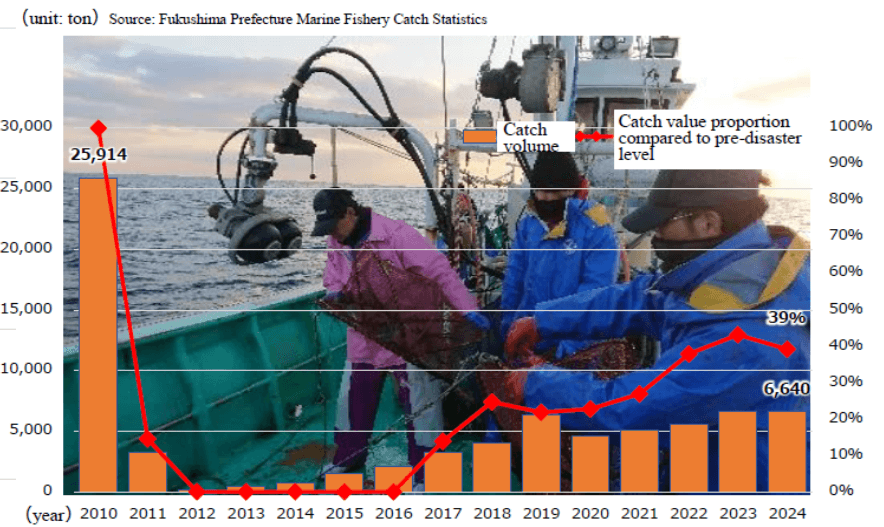
Gradual return of marine fishing in Fukushima (Fukushima Prefectural Government)
Japanese nuclear energy
As noted in the previous overview, the Onagawa 2 boiling water reactor was restarted in 2024, followed by another boiling water reactor, Shimane 2, in January 2025. At the start of 2026, a total of 14 units were in operation: the pressurised water reactors Genkai 3 and 4, Ikata 3, Mihama 3, Ohi 3 and 4, Sendai 1 and 2, and Takahama 1 to 4, as well as the aforementioned boiling water reactors Onagawa 2 and Shimane 2. Work was also under way at another 11 reactors to enable their restart. In total, 33 units continued to be classified as operable reactors. However, the future of eight of them had not yet been decided.
Only four pressurised water reactors are not in operation. These are the three reactors at Tomari and Tsuruga 2. At the end of April 2025, the Nuclear Regulation Authority (NRA) approved the documentation and confirmed that the plan for Tomari 3 met all safety requirements, a fundamental condition for restart. This reactor has a capacity of 912 MWe. Hokkaido EPC built a new breakwater up to 19 m high. An embankment is now under construction and should be completed at the beginning of 2027. Tomari 3 is the 18th reactor to receive this plan approval. This was followed by a period for public comments, and at the end of July 2025 the NRA gave final approval to the proposed modifications. However, it must still obtain approval for restart from local communities. Tomari 1 and 2 each have a capacity of 550 MWe.
Preparations continued for the restart of the two newest units at Kashiwazaki-Kariwa. Fuel was loaded into unit 6 in June 2025, while fuel loading in unit 7 had already taken place in 2024. These are Generation III ABWR reactors, each loaded with 872 fuel assemblies. Some seismic safety measures are still being implemented. The key obstacle to restarting the reactors, however, was obtaining approval from local communities. This was resolved in December 2025, when the governor and assembly of Niigata Prefecture approved the return to operation of Kashiwazaki-Kariwa units 6 and 7. The start-up of unit 6 was being prepared for the end of January. Following the failure of an acoustic sensor during testing, start-up was postponed. The fission chain reaction therefore began only on 21 January 2026. The commissioning of unit 6 was subsequently complicated again. An alarm associated with a control rod was triggered, and further start-up steps were postponed pending an investigation into the cause of the event.
TEPCO announced in October 2025 that it was moving towards the permanent shutdown of units 1 and 2 at this plant. The final decision will still be assessed, including with shareholders, after an analysis of the impacts on the company's and the region's economy.
Kansai began a survey of the Mihama plant site in November 2025 to determine whether a new reactor could be built to replace the shut-down units 1 and 2. The geological survey, including boreholes and other required studies, should be completed in 2027. The company would like to build Mitsubishi Heavy Industries' Generation III SRZ-1200 pressurised water reactor. Mihama 3 has been back in operation since June 2021.
In the new energy strategy presented at the start of 2025, the role of nuclear power is being significantly strengthened. It is expected to supply 20% of electricity in 2040. This assumes that all remaining reactors can be restarted and those under construction completed. In February 2023, the Japanese government already decided that reactor operation could be extended to a total of 60 years. The development and future use of advanced reactors is also planned.
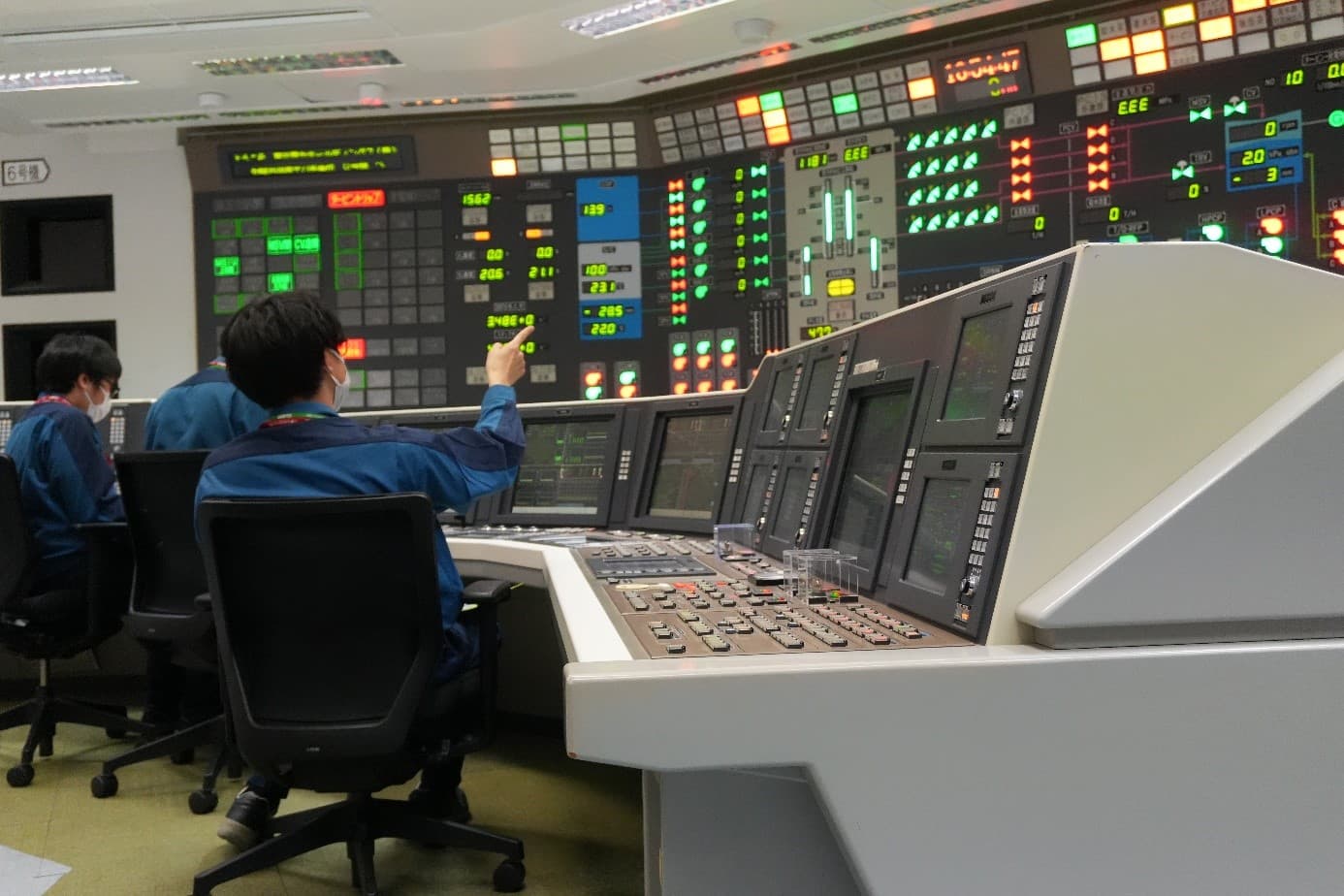
Control room of Kashiwazaki-Kariwa unit 6 during its start-up (source: TEPCO)
Conclusion
In 2025, Japan used Expo 2025 in Osaka to present progress in addressing the consequences of the Fukushima Daiichi nuclear power plant accident. A section dedicated to reconstruction of the affected areas was opened there. A company from the affected town of Namie supplied timber for one of the Grand Ring's largest wooden structures, which was a symbol of the Expo.
The discharge of accumulated tritiated water is continuing successfully, freeing up tanks that can then be dismantled. The freed-up space makes it possible to build facilities for removing damaged reactor core debris. In 2025, another small corium sample was taken from reactor 2, and the collection of gram-scale samples is being prepared. The plan for removing damaged core debris from unit 3, where conditions for this work are the best, is being refined.
The transparent conduct of tritiated water discharges, also monitored by fisheries associations, is helping to build trust in seafood products from the region. A whole range of infrastructure projects has been completed in severely affected areas, accelerating their revitalisation. The number of tourists visiting the region has risen again following the decline during the COVID-19 pandemic and exceeds levels recorded before the plant accident. Further significant progress can therefore be expected in the coming years.
Translation disclaimer
This article is a machine translation of the Czech original and has not yet been fully reviewed. In case of any doubt, please refer to the Czech version.
Sdílejte článek prostřednictvím:
Topics:Opinion
You might also like
23 October 2026, 11:01
23 October 2026, 06:34