23 October 2026, 14:38
Loading...
Fukushima I at the start of 2025
Vladimír Wagner
3 January 2025, 11:25
The biggest achievement of this year was the successful retrieval of a sample of solidified melt from the core of the second reactor. The first year of releases of tritiated water was also highly successful. Another turning point was the restart of the first boiling-water reactor, Onagawa Unit 2. Japan has returned to an energy strategy based on developing a combination of nuclear and renewable sources.
At the beginning of this year, the latest overview of the status of efforts to deal with the consequences of the accident at the Fukushima I nuclear power plant and developments in nuclear energy in Japan was published. Let us look at the progress achieved this year and the current state of the power plant site and its surroundings. This year saw the start of the third stage of dealing with the accident. The cold shutdown of Fukushima I, declared on 16 December 2011, is considered the beginning of the first stage. The second stage began with the start of spent fuel removal in November 2013. The third stage began in September 2024, when the first samples of solidified melt were successfully retrieved from the second reactor.
Releases of tritiated water and other work at the site
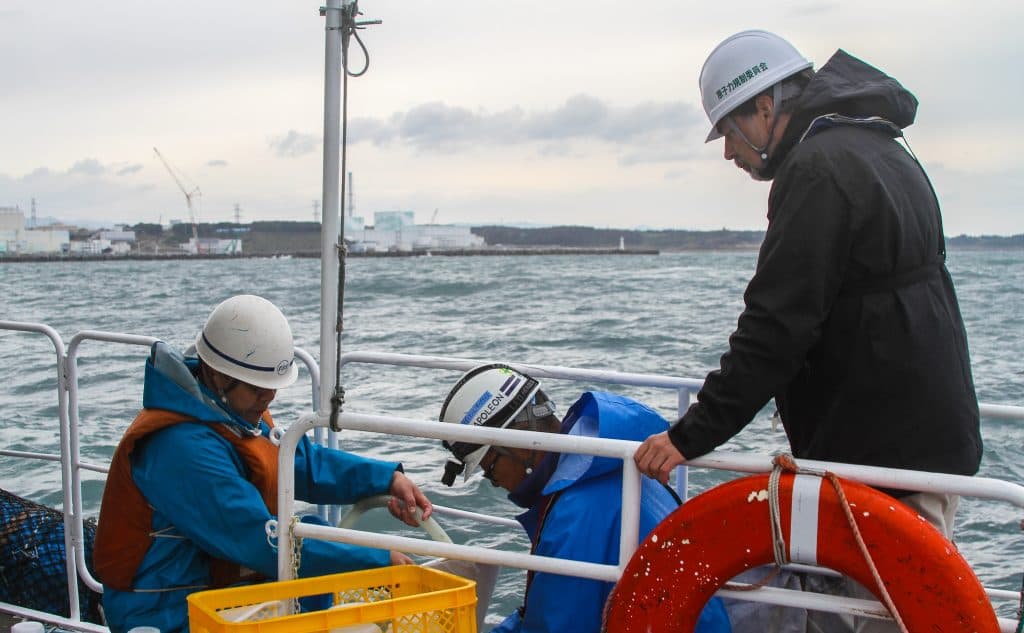
The key event described in the previous overview was the start of tritiated water releases. These began at the end of August last year. It is very important that the monitoring of released water and its environmental impacts is as transparent as possible. Representatives of fishermen and other affected parts of society take part in it. This monitoring must be conducted internationally, with the participation of key neighbours that may feel threatened. Japan is genuinely making an effort in this area. In September 2024, Japan and China signed an agreement enabling independent sampling and testing alongside IAEA staff. China will thus base its response, such as restrictions on imports of fish and other seafood from Japan, on actual data. The result is that no impacts on consumers of seafood from the region have been observed.
By the end of August, i.e. over the course of one year, eight release periods had taken place and a total of 62 400 cubic metres (tonnes) of tritiated water containing roughly 10 TBq of activity had been discharged into the sea. This is roughly half of the set limit. It should be recalled that this limit is set at the level of activity discharged annually during normal operation of the plant. The contribution of radionuclides other than tritium is four orders of magnitude lower. The ninth release period began in September. Based on actual data on the discharged activity, the dispersion of released activity in the ocean was again assessed using a model (see the TEPCO report). The results fully correspond to the modelling conducted before the releases began and described in an earlier overview. All tests and ongoing monitoring show that the environmental impacts of the released tritium are negligible. Higher activity levels can be detected only at the outlet of the discharge channel during releases. Everywhere else, both the model and measurements showed that the increase in activity did not exceed 1 Bq. It is confirmed that the releases have negligible effects on public health and the environment.
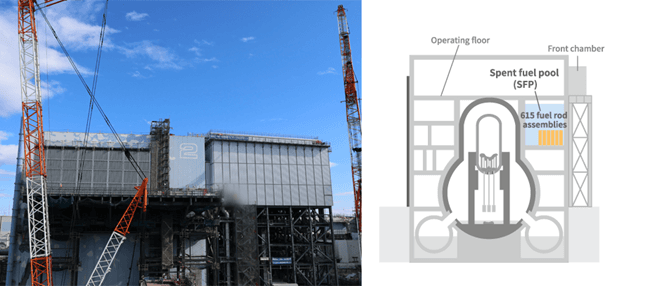
The spent fuel pool at Unit 2 contains 615 fuel assemblies (source: TEPCO).
Efforts to remove spent fuel assemblies from the damaged reactors are continuing. Their removal was completed at Unit 4 in December 2014 and at Unit 3 in 2021. There was no hydrogen explosion at Unit 2 and the upper part of the building was not destroyed. However, the first survey in 2012, using Quince robots, found very high activity levels and dose rates inside the unit and in the areas where the spent fuel pool is located, reaching the order of hundreds of millisieverts per hour. It was therefore originally envisaged that the upper part of the building would be demolished, a new fuel-handling system installed and a new upper section of the building constructed.
Following a successful survey of the areas around the pool at the beginning of the 2020s, it was found that the dose rate had fallen significantly. It was therefore decided not to demolish the upper part of the building. As described in the overview of May 2022, the original fuel-handling system was moved aside. A special chamber was built on the south side of the reactor building, through which spent fuel assemblies will be transported out and, using a special transporter, to a shared storage facility. Intensive work has been under way on a crane for handling the spent fuel assemblies. Removal from Unit 2 should begin in 2025 to 2026.
Work at Unit 1 is even more demanding, as the upper part of the building and the structure for the crane that will handle the spent fuel assemblies still need to be completed. Their removal should therefore begin in 2027 to 2028.
Preparations for dismantling the damaged reactors
In mid-August 2024, an operation began to retrieve samples from the damaged reactor core at Unit 2. A specially manufactured long, telescopic, remotely controlled arm called Robot Telesco was used. The X-6 access point was used to insert the arm. The arm can reach a distance of up to 22 m. The entire operation was originally expected to take roughly two weeks. However, a number of problems had to be overcome and everything was significantly delayed. First, the arm was assembled incorrectly and then, in September, the camera failed, probably due to the high radiation dose.
The sample, weighing roughly 3 g, was finally successfully grasped by special tongs on 30 October 2024; on 6 November it was placed in a transport box and subsequently in a shielded container. Dosimetric measurements were then carried out, showing that the dose rate 20 cm from the container surface was safe, below 24 mSv/h. In November, samples of solidified melt were successfully retrieved from the core of the second reactor. So far, this has amounted to only the aforementioned 3 g. The retrieved sample was transported in a special container to the JAEA Oarai Research and Development Institute in Ibaraki Prefecture. The samples will now be studied in detail, for months to a year. The findings will make it possible to refine methods for dismantling the damaged reactor cores.
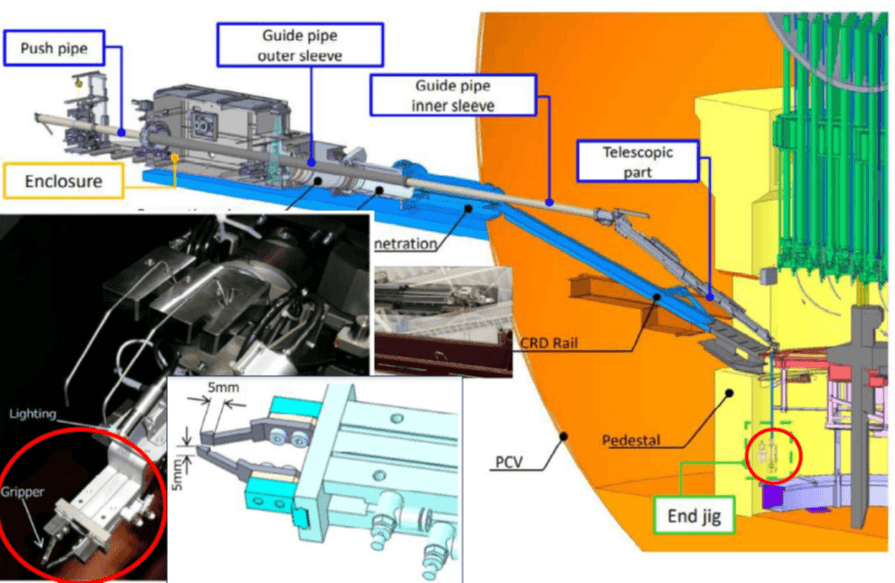
Diagram of the automated telescopic Robot Telesco arm (source: TEPCO).
It is clear that one small sample will not provide a sufficient picture of the diversity of different materials created when the reactor core and internal equipment melted. More samples will therefore need to be taken from different locations and their consistency and chemical composition examined. It will then be possible to specify the procedure for removing debris and fully dismantling the damaged reactor core. The partial flooding of some parts of the containment and use of water's shielding effect are envisaged.
Beginning core dismantling at the individual units also requires a wide range of work to modify their buildings and surroundings. The upper sections will need to be rebuilt so that they are hermetically sealed and prevent possible radioactive releases during dismantling of the damaged reactor core. Several surrounding buildings will need to be demolished to make space for the necessary facilities, including a new building to store the remains of the damaged reactor core. This will take a long time. These preparations are being made first at Unit 3.
An important event for progress in dealing with the consequences of the Fukushima I accident is the completion and opening of Japan's first medium-term interim spent fuel storage facility. It is located in Mutsu, Aomori Prefecture, and operated by Recyclable Fuel Storage (RFS). It stores fuel intended for future recycling once the spent fuel reprocessing plant begins operation. The project was launched in 2005 and completed in 2013. However, it was necessary to ensure compliance with new, stricter safety requirements set after the Fukushima I accident, particularly greater resistance to earthquakes and tsunamis. The facility therefore received its operating licence from Japan's Nuclear Regulation Authority (NRA) only now.
The facility will receive fuel from reactors operated by TEPCO and Japan Atomic Power. This will include fuel from boiling-water and pressurised-water reactors. It will have a total capacity of 5000 tonnes and will free up storage space at power plant sites. This could also free up space at the Fukushima I plant site. The capacity of interim storage facilities at power plant sites is roughly 20 000 tonnes and they are about 80 % full.
The facility has begun operations and received its first container holding 12 tonnes of spent fuel in 69 fuel assemblies. These came from Unit 4 of the Kashiwazaki-Kariwa power plant. A further 8 containers holding 96 tonnes of fuel should be added over the next two years.
A facility for spent fuel reprocessing and production of recycled MOX fuel has been under construction in nearby Rokkasho since 1993. Its start-up has, however, repeatedly been delayed. It could enter operation in 2026 to 2027. These are key facilities not only for dealing with the Fukushima I plant, but also for the future development of nuclear energy in Japan. We will return to this topic in more detail later.
Reconstruction of affected areas
Intensive work on decontamination and revitalisation of the most severely affected areas is continuing. The previous overview reported on the opening of reconstruction bases in six towns and villages whose territories include the most severely affected areas. These serve as bases for the gradual return to these areas. Transport infrastructure has been almost completely restored, which should also help accelerate reconstruction.
Following the opening of an interim storage facility for radioactive waste from decontamination and the transfer to it of waste from earlier decontamination work that had been held in a large number of temporary storage facilities, intensive decontamination of the most severely affected areas could begin in December 2023. Fukushima residents have been promised that after thirty years the facility will close and the waste will be sorted and either finally reused or disposed of outside Fukushima Prefecture.
The area subject to evacuation orders has decreased from a maximum of 1150 km2 to 309 km2 (as of July 2024). The number of evacuated residents fell from 164 865 in May 2012 to 25 610 in November 2024. As of the end of May 2024, fewer than half of residents had permanently returned to the most severely affected towns and villages: 37 % in Katsurao village, 33 % in Iitate, 21 % in Tomioka, 15 % in Namie, 8 % in Okuma and only 2 % in Futaba. It should be stressed, however, that this is partly due to the fact that reconstruction of areas destroyed by the tsunami is demanding and takes a long time. Atmospheric radioactivity has declined significantly and does not differ from normal levels elsewhere in the world.
A centre supporting residents' return opened in Iitate village in May 2024. Farms and agricultural production, particularly the renowned cattle farming sector, are gradually being restored. More restaurants are therefore offering beef from Iitate farmers.
Japanese nuclear energy
The key step this year was the restart of the first boiling-water reactor since the Fukushima I accident. This was Unit 2 at the Onagawa nuclear power plant. It was the plant closest to the epicentre of the 11 March 2011 earthquake. Yet earthquake damage to the facility was unexpectedly minor. Four of the five power lines were severed, but the remaining one was able to meet the needs of all three units and enabled their trouble-free transition to cold shutdown. A small fire that broke out in the turbine hall was quickly extinguished.
The tsunami impact was also smaller than elsewhere. The plant had a tsunami protection wall almost 15 metres above sea level. Some areas were flooded, but this did not lead to major problems for the plant. The tsunami had dramatic impacts on the town of Onagawa itself, and some residents found shelter and assistance, including supplies, at the nuclear power plant. Its example showed that a nuclear facility can withstand even such a dramatic natural disaster.
The plant has three boiling-water units. The first, with a capacity of 524 MWe and commissioned in 1983, was designated for permanent shutdown and dismantling in 2018. Upgrading it to meet the new safety requirements would have been too demanding both economically and in terms of time.
The other two have a capacity of 825 MWe. Onagawa Unit 2 was commissioned in 1994 and Onagawa Unit 3 in 2001. For these units, implementing measures to meet the new safety requirements was economically effective. Intensive work therefore began on them. In 2020, it was determined that Onagawa 2 met the newly established safety requirements. It was then necessary to reach agreement with representatives of local communities on restarting the reactor. After all necessary steps had been completed, fuel loading began on 3 September 2024. The reactor restarted on 29 October 2024.
Other boiling-water reactors are also preparing for restart. One is Shimane Unit 2, with a capacity of 789 MWe, which was commissioned in 1989. As part of post-Fukushima safety measures, a 15 m-high tsunami protection embankment was built, along with measures to ensure protection against a potential eruption of Mount Sanbe. All necessary measures were completed and approved by the NRA in July 2021. It was the seventeenth reactor to pass NRA approval in this way and the fifth boiling-water reactor. Intensive negotiations with local communities then began to secure their consent for the reactor's restart. The fission chain reaction began on 7 December 2024 and it started supplying electricity to the grid on 25 December. It should enter commercial operation on 10 January 2025. This makes it the fourteenth reactor restarted after the Fukushima I accident, and the second boiling-water reactor.
There are two other units at the Shimane plant. Shimane Unit 1, with a capacity of 460 MWe and commissioned in 1974, is to be dismantled. Adapting it to the new safety requirements would be economically unfeasible. Shimane Unit 3 is a 1373 MWe ABWR under construction, and work is under way to complete it in compliance with all current safety requirements.
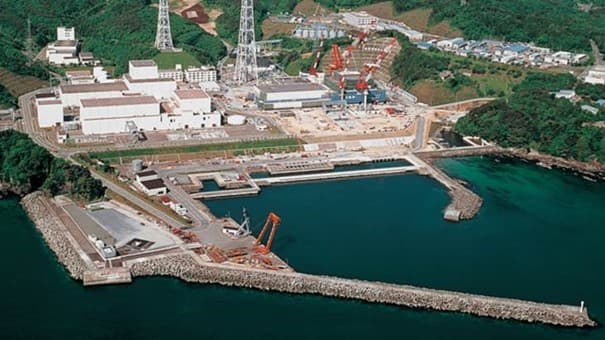
Onagawa nuclear power plant (source: Kurihalant Co. Ltd)
The first two reactors were restarted under the new rules in August and October 2015, namely Sendai Units 1 and 2. Also in operation are Genkai Units 3 and 4, Ikata Unit 3, Mihama Unit 3, Ohi Units 3 and 4, and Takahama Units 1, 2, 3 and 4. There are now twelve pressurised-water reactors and the first two boiling-water reactors in operation. It should be recalled that Takahama Unit 1, which started up in 1974, is the first to receive permission to operate for more than 50 years. Until now, it had been possible to add another twenty years to the forty years from the start of operations, subject to meeting conditions set by the NRA. A recently approved change to the rules allows operation beyond sixty years from the start of operations. The period during which a reactor was shut down after the Fukushima accident will not count towards the sixty years of operation. This change is rational, as the reactor pressure vessel was not irradiated by the neutron field during that period.
A further twelve units have submitted applications to the NRA for the resumption of operations. Some boiling-water reactors among them are already very close to meeting the conditions for restart. These include Tokai Unit 2 and Kashiwazaki-Kariwa Units 6 and 7. For the latter two, however, the fundamental problem is that their operator is TEPCO, which also operated Fukushima I. It is therefore finding it very difficult to gain support for restart from local communities, which is a necessary condition. The other eight reactors still face many challenges on the path to restart approval. In addition, for Tsuruga Unit 2, the NRA disputes whether safety requirements can be met because of the presence of an active geological fault.
For roughly another eight units, the possibility of applying for permission to resume operation is still under consideration. These include other units at Kashiwazaki-Kariwa. However, whether their owner will apply to restart them or decide to dismantle them remains completely open. In addition to the aforementioned Shimane Unit 3, the Ohma reactor is also under construction.
Last year, nuclear units in Japan supplied roughly 6 % of electricity. More than 70 % was supplied by fossil fuels, split roughly equally between coal and liquefied natural gas. Nuclear generation is gradually increasing and makes it possible to reduce the need for fossil fuels, particularly coal. Nuclear energy is key to Japan's path towards a low-emission energy system.
Japan's Ministry of Economy, Trade and Industry has published a draft revision of the country's national energy strategy. The intention to reduce dependence on nuclear energy has been removed. The draft revised version calls for maximum use of renewable and nuclear energy as a path to reducing carbon dioxide emissions. Under it, renewables should account for roughly 40-50 % in 2040, double the current level, while nuclear sources should provide 20 %, also roughly double the current level. The remainder will still be supplied by fossil fuels, predominantly imported coal and natural gas. It should be recalled that before the Fukushima I accident, nuclear energy provided 30 % of electricity. The government therefore supports extending the operation of existing reactors and building new ones. Japan plans to focus on deploying advanced nuclear technologies. One avenue is improving specific design approaches that will enhance the earthquake resistance of small modular reactors. New designs are already being developed and tested. They should make it possible to build small modular reactors even in areas with greater seismic risks.
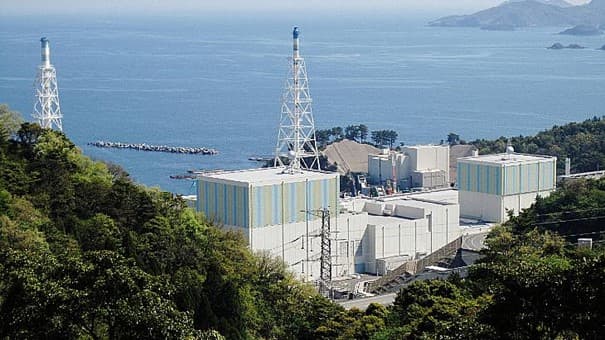
Shimane nuclear power plant (source: Qurren/CreativeCommons).
Conclusion
This year, a smooth process for releasing tritiated water into the ocean was established. It has been confirmed that this has negligible environmental impacts and poses no risk to residents. For the first time, a sample of solidified melt was obtained from the core of the second reactor. This is a significant step in preparing for the dismantling of damaged reactor cores. Removal of spent fuel from the Unit 2 pool is also approaching.
A turning point was also reached in revitalising affected areas, with intensive decontamination beginning in the most affected territories. Residents are now starting to return even to the hardest-hit areas. Japan is determined to revitalise all affected regions, including those closest to the plant.
Japan is returning to the development of nuclear energy. This year, it successfully restarted the first two boiling-water reactors, bringing the total number of operating reactors to 14. An interim storage facility for spent fuel intended for future recycling entered operation. The first spent fuel assemblies were transferred there from Kashiwazaki-Kariwa. Japan's new national energy strategy again envisages the development of nuclear energy. It includes extending the operation of existing units to 60 years and constructing new reactors. It has become clear that a low-emission energy system cannot be achieved without nuclear sources.
More details on the accident and the first years of dealing with its consequences are available in an e-book from the Kosmas publishing house.
Source: Author
Translation disclaimer
This article is a machine translation of the Czech original and has not yet been fully reviewed. In case of any doubt, please refer to the Czech version.
Sdílejte článek prostřednictvím:
Topics:Opinion
You might also like
23 October 2026, 11:01
23 October 2026, 06:34