23 October 2026, 14:38
Loading...
Fukushima I ten years on
Vladimír Wagner
8 March 2021, 15:33
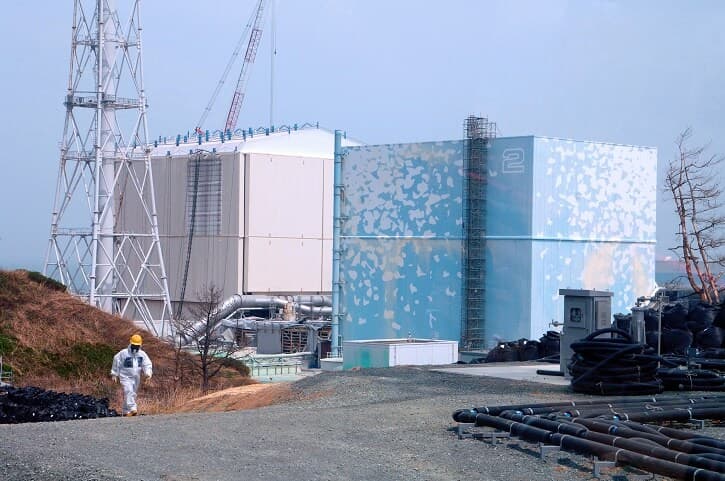
The tenth anniversary of the accident at the Fukushima I nuclear power plant is approaching. This is therefore a good time to look at progress in dealing with the consequences of the accident, rebuilding the affected areas and restoring Japan’s nuclear power sector. Around the anniversary, another strong earthquake struck beneath the sea near Fukushima. A significant milestone in addressing the consequences of the accident came just before the anniversary, when all fuel assemblies were successfully removed from the spent-fuel pool of Unit 3.
In the latest instalment of the Fukushima series, we looked at the plant in August 2020. The time is now approaching to mark the tenth anniversary of the major Tōhoku earthquake and the accident at the Fukushima I nuclear power plant. Just before this, on 13 February 2021, an earthquake occurred with its epicentre beneath the sea northeast of the plant. Its magnitude was 7.3, almost two orders of magnitude lower than that of the earthquake that caused the Fukushima accident. The earthquake’s hypocentre was at a depth of around 55 km. Strong tremors were also felt in Tokyo. Seismographs recorded the earthquake in Czechia as well. It may have been an aftershock of the aforementioned major Tōhoku earthquake. This new earthquake was roughly 100 km further south than the one in 2011. In Fukushima Prefecture, it damaged 3,347 buildings and completely destroyed 24; 102 people were injured, five of them seriously.
At the plant itself, which was also hit by the earthquake, initial inspections found no significant impacts. Water splashed out of some spent-fuel pools, but the amount did not exceed two litres anywhere, so this could not have had any consequences. Several impacts emerged later. On 18 February, the water level in the containment of Unit 1 fell by half a metre, which could indicate damage to the containment. A water-level decline of around 30 cm was also recorded in the containment of Unit 3. However, this was not reflected in an increase in the water level in the basements of the buildings. Further changes were found during a detailed inspection of radioactive-water tanks. A noticeable shift of 3 to 9 cm occurred in 53 of them. However, none was damaged and no water leaked.
Work to decommission the Fukushima I plant
The greatest recent success has been achieved in removing fuel from spent-fuel pools. On 26 February, the last six fuel assemblies were removed from the Unit 3 pool. They were placed in the central wet storage facility. In total, 566 fuel assemblies that had been in the pool at the time of the accident were removed, including those with damaged handles. The work began on 15 April 2019 and was extremely demanding. Due to high radiation around the pool, it had to be carried out as automatically and remotely as possible. Unit 3 thus followed Unit 4, where clearance was completed in December 2014. The experience gained is very important for work to empty the spent-fuel pools of Units 1 and 2.
As mentioned in the previous part of the series, a final decision was made for Unit 2 not to demolish the upper part of the building. A special enclosure was built alongside it, enabling work inside the building on the floor containing the pool. Its clearance should begin between 2024 and 2026.
At Unit 1, work continues to remove or structurally stabilise collapsed structures. In October 2020, the collapsed 161-tonne fuel-handling machine was successfully supported with a beam. Clearance of Unit 1 should begin between 2027 and 2028.
The start of removing debris from the melted reactor core from the containment of Unit 2 will also be delayed. As noted in the previous review, a British company is preparing the 22 m-long robotic arm that will be used to collect pieces of solidified corium. However, the COVID-19 epidemic and travel restrictions severely disrupted the work, especially joint testing by British and Japanese engineers. The robotic arm will therefore be delivered to the Fukushima I site later. Work in the Unit 2 containment will thus be significantly delayed, probably by up to a year. Nevertheless, it could begin as early as this year. Initially, only gram-scale samples will be taken, allowing the composition and properties of the solidified corium to be examined. Larger pieces will be removed only later. Actual removal of the melted core will naturally require more sophisticated equipment. The initial analysis described above should enable its development.
The entire plant site is being progressively cleaned, improving radiological conditions. Normal work clothing can now be worn on 96 % of the plant’s area. Earlier temporary solutions and patches are gradually being replaced. In September 2020, a temporary cover over a hole in the roof of the Unit 3 turbine building was replaced. The hole had been created by the hydrogen explosion in that unit’s reactor building. It had been provisionally covered after the accident. The roof has now been cleared of debris that covered it. This reduced radioactivity enough to allow work on the roof, and the roof including the hole was covered so that water would not leak into the turbine building even during typhoon rains.
The most serious problem still requiring a decision this year is what to do with the accumulated radioactive water. It has been purified of all radionuclides except tritium. Tritium cannot be chemically separated and therefore remains in the water. The increasing volume is mainly caused by groundwater penetrating the basements of destroyed reactors and rainwater during heavy rainfall. Average inflow has been reduced to below 150 tonnes per day. It should be recalled that in 2015 it was still almost 500 tonnes per day. The aforementioned roof repair also helped, for example, by reducing rainwater penetration into the basement of the Unit 3 turbine building. This has postponed the point at which tank capacity will be exceeded until autumn 2022. Efforts to further reduce water ingress into building basements continue.
Experts have concluded that the most suitable solution is to discharge water containing only tritium into the sea after sufficient dilution. If its tritium content did not exceed health limits, it would pose no environmental risks. Tritium is naturally created by interactions of cosmic radiation in the atmosphere and occurs naturally in the environment. The issue was explained in detail in previous parts of the series. There are therefore no environmental problems. Discharge has essentially been decided even at government level, and is also supported by the International Atomic Energy Agency. The problem, however, is fishermen’s concern about how information about releasing tritium-containing water will affect their customers. Opposition to such discharge in South Korea is also a political problem. This opposition from fishermen is the main reason why the start of water discharge into the sea continues to be delayed. If discharge takes place, it should be supervised by independent experts from the International Atomic Energy Agency, South Korea and representatives of fishermen.
Progress in revitalising affected areas
The start of decontamination in heavily polluted areas in Zone III was conditional on completing decontamination and reopening the less affected areas in Categories I and II. A key condition, however, was construction and opening of an interim storage facility for waste generated during decontamination in the heavily contaminated towns of Futaba and Ōkuma. All waste accumulated during decontamination is gradually transported there. It is also classified there. Over time, the activity of part of it has fallen below health limits and it no longer needs to be placed in the facility. It can be handled as normal waste. Another part can be incinerated, with radionuclides captured by filters or remaining in the resulting slag and ash. The waste thus has higher activity, but its volume is radically reduced. A review of radioactive-waste volumes showed that the original volume generated during decontamination was 9.1 million m3 from more heavily contaminated Category II areas and 7.9 million m3 from less contaminated Category I areas. Its treatment, sorting and use will make it possible to reduce this volume.
Already in the review from the previous anniversary, we wrote about the beginning of reopening the worst-affected areas. These cover almost the entire area of two towns on whose shared boundary the Fukushima I plant stands. The towns of Ōkuma and Futaba are therefore furthest behind in reconstruction and the return of residents. Reconstruction bases are being built in heavily affected areas after decontamination, serving as centres for the gradual expansion of decontaminated and revitalised areas. There are currently six of these, roughly corresponding to the number of municipalities containing heavily contaminated territory. A reconstruction base includes the core infrastructure needed to administer the area and support returning residents, as well as for decontamination and reconstruction work. An example is the reconstruction centre in the village of Iitate. There, the heavily affected area, the Nagadoro district, makes up only a very small part of the territory. Its return to normal is being achieved through the reconstruction centre, which also provides services to returning residents. Test cultivation of certain agricultural crops on decontaminated soil has now begun there. A condition for the permanent return of residents is decontamination ensuring that the annual effective dose does not exceed 20 mSv. In addition, basic infrastructure must be restored and the town administration must have an approved plan for the return process. Residents will use dosimeters after returning and radiological conditions will be monitored.
As mentioned in last year’s review, the ban on entering heavily affected areas was lifted. Residents can therefore begin preparing their return and take part in decontamination and reconstruction work. In Futaba, test cultivation of various crops began in August 2020. This involves five types of vegetables, including spinach, cabbage and broccoli. The products will be radiologically monitored. If they prove to meet health limits of 100 Bq/kg, operations at individual farms can be restored. Initial trials took place in 2019, but heavy rain and flooding prevented their analysis. Futaba is the only town where the permanent return of residents has not yet begun at all. It is planned to start in 2022.
Revitalisation of the town of Ōkuma has progressed somewhat further. In the review before last, we wrote about the full reopening of the Jōban railway line. The Ono railway station was opened there in March last year. However, very few people use it. So far, only the Okawana and Nakayashiki districts have been opened in this town. New homes have also been built in these open areas, where returnees live. Before the accident, around 11,000 residents lived in Ōkuma; currently 860 live there. However, 70 % of them are plant workers. The remainder are municipal officials working in restored infrastructure facilities and elderly people. In Ōkuma’s case too, a broader reopening of heavily affected areas is planned for 2022. This is mainly awaiting infrastructure restoration.
In the previous review, we wrote about work on a memorial park and monument dedicated to the accident and affected residents, located in the towns of Futaba and Namie. Completion of a museum dedicated to the event was also mentioned. It opened at the end of September 2020. The exhibitions in the three-storey building cover an area of just over 5,000 square metres.
The town of Naraha was among the first fully evacuated towns located entirely in affected areas to begin reopening in 2015. So far, just over 60 % of residents have returned. Beaches destroyed by the tsunami wave are gradually being rebuilt. Reconstruction of Iwasawa Beach in Naraha should be completed this year, allowing it to open in summer 2022. It is a popular spot for surfers and one of the improvements that could attract more residents to the town.
Agricultural production is expanding in the aforementioned town of Namie as well, where rice fields have been restored in a coastal area roughly 10 km from the plant that was flooded and destroyed by the tsunami. Some of them are leased by Tokyo University of Agriculture and used to grow genetically modified golden rice. The first harvest could therefore be gathered in autumn 2020 and will be sold in specialist shops and used in university facilities and shops.
To accelerate returns, financial support has been introduced for people returning to reopened affected areas. This applies to new residents as well as entrepreneurs opening new businesses in these areas. The condition is that projects must be sustainable and continue for at least five years.
Japanese nuclear power
It is becoming increasingly clear that Japan’s energy sector cannot do without nuclear power. Nuclear capacity has largely been replaced by fossil-fuel sources. It should be recalled that Japan has no domestic fossil-fuel resources and must import them. Imports of gas and coal in particular have increased massively. This has led to electricity prices rising by more than 30 %. Japan is trying to increase the share of renewable sources, but faces fundamental problems. High population density and very few suitable vacant sites limit the construction of solar and wind parks. Development of offshore wind farms is severely limited by the fact that Japan has no continental shelves and water depth rises very quickly.
Fukushima Prefecture also has high hopes for mainly photovoltaic panels, which it would like to use to replace electricity generation from nuclear sources. Hopes were also associated with wind energy. In 2015, a floating offshore turbine with an output of 7 MWp was installed. Wind potential was tested using two additional wind turbines. However, their operation proved uneconomic. The required annual capacity factor could not be achieved. The floating turbine mentioned above was therefore dismantled as early as summer 2020. The remaining two turbines are now being decommissioned. It has become clear that wind energy, at least in this area, does not offer a solution for replacing nuclear units.
This winter, which was very cold in Japan as well and saw electricity consumption 10 % higher than last year, dramatically demonstrated the need for stable energy sources. Photovoltaics were covered by snow and their output is always low in winter. Wind turbines did not generate either. Spot electricity prices rose by orders of magnitude on some days. Nuclear power now supplies 6 % of electricity, compared with 30 % before the accident. Only nine reactors are still licensed to operate.
In mid-September, Kansai completed safety upgrades at two reactors more than 40 years old. These upgrades were a condition for restarting operations and extending their operation by another 20 years. They were Takahama 1 and Mihama 3. Work on Takahama 2 continued later in the year. Permission to extend operation subject to completion of all safety upgrades was granted for these pressurised-water reactors in 2016 (here and here). The most important work involved strengthening containment walls and improving fire resistance by replacing cables with non-combustible ones, installing additional fireproof barriers, fire detectors and automatic extinguishing systems. Support from local communities will now be needed to restart these units. A step in this direction was approval of operation of Takahama Units 1 and 2 by the leadership of Takahama town. Continued operation of Mihama Unit 3 was approved by representatives of Fukui Prefecture. Restarting all three reactors is planned for 2021.
At the beginning of October, Kansai had to shut down Takahama 4 because it had not completed certain upgrades in time to comply with newly established safety requirements. In autumn, Sendai Units 1 and 2 were returned to operation after completion of a backup accident-control bunker, increased resistance to the impact of a large aircraft and other counter-terrorism measures. The forced shutdown of these units was discussed in the previous article in the series. Temporary closures of several units where some required safety measures were not completed in time, along with regular refuelling at others, meant that at the end of the year only one reactor, Genkai 4, was operating in Japan for a time.
In October 2020, the nuclear safety authority approved safety modifications and upgrades at Units 6 and 7 of TEPCO’s Kashiwazaki-Kariwa plant. These are the most modern Generation III boiling-water reactors. TEPCO will now mainly have to obtain permission from local communities to operate these units, which will be very challenging.
At the beginning of November 2020, the leadership of Miyagi Prefecture approved the restart of the 796 MWe Onagawa 2 boiling-water reactor. The unit is expected to start between 2022 and 2023, as some modifications still need to be completed. It will probably be the first older-design boiling-water reactor to return to operation. Onagawa was the plant closest to the earthquake’s hypocentre. Decommissioning has been decided for the older Onagawa 1 unit. Onagawa 3 is being prepared and assessed for a future restart.
The nine reactors already operating could therefore soon be joined by Takahama 1 and 2, Kashiwazaki-Kariwa 6 and 7, Onagawa 2, Mihama 3 and Tokai 2. A further 17 reactors are still being assessed by the NRA nuclear safety authority. Industry, particularly energy-intensive sectors that are losing competitiveness due to high electricity prices and shortages, is calling for more reactors to be restarted soon.
J-Power announced in September 2020 a further delay in construction of the Ōma plant under development in Aomori Prefecture. This is because the NRA nuclear safety authority is still assessing project modifications aimed at increasing protection against earthquakes and tsunamis. Work on these new installations, required by the modifications, is now expected to begin in the second half of 2022, with completion anticipated in 2027. It is not yet possible to determine when the plant could enter commercial operation.
Four operating reactors (Ikata 3, Genkai 3, Takahama 3 and 4) use MOX mixed plutonium fuel produced from spent fuel. Japan has no uranium and no other energy raw materials either. This is why it plans to recycle spent fuel and use MOX fuel. This approach also reduces the volume of radioactive waste per unit of energy generated. Until now, Japanese spent fuel has been reprocessed and MOX fuel assemblies prepared in France. Since 1993, a reprocessing plant and MOX fuel production facility have been under construction at Rokkasho. The site is built on a similar principle to that used at France’s La Hague. Completion has been delayed many times. The Fukushima I accident and increased safety requirements naturally caused major delays. The completed plant should be able to process 800 tonnes of fuel, representing the output of around 40 reactors. Since 2010, a MOX fuel production plant has been under construction, with output of up to 130 tonnes of fuel annually. Completion of the reprocessing section is now planned for 2022 and MOX fuel production for 2024. The reasons for postponing the reprocessing section’s launch until September 2022 were discussed in the previous review. In summer 2020, the final conditions and safety measures for starting operations were approved. These include reinforcing cooling towers so they can withstand an even more severe tornado. One cooling tower must therefore be rebuilt. The cost of the entire complex should reach $27.3 billion upon completion.
In October 2020, a plan to decommission Ikata 2 was approved. It is a 538 MWe boiling-water unit that entered operation in 1982. Modifying it to meet the new safety requirements would not be economically viable. Decommissioning will begin with removal of fuel; spent fuel will go for reprocessing and unused fuel assemblies will return to the manufacturing plant.
Japan has also decided that a new experimental fast reactor will be built at the Monju site, where the experimental sodium-cooled fast reactor is being decommissioned. Project preparation will begin in 2022.
Conclusion
The accident at the Fukushima I nuclear power plant was the second largest after Chernobyl. It involved core meltdowns in three reactors. It was triggered by one of the largest earthquakes and tsunamis encountered by human civilisation. Although the tsunami itself caused almost 20,000 direct deaths, the nuclear power plant accident caused none. However, the evacuation required by the tsunami, the accident and the subsequent release of radioactive substances had very major social, psychological and economic impacts. Decommissioning the destroyed nuclear plant and dealing with the accident’s consequences is therefore an enormous challenge. Over the ten years since the accident, which we have followed in detail in our series of articles, considerable progress has been made. This was achieved thanks to very broad cooperation and support from the international community. However, many things proved far more difficult than expected. It should be noted that the same applies to dealing with the consequences of the tsunami. It must always be remembered that this was one of the greatest natural disasters to strike our civilisation.
On the other hand, it is necessary to remember that human errors also contributed to the accident, caused by underestimating the possible size of a tsunami and incorrectly locating backup electricity sources. It should be said that analysis of the causes and course of the accident contributed to a dramatic improvement in reactor safety parameters around the world. Weaknesses in responses to both natural and industrial disasters likewise became apparent. The Nuclear Energy Agency (NEA) also participated in cooperation on dealing with the accident’s impacts and using the lessons learned, and issued its third summary review of progress in addressing the consequences of the accident to mark its tenth anniversary.
The plant site has become a normal workplace, where no special protective equipment is needed across the dominant part of its area. Canteens, shops and other facilities for workers operate there. Fuel assemblies have been removed from two of the four spent-fuel pools in the damaged units. The method for removing fuel from the remaining two is clear and implementation will take place in this decade. It has been possible to examine conditions inside the containments of three damaged reactors. Removal of molten-core debris from the second reactor will begin this or next year. Initially these will be small samples, but this marks the beginning of the path towards removing the destroyed cores. Inflow of groundwater and rainwater into heavily contaminated areas around the reactors, and the growth in the volume of stored radioactive water, have been significantly reduced. It is now also clear that this water, purified of all radionuclides except tritium and meeting all health limits, will be discharged into the sea. First, however, the matter needs to be discussed with affected communities so that fishermen in particular are not harmed by concerns that may arise around it. Overall decommissioning of the destroyed plant will take many decades, but the path is now clear and significant progress is being made.
Key successes have been achieved in reconstruction and revitalisation of affected areas. All territories except the most heavily affected ones have been opened for full return. Six reconstruction centres have been built there, serving as sources of their decontamination, reconstruction and revitalisation. An interim storage facility has been built in the towns of Futaba and Ōkuma for radioactive waste produced during decontamination. Waste is transported there from already decontaminated and revitalised areas, which thereby return fully to normal. It will be sorted and processed there, reducing its volume. The entire Jōban railway line has been opened with all stations, which serve as centres of revitalisation also for the aforementioned heavily affected areas in the immediate vicinity of the destroyed plant. All fishing ports destroyed by the tsunami have already reopened, including those closest to the plant. Restoring fisheries, rice production and other traditional sectors helps overall revitalisation and accelerates the return of residents. New residents are attracted by the opening of ultra-modern research institutes and technology centres focused on robotics, for example in Naraha. The J-Village sports centre has also returned to its purpose. Overall, Fukushima is overcoming the consequences of both the tsunami and the accident. From 2022, returns to heavily affected areas should begin, and the first residents will also return to Futaba, which borders the plant and had almost its entire territory within the heavily affected area. The path has thus begun towards fully dealing with the consequences of the tsunami and the accident outside the plant site itself.
It is becoming increasingly clear that Japan cannot do without nuclear power, especially if it genuinely wants to reduce carbon dioxide emissions. So far, nine units are back in operation, and another seven could start up in the next two years. A further 17 are under review by the regulator. Recycling of spent fuel and production of MOX fuel should also begin. Japan also wants to continue developing fast nuclear reactors.
From the first days after the accident, I described developments at the Fukushima I nuclear power plant for the full ten years in a series on the Osel website. Its first article was published on 24 March 2011, and it is possible to see how realistically it described the situation even then. The discussion at the time is also interesting. In total, nearly 60 articles have so far appeared in the series. It is interesting to look at the review sections published at the time of each anniversary, which also show what expectations there were then about the progress of work. For example, the article one year after the event or five years after the event. It is clear that delays occur and many tasks were much more challenging and required much more time than expected. On the other hand, all challenges arising in addressing the accident’s impacts are gradually being met. It has become clear that the health impacts of radioactivity are negligible, while psychological and social impacts were critical. Approaches must be improved and attention focused on this area. That is now happening. This too is a promise that reconstruction of Fukushima Prefecture and removal of the consequences of the tsunami and accident will succeed.
Note: A second edition of the book Fukushima I Afterwards, first published in 2015, should be released shortly. The new edition will be electronic and supplemented by a recap of events that occurred during the following five years, as well as calendars at the end of the book.
A lecture on Fukushima from 2016 (for the fifth anniversary) for Pátečníci:
The article was written for the oEnergetice and Osel websites.
Translation disclaimer
This article is a machine translation of the Czech original and has not yet been fully reviewed. In case of any doubt, please refer to the Czech version.
Sdílejte článek prostřednictvím:
You might also like
23 October 2026, 11:01
23 October 2026, 06:34