23 October 2026, 14:38
Loading...
Fukushima: Like must be compared with like
Vladimír Wagner
21 March 2026, 13:09
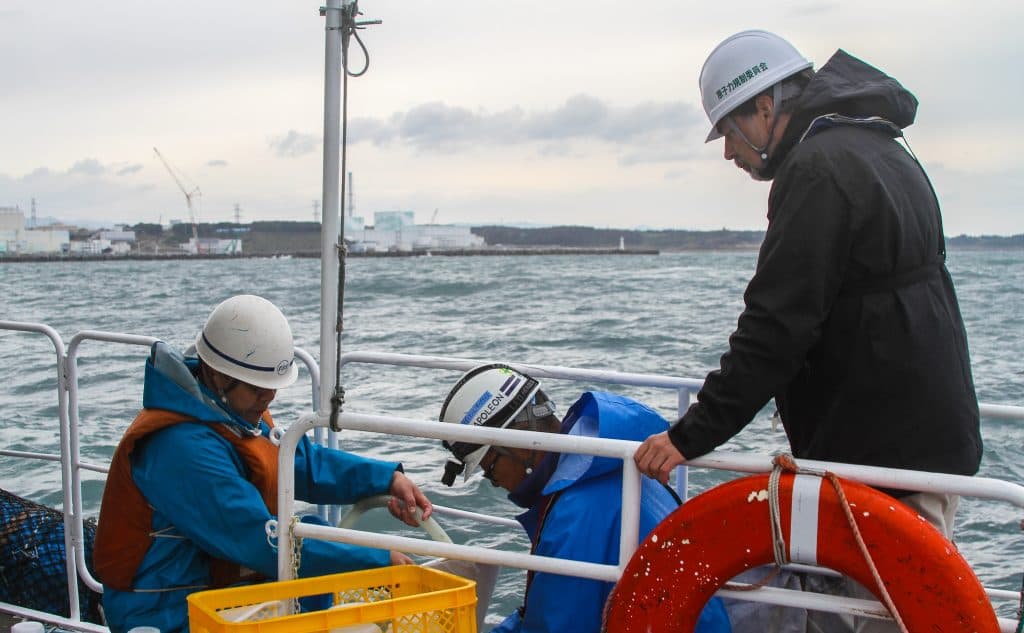
Anti-nuclear activists very often argue that, while the nuclear accident at Fukushima Daiichi had no direct victims, it did have indirect victims. They seek to quantify them as evidence of the dangers of nuclear power. All forms of industrial activity entail certain risks. If we want to compare their impacts rationally, we must compare the same types of figures and quantities.
The Bulletin of the Atomic Scientists published an article by Maxime Polleri on 11 March 2026, the fifteenth anniversary of the Fukushima Daiichi accident, examining its impacts, and above all counting the deaths it caused. The author criticises the fact that, in the case of the Fukushima Daiichi accident, discussion is usually limited to direct victims. Here, Maxime Polleri also acknowledges that the accident and the release of radioactive substances had no direct victims at all. However, he criticises the IAEA (International Atomic Energy Agency), the World Health Organization (WHO) and the UN Scientific Committee on the Effects of Atomic Radiation (UNSCEAR), which argue that the radiation releases and doses received by plant workers and residents were so low that they pose no health risk, and that fear of radiation and the psychological problems caused by evacuation had and continue to have far greater impacts. Polleri, however, argues that the accident and radiation had indirect victims.
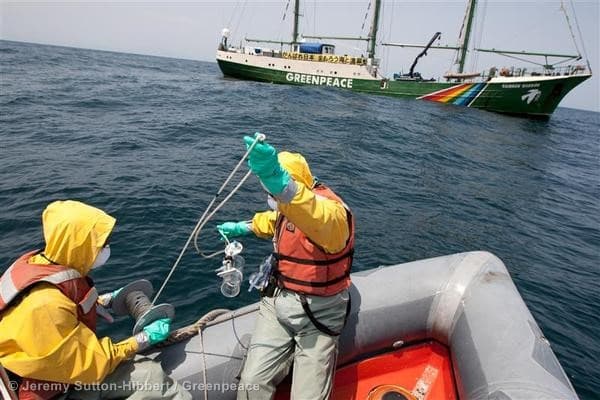
Greenpeace activists have also carried out independent measurements of the dosimetric situation around Fukushima Daiichi throughout the period since the accident. Their published data are in good agreement with official measurements (source: Greenpeace)
I have followed the course of the accident and efforts to clean up and overcome its consequences over the long term in a series of articles for Osel (the latest is here), while I described the current state of the cleanup following the Fukushima and Chernobyl accidents in an article for Neviditelný pes. I would therefore venture to challenge the arguments in Maxime Polleri's article. The fact that indirect victims were associated with the Fukushima Daiichi accident is often mentioned not only by me in my articles and lectures, but by many other authors as well. However, we usually focus on comparing the impacts of different disasters, the use of different energy sources, or different industrial accidents. Given that the precise determination of indirect victims is highly difficult and problematic, only direct victims are almost always cited.
I, too, often compare the impacts of the earthquake and tsunami themselves with the consequences of the Fukushima Daiichi accident. Yet only direct victims are always cited for the tsunami. I often note that the nuclear accident also had indirect victims, but as far as direct victims are concerned, the ratio of the tsunami to the accident is clear: more than 20,000 to 0. It is highly likely that a comparison of the number of indirect victims would be similarly dramatic to the detriment of the tsunami's consequences. The tsunami caused far more rapid evacuations of hospitals and care homes; it is also more likely that someone who lost loved ones and property would commit suicide than someone who lost only property. Stress and a sense of threat are also consequences for communities hit by the tsunami, and the number affected in these communities is orders of magnitude higher.
Let us recall which indirect deaths Maxime Polleri has in mind. He agrees with the aforementioned international organisations that, during the Fukushima Daiichi accident, no worker or resident received an effective dose high enough to cause deterministic effects in the form of radiation sickness. However, he disagrees that the doses received were so low that even non-deterministic effects, in the form of increased incidence of cancers or other consequences in the following period, would be unobservable. Or, perhaps more accurately, if any number of illnesses caused by radiation from Fukushima Daiichi does occur, it will be negligible and unobservable compared with their natural incidence.
Maxime Polleri is right that the absence of evidence for the existence of something does not constitute evidence of its non-existence. However, I argue that it means only that the existence of the phenomenon in question cannot be determined; it does not mean that it exists. In the case of Fukushima Daiichi, independent dosimetric and epidemiological studies are very detailed and confirm the negligible effect of radiation on the health of plant workers and residents. When reporting the results of these studies, it is necessary to look not only at the figures, but also at their context and comparison. Above all, it is necessary to understand what the figures actually mean. I discussed one example in which anti-nuclear activists alarmed people with a 70% increase in risk, when in reality it was a negligible risk, in an earlier article.
Maxime Polleri cites as evidence of a proven causal link between a dose of radioactivity and a plant worker's lung cancer and death the fact that the Japanese government recognised this link in 2018, classified the death as work-related and approved compensation. However, this is no genuine scientific confirmation of such a causal link. I would note that there have also been another six cases in which occupational diseases involving leukaemia, lung cancer and thyroid cancer were recognised in Fukushima Daiichi workers, who received compensation. The fact that a link was legally recognised in these cases has nothing to do with actual causality. This is because nuclear industry workers in Japan have an agreement under which, if they exceed an effective dose of 5 mSv received at work, certain types of illness are automatically considered occupational diseases (from radiation). In reality, causality is very unlikely to exist here, because in most cases these were workers who received relatively lower doses.
As indirect victims, Maxime Polleri mentions the deaths of seriously ill people during the evacuation of hospitals, and above all cases involving the deaths of care home residents. However, it would be fair to mention that the excessively rapid evacuation was caused precisely by the campaign of people like the article's author, who press for the risk from radiation (at lower doses) to be assessed not according to scientific knowledge but as something a priori terrifying. In the Fukushima cases, a delay of a few days to ensure sufficient technical and medical support for people on medical equipment would not have been a problem. Any possible increase in cancer risk many years later would have been entirely irrelevant for elderly people, while staff doses would not have exceeded levels common in many healthcare professions.
Another example is said to be 99 recorded suicides, as well as miscarriages and stillbirths that may be linked to stress caused by the crisis events. As I have already mentioned, there were many orders of magnitude more such cases associated with the impacts of the tsunami itself. It would also be correct to mention that some of the evacuations and their impacts attributed to the accident had already taken place in connection with the tsunami.
It is precisely the campaign, also pursued by the article's author, about the enormous risk of radiation not exceeding natural background levels that has negative psychological impacts on the population and may also be responsible for some of the symptoms of a more psychosomatic origin discussed in the article. It is paradoxical that the author mentions that continued evacuation has negative impacts while at the same time campaigning for permanent evacuation even where the dose at a given location is already below the level commonly received from background radiation in Czechia.

Following decontamination and revitalisation, people are beginning to return even to the hardest-hit areas near the plant. The municipal office in the reopened area of Futaba serves as a revitalisation centre and helps rebuild local communities (source: Nippon.com)
A number of psychological impacts, not only on farmers, were also caused in cases where they had to leave their farms forcibly, even in places where radiation was at a level that would not lead to health effects and where the psychological and social impacts could have been much smaller had evacuation been more voluntary. And the disproportionate pressure for evacuation is due precisely to the campaign by groups holding views close to those of the author.
The author rejects all knowledge on the effects of radiation from official scientific studies and international bodies by claiming that, even if no epidemiological study has demonstrated a negative health effect from a given low dose, this does not mean that some negative effect cannot exist. That may be true, but it does not justify the claim implicit in his article: that while there is no scientific evidence of the harmful effects of very low doses, radioactivity is in any case harmful, even in minimal amounts, and evacuation is necessary at any cost. It was precisely such an approach that contributed to deepening the negative impacts on local residents during the Fukushima Daiichi events.
Translation disclaimer
This article is a machine translation of the Czech original and has not yet been fully reviewed. In case of any doubt, please refer to the Czech version.
Sdílejte článek prostřednictvím:
Topics:Opinion
You might also like


23 October 2026, 11:01

23 October 2026, 06:34