23 October 2026, 14:38
Loading...
How far has Czechia progressed towards nuclear fusion? – Part 1
Vladimír Wagner
18 May 2020, 14:14
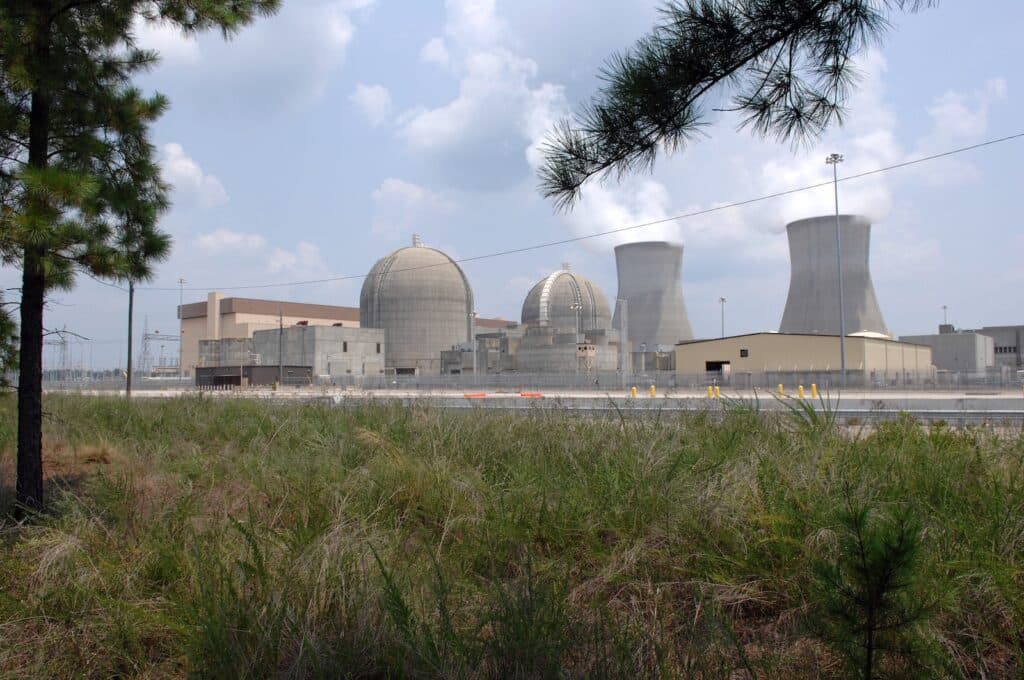
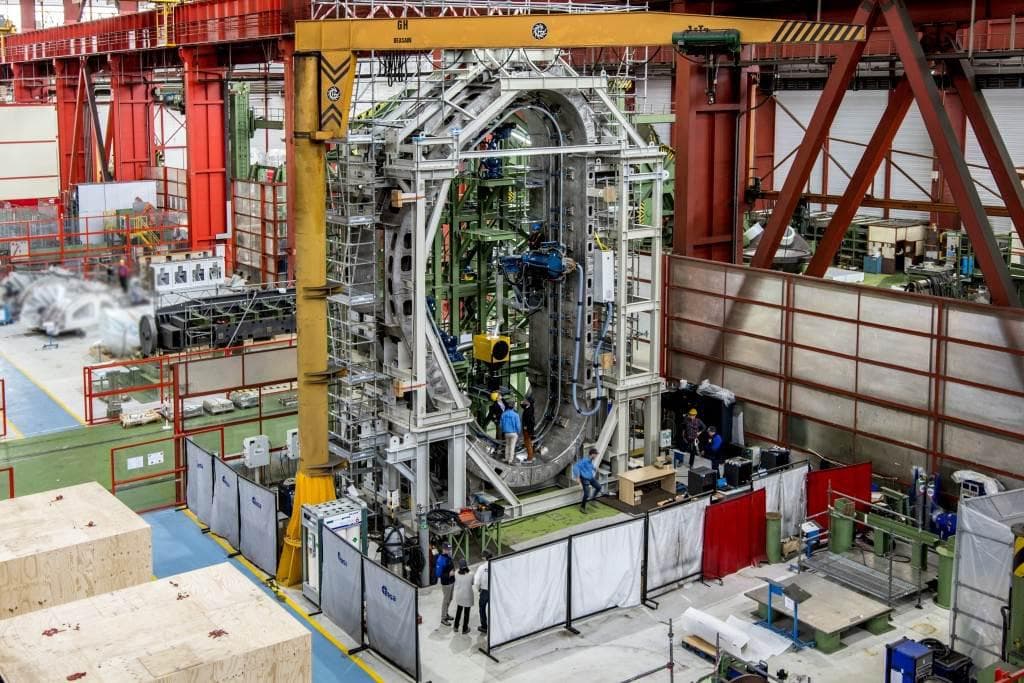
The building that will house the ITER thermonuclear reactor has now been completed, making it possible to begin installing the tokamak itself. Assembly will thus begin on the plasma vacuum vessel, superconducting magnets and other structures of this facility. Let us use this key turning point to summarise our knowledge of the potential use of thermonuclear fusion.
Principles of using nuclear reactions for energy
The use of nuclear reactions for energy is based on the fundamental properties of quantum physics and special relativity. According to Einstein's special theory of relativity, mass and energy are equivalent. Rest energy associated with mass can therefore be transformed into kinetic energy, which can in turn be converted into heat and used, for example, to generate electricity. In the fusion or fission of nuclei, it is thus possible to use the binding energy released in these processes.
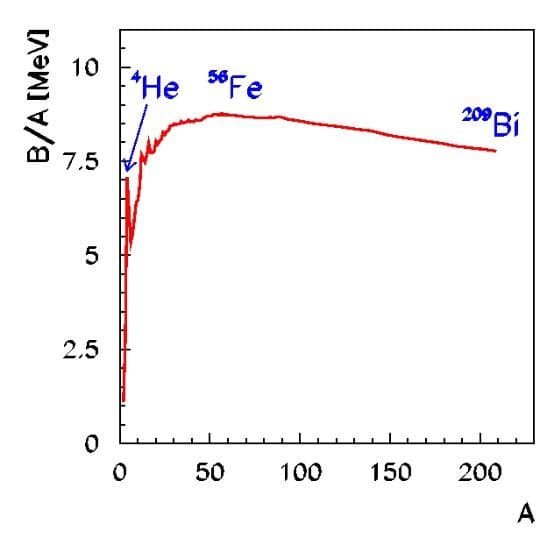
Which of the processes mentioned can be used depends on how the binding energy per nucleon changes with the number of nucleons. If we look at a graph showing this relationship, we can see that binding energy per nucleon rises up to iron with 58 nucleons. For elements lighter than this iron isotope, released binding energy and the conversion of rest energy into kinetic energy can therefore be obtained through fusion. Conversely, heavy nuclei can be used through fission.
Fission is used in conventional fission reactors. We will now focus on the potential for fusing light nuclei. In this case, we encounter one major problem. Nuclei are positively charged because of their protons and electrostatically repel one another. This repulsive force acts until the nuclei approach to a distance shorter than the range of the strong nuclear interaction. This interaction then dominates the electrical repulsion. Repulsion turns into attraction and a nuclear reaction occurs. As shown in the figure, this creates a repulsive Coulomb barrier that the charged nucleus must overcome for a fusion reaction to occur. In the classical case, the kinetic energy of the incoming nucleus would have to be greater than the height of the Coulomb barrier. However, quantum physics also allows an incoming charged particle to tunnel through to a sufficient proximity. The probability of such an event and of a nuclear reaction is orders of magnitude lower in this case. Moreover, it falls very rapidly as projectile energy decreases and the height of the Coulomb barrier increases.
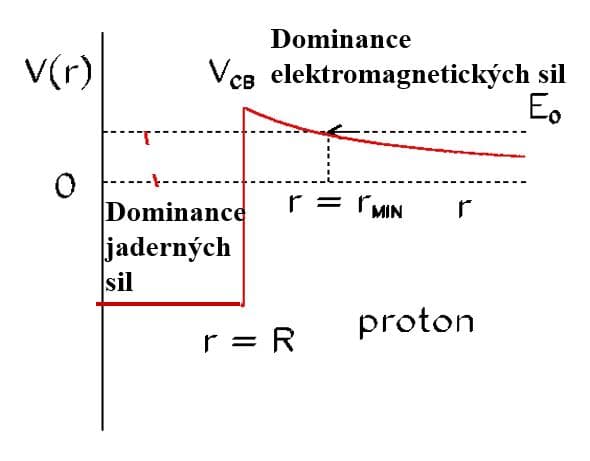
To overcome the Coulomb barrier, nuclei must be accelerated to sufficient speeds and kinetic energies. This can be achieved in two ways. The first is to accelerate light nuclei using an electric field, producing a beam of accelerated nuclei moving in an ordered manner. This can be achieved in a fusor or using an accelerator. In this case, only a very small number of fusion reactions are obtained for the energy supplied for acceleration. Fusion reactions do take place in these facilities, but they do not serve to produce energy. However, with the right reaction selected, they can serve as an intense source of neutrons.
The second option is intense heating of plasma, in which the necessary speed and kinetic energy are achieved through the chaotic thermal motion of nuclei. The temperature is very high, in the order of 10^7 to 10^9 K. Even then, however, the kinetic energies of the ions are insufficient to directly overcome the Coulomb barrier, which is crossed through quantum tunnelling. It is precisely this thermonuclear fusion that offers a path towards a fusion reactor and power plant.
The Sun is also a fusion reactor
Stars, including our Sun, are examples of natural thermonuclear reactors. In this case, they consist of an enormous volume of hot plasma held together by gravity. The core of the Sun, where thermonuclear reactions take place, has a radius of 175 000 km, meaning that its volume accounts for just under 0,2 % of the total volume. In this solar core, the temperature is the required 15 million kelvin and plasma density is around 130 000 kg/m3 (meaning a density in the order of 10^32 protons/m3). Given this high density, this small part of the Sun by volume contains a large share, up to tens of percent, of its mass. The Sun's power density is roughly 0,19 mW/kg. This is very low, so the Sun's high total output is mainly due to its enormous volume.
Let us examine which reactions take place in the Sun and whether they could inspire applications in terrestrial thermonuclear reactors. The first is the proton-proton cycle. Three reactions take place here, resulting in conversion. The first of these is critical. It is the fusion of two protons to form a deuteron, a positron and an electron neutrino. The conversion of a proton into a neutron, or conversely of a neutron into a proton, can only occur through the weak interaction. One quark must be transformed into another, and no other type of interaction permits this. Since this interaction is extremely weak, the probability of it occurring is also extremely low. Even in an environment dominated by protons, a particular proton must wait an average of 9 billion years before its conversion into a deuteron takes place with the help of another proton.
The next reaction is the combination of a deuteron and a proton to form the helium-3 isotope. This involves only the fusion of several nucleons, achieved through the strong interaction. This is very intense, and the process therefore takes place very quickly. A deuteron survives for an average of only around four seconds before fusing with a proton. During that time, it has a negligible probability of encountering another deuteron. Thus, the fusion reaction of two deuterons does not occur in stars.
In the third reaction, two helium-3 nuclei combine to form helium-4 and two protons. Helium-3 survives for an average of 400 years before encountering another helium-3 nucleus and undergoing the reaction mentioned. Given the very short lifetime of deuterons, it has a very low probability of encountering one. A reaction with a proton, of which there are large numbers around helium-3, could produce helium-4 and emit a positron and neutrino. However, this reaction occurs only through the weak interaction and with an extremely low probability, so its occurrence is negligible even in the Sun.
Two other cycles of fusion reactions also take place in the Sun. The first is the CNO cycle, in which carbon acts as a catalyst enabling the conversion of four protons into helium-4 through a series of reactions. In addition to reactions in which nuclei fuse through the strong nuclear interaction, there are two beta decays in which neutrons are converted into protons through the weak interaction, producing a positron and neutrino. This cycle has several side branches, but these mostly occur at higher temperatures and in stars more massive than the Sun. Heavier elements can also be formed from carbon in them. Not only the reactions of the CNO cycle, but also other reactions in stars and methods for studying them in laboratories on Earth, are described in a more detailed article on the production of elements in the universe.
The third reaction cycle is the Salpeter cycle, or triple-alpha process. This involves the fusion of three helium-4 nuclei into carbon-12. This is possible thanks to the existence of an excited state of the carbon nucleus with the corresponding energy. This state was predicted by the American astrophysicist Fred Hoyle precisely because carbon production in stars had to be possible. Only later were nuclear physicists able to confirm it experimentally.
All these reactions and the production of sufficient energy are possible only because of the large volume and mass of stars, these natural reactors in which plasma is held by gravity. This makes it possible to overcome the problem of the low probability of some of them. In designing thermonuclear reactors on Earth, however, it is necessary to use only reactions based on the strong nuclear interaction, which have a sufficiently high probability.
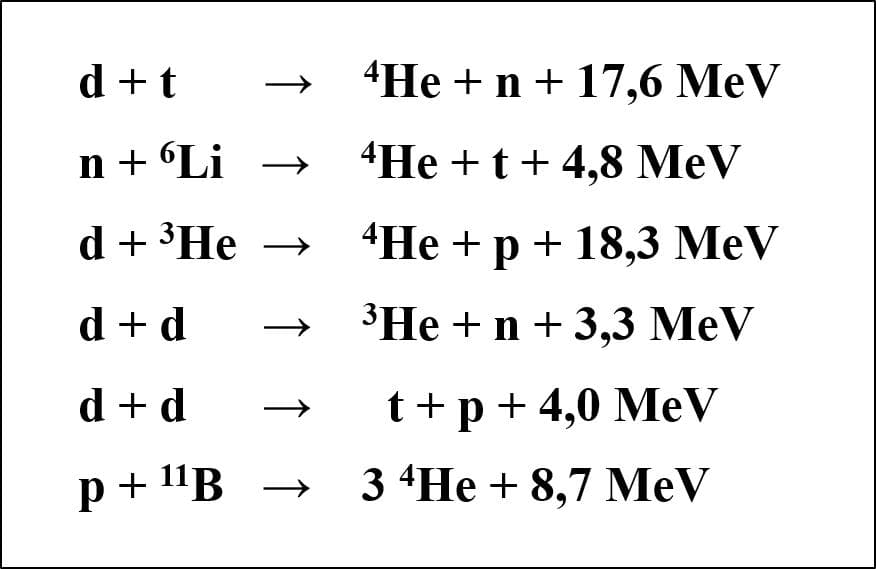
Nuclear reactions usable for an artificial fusion reactor
Several reactions involve the fusion of the lightest nuclei and can be used for energy production. Their suitability depends on the plasma temperature they require for the probability of their occurrence to rise sufficiently. It also depends on how high the probability, expressed through the quantity known as the cross-section, will be at achievable temperatures. From this perspective, the most advantageous reaction is the fusion of a deuteron and triton, producing helium-4 and a neutron. The reaction probability rises and reaches a maximum at temperatures between 10^8 and 10^9 K, one to two orders of magnitude higher than the temperature inside the Sun mentioned in the preceding section. Deuterium is stable hydrogen with one neutron. Relatively large quantities are also present in seawater, from which it can be extracted. Tritium has two neutrons and is radioactive, with a half-life of 12,3 years.
It occurs naturally, as it is produced by cosmic-ray interactions in the atmosphere. It is also produced, for example, during the operation of nuclear reactors, particularly those cooled and moderated by heavy water. However, obtaining this tritium is not very efficient. For now, it is therefore assumed that it will be produced from lithium, which is a relatively common element and yields tritium through reactions with neutrons. This occurs both in a reaction with lithium-6, producing tritium and helium-4, and in a reaction with lithium-7, producing tritium, helium-4 and a neutron. The first reaction does not require the neutron to have energy; its capture by lithium is sufficient. Energy is in fact released in it. In the second, however, the neutron needs relatively high energy to split lithium-7. Naturally occurring lithium consists of roughly 92,5 % lithium-7 and 7,5 % lithium-6.
The second possible reaction is the fusion of a deuteron and helium-3. This requires a higher temperature, and the maximum cross-section for this reaction is also almost an order of magnitude lower than for the deuteron-triton reaction. In this case, helium-3 is a stable nucleus. The problem is obtaining it. It is assumed that larger amounts could occur in the Moon's surface layers, where it could be captured from the solar wind. It is therefore considered in connection with potential expansion into space.
The maximum probability for the fusion reaction of two deuterons is even lower, and the temperature at which that maximum occurs is also higher. The advantage in this case is that deuterium is readily available in large quantities from seawater. With varying probabilities, the reaction can produce helium-4, helium-3 and a neutron, or triton and a proton. The drawback is that in the latter two cases, almost three times less energy is released per reaction than in the aforementioned reactions of deuterium with tritium or helium-3. If sufficiently high plasma temperatures and densities could be achieved to use this reaction, there would truly be no problem with fuel for thermonuclear fusion.
There is one further option under consideration: the reaction of a proton with the boron-11 isotope, which produces three helium-4 nuclei. Boron-11 accounts for 80 % of the natural mixture. Fuel reserves would therefore be sufficient. The disadvantage is that the probability of this reaction does not reach its maximum until temperatures of around 9 billion kelvin.
What conditions are needed for fusion?
To ensure sufficient reaction probability, and therefore cross-section, an appropriate temperature is needed. The probability of a reaction changes with temperature. The density of energy production is determined by reaction probability and plasma density. Total energy produced per unit volume is then determined by the product of plasma density and confinement time. For the energy produced by fusion reactions in plasma to exceed significant milestones, the product of its density and confinement time must be greater than a certain value. This rule was first described by John D. Lawson in 1955 and is known as the Lawson criterion.
There are several such thresholds. The first is the point at which produced fusion power equals the power required to heat the plasma. This is known as scientific breakeven. The second is the situation in which the portion of fusion power absorbed in the plasma equals the power required to heat it. In the case of using deuterium and tritium, neutrons carry away the largest share of the energy produced in the fusion reaction. They are neutral and escape from the plasma. This threshold is known as ignition breakeven. The last is when produced gross power covers the total consumption of a fusion power plant. This threshold is known as engineering breakeven. The first thresholds are of interest for the scientific study of plasma and fusion. The last is critical for the potential construction of a thermonuclear power plant.
For deuterium-tritium fusion, the optimum temperature is 165 million kelvin. The Lawson criterion for ignition breakeven exceeds 10^20 m-3s. The Lawson criterion points to two very different approaches to plasma confinement. The first option is relatively low plasma density and long confinement time. In this case, a magnetic trap is used to confine the plasma, and we speak of magnetic confinement. The second option is very high plasma density, where even a very short confinement time is sufficient to meet the Lawson criterion. In this case, we speak of inertial confinement of plasma.
I wrote a detailed analysis of the state of thermonuclear fusion research for Osel more than ten years ago, so it is interesting to look at what has been achieved since then and the current state of play.
Inertial plasma confinement
In this method of achieving sufficient fusion power, compression must produce a plasma density exceeding 10^26 ions/m3. Confinement time can then be shorter than one microsecond. The higher the density achieved through compression, the shorter the confinement time can be. The fact that the hot, dense zone does not immediately fly apart after compression and ignition of fusion reactions is due to inertia. Hence the name inertial confinement. It somewhat resembles the creation of thermonuclear micro-explosions. For a vessel with a radius of several metres to withstand the effects of such an explosion, the released energy must be limited to values in the order of hundreds of megajoules. The amount of fuel must therefore be in the order of milligrams.
The most promising method of inertial fusion is the symmetrical compression of a tiny fuel pellet using extremely intense beams. Laser beams, which can be split, are highly suitable for this purpose. The use of a laser beam was proposed as early as 1963 by physicists G. Basov and O. N. Krochin. Ensuring isotropic, homogeneous irradiation is extremely important in order to compress the pellet as much as possible. If irradiation is asymmetric, part of the plasma is ejected before sufficient compression and the achievement and maintenance of density sufficient to meet the Lawson criterion.
The NIF facility at LLNL
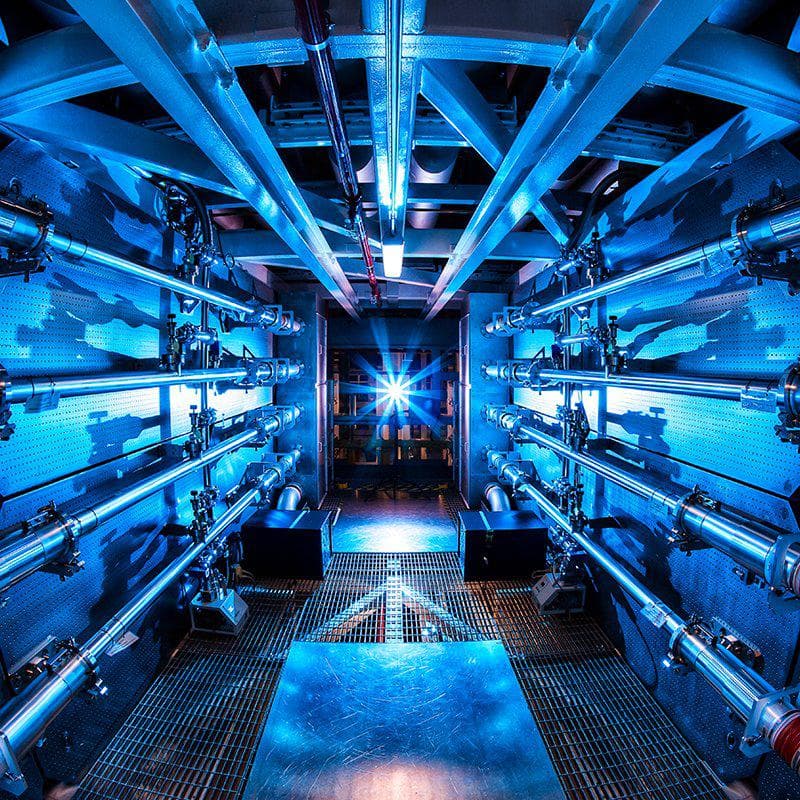
Achieving symmetrical irradiation and compression of the fuel capsule is precisely the critical problem that has not yet been solved. The approach currently envisaged is to use a very powerful laser for compression, splitting its beam to irradiate the capsule symmetrically from all sides. The largest and most advanced facility of this type to date was built in the United States. The NIF (National Ignition Facility) at LLNL (Lawrence Livermore National Laboratory) has an extremely powerful neodymium laser that reaches 0,5 PW for a period in the order of nanoseconds. In such a case, density exceeding 10^29 ions/m3 must be achieved. Its beam is split into 192 beams, which are then used to irradiate as evenly as possible a capsule filled with a mixture of deuterium and tritium.
Compressing the fuel itself is a relatively complicated matter. The capsule is a plastic shell roughly the size of a peppercorn. Inside is a frozen mixture of deuterium and tritium. The laser beam can strike the capsule directly or a special device known as a hohlraum (German for cavity). This is a gold cylinder into which laser beams enter through two opposing openings.
When a hohlraum is used, the internal walls of the cavity are heated by the impact of an extremely intense ultraviolet laser beam, ultimately reaching thermal equilibrium at a very high temperature. At the achieved temperature, the cavity emits X-rays. These strike the plastic shell, which vaporises and expands. At the same time, under the law of action and reaction, this creates the conditions for implosion of the fuel inside the plastic shell and its extreme compression and heating. The speed of the imploding fuel can reach several thousand km per second. This produces extremely dense plasma, albeit for a very short time. If homogeneous irradiation without asymmetries could be created, a temperature of 50 million kelvin and plasma density two orders of magnitude greater than the density of lead should be achieved. Fusion reactions would then ignite in the hot spot at the centre, and the alpha particles produced in them would further heat the plasma. A fiery shock wave would spread from the centre, progressively igniting all the fuel.
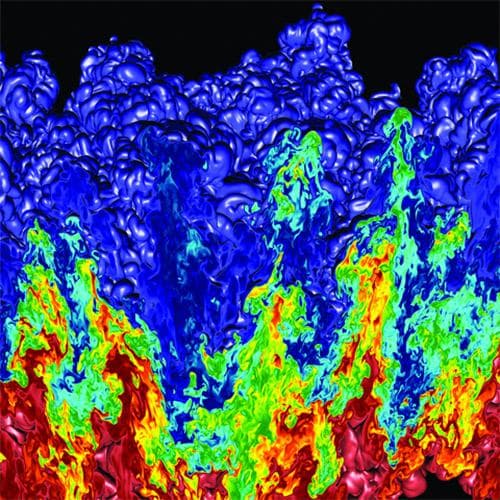
The NIF facility was completed and began operating in 2009. The first three-year experimental campaign began at that time. Based on experience from previous facilities, direct irradiation was not used; instead, a hohlraum was employed. During the campaign, ongoing efforts were made to improve the laser-beam irradiation process. Nevertheless, conditions for ignition of a thermonuclear reaction were not achieved, and this remains the case today. Several problems and challenges requiring attention were identified. The fuel capsule does not contract symmetrically and does not attain the shape of a perfect sphere. Instabilities occur in the resulting plasma during implosion, causing turbulence particularly at the edge. Shell material mixes into the fuel, while mixing of fuel layers at different temperatures cools the inner regions. In addition, material released from the hohlraum wall scatters the light from the incoming laser beams, causing energy losses. The design of the hohlraum itself is asymmetric and disrupts the symmetry and isotropy of capsule irradiation.
Results of efforts to ignite a fusion reaction
Long-term work and efforts to ignite a fusion reaction in the fuel inside the capsule are therefore under way. The shape and profile of the laser beam are being changed. The capsule material is being changed from plastic to diamond, as is the design, especially the shape, of the hohlraum. Progressive improvements have led to a more than forty-fold increase in fusion yield. As early as 2012, laser power of 500 TW and total energy of almost 2 MJ were achieved. Yet it was not possible to reach the point where the energy released in fusion at least approached parity with the energy consumed in heating the plasma. So far, the ratio of these energies has reached only 0,1. A return to direct heating instead of using a hohlraum therefore began to be considered. This direction had been abandoned because of problems with symmetric irradiation. In this case, the requirements for the quality and homogeneity of the laser beam are even greater. Work on the size and design of the capsule could also help. Its precise positioning and the overall geometry of the entire assembly are also critical. It is clear that ensuring precise placement of an object the size of a peppercorn is not at all easy.
The magnitude and impact of asymmetries are further amplified by Rayleigh-Taylor and Richtmyer-Meshkov instabilities. Experiments not only at NIF have focused on studying them, and especially on how to address them. Other large lasers, such as the University of Rochester's OMEGA, have also been involved. Simulations of the formation and development of such instabilities are carried out using hydrodynamic models on the largest computers. Comparing experiments with simulations could contribute to understanding their sources and identifying the most suitable parameters for both the capsule and laser beams.
NIF is strictly an experimental facility. It can carry out only one laser shot per day. In a real thermonuclear power plant, this would need to be roughly ten shots per second. Moreover, it has become clear that we are not yet able to ensure that the energy produced by fusion at least equals the energy transferred to the plasma during a shot. It cannot yet be said whether this target can be achieved at this facility by improving the conditions and parameters of the beam and target.
This result is naturally disappointing, particularly for supporters of using thermonuclear fusion to power future starships. Inertial fusion is considered for such spacecraft, as described in more detail in an earlier article on Osel. However, it should be noted that, from the US perspective, the facility's most important task is testing the behaviour of various materials and plasma under conditions arising in a thermonuclear bomb explosion. Since thermonuclear weapons tests are prohibited, it is necessary to experimentally verify the programmes used to design these weapons. At the same time, plasma can also be tested under the same conditions that exist inside brown and red dwarfs. This facility therefore appears likely to make a more significant contribution to weapons research and fundamental astrophysics research. The LMJ (Laser MegaJoule), a similar facility built in France that has operated since 2014, has the same goals and a dominant focus on thermonuclear weapons research. The large PETAL (PETawatt Aquitaine Laser) began operating there in 2017.
In addition to laser beams, intense particle or ion beams can also be used to compress fuel and ignite thermonuclear fusion through inertial confinement. At present, however, a promising research direction is the potential to build compact particle accelerators using laser beams. Research into very powerful lasers and shaping their beams is therefore a highly important field. It is thus very positive that the cutting-edge ELI-Beamlines laser facility, which has petawatt lasers, is now being completed in Czechia. Its research can also contribute to the path towards inertial confinement of fusion plasma.
Magnetic plasma confinement
In magnetic plasma confinement, its density is orders of magnitude lower, but this must be compensated by a longer confinement time. It uses the movement of charged particles in a magnetic field and the possibility of trapping them in that field. Open systems were initially used, addressing particle losses through magnetic mirrors at their open ends. However, substantial losses occur through them and cannot be prevented. This problem was resolved by closed systems with a hollow-ring-shaped vacuum vessel, in which plasma densities of between 10^19 and 10^20 particles/m3 can be achieved. Plasma confinement time must then be in the order of seconds to tens of seconds.
At present, two options among closed systems, where the magnetic field does not leave the vessel, are considered the most promising. The first is the tokamak and the second is the stellarator. The tokamak is a Russian concept from the early 1950s developed by Igor Yevgenyevich Tamm and Andrei Sakharov. The toroidal vacuum chamber is placed on a transformer core. The transformer generates an electric current in the plasma, which in this case acts as its secondary winding. This current then creates a poloidal magnetic field. The tokamak also has electromagnets that create a toroidal magnetic field. The combination of these fields creates a helical magnetic field and closed paths for the movement of plasma particles. It thus enables the trapping and confinement of plasma inside the ring-shaped vacuum vessel. The current generated in the plasma can also be used to heat it.
The stellarator was proposed by Lyman Spitzer in 1950. Unlike a tokamak, it does not use current in the plasma to generate the magnetic field. The closed paths of plasma particles are achieved purely by external electromagnets. It must therefore have a far more complicated arrangement of electromagnetic coils and of the magnetic field they create. The toroidal geometry of the vessel is thus deliberately twisted and also has a relatively complex shape.
How can plasma be heated and monitored?
As already mentioned, a tokamak uses heating from the passage of the electric current generated in the plasma. Electrical resistance also arises in plasma and Joule heat is induced. This is known as ohmic heating. The ohmic resistance of plasma declines as its temperature rises, so this heating method works mainly at lower temperatures and in the initial phases of heating. Another option is heating by radio waves emitted by antennas at the correct frequency, which is in the range of tens of MHz for electrons and tens of GHz for ions. Another source of energy is heating by the fusion reaction itself. Here we encounter a problem when using tritium-deuterium fusion. The neutrons produced, which carry away the greater part of the released energy, are neutral, do not interact with plasma, and a large share of energy therefore escapes from the plasma. Heating is provided only by the helium nuclei produced. Another option is heating by injecting neutral atoms. In this case, deuterium injection is most commonly used, which also makes it possible to supply more fuel. These atoms are accelerated as ions and neutralised before entering the tokamak chamber. After penetrating the magnetic field into the plasma, they are ionised and transfer their kinetic energy through collisions to other particles in the plasma. The optimum energy ranges from 40 keV to 1 MeV, depending on plasma volume. These energies correspond to temperatures up to one hundred times higher than that of the plasma.
Monitoring plasma development and maintaining its stability are very important. Instabilities lead to cooling and the removal of particles from its volume. Another problem is that plasma coming into contact with the surface of the vacuum vessel can damage it. Plasma conditions can be monitored directly using probes or indirectly by detecting particles and radiation emitted by the plasma. Different types of coils are used to measure the magnetic-field profile.
The electric current flowing through the plasma, as well as the plasma's position and shape, must be measured. Its density, temperature and pressure at different points must likewise be measured. Differences in temperatures and other parameters among its different components must also be measured. Studying various impurities that enter it and can cause instabilities is also very important. Radiation from plasma affects energy losses and cooling. Plasma instabilities and magnetohydrodynamic activity must be studied in great detail. Monitoring the temperature, particularly of those parts of the vacuum vessel surface that plasma may touch, is important.
Problem areas
A number of challenges arise in the construction of modern tokamaks capable of achieving fusion ignition and potentially using it. Fuel replenishment must be addressed. It must overcome the barrier created by the magnetic field and enter the plasma inside it. On the other hand, the removal of exhaust products, namely helium from the plasma, and impurities entering it from various surfaces must be addressed. This uses a device known as a divertor. A special shape of the chamber and magnetic field directs particles from the outer regions of the plasma to a dedicated location, where they are captured on special surfaces and pumped away using vacuum pumps.
The resilience of the vessel's inner walls is also critical. They are exposed to very high thermal stress and extreme radiation. The dose caused by the high neutron fluxes generated in fusion reactions is very high. Long-lived radioactive elements can also arise in nuclear reactions of neutrons with the wall material. It is therefore important to select pure materials in which neutrons do not create such elements in nuclear reactions.
The article will continue in part two…
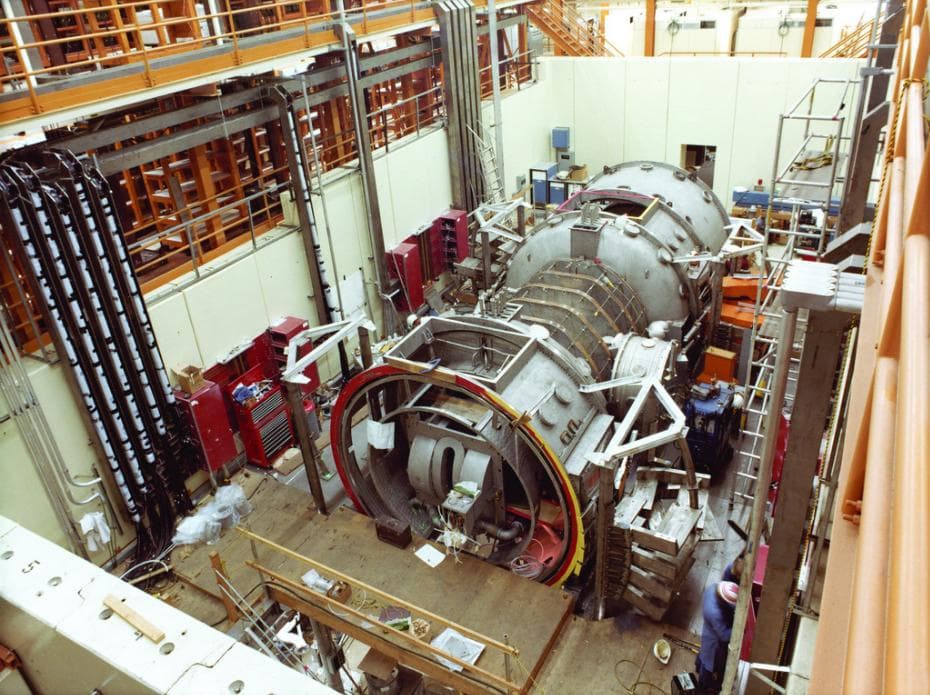
Opening photograph: The JET tokamak is currently the largest tokamak (source: Efda.org)
Translation disclaimer
This article is a machine translation of the Czech original and has not yet been fully reviewed. In case of any doubt, please refer to the Czech version.
Sdílejte článek prostřednictvím:
You might also like
23 October 2026, 11:01

23 October 2026, 06:34