23 October 2026, 14:38
Loading...
How far has Czechia progressed towards nuclear fusion? – Part 2
Vladimír Wagner
20 May 2020, 13:38
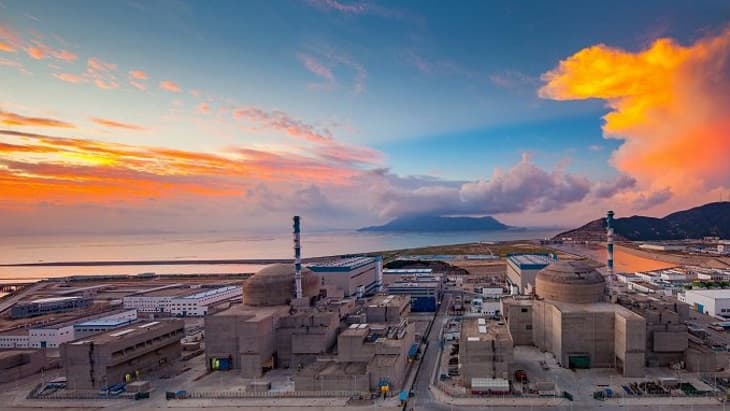
The building that will house the ITER thermonuclear reactor has now been completed, making it possible to begin installing the tokamak itself. Assembly of the plasma vacuum vessel, superconducting magnets and other structures of this facility will thus begin. Let us use this key milestone to summarise our knowledge of the potential use of thermonuclear fusion.
This is the second part of the article. The first is available at this link.
Tokamaks
Several highly modern tokamaks have been built around the world in recent years. Some of them already have all their magnets superconducting. Asia in particular is gradually taking the lead. The highly modern KSTAR (Korean Superconducting Tokamak Reactor) tokamak was built in South Korea. Its major radius is 1.8 m and its minor radius is 0.5 m. The achieved magnetic field strength is 3.5 T and the discharge duration is up to hundreds of seconds. At the beginning of 2019, it succeeded in maintaining plasma at a temperature of 100 million kelvin for one and a half seconds.
Since 2006, the EAST (Experimental Advanced Superconducting Tokamak) tokamak has been operating in China, with a major radius of 1.85 m and a minor radius of 0.45 m. Its magnetic field strength reaches 3.5 T and its heating power is 7.5 MW. By the end of 2018, it had achieved a confinement time of 100 s and a temperature of 100 million kelvin. In future, it should have a magnetic field strength of up to 5 T and achieve a confinement time of as much as 1000 s. China also decided in 2019 to build a national centre for thermonuclear fusion research. A new tokamak is also to be built there by 2030. Although it will be smaller than ITER, the use of more advanced technologies and a specific design will make it possible to achieve higher plasma temperatures. China will thus use the synergies from its participation in the ITER project to develop its own path towards fusion energy.
The Japanese built on their experience with the JT-60U tokamak (Japan Torus with a volume of 60 m3) and completed the fully superconducting JT-60SA tokamak at the turn of the year. Its first plasma was expected to be produced in autumn 2020. It is one of the largest and most advanced tokamaks, paving the way for the completion and operation of the ITER tokamak.
The largest tokamak in Europe is JET (Joint European Torus) in the village of Culham near Oxford in the United Kingdom. It was commissioned in 1983. Its major radius is 2.98 m, while its horizontal minor radius is 1.25 m and vertical minor radius is 2.10 m. Its plasma volume is around 100 m3 and its magnetic field strength is 3.45 T. It has achieved a number of fusion records. It also operated with tritium and, in a campaign from 1991 to 1997, carried out the first more substantial production of fusion energy. It achieved an output of 1.7 MW at a fuel temperature of 200 million kelvin. Following modifications and the installation of a new divertor, it was able to produce 22 MJ of fusion energy, a peak output of 16 MW, and a ratio of total fusion output to supplied thermal input of 0.65. It even succeeded in maintaining plasma for 4 seconds at a stable fusion output of 4 MW. It then returned to experimental operation without using tritium. In 2011, its inner wall was rebuilt to correspond to the design to be used for the ITER tokamak. It is to be made of beryllium, and of tungsten in the divertor area. Following demanding reconstruction, it was expected in 2020 to resume experiments with deuterium-tritium fusion. The goal is to achieve plasma confinement for 5 s and stable output from fusion reactions of 15 MW. The conditions achieved will be very similar to those expected at ITER.
The second-largest international scientific project – the ITER tokamak
The facility intended to produce more energy through fusion than is needed to heat the plasma will be the international ITER tokamak, being built at Cadarache in France. Thirty-five countries are officially involved in the project. The French Tore Supra tokamak has also been operating at this site since 1988. It has a major radius of 2.25 m and a minor radius of 0.7 m, while its magnetic field strength is 4.5 T. In 2003, a discharge took place here in which plasma confinement lasted 390 s at a temperature on the order of one hundred million kelvin. It underwent reconstruction between 2013 and 2016, involving changes to the cooling system and inner wall, as well as the addition of a tungsten divertor. The tokamak was also given the new name WEST (W Environment in Steady-state Tokamak). In this case, the W at the start of the name denotes the chemical symbol for tungsten. It thus became another tokamak testing future conditions at ITER.
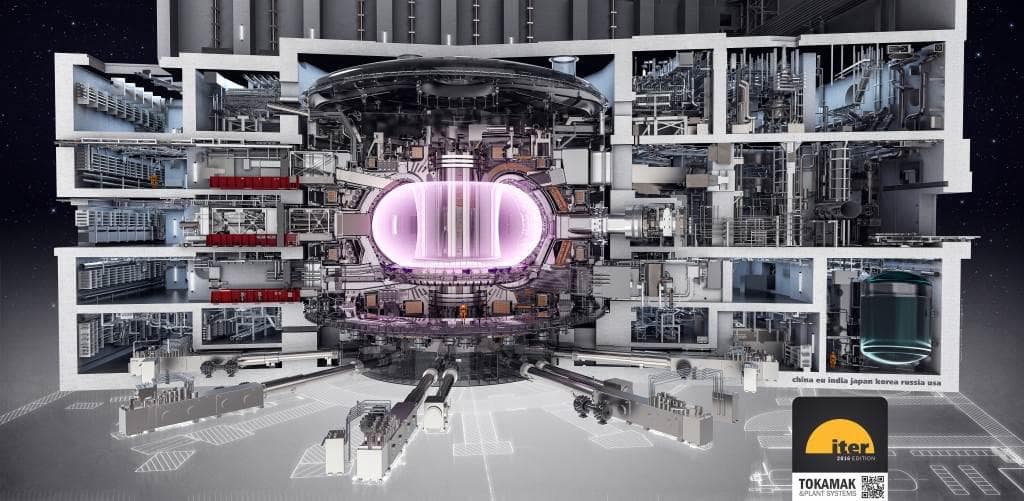
Construction of ITER itself began in 2007. Its major radius is to be 6.2 m and its minor radius 2 m. The plasma volume will be 840 m3. The magnetic field strength will be 5.3 T. Its output is to be 500 MW. The ratio between fusion output obtained and the power supplied for heating is expected to reach as much as 10. The plasma confinement time is to be up to 300 s and its temperature 150 million kelvin. The total weight of the facility will be 23 000 t.
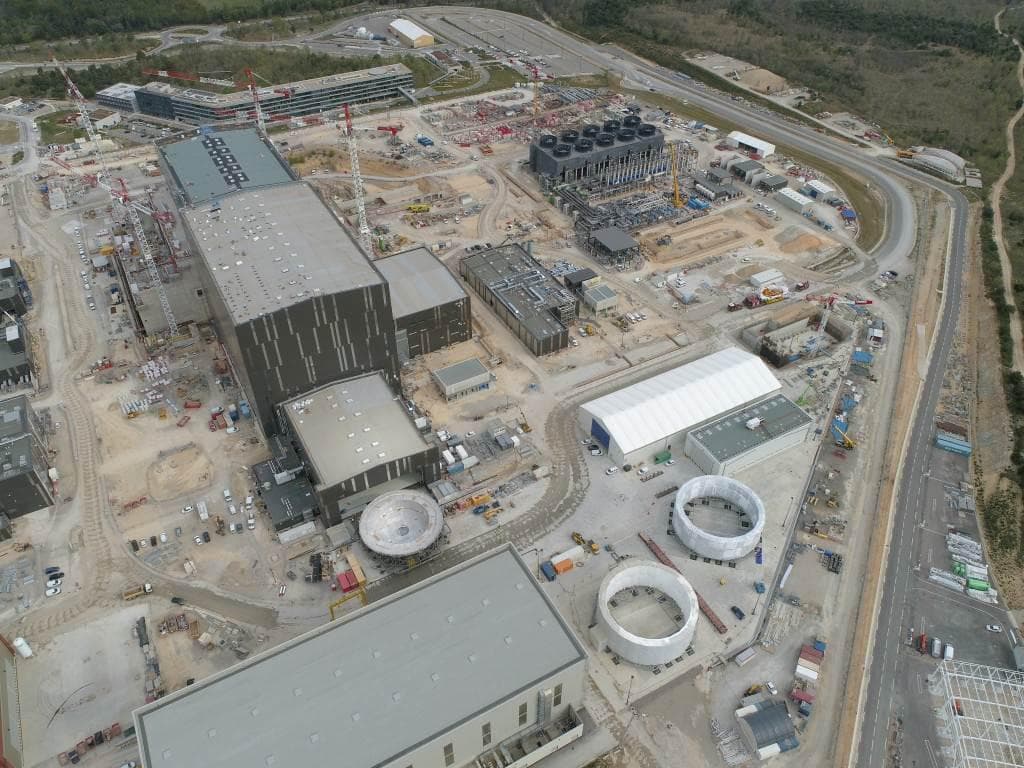
And now, following completion of the building, which is 80 m high, 120 m long and 73 m wide, assembly of the tokamak's main components is beginning. These are supplied by Europe, South Korea, China and Japan. The tokamak and the necessary equipment are to be completed and installed gradually. At the outset, a number of organisational problems emerged, which is nothing unusual when launching such a complex project with many suppliers from different parts of the world. However, this may also have reflected incompatibility between Japanese management and French employees, as the director was initially Japanese. The situation has now stabilised, and under the leadership of the new director, Bernard Bigot, deadlines are being met, so current estimates for completing the facility appear realistic.
The first plasma in the ITER tokamak was expected to be produced at the turn of 2025 and 2026. As already mentioned, most tokamaks investigate plasma properties rather than fusion reactions. They therefore do not use tritium. The use of this radioactive material brings considerable challenges. In addition, deuterium-tritium fusion reactions, with their production of a higher neutron flux that interacts with tokamak materials, induce radioactivity in structural components. The use of tritium also brings no advantages in studying plasma behaviour. This is why tritium will not be used at ITER for its first several years either. The tokamak is expected to enter full operation and begin deuterium-tritium fusion experiments in 2035. It should be said that, from the experience gained with its predecessors, we know that constructing ITER is a major challenge, but the facility will work. Its size will enable it to demonstrate that nuclear fusion can produce sufficient energy and make that key step towards fusion power.
Czech involvement in the use of tokamaks
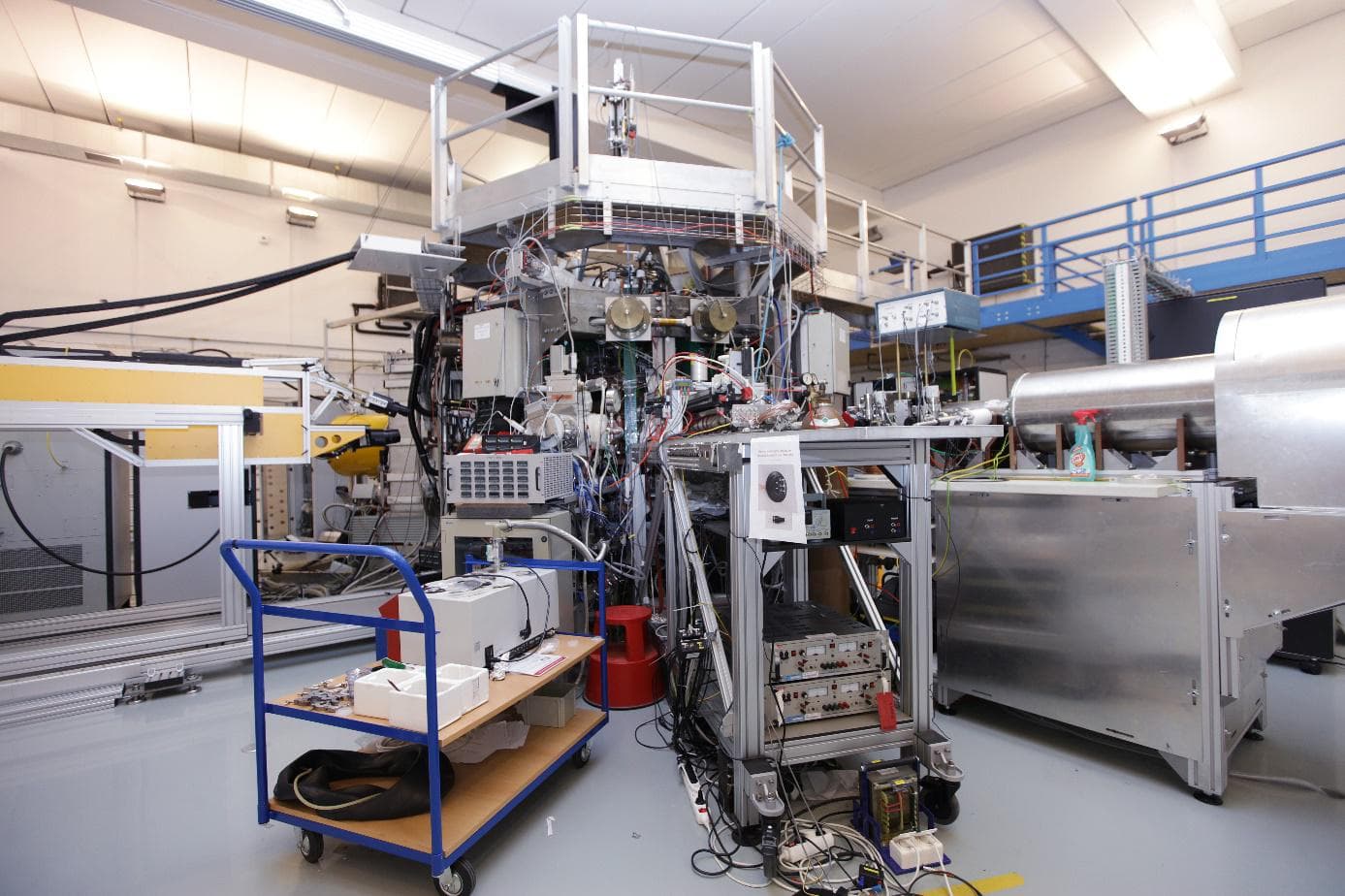
The Czech Republic has been involved in thermonuclear research using tokamaks since its early days. The main centre in the country is the Institute of Plasma Physics of the Czech Academy of Sciences. The TM-1-MH tokamak began operating there in 1977. Based on the previous involvement of Czech scientists in this research, it was transferred from the then Soviet Union. After being brought to Prague, it was named CASTOR (Czech Academy of Sciences TORus). It operated at the Institute of Plasma Physics until 2006 and was subsequently moved to the Faculty of Nuclear Sciences and Physical Engineering at the Czech Technical University, where since 2009 it has served students under the name GOLEM.
As a replacement, the Institute of Plasma Physics received the COMPASS tokamak from the United Kingdom. Its enormous advantage is that the shape of its vacuum vessel and its other parameters are similar to those of ITER. It is simply much smaller, with a plasma volume an order of magnitude lower. Its major radius is 0.56 m, its minor radius 0.35 m, and its magnetic field strength 2.1 T. It can therefore be used to investigate ITER operating conditions. Evidence that colleagues at the Institute of Plasma Physics are doing this well is that Radomír Pánek was appointed one of the three leading representatives of Fusion for Energy (F4E), which implements the European part of the ITER project. A new, larger tokamak designated COMPASS-Upgrade is currently being prepared. It will again be a facility similar to ITER. In this case, the magnetic field strength is to be 5 T. Completion of the new tokamak will represent another leap forward in the involvement of Czech physicists in fusion research.
Thermonuclear fusion is also studied at the aforementioned Faculty of Nuclear Sciences and Physical Engineering of the Czech Technical University, where students can use the GOLEM tokamak mentioned above. As I take part in final examinations, I know that many of their bachelor's and master's theses are connected with tokamaks and the behaviour of the plasma produced in them. There are certainly a number among them who will also work at ITER.
There is one more plasma and fusion research facility in Czechia: a so-called Z-pinch. This facility is located at the Faculty of Electrical Engineering of the Czech Technical University. Plasma compression is achieved by the magnetic field generated during a discharge. Z-pinches are described in more detail in the aforementioned older article on fusion.
Stellarators
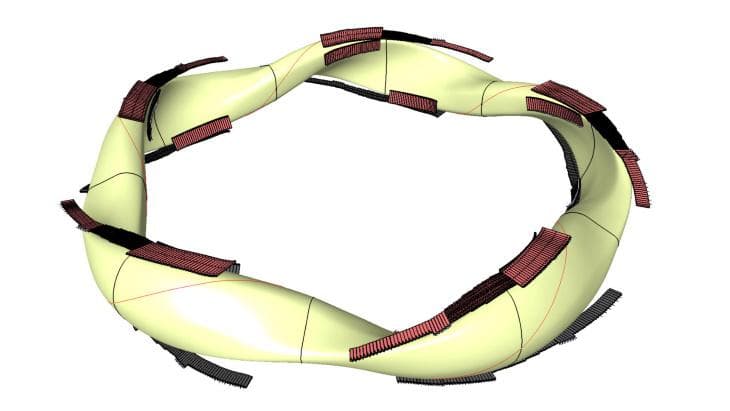
The largest and most advanced stellarator currently in operation is the German Wendelstein 7-X facility in Greifswald. It has made full use of advances in mathematical simulation of the required magnetic field shapes, the design of corresponding magnets, and the development of new materials.
The predecessor of this stellarator was Japan's LHD (Large Helical Device) at the Toki laboratory, which has operated since 1998 and in 2005 succeeded in maintaining plasma, albeit at limited density, for as long as 3900 s. Stellarators make it possible to ensure long-term plasma stability. This result also points to the possibility of stable plasma confinement in such facilities. Another such facility is the HSX (Helically Symmetric Experiment) at the University of Wisconsin-Madison in the United States. In Europe, in addition to the aforementioned German facility, the TJ-II stellarator with a 1 T magnetic field has operated in Spain since 1998.
The Wendelstein 7-X stellarator has a major radius of 5.5 m and a minor radius of 0.65 m. Its plasma volume is 30 m3, density should reach up to 3ˑ10^20 ions/m3, and temperature more than one hundred million kelvin. Its magnetic field can achieve a strength of 3.0 T, while the discharge duration, and thus plasma confinement time, is to be 30 minutes. It could have reached this value in the following year. Achievable heating power is 14 MW. It was completed in 2015. In 2018, it succeeded in achieving a plasma density of 2ˑ10^20 ions/m3 at a temperature of 20 million kelvin and a plasma confinement time of 100 s. The facility was being upgraded last year. This primarily involved completing the installation and improving the divertors, which will enable impurities to be removed from the plasma. They will be water-cooled. Cooling of the inner lining of the vacuum vessel is also currently being installed. This will make it possible to increase plasma temperature and confinement time, enabling the facility to reach its planned parameters. Operations were expected to resume following the upgrade at the end of 2021.
As mentioned, stellarators are very good at ensuring long-term plasma confinement. They can therefore provide very important insights on the path to stable plasma confinement for ITER as well. Stellarators lag behind the ITER tokamak, particularly in terms of size, but it is good to have a parallel path. The future will show which facility is more efficient on the road to fusion power. For now, synergies can be leveraged by working on both options.
Fusion power plants
The ITER tokamak, and even more so the stellarator, are still a long way from a fusion power plant. They do not address two fundamental components that a future power plant will need to contain. The first is fuel production, namely tritium. This should be produced through reactions of neutrons with lithium placed in the blanket behind the front wall of the tokamak's vacuum vessel. Tritium production, collection and replenishment in the tokamak must be resolved. The second key part is conversion of the heat produced by the reactor into electricity. Heat is produced in the vacuum vessel wall and its main source is neutral neutrons escaping from the plasma. Helium nuclei heat the plasma itself. This should not be such a problem, as experience can be drawn from nuclear power or other thermal power plants. On the other hand, optimising this part will not be entirely straightforward either.
The DEMO project should therefore become the first prototype fusion reactor. Planning work is under way, but it is waiting for the key knowledge that ITER is expected to provide. Its construction will therefore probably begin after 2040.
However, it should be recalled that this will be a prototype facility that will most likely not yet be economically competitive. Only on the basis of experience with it will individual companies proceed with preparing their competitive fusion reactor models.
Synergies between fusion and fission energy
Fusion and fission energy have a number of common challenges and technologies. As already mentioned, both are thermal power plants with similar systems for converting thermal energy into electricity. Both fission technologies and fusion facilities involve very intense neutron fluxes, requiring materials resistant to radiation damage. At the same time, they are also subject to very high temperatures. For example, inspections of a tokamak, just as with reactors, must take account of high induced radioactivity.
A very important area is therefore the study of materials resistant to radiation and high temperatures. Nuclear methods can be used to investigate primarily the surface layers of materials. The Institute of Nuclear Physics of the Czech Academy of Sciences also studies various advanced materials using ion beams from accelerators or neutrons from a reactor.
It is necessary to study the probabilities of neutron reactions with various materials that are part of tokamaks or fission systems. Fusion reactions, fast fission reactors and accelerator-driven transmuters produce neutrons with much higher energy than conventional thermal reactors. And experimental data on neutron reactions with various materials are often lacking at these energies. Their study requires a neutron source with precisely defined neutron energy. Such an accelerator- and lithium-target-based neutron source is available at our institute. Our students conduct measurements not only there but also at neutron sources abroad, as I wrote in an article on Osel.
Research into electronic components, entire instruments and robots capable of operating in a radiation environment is also necessary for both branches of nuclear energy. Reactors, accelerators, and neutron or gamma-radiation sources can also be used for this purpose. This is also connected with the development and use of dosimetric monitoring equipment.
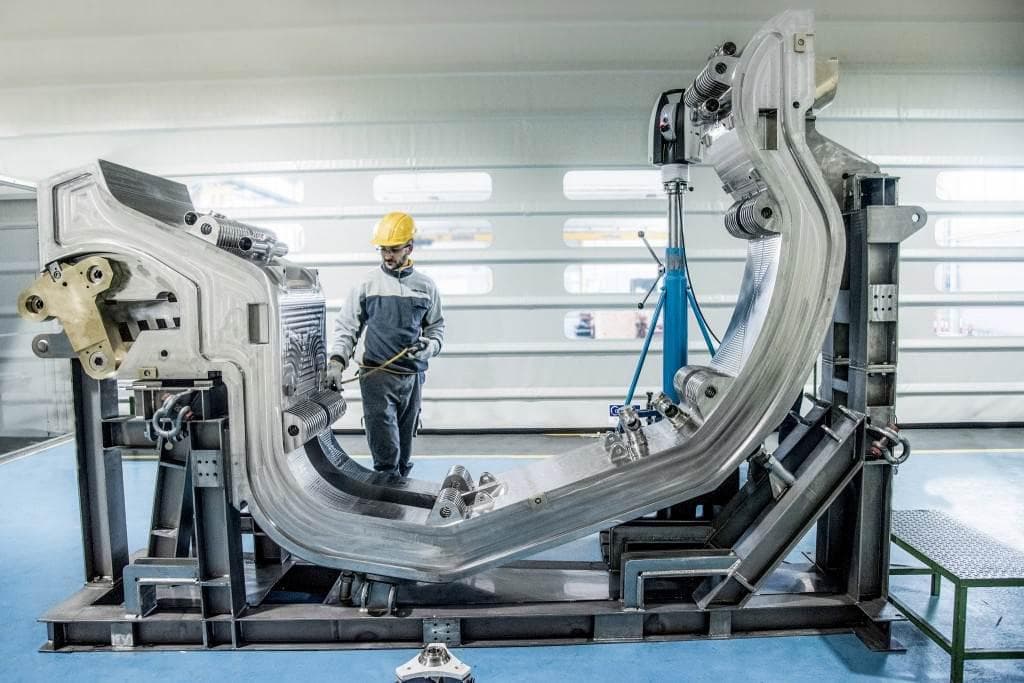
The radiation resistance of materials needed for ITER and DEMO, as well as tritium production in neutron-lithium reactions, will be studied at a special facility complementing the ITER project. It is being built in Japan under the acronym IFMIF (International Fusion Materials Irradiation Facility). There will be two deuteron accelerators that will create very intense beams of neutrons with energy of around 14 MeV on a lithium target, which is the energy of neutrons produced during deuterium-tritium fusion. Work is currently focused primarily on a prototype linear accelerator that this facility will use. The results will be of interest to both the fusion and fission communities.
Similar simulation programmes are used to describe thermodynamics and particle interactions with matter. Their development and benchmarking are also important joint activities.
Hybrid systems
Hybrid systems could become an interesting example of the outcome of synergies between fission and fusion energy. As mentioned several times, a fusion reactor is an intense source of neutrons. These are used to produce tritium from lithium. However, they can be used differently. If, in addition to tritium, transuranic elements from spent nuclear fuel were placed in the blanket around the vacuum vessel, this would create a subcritical fission system controlled by an external neutron source. It would also contribute to increased energy production. Its main advantage, however, would be that it would enable nuclear waste to be used for energy and burned. This would reduce the volume that would have to go to a permanent underground repository. From this perspective, it would complement Generation IV fission reactors and accelerator-driven transmuters. Accelerator-driven fission technologies are described in a now rather old article on Osel, and we will return to the current situation in this field in more detail another time.
The first proposal for such a hybrid system was considered by Andrei Sakharov, although his thoughts were primarily about improving energy production and using uranium. Today, the possibility of resolving problems with spent nuclear fuel is more attractive. Although the energy contribution would not be negligible from the perspective of fusion power plant economics either. The fusion part itself would not have to be as efficient or produce as much energy, as this would be made up by fission energy. The question, however, is how anti-nuclear activists would view such a combination of fusion and fission systems.
Conclusion
Steps are currently being taken that could represent a breakthrough in the implementation of thermonuclear fusion. Following completion of the building, assembly of the ITER tokamak has begun. It is highly likely that as early as 2025 it will begin intensive investigation of the plasma properties needed to ignite a fusion reaction. From 2035, it will then operate with tritium as a fusion reactor. Research on existing tokamaks, including COMPASS at the Institute of Plasma Physics, is intended to ensure that its commissioning proceeds as quickly, efficiently and smoothly as possible. The most modern tokamaks, and especially those still being designed, are also testing technologies more advanced than those used for ITER. These include electromagnets using high-temperature superconductivity. They could help make future fusion reactors more compact and less energy-intensive. In addition to tokamaks, considerable progress has been made with stellarators.
Private companies are also joining efforts to build smaller fusion facilities. It is therefore possible that a technological breakthrough will be achieved and ITER overtaken by a different route. However, this cannot be relied upon. If the route to a fusion power plant goes through ITER, it should be expected that the first real prototype fusion power plant, DEMO, will probably not come before 2050. Commercial fusion power plants therefore cannot be expected before the middle of the century, and they will be large-capacity facilities. They will complement the energy mix and help replace fossil fuels. However, I do not expect them to displace fission reactors.
Written for oEnergetice and Osel.
A lecture on the need for and future of fission energy, which I gave with my colleague Jan Horáček: https://slideslive.com/38916074/co-prinese-nova-era-jaderne-energie
Opening photograph: The new Japanese fully superconducting JT-60SA tokamak (source: JT-60SA)
Translation disclaimer
This article is a machine translation of the Czech original and has not yet been fully reviewed. In case of any doubt, please refer to the Czech version.
Sdílejte článek prostřednictvím:
You might also like
23 October 2026, 11:01

23 October 2026, 06:34