23 October 2026, 14:38
Loading...
How much does decommissioning a retired Czech nuclear power plant cost? – Part 1
Vladimír Wagner
26 February 2020, 07:26
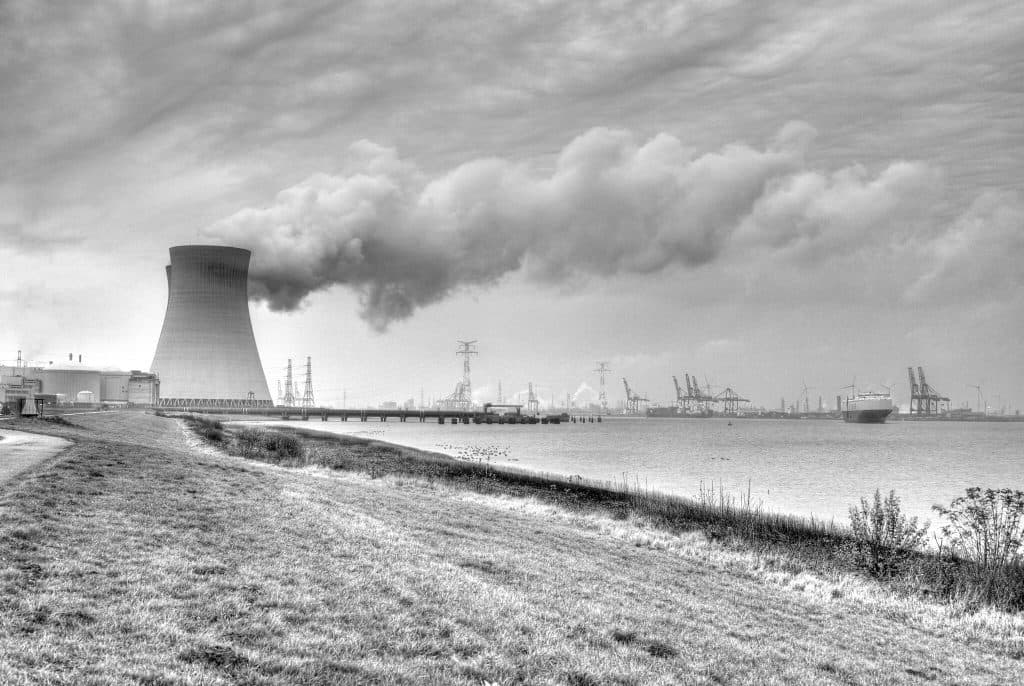
Anti-nuclear activists’ materials often argue that the decommissioning of no retired nuclear reactor has yet been completed. This is not true, however. It is therefore interesting to look at the real situation in this area.
The issue of decommissioning a nuclear power plant after it ceases operation, and of financially securing this process, is a very serious one. The same applies to ensuring the decommissioning of ageing offshore wind farms covering tens of square kilometres, extensive solar power plant fields, intercontinental oil or gas pipelines, or the consequences of coal or uranium mining. There is considerable scope for serious discussion here.
There is now considerable experience regarding both the complexity and cost of decommissioning nuclear power plants. While it is true that most reactors built to date are still operating, quite a number have already been shut down. For a summary of the current state of affairs, one can look, for example, at an overview by the WNA (World Nuclear Association). It states that 115 commercial reactors, 48 experimental and prototype reactors, more than 250 research reactors, and several fuel manufacturing facilities have already ceased operation.
Three approaches can be taken when decommissioning nuclear units. Decommissioning can either begin within a short period, or the unit can be placed in safe storage after the nuclear fuel has been removed and unnecessary equipment partly dismantled and decontaminated. Several decades are then allowed for activity levels to decline, and decommissioning is postponed. The final option is entombment. In the case of complete decommissioning, the entire site is often not released. Where spent fuel is not sent for recycling or to another interim storage facility and it is necessary to wait for a permanent spent-fuel repository to be built, a dry interim storage facility for fuel-assembly casks remains on part of the original site. It is simpler where further industrial use of the site is envisaged and restoration to a greenfield condition is not required.
By 2016, 17 commercial or prototype reactors had already been completely decommissioned, while work was under way to decommission another 50. A further 50 were in safe storage awaiting the decline of activity levels, with decommissioning to take place later. Three had been entombed, while no decision had yet been made on the approach for the remainder.
How nuclear power plants are decommissioned
Most parts of a power plant are not activated at all, or are only very weakly radioactive. The non-nuclear part is dismantled in the same way as at other power plants and industrial facilities. There is therefore extensive experience in this area, and major uncertainty in cost estimates can hardly be expected. Weakly activated metal components, such as some cooling-system components or steam generators, can be melted down and used to manufacture equipment for new nuclear power plants or casks for nuclear waste or spent fuel. Most equipment, especially metal components, can therefore be recycled. It should be borne in mind that 99 % of radionuclides generated during operation are in the spent fuel itself. Less than one percent is in the other components. Moreover, these are relatively short-lived radionuclides, so in most cases this nuclear waste does not need to go to a permanent repository. The selection of construction materials is also guided by this objective.
The highly radioactive components, which account for only a small share, must be processed and placed in a repository. It has been shown that the complete decommissioning of a nuclear power plant can be carried out quickly, successfully, economically and environmentally, with most metal components recycled. There are numerous examples around the world. As experience grows, it has increasingly emerged that in some cases decommissioning is even cheaper than anticipated. In others, however, the opposite may be true. The price increases sometimes cited are often mainly due to inflation. The cost also depends on whether decommissioning restores a site to greenfield condition, or whether the site is used for further industrial purposes and, for example, administrative buildings, cooling towers or other usable structures do not have to be demolished. Comparing the cost of building and decommissioning a nuclear power plant, which are separated by a considerable period of time, is somewhat misleading. However, the sums involved are at least broadly comparable, while the cost of decommissioning is significantly lower when inflation-adjusted prices are used.
In the vast majority of countries, including Czechia, the operator is responsible for decommissioning a nuclear unit and is required to set aside funds for it from electricity sales. Given that nuclear power plants involve strong investors and companies that operate in the energy sector over the long term, there is a far greater likelihood that everything will be properly secured in this respect than, for example, at solar or wind power plants, where the operator is often a limited-liability company. Naturally, until all radioactivity has been removed from the site, it remains under the continuous supervision of the nuclear safety authority.
Examples of decommissioned units
Completed decommissioning projects concern the very oldest units. Dismantling is not rushed, in order to allow radioactivity to decline as much as possible. Examples of completed processes include Germany’s 15 MWe Kahl unit and Japan’s Tokai 1 reactor. In the US, complete decommissioning has already been completed at Shippingport, Fort St. Vrain and Haddam Neck, among others. Large radioactive metal pieces are often cut up under water, which shields the radiation, so this is not such a major problem. Let us look at some examples in more detail.
Decommissioning in Japan and the US
As mentioned, Japan successfully completely decommissioned the Tokai 1 unit. This was a graphite-moderated, gas-cooled Magnox reactor with a capacity of 159 MWe, which began supplying electricity in 1966 and operated until 1998. All fuel assemblies were removed by 2001. The turbine hall equipment, refuelling equipment and steam generators were then progressively dismantled. From 2011, the reactor itself was dismantled, followed by the demolition of buildings. The site was restored to greenfield condition by 2018. Costs were approximately 960 million euro.
The United States has considerable experience in decommissioning nuclear power units. Spent fuel is not recycled there, and construction of a permanent repository for it has not yet begun. Therefore, at nuclear power plants that have been completely decommissioned, a small part of the site is generally not released and hosts a dry interim storage facility containing spent-fuel casks. The number of nuclear power units whose decommissioning has been completed has already exceeded ten, and work is under way to dismantle a number of others. Let us show some examples.
The US Shippingport nuclear power plant was the first nuclear power plant in the United States. During its operating life, the reactor used three different cores. The first used highly enriched uranium surrounded by a natural-uranium blanket. The second was similar, but had higher output. In the third, thorium was placed in the blanket instead of natural uranium, and the possibilities of the thorium cycle were tested. The 60 MWe reactor operated from 1957 to 1982. Equipment dismantling began in 1985. In 1988, the reactor vessel and biological shield, weighing 956 tonnes, were removed intact. The site was decontaminated and cleared. The entire decommissioning of this unit cost the equivalent of 90 million euro.
This was the first example of reactor decommissioning. In this case it was a small reactor, but subsequent examples involved larger conventional reactors. The first to mention is Colorado’s only nuclear power plant, Fort St. Vrain. This was a prototype high-temperature gas-cooled reactor, using helium as coolant. It had a capacity of 330 MWe and began supplying electricity in 1979. It operated until 1989, when the reactor was closed for economic reasons. Decommissioning and fuel removal were completed in 1992. Since then, the site has been used for a gas-fired power plant that uses a large part of the original equipment. Decommissioning costs reached the equivalent of 180 million euro.
The Big Rock Point nuclear power plant in Michigan was successfully decommissioned to greenfield condition. This was another smaller reactor, in this case a 67 MWe boiling water reactor. It operated from 1962 to 1997. The reactor vessel was removed in 2003. The entire site was released, apart from a small area containing a dry interim storage facility with eight casks holding spent fuel assemblies awaiting a permanent repository. Decommissioning required the equivalent of approximately 360 million euro.
Yankee Rowe was a power plant with a pressurised water reactor with electrical output of 185 MWe, operating from 1960 to 1992. Its annual capacity factor was 74 %. It was one of the very first commercial nuclear power plants in the US. Decommissioning was completed in 2007. Spent fuel is in dry interim storage at the site of the former power plant.
Maine Yankee had a 900 MWe pressurised water reactor, which operated from 1972 to 1996 with an annual capacity factor of 68 %. Decommissioning took place from 1997 to 2005. The reactor vessel was removed in 2003. Demolition of the containment structure took place in 2004. The site was then completely released, with the exception of 5 ha housing a dry interim storage facility for spent fuel. Decommissioning was completed on schedule and at a cost of approximately 460 million euro.
Connecticut Yankee was also a pressurised water reactor, with a capacity of 582 MWe, operating from 1968 to 1997. Decommissioning began in 1998 and the containment structure was demolished in July 2006. Apart from a two-hectare area used as dry interim storage for spent fuel, the rest of the site was released.
The Trojan nuclear power plant was Oregon’s only one. Its pressurised water reactor had a capacity of 1095 MWe. It began supplying electricity in 1975 and operated until 1992. All spent fuel had been transported in casks to dry interim storage by 2003. The reactor vessel was transported to interim storage at Hanford. Decontamination and site clearance followed. The cooling tower was demolished in 2006. The remaining buildings were then demolished. Decommissioning costs amounted to approximately the equivalent of 280 million euro.
The Rancho Seco power plant in California had one 913 MWe pressurised water reactor. It was commissioned in 1975 and supplied electricity until 1989, when it was closed following the result of a referendum. The nuclear unit was replaced by a combination of natural gas and solar photovoltaics. All equipment related to nuclear electricity generation was dismantled, and the buildings and site decontaminated. Almost the entire area, 32 ha, was released in 2019. Only a small 4,5 ha area serves as dry interim storage for spent fuel and radioactive waste. The total cost of decommissioning reached approximately the equivalent of 450 million euro.
In 2019, the decommissioning of the 70 MWe boiling water reactor at the La Crosse power plant in Wisconsin was completed. The plant began supplying electricity in 1967 and was closed in 1987. The small reactor was no longer economically viable. It was initially placed in safe storage to await the decline of activity levels. A decommissioning plan was approved in 1997. A dry interim storage facility was built and the spent fuel transferred there. Dismantling of internal equipment then began progressively. In 2016, the 310-tonne reactor vessel was removed. The site is now free of radioactive materials and has been released.
There are a number of other units in the United States at various stages of decommissioning. At multi-unit power plants, it is often more sensible to wait until all reactors have ceased operation. Joint decommissioning then brings savings. This is also the case of Three Mile Island 2, to which we will return. Experience shows that as it grows, the efficiency of decommissioning work increases and its costs fall. Later, larger units are now gradually beginning to be decommissioned; while they involve a greater volume of work, this also makes it possible to improve efficiency. A persistent problem in the United States remains the unresolved end of the fuel cycle. It does not recycle spent fuel and has no permanent repository for it either. Let us now look at the situation in Europe.
Decommissioning nuclear power plants in Germany
Germany is currently the furthest advanced in this area. It has decided to withdraw completely from nuclear energy. It intended to close all its nuclear reactors by the end of 2022. At the same time, it has embarked intensively on the gradual decommissioning of closed units. In total, it will ultimately have to decommission 29 power reactors. Of these, only the first few have been completely, and several others partially, dismantled. Further work in this area can draw on experience from the previous decommissioning of nuclear facilities. Including smaller and larger research reactors, Germany has already completely decommissioned a total of 29 reactors and nine nuclear fuel-cycle facilities. However, we will look at the initial experience with nuclear power units.
The first prototype nuclear power plant in Germany was Kahl, an experimental 16 MWe boiling water reactor. It began operation in 1961 and was shut down in 1985. Preparations for dismantling began in 1986, while the first actual work began in 1988. In 2005, its characteristic yellow dome disappeared. Remotely controlled machines dismantled the reactor pressure vessel. Demolition was completed in 2008. It was the second nuclear unit in Germany to be completely removed to greenfield condition. The same area also housed the 25 MWe Großwelzheim prototype boiling water reactor, which was commissioned in 1969. Due to technical problems, the reactor was shut down after one and a half years. Decommissioning was completed in 1983, and until 1998, when complete dismantling took place, the facility was used for safety tests.
The first completely decommissioned power reactor was Niederaichbach, although it was more of an experimental unit. It was a heavy-water, gas-cooled reactor with electrical output of 100 MWe. It was completed in 1973. Even during construction, it was clear that development of the heavy-water reactor concept would not continue and that Germany would focus on light-water reactors. The reactor operated for only just over a year, and its operation was ended due to major problems with the steam generators. Spent fuel was transported to France’s Cadarache for reprocessing. Dismantling and decommissioning took place between 1987 and 1995. This was the first power plant to be completely removed and its land restored to greenfield condition. It is near the Isar nuclear power plant, which was built there later. Today, only a commemorative plaque remains. The total cost of decommissioning was approximately the equivalent of 210 million euro. Germany thus has a total of three decommissioned power reactors with complete site release.
Gundremmingen A, also known as KRB A, was Germany’s first commercial reactor. It was a 237 MWe boiling water reactor that operated from 1966 to 1977. It was shut down after an accident triggered by a short circuit on the high-voltage lines carrying power from the plant. The rapid emergency shutdown of the reactor led to operator errors, and an excessive amount of cooling water entered the reactor. Slightly contaminated cooling water then flooded part of the reactor building. The subsequent repairs and upgrades required to meet higher safety standards would not have been economical. In addition, the new Gundremmingen B and C units were under construction. A decision was therefore made to shut down the reactor. Decommissioning began in 1983, while work on the most heavily contaminated components began in 1990 using underwater cutting technology, with the water providing shielding. In total, 3800 tonnes of inactive material could be released after dismantling and inspection. Around 1500 tonnes of carbon steel were used to produce cast iron for radioactive-waste storage casks. This significantly reduced the volume of unused lightly contaminated scrap iron.
Under a permit issued in 2006, Gundremmingen A was converted into a technology centre that will also work on dismantling the two more modern units. Of these, Gundremmingen B was shut down at the end of 2017, while unit C was due to be shut down in 2021. In 2019, a permit was granted to begin decommissioning unit B, and work began.
The Würgassen nuclear power plant had a 640 MWe boiling water reactor. The plant began operating in 1971 and ceased operation in 1997. Decommissioning was completed in 2014. Part of the site is used as an interim storage facility for spent nuclear fuel. It is also awaiting the opening of the Konrad repository for low- and intermediate-level waste. It will then be possible to dismantle the interim storage facility at the power plant site. The Gundremmingen A and Würgassen units have already had unnecessary equipment removed, especially radioactive components, and have been decontaminated. They are therefore at a very advanced stage of decommissioning.
A very special case is the Mülheim-Kärlich nuclear power plant. The 1308 MWe pressurised water reactor operated only from 1986 to 1988. It was then shut down by court order, triggering a lengthy legal battle in which a final decision was made in Berlin in 1998 that the plant could not be restarted. Decommissioning of the power plant therefore began in 2001. It became an example of the dismantling of a modern large reactor. Spent fuel was removed in the following year for reprocessing at La Hague in France. The turbine and other equipment were sold to Egypt. Intensive decontamination took place. After delays, dismantling of the steam generators began in 2018. Complete demolition of the power plant buildings and cooling tower was delayed. The cooling tower was demolished in 2018 and 2019. A special excavator progressively broke up the upper part, and the remaining section was ultimately demolished by blasting. Decommissioning to greenfield condition should be completed by 2029. According to RWE, which is carrying out the decommissioning, total costs should be around EUR 1 billion, or approximately CZK 25 billion.
The examples of power plants in the former East Germany are also specific. They are now being jointly decommissioned by EWN (Entsorgungswerk für Nuklearanlangen). The first is Rheinsberg, which had a 70 MWe VVER-70 reactor. It was completed in 1966 and operated until 1990. Decommissioning has been under way since 1995. Spent fuel was transported in Castor casks to an interim storage facility built at the decommissioned Greifswald power plant. Radioactive materials were transferred to interim storage facilities. The reactor vessel was removed intact to an interim storage facility, where it will be dismantled. The total mass of building materials and equipment at the power plant is 342000 tonnes, of which 63 000 tonnes are radioactive to varying degrees, mostly only weakly so.
The larger Greifswald power plant has four further Russian VVER-440 reactors, completed between 1974 and 1979. They were shut down in 1990 following German reunification. Another four VVER-440 units were under construction. One was brought into operation for three weeks and then shut down, while another was completed. For the third and fourth, only the buildings had been constructed. The equipment from the completed unit that was never brought into operation was gradually partly sold off. The same was true of 860 unused fuel assemblies. Some even ended up at Czech and Slovak nuclear power plants with reactors of the same type. In total, 235 partially used fuel assemblies were transported to the Paks nuclear power plant in Hungary. A total of 5037 spent fuel assemblies were loaded into Castor casks between 1999 and 2006 and are currently stored in the aforementioned dry interim storage facility at the power plant site, whose building is 240 m long, 140 m wide and 18 m high.
Work is also progressing intensively on the decommissioning of these units. Contaminated components have been progressively removed. In total, complete dismantling here is expected to involve 1 800 000 tonnes, of which around 564 000 tonnes are potentially radioactive. Of this, 67 000 tonnes should come from equipment and 497 000 tonnes from contaminated building materials. Decontamination has been completed. The site is gradually being transformed into a technology centre. At the same time, it is becoming a centre for decommissioning retired nuclear units. The experience will also be of interest to Czechia in the future, because the Dukovany plant has units of the same type. The sixth unit, which was completed but never started up, is now a site for attractive tours.
Germany will ultimately need to decommission a total of 29 power reactors. Germany has decided to opt for the immediate dismantling approach and does not envisage a longer period of safe storage and waiting for radioactivity to decline. It therefore expects preparation for the demolition of each of them to require approximately 15 years and for all to be completed by 2035. It thus plans to bring the era of nuclear power plants in Germany to a complete end at that time. I believe this is a very ambitious target and will most likely not be achieved. However, the delay is unlikely to be very long.
The article will continue in Part 2…
Translation disclaimer
This article is a machine translation of the Czech original and has not yet been fully reviewed. In case of any doubt, please refer to the Czech version.
Sdílejte článek prostřednictvím:
You might also like
23 October 2026, 11:01
23 October 2026, 06:34