
23 October 2026, 14:38
Loading...
Imported wood replaces coal not only in Denmark – is another green fiasco looming?
Vladimír Wagner
21 February 2017, 18:09
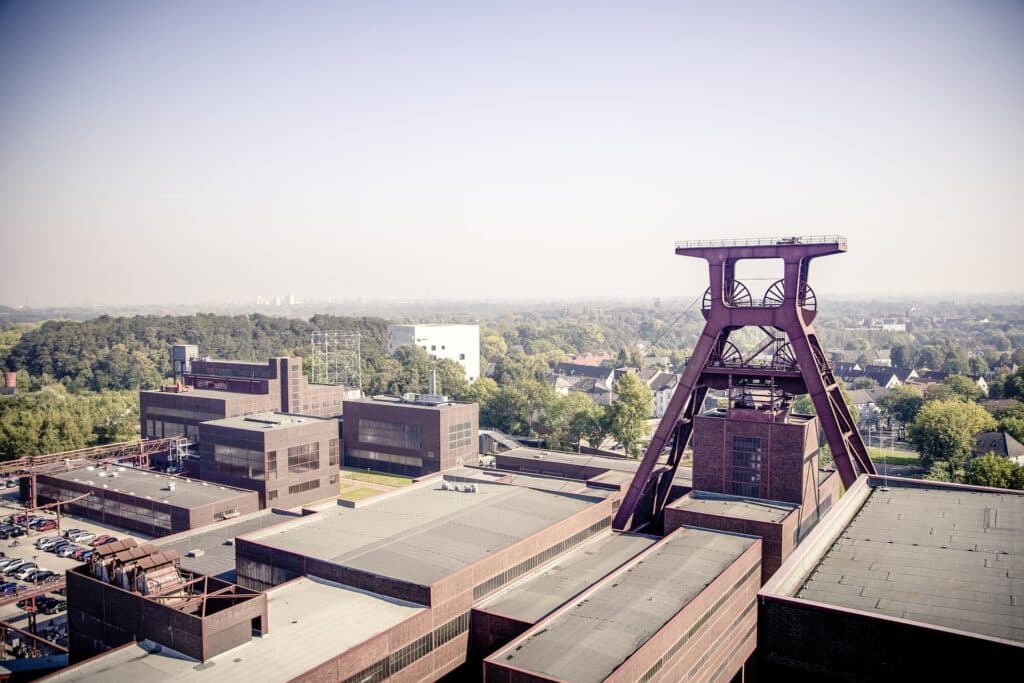
Denmark, Great Britain and a number of other European countries are beginning to convert coal-fired power plants to burn biomass. This is meant to be an important step towards reducing emissions and creating an environmentally friendly power sector. The countries in question do not have enough forests, so they import the required wood chips and pellets from abroad. There is therefore a major risk that a massive shift from coal to biomass will have ecological impacts very similar to those caused by the use of, and heavy subsidies for, biofuels made from palm oil.
Recent articles (here, here and here) described how the recent turn of the year showed that weather-dependent wind and solar sources will not be able to replace fossil and nuclear sources, not just in Germany. Germany and Denmark are therefore falling short of their stated targets for cutting emissions and replacing coal-fired power plants. A complete switch from coal to gas is economically demanding and would reduce carbon dioxide emissions by only half. At least on paper, switching to burning biomass reduces carbon dioxide production to zero. In reality, the situation is different. Burning biomass produces emissions of pollutants and carbon dioxide. However, it is assumed that the biomass will regrow and absorb the same amount of carbon dioxide that was produced when it was burned. Formally, this gives us a zero-emission source. One problem is that the growth of the trees from which pellets are made can take many decades, and that is also how long the carbon dioxide cycle takes to complete in this case.
Great Britain has enacted legislation requiring a very rapid reduction in carbon dioxide emissions. Its requirements cannot be met without completely ending electricity generation in coal-fired units. Great Britain expects to continue using nuclear energy and to build new nuclear units. However, the renewal of generation capacity, not only nuclear capacity, is severely delayed there, so coal-fired power plants have been converted to burn biomass. The large Drax coal-fired power plant began gradually switching to wood burning after 2012, turning the company from one of the largest carbon dioxide emitters into one of the largest producers of renewable electricity. Drax power plant has a total capacity of 4000 MWe. However, Great Britain does not have the wood required to produce pellets for this electricity generation. Most of its forests disappeared during the first phase of the Industrial Revolution.
And the needs are not small: every year, an area of forest larger than Central Bohemia and Prague combined. Producing half a million tonnes of pellets requires one million tonnes of wood, which requires roughly 800 km2. Drax will need roughly 7.5 million tonnes of pellet biomass annually, meaning wood consumption from an area of around 12 000 km2.
Huge pellet storage facilities have therefore been built, and millions of tonnes of wood are imported from around the world. At first, biomass was only co-fired with coal, so in 2015 the share of biomass use was 35 %; in 2016 it shifted to 70 % of generation from pellets, gradually reaching 100 % wood use. Most of the wood is imported by ship from America.
Danish company Dong Energy has taken the same path, also gradually switching its power plants from coal to wood biomass. Since 2003, it has used pellets and wood chips at the Herning and Avedøre power plants. Its Asnæs power plant, for example, with three units rated at 147 MW, 270 MW and 640 MW, is also being gradually converted to wood. The company is thus progressively replacing coal with wood, having cut its coal consumption from 6.2 million tonnes a year in 2003 to just 1.7 million tonnes last year at its two remaining coal-fired power plants. By 2023, it intends to burn only biomass. If it consumes around 7 million tonnes of wood biomass, more than 10 000 km2 of forest will need to be harvested annually. Denmark does have some biomass from agricultural waste and food production, but this is already fully used, mainly for heating. Denmark therefore also imports the required wood biomass from abroad. So far, it has mostly come from Estonia, Lithuania, Latvia and Russia. However, it is increasingly turning to America as well.
German company RWE is also converting coal-fired units to burn wood pellets and chips. It began burning pellets from the US at its Dutch Amer power plant. Germany, too, is eyeing the option of converting coal-fired power plants to biomass burning in order to meet its carbon dioxide emission-reduction targets. It sees this as a way to cover its need for reliable generation sources and achieve emissions cuts at an acceptable cost. While the number of coal-fired units in Great Britain and Denmark is still relatively limited, Germany currently has 50 GWe of coal-fired capacity. If these plants begin switching to biomass on a large scale, it will mean a radical increase in imports of wood biomass to Europe.
German politicians are now beginning to see clearly that the Energiewende is unable to fulfil its stated promises on reducing emissions and coal mining and imports. There is therefore a major risk that they will follow their Danish energy model in the transition from coal to biomass as well. Not least because most green organisations also proclaim a major potential for biomass in their programmes and plans. The energy strategies of the Czech branches of Greenpeace and Hnutí Duha also envisage a very large share of electricity generation from biomass. Any emissions reduction achieved will be merely formal and on paper, while the real environmental impacts will be extremely negative. Yet not only green proponents of the Energiewende in Germany, Denmark and elsewhere will be able to declare its complete success.
I am greatly concerned that this will end in an even more dramatic disaster than the one we are seeing in connection with subsidised biofuels in Europe, palm oil and the destruction of rainforests in Indonesia. If Germany and other countries really follow the Danish energy model, the devastation of forests will be incomparably greater and will affect far wider areas of the world. And it is possible that, as in the case of biodiesel, green organisations will again forget that their campaign was at the beginning of it all. Just as they now demonstrate against the use of palm oil in food, in the future they will organise campaigns against imported wood for furniture, even though the dominant share of the increase in wood consumption will come from green electricity generation at European power plants that have switched from coal to biomass. I hope that my warning will also help ensure that this bleak vision, unlike that involving subsidised biodiesel and its mandatory blending into motor fuels, does not come to pass.
Lead photo source: www.ksb.com
Translation disclaimer
This article is a machine translation of the Czech original and has not yet been fully reviewed. In case of any doubt, please refer to the Czech version.
Sdílejte článek prostřednictvím:
Topics:Opinion
You might also like


23 October 2026, 11:01
23 October 2026, 06:34