
23 October 2026, 14:38
Loading...
Is Chernobyl really at risk of another explosion?
Vladimír Wagner
13 May 2021, 14:43
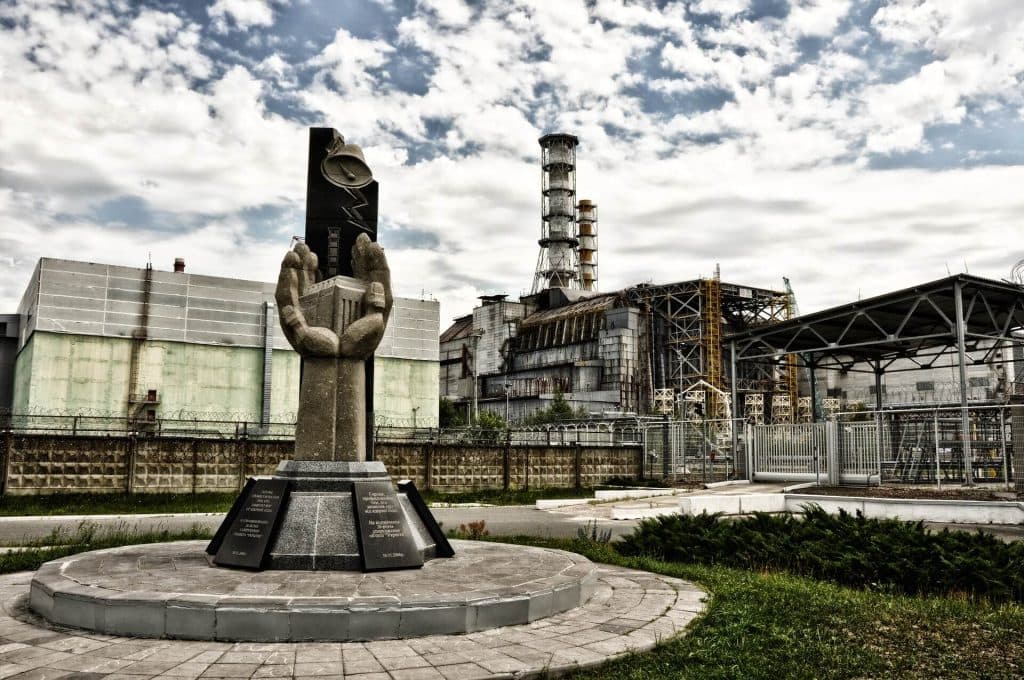
In recent days, a number of articles have appeared, including in Czech media, claiming that a nuclear chain reaction is restarting at Chernobyl and that an explosion is threatened. They all draw on a single source, whose information is typically exaggerated in journalistic fashion. Let us look at the facts.
Four years ago, a new sarcophagus was successfully slid over the destroyed reactor, and this year, when the 35th anniversary of the accident was commemorated, more concrete plans were adopted for opening areas that have so far remained closed. Given the popularity of HBO’s Chernobyl series, tourist interest in the area is growing, and after the pandemic is overcome, this could mean relatively rapid development and revitalisation of the affected areas. Some parts of the industrial park in the immediate vicinity of the power plant are also entering operation, whether it is a photovoltaic power plant or two dry spent nuclear fuel storage facilities. We examined the current situation at Chernobyl in detail at the time of the anniversary in a recent article.
The preceding facts are not sensational or alarming enough. That is probably why journalists have now eagerly seized on a popular article, and a number of alarming headlines have appeared in Czech media in the style of “Chernobyl reactors are heating up again, experts fear another accident”. The situation is similar elsewhere in Europe; let us cite an example headline from our closest neighbours: “Is another gigantic catastrophe looming? A scientists’ nightmare is awakening deep beneath the rubble at Chernobyl”.
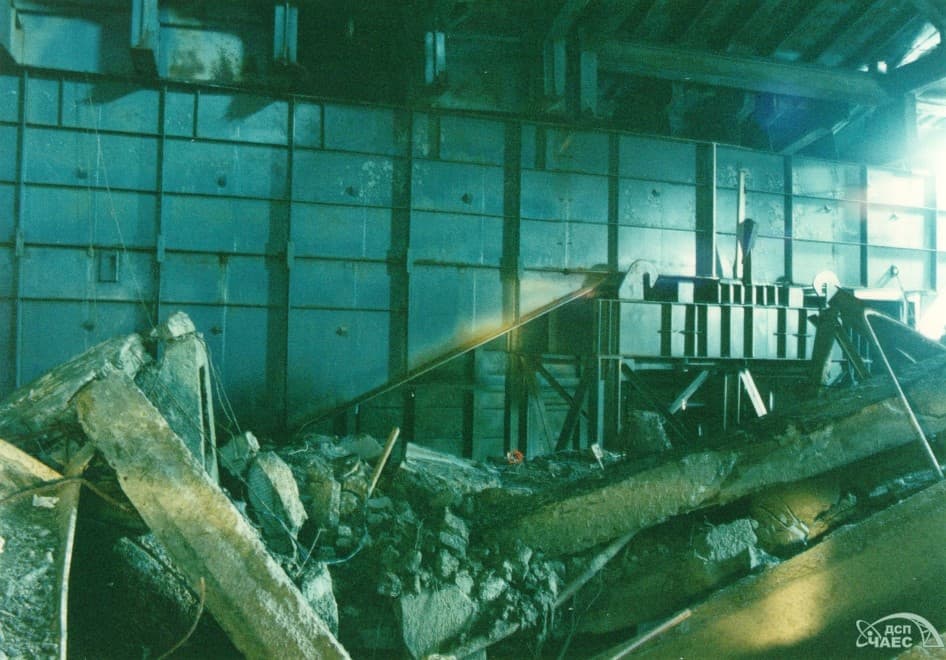
Photograph from inside the old sarcophagus (source: Chernobyl Nuclear Power Plant).
Corium in the destroyed Chernobyl reactor
Let us look at the reality behind these alarming headlines. As described in the aforementioned overview article marking the Chernobyl accident anniversary, the interior of the destroyed reactor has been extensively explored. Locations have been found containing remnants of the melted reactor core and solidified corium, a mixture of melted materials from it, including fuel. The article mentions and recalls the iconic photograph of the so-called Elephant’s Foot, the best-known such remnant. Others are less accessible and are often hidden beneath a layer of concrete.
This solidified lava therefore also contains uranium and transuranic elements that can undergo fission. This includes both neutron-induced fission and spontaneous fission, which is more likely to occur in some transuranic elements. The production of neutrons or fission products thus need not mean that a fission chain reaction has started. It was, for example, the detection of fission products from spontaneous fission that lay behind the report of a renewed chain reaction at Fukushima, which also strongly resonated in the Czech press at the end of 2011.
Naturally, however, at Chernobyl it is very important to monitor the situation at the locations in question as carefully as possible. At the same time, it is important to be able, if necessary, to deliver to these locations substances that effectively absorb thermal neutrons. These include boron, which was used in the early stages of the accident, gadolinium and cadmium.
As mentioned, workers investigating the consequences of the accident and the condition of the destroyed reactor have already gained access to a number of locations containing corium. At some of these locations, neutron detectors could therefore be installed to monitor changes in neutron fluxes that might reflect changes taking place in the corium. A monitoring system was gradually built to track neutron flux and temperature at various locations. Using automated and remote means, it has also been possible to reach difficult-to-access locations. Based on the data and samples obtained from accessible locations, estimates were made of the content of actinides (uranium and transuranic elements) in the relevant areas, as well as estimates for locations that remain inaccessible. Ukrainian scientists have thus mapped the remnants of the reactor core to a considerable extent, albeit with limited accuracy. A more detailed analysis can be found, for example, in the four-part overview from the Kurchatov Institute (the first part is here).
Changes in neutron fluxes
In earlier times, increases in neutron flux were observed at some locations; the case from 1990 is well known. To reduce the risk in that instance, liquids containing nuclides that strongly absorb thermal neutrons were used. In this case, it was gadolinium.
It was assumed that water penetrating the old sarcophagus and moderating neutrons could be behind changes leading to increased neutron flux in such situations.
Work is currently under way to improve the entire monitoring system. The report in question is based precisely on the observation of rising recorded neutron fluxes at one location containing corium that remains inaccessible. It should be noted that these are changes over four years, and are therefore relatively very slow. The original article provides no details, so it is impossible to say what lies behind this observation. It may not even be an increase in the number of fissions, but merely a change in the neutron spectrum caused, for example, by a change in the intensity of moderation.
The authors of the original article themselves point to the effect of covering the old sarcophagus with the new one. The new sarcophagus is hermetically sealed and prevents rainwater from entering. The interior parts of the destroyed reactor are therefore now drying out. In general, a reduction in water should reduce moderation and thus also reduce the likelihood of a fission chain reaction occurring. However, in combination with certain materials, the opposite effect may initially occur, and moderation will only begin to decrease once the water content has fallen sufficiently. This is one possible reason for changes in neutron fluxes at the aforementioned location after the new sarcophagus was put in place.
Conclusion
The case demonstrates the importance of improving the monitoring and control of the situation inside the destroyed unit. At the same time, it must be emphasised that the phenomena described pose no danger, also thanks to the new sarcophagus. Any local increase in the number of fissions or a rise in the temperature of the solidified corium could only increase the release of radioactive substances. This may also occur through the gradual change in the physical properties of corium over time, as observed, for example, at the Elephant’s Foot. However, this is precisely why the new hermetically sealed sarcophagus was built: it prevents radioactive substances from escaping into the surroundings. The radiation situation inside the sarcophagus could worsen, and therefore so could conditions for work on dismantling the old sarcophagus and the destroyed reactor, but this does not endanger the surrounding area. In any case, it would be good to support the improvement and acceleration of work to investigate the situation inside the destroyed unit, monitor it and gradually move towards its decommissioning. For the European Union, this is a good opportunity to support Ukraine’s development.
Addendum
That the increase in neutron flux is a fairly expected phenomenon caused by drying following the installation of the new sarcophagus, and that it poses no risk thanks also to careful monitoring, is also shown by the power plant’s recent statement responding to the current uproar in the international press.
Translation disclaimer
This article is a machine translation of the Czech original and has not yet been fully reviewed. In case of any doubt, please refer to the Czech version.
Sdílejte článek prostřednictvím:
You might also like
23 October 2026, 11:01

23 October 2026, 06:34