23 October 2026, 14:38
Loading...
Nuclear energy in 2018
Vladimír Wagner
9 January 2019, 17:15
2018 truly marked the beginning of the era of advanced nuclear reactors. The first unit of as many as three Generation III+ reactor types entered commercial operation. This brings the total number of Generation III reactor types in operation to six.
2018 was a successful year for nuclear energy. Nine reactors entered commercial operation, seven Chinese and two Russian. The first units of three new types of advanced nuclear reactors came online. Another is close to completion. Next year, seven types of Generation III reactors will therefore be in operation. Apart from the Japanese ABWR boiling water reactor, these are pressurised water reactors. The South Korean APR1400 reactor and the Russian VVER1200 reactor have completed their first year of operation. In 2018, the French EPR unit, Westinghouse's AP1000 reactor and the Chinese APCR1000 unit came online. The Chinese HPR1000 (Hualong One) unit should come online in 2019.
At the end of 2018 (31 December), 450 reactors with a capacity of 398.9 GWe were in operation (according to World Nuclear Association data). In 2018, 7 units entered operation in China and two in Russia. In China, these included the aforementioned Generation III reactors (Sanmen 1 and 2, Haiyang 1, Taishan 1 and Yangjiang 5), as well as VVER1000 reactors at Tianwan units 3 and 4. In Russia, this included the aforementioned first reactor in the second construction phase of the Leningrad nuclear power plant. The other was Rostov unit 4, completing a VVER1000 reactor.
In Japan, another four units shut down after the Fukushima accident were restarted: Genkai 3 and 4 and Ohi 3 and 4. This brings the total number operating to nine. Operators have submitted applications for assessment of the possibility of restarting a further 18.
Seven reactors were shut down during the period under review, one of them just before the end of 2017. This was the German reactor Grundremmingen B, which was already mentioned in the previous review. On 17 September 2018, one of the oldest Generation II reactors, Oyster Creek in the United States, ceased operation. The 610 MWe boiling water reactor operated for a total of 49 years. Its licence was valid for 60 years, but competition from cheap gas and, above all, the requirement to build cooling towers to replace direct seawater cooling contributed to its closure. Building them would not have been economically viable for ten years of operation. A number of reactors in the United States face a similar problem. It is therefore a question to what extent the lifetime of the ageing fleet in that country can be extended. In addition, two reactors in Japan officially began decommissioning: Ikata unit 2 and Onagawa unit 1. The number of operational units in Japan thus fell to 40. At the end of the year, on 21 December 2018, an RBMK1000 reactor, the first unit at the Leningrad nuclear power plant, was shut down exactly after 45 years of operation. It was the first unit of this type. During its operation, it supplied 264.9 TWh of electricity. It is being replaced by the aforementioned newly built VVER1200 unit. All four RBMK1000 reactors at this plant will gradually be replaced.
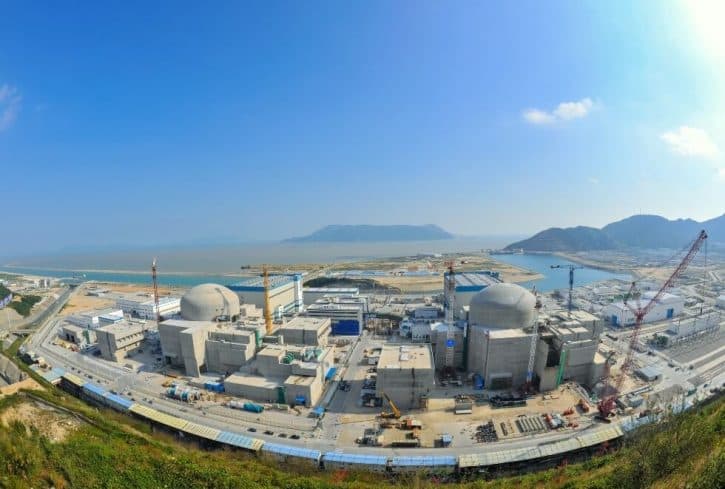
In addition, two units in Taiwan were shut down. These were the two boiling water reactors at the Chinshan plant, each with a capacity of 636 MWe. Taiwan is currently in a contradictory situation. Following a campaign by anti-nuclear activists, who also resorted to protest hunger strikes, it declared, similarly to Germany, that it would phase out nuclear energy. In 2014 and 2015, even two nearly completed third-generation ABWR reactors at the Lungmen plant were not started up. The first is already fully complete and its fuel is also ready, but it was mothballed just before start-up. A referendum was held in Taiwan at the end of 2018, in which a majority of participants supported the use of nuclear energy. Based on this result, the sale of the aforementioned fuel was halted. However, it is difficult to say what real impact the results of the non-binding referendum will have. Taiwan generates over 20 % of its electricity from nuclear power and almost 70 % from imported fossil fuels. It will therefore find it very difficult to do without nuclear power. There is very little space for deploying renewable sources on this island.
In 2017, nuclear reactors generated 2 519 TWh, an increase of 29 TWh compared with 2016, when 2 490 TWh was generated. For the first time since 2011, output exceeded 2500 TWh, although this remains below the previous maximum of 2658 TWh reached in 2006. Generation is expected to have risen again in 2018, and this maximum could be exceeded within the next few years.
Construction began on five reactors. Three are of the VVER1200 type. Construction of Kursk II-1 and Akkuyu 1 began in April 2018, and Rooppur 2 in July 2018; construction of Rooppur 1 had already begun in November 2017. Another was the Korean APR1400 reactor at Shin Kori unit 6 in September 2018. Construction of the CFR-600 fast sodium reactor at the Xiapu plant in China had already begun at the end of 2017.
In December 2018, concrete was poured for the nuclear island of the first of two EPR reactors at the Hinkley Point C plant in the United Kingdom. This project is crucial for the future of this reactor type and of European nuclear energy. Before looking at Europe in greater detail, however, let us focus on the most successful players in today's nuclear energy sector: Russia and China
A very detailed overview of events in nuclear energy in 2018 is available in an extensive article on Osel. Here, let us briefly examine the situation for individual Generation III reactors. A sufficient number of projects is very important to the success of advanced reactors. It is necessary to leverage serial construction and the gradual accumulation of experience, which reduces both costs and construction time. In this respect, the Russian VVER1200 reactor is in a very strong position. Russia has a well-developed strategy for replacing ageing units and building new ones at home. VVER1200 construction at the Novovoronezh nuclear power plant is replacing old units of this type. At the Leningrad and Kursk nuclear power plants, VVER1200 reactors are replacing RBMK units. At the same time, Rosatom has a number of units under construction and in preparation abroad. Work is under way on reactors in Belarus, Turkey, India, Bangladesh and Iran. Construction is being prepared in Finland, Hungary and Egypt. Russia has shown that it can build a unit in as little as five years. An important factor for the future will be the progress of VVER1200 unit construction in Finland and Hungary. If it is successful, the units are licensed and delivered within a reasonable timeframe, this would open the way for them into developed Europe.
China is in a very similar position with its ACPR1000 and HPR1000 units: it has enough units under construction and planned at home, and is also beginning to build them abroad, specifically in Pakistan. Cooperation with EDF and the successful delivery of the Bradwell project could be crucial here. This could open the way for the Chinese into developed Europe.
Four AP1000 units will be operating in China in 2019. If Westinghouse successfully completes the two units at the Vogtle plant, an order to build multiple units in India could materialise. Chinese versions of this unit could also be built in China. In that case, this reactor could also be expected to succeed.
As already stressed, the successful progress of construction at Hinkley Point C is critical for the EPR unit. If successful, and if agreement is also reached on the Sizewell C project, construction in India is highly likely to begin. The reality of energy developments in Europe clearly shows that France will have to begin preparing to replace its ageing units in the 2020s. And it is highly likely that this will involve EPR units. If this succeeds, the future of this reactor type should also be secured.
For the Korean APR1400 reactor, the most important issue will be whether the four reactors at the Barakah nuclear power plant can be successfully brought into operation. Another factor that will strongly influence the success of the Korean nuclear industry will be the development of attitudes towards nuclear energy in South Korea itself. If the policy of phasing out nuclear energy continues, the situation will be much more difficult for it and deployment abroad will also be more problematic. However, it should be emphasised that Korea imports fossil fuels and, apart from nuclear power, has few other options for replacing them.
A number of reactors should enter operation next year as well. In Europe, these should finally include EPR units in Finland and France. In neighbouring Slovakia, the long-awaited Mochovce 3 unit is expected. The first unit at the Belarusian Ostrovets plant should enter operation. A number of units should again come online in China and Russia. The most interesting of these will probably be the small reactors at the Akademik Lomonosov floating nuclear power plant and the small modular reactor HTR-PM. They could signal the beginning of development in this segment of nuclear energy.
In recent years, the number of nuclear unit construction starts has lagged, especially in China. This should change. The number of units that have reached an advanced stage of preparation also indicates this.
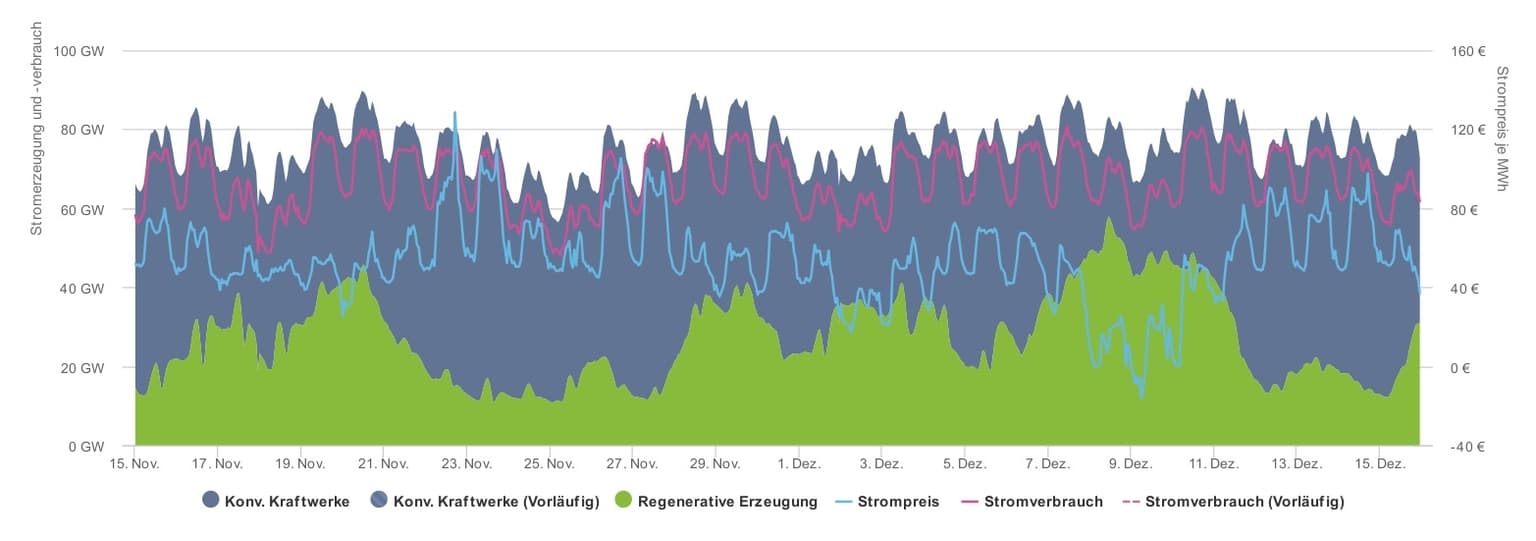
Developments in European energy show that nuclear sources cannot be dispensed with if there is pressure to transition to low emissions and reduce the use of fossil fuels. The absence of a realistic and stable energy strategy has very adverse consequences. Announcing the rapid closure of existing nuclear units, only to reverse it when it is found that this is not realistic without fossil fuels, does not contribute to the stability and reliability of the energy system. Belgium, which generates around 50 % of its electricity from nuclear power, experienced this at the turn of 2018 and 2019. There, the aforementioned policy meant that the operator did not know whether it would shut down the nuclear units immediately, in a year, in five years or in ten years. This was reflected in the quality of maintenance at its plants. Most nuclear units were therefore unexpectedly shut down this autumn due to the need for repairs and maintenance. Belgium thus had to prepare for crisis scenarios in the autumn. Fortunately, the problematic period was overcome and was reflected only in high electricity prices on the local power exchange.
Let us hope that the situation in Belgium will be a sufficient lesson. Already this winter, a number of European countries could face problems with the availability of the necessary capacity from sources not dependent on wind or sunshine if conditions are severe. And a significant number of nuclear and coal units are due to be shut down in the coming years. Germany is also likely to rely on electricity imports when there is neither wind nor sunshine. It is therefore likely that some countries will change their decision not to use nuclear power and will also opt to build new units.
A decision on the construction of nuclear units will also need to be made in Czechia. The fundamental issue here is the choice of financing model. A nuclear power plant is a major investment, and its final cost is very strongly influenced by the financing model. An analysis of the current situation in the context of Europe's energy situation is available here, a comparison of the costs of different sources here, and of different units here.
Translation disclaimer
This article is a machine translation of the Czech original and has not yet been fully reviewed. In case of any doubt, please refer to the Czech version.
Sdílejte článek prostřednictvím:
You might also like
23 October 2026, 11:01
23 October 2026, 06:34