23 October 2026, 14:38
Loading...
Nuclear power in 2024, part 3: China is now second in reactor numbers
Vladimír Wagner
26 January 2025, 08:22
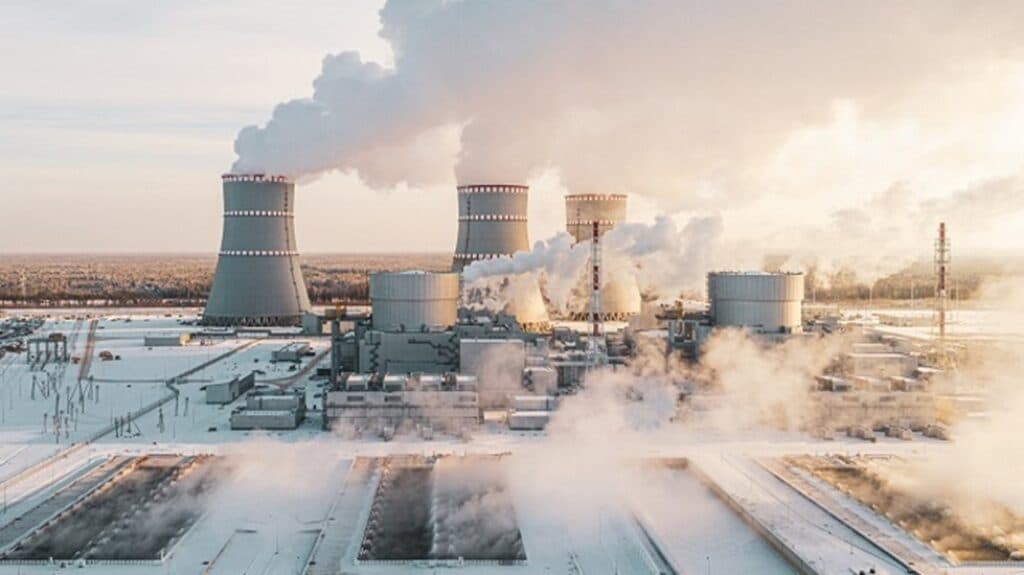
In the third part of our overview, we will focus on countries where a nuclear power renaissance is already underway. China is relying ever more heavily on nuclear power development. The number of Chinese reactors now stands at 58. China has thus moved into second place, overtaking France, which increased its reactor count to 57 with the start-up of Flamanville 3. China has 29 reactors under construction and 36 planned. If the reactors under construction and at least some of those planned are completed, it will move into first place ahead of the United States, which has a total of 94 reactors following the start-up of Vogtle 4. The Chinese government has also pledged to approve plans for 10 new reactors every year until 2035, meaning 100 new planned reactors over a ten-year period.
In 2024, it fulfilled this vision by approving five nuclear projects comprising a total of 11 reactors. These are the first phase of the Xuwei plant, the first phase of the Lufeng plant, the first phase of Zhaoyuan, the second phase of the San'ao plant and the first phase of the Bailong plant.
At the Xuwei plant in Jiangsu province, CNNC wants to build a combination of a Hualong One pressurised water reactor and a high-temperature gas-cooled reactor. In addition to electricity generation, it would focus on producing industrial heat, including high-grade heat. The plant will also include a heat-exchange station. Desalinated water will be preheated by steam from the Hualong One unit, converted into saturated steam, and then further heated using high-temperature steam from the high-temperature gas-cooled reactor.
CNG wants to build two CAP1000 units at the Lufeng plant, two Hualong One units at Zhaoyuan, and two further Hualong One units in the second phase of the San'ao plant. SPIC plans to build two CAP1000 units and later four CAP1400 reactors.
From 2019 to 2023, the number of approved reactors was 6, 4, 5, 10 and 10 respectively. This clearly shows a very positive trend. If reactor construction can be delivered in the standard period of around five years, the number of reactors in China could approach 200 by 2040. Nuclear sources would then cover 10 % of electricity production. By 2060, China could have as much as 400 GWe of nuclear capacity. Based on experience to date, these Chinese plans are certainly very ambitious, but it is quite likely that they will be fulfilled. China also wants to offer nuclear technologies on the international market. So far, the main model being offered is the Hualong One reactor, with 33 already operating or under construction in China. The Linglong One small modular reactor is also expected to join the export offering.
Let us now look at progress in deploying the individual reactor types. First, Hualong One (HPR1000), the domestic flagship. The completion of Fangchenggang 4 was very important. It is the final unit in the first group of four Hualong One (HPR1000) reactors. One pair was built at the Fuqing plant and the other at Fangchenggang. It was the pair at the latter plant that experienced delays. A fission chain reaction began at Fangchenggang 4 on 3 April 2024, the unit started supplying electricity on 9 April, and entered commercial operation at the end of May. Units 5 and 6, also Hualong One reactors, are to be built at this plant.
Construction of these reactors is also continuing at the San'ao plant in Zhejiang province. Cold testing began on the first unit in mid-November. The main large gantry crane was installed at the second unit at the end of January 2024, and the reactor vessel arrived at the site in early August. San'ao units 1 and 2 are expected to enter operation in 2026 and 2027. Construction of units 3 and 4 was approved in August. A total of six reactors are to be built at the plant.
At the end of July 2024, concreting began for the nuclear island of Ningde 5. A sixth unit will follow. This pair is also of the Hualong One type, while the previous four units at the plant are CPR1000 reactors.
Concreting of the nuclear island began at the end of July for the first Hualong One reactor at the Shidaowan plant. This site is also intended to host a pair of reactors. The HTR-PM200 high-temperature small modular reactor is already in operation at the plant.
The outer containment dome was installed at Changjiang 3, a Hualong One reactor, on 18 October. It has a diameter of 53 m, a height of 13 m and a total weight of 415 tonnes. Two CNP-600 units are already operating at this plant, while the ACP100 small modular reactor is being completed there.
The first unit at the Zhangzhou plant was completed. Its containment integrity pressure test took place on 20 June 2024, fuel in the form of 177 fuel assemblies was loaded in mid-October, it was connected to the grid in November, and it entered commercial operation on 2 January 2025. The containment for the second unit was completed at the end of October. This unit is also expected to enter operation in 2025. Construction of the plant's second phase has begun. Concreting of the nuclear island at Zhangzhou 3 began on 22 February 2024, while concreting of Zhangzhou 4 began in October. CNNC ultimately wants to build six Hualong One reactors here.
Work is progressing on the fifth and sixth units at the Lufeng plant, which are also Hualong One reactors. The inner containment dome was installed at the fifth unit in April 2024. Completion of the units is expected in 2028 to 2029. The first four units at this plant are intended to be CAP1000 reactors. However, their construction has not yet started.
Two Hualong One units are being built at the Taipingling plant. The start of cold testing at the first of them was reported in the previous overview. These tests were completed in the first half of 2024, and the subsequent hot tests were also completed in mid-September. Concreting of the outer containment dome was completed in June. A total of six Hualong One units are to be built at the plant.
Earthworks began in February 2024 at the site of the new Jinquimen nuclear power plant in Ningbo, Zhejiang province. Two Hualong One reactors are to be built in the first phase of this plant. There should eventually be six units in total.
Construction is also continuing on CAP1000 reactors, China's variant of the AP1000 design. The upper sections of the steel containment dome structure were installed at Sanmen 3 and Haiyang 3 in September. Installation of the reactor vessel at Haiyang 3 was reported in the previous overview; the reactor vessel was installed at Haiyang 4 at the end of November 2024. The containment at Haiyang 3 was built progressively. Both new pairs of units at the Sanmen and Haiyang plants are expected to be operating in 2027.
The same reactor type is also being built as units 1 and 2 at the Xudabao plant. The largest CA20 module was installed at the first unit on 24 January 2024. It is 20.6 m long, 14.2 m wide, 21 m high and weighs more than 1000 tonnes. Concreting of the nuclear island at the second unit began in mid-July 2024, and the CA20 module was installed there too in early November. Two VVER1200 reactors are also being built at this plant as units 3 and 4. Two further units, 5 and 6, are planned, again as CAP1000 reactors.
Concreting of the nuclear island at Liangjiang 2 began at the end of April 2024, following the first CAP1000 unit at this plant, which was covered last year. At this first unit, the 1066-tonne CA01 supermodule was installed in mid-April, followed by the largest CA20 module, also weighing more than 1000 tonnes, in October. The CA01 supermodule was set in place at the second unit in early January 2025. There should eventually be six units in total.
In 2024, China completed and started up the first uprated Chinese variant of the AP1000 reactor, the CAP1400. The first of this pair of units was started up at the Shidaowan Guohe One plant. It began supplying electricity to the grid at the beginning of November. It should be recalled that construction of the reactor began in June 2019, meaning it was started up within five years. China plans to build the CAP1400 reactor on a large scale domestically and offer it abroad as well.
Hualong One units are the reactors China has begun exporting. It completed and commissioned a pair of these units as units 2 and 3 at the Karachi plant in Pakistan. At the very beginning of 2025, concreting of the nuclear island began for this reactor as Chashma 5.
India is closer to closing the fuel cycle
In 2024, the second Indian 700 MWe heavy-water reactor, Kakrapar 4, was gradually brought into operation. Its fission chain reaction began as early as December 2023, and it had reached 50 % of its nominal output by the first half of February.
Fuel was loaded at Rajasthan 7 in early August 2024, and a fission chain reaction began in September 2024. It thus became the third heavy-water reactor of this type in operation. The first four heavy-water reactors are to be followed by ten more. The first pair will be the fifth and sixth units at the Kaiga plant. Steam generators and a heat exchanger have arrived on site for these reactors. A total of sixteen reactors in this series are planned.
Russia is gradually building the Kudankulam plant in India using VVER reactors. There are currently two units in operation and four under construction. The reactor vessel was placed in position at Kudankulam 4 on 24 January 2024, and installation of all four steam generators was completed on 19 June. Units 5 and 6 are also under construction, while the project for units 7 and 8 is under preparation.
In the section on the path towards closing the fuel cycle at the end of the overview, we will look more closely at progress with India's prototype FBR sodium-cooled fast reactor at Kalpakkam. In 2024, it received authorisation to begin criticality experiments and start a fission chain reaction. The reactor has thus entered the start-up phase. India is continuing on its path towards implementing a closed uranium cycle and, later, a thorium cycle, as described in detail in an article from 2009. A comparison of the situation fifteen years ago described in that article with the current state also shows how demanding this path is. The deployment of Indian heavy-water reactors, and especially sodium-cooled fast reactors, has been subject to very substantial delays. However, this could now represent a crucial breakthrough and an acceleration of progress in this direction. India needs to increase its nuclear capacity rapidly. That is why it is seeking to attract foreign suppliers for the construction of light-water reactors. At present, this means Rosatom and the VVER1000 reactors at the aforementioned Kudankulam plant. This could be helped by the United States lifting the final restrictions on cooperation with India in the field of civilian nuclear energy and technology at the beginning of 2025.
Russia continues building nuclear capacity at home and abroad
Nuclear power is one of the few technological fields in which Russia is at the forefront of global development. Rosatom is building the largest number of reactors abroad. This is also why it is one of the few areas only minimally affected by sanctions.
Fuel was delivered in mid-June to the nearly completed second phase of the Kursk nuclear power plant, where two VVER-TOI reactors are being built. The first reactor is nearing completion. Dummy fuel assemblies were placed in the reactor pressure vessel in mid-July, and hydrotests began progressively.
Construction is continuing on the third and fourth units of the second phase of the Leningrad nuclear power plant. Concreting of the nuclear island began at unit 7 in March 2024. Concreting of the foundation slab at unit 8 was completed at the beginning of August, and concreting of the nuclear island is expected to begin in 2025. They should enter operation between 2030 and 2032.
Let us now look at construction of Russian reactors abroad. The first unit of the Akkuyu plant is nearing completion. In February 2024, it ceased to be a construction site and entered the phase of assembling internal structures. Assembly and placement of the outer containment dome were completed at the end of September. Its concreting then continued and was completed in the first half of November 2024. Turbine assembly began in the turbine hall and was completed in December. This opened the way for preparation and commencement of cold and hot testing. Completion is planned for 2025. Installation of the turbine hall roof at the second unit, consisting of nine sections, was completed in mid-May. Installation of the individual turbine components then began. Concreting of the turbine hall at the third unit was completed in early September. All units should be in operation in 2028.
The first of the two VVER1200 reactors at Bangladesh's Rooppur nuclear power plant should be completed in 2025. Dummy fuel assemblies were loaded into the reactor in mid-September and hydrotests began. Concreting of the outer containment shell for the second unit was completed in January 2024, and the structure of the passive heat removal system was installed at the top of the containment. The reactor building is now almost 75 m high. In the event of a power outage, the system provides long-term passive removal of heat from the containment to the atmosphere based on natural circulation. Installation of internal structures in the reactor vessel was completed at the second unit in October. This reactor is also nearing completion and the start of preparations for commissioning. Hydrotests can then begin. Bangladesh is considering expanding the plant with another pair of VVER1200 units.
All four units at Egypt's El Dabaa nuclear power plant are now under construction. Installation of the first rings of the inner containment began at the first reactor in mid-March 2024 and was completed in May. The inner containment began taking shape at the second unit in October. A core catcher was installed at the third unit in October. Construction of the fourth unit began at the end of January 2024, and its core catcher was installed in November. Around 20 000 workers are now employed at the site.
A pair of VVER1200 reactors is being built as the third and fourth units at China's Xudabao nuclear power plant. The containment dome was placed in position at the fourth unit in June 2024, and the reactor pressure vessel was installed inside it in mid-December. The Xudabao units should enter operation in 2026 and 2027.
Construction continued on two VVER1200 reactors as Tianwan units 7 and 8 at the Tianwan plant. The inner containment dome was set in place at Tianwan 7 in 2023. At Tianwan 8, the lower section of the inner dome was installed in March and the upper section in April 2024. Steam generators and the reactor vessel arrived on site in August. The reactor vessel was then installed in September.
A Russian VVER1000 reactor is gradually being built as the second unit at Iran's Bushehr plant. A core catcher was installed there in September 2024. Its completion is expected in 2029. Concreting of the nuclear island at the third unit of the same type should begin in the near future.
Translation disclaimer
This article is a machine translation of the Czech original and has not yet been fully reviewed. In case of any doubt, please refer to the Czech version.
Sdílejte článek prostřednictvím:
Topics:Opinion
You might also like
23 October 2026, 11:01

23 October 2026, 06:34