Practical experience with an electric car and home solar PV in Czechia: a one-year review
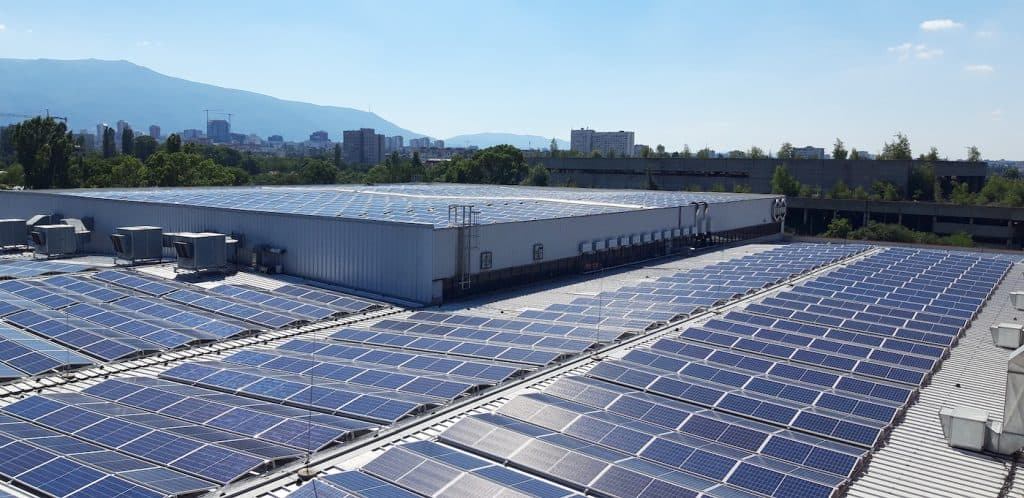
By mid-2023, around 120,000 small PV systems with a combined capacity nearly equivalent to a Temelín unit had been connected in Czechia. Using a home PV system has its specifics, and it is necessary to learn how to make proper use of the source. In July, I wrote an article about the interaction between rooftop solar PV and an electric car. I now have data for the full year, so I would like to follow up on that article with a more detailed analysis of how the car is used.
Annual PV generation
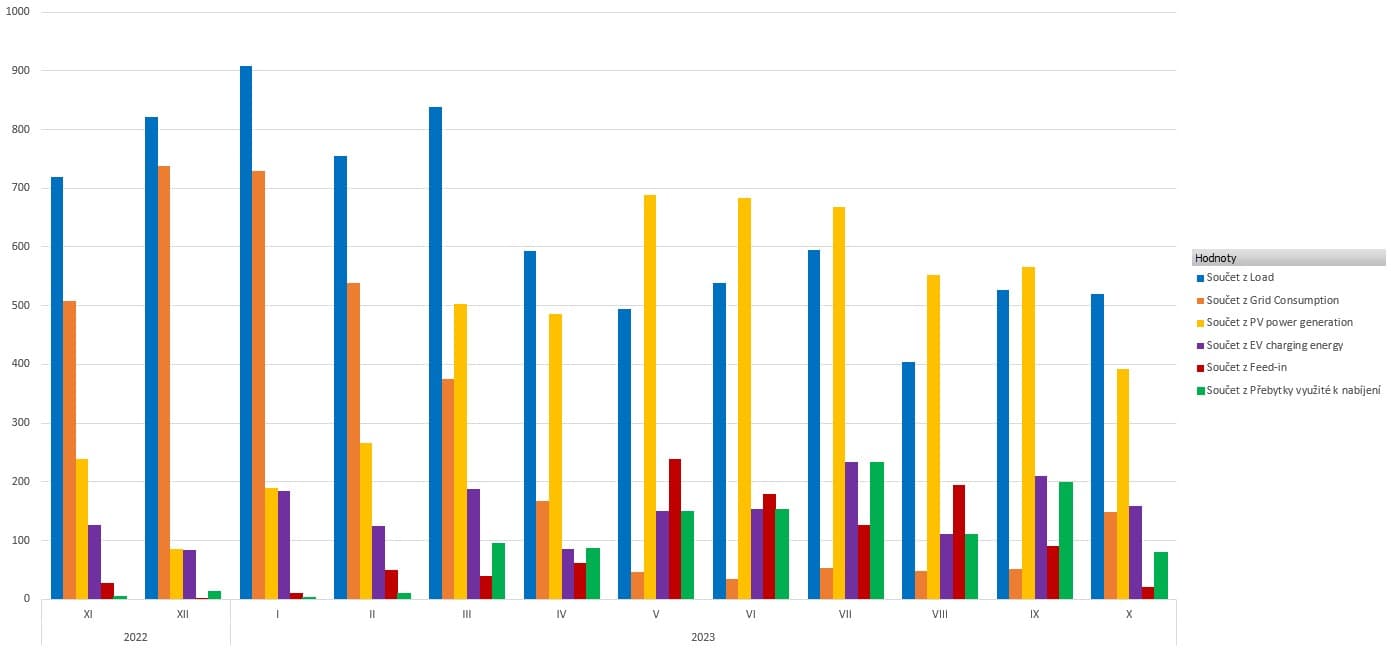
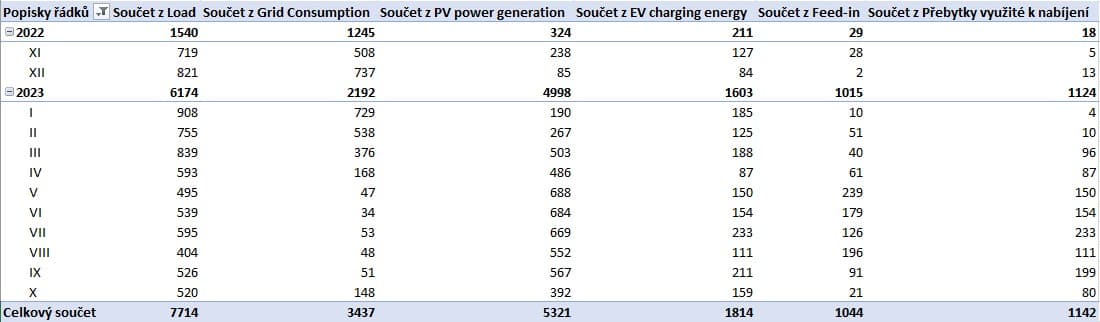
The total electricity consumption of the house was 7.7MWh over the period from 11/2022 to 10/2023, of which 5.9MWh was used by the house and 1.8MWh for charging the car. The car therefore accounts for just under a quarter of the energy consumed. The 5.5kWp PV system generated around 5.3MWh of electricity over the year. Approximately 1MWh of electricity could not be used and was exported back to the distribution grid. More than 80% of the electricity generated was therefore used directly on the property. PV generation covered approximately 55% of total consumption, including the operation of the car.
Such good figures would not be possible without managing consumption in the house. There is no need to schedule every activity around generation from the system, but it pays to leave certain energy-intensive activities for sunny days. These primarily include washing dishes, doing laundry and heating domestic hot water. We have learned to run the dishwasher mainly during the day, or we set a timer for it to start at a more suitable time. We do not worry too much about regular washing at 40°C, but it is advisable to postpone a boil wash. Towels and bed linen can usually wait a few days in the laundry basket. I limited domestic hot water heating to suitable hours during the day through the heat pump settings. It therefore usually operates while solar power is being generated and, moreover, with a higher coefficient of performance than if it switched on at any time, such as at night. I also installed an additional heating element in the hot water tank with a programmable switching time. This supplementary heating is switched on only during periods of excess generation, when the energy cannot be used otherwise, and provides around 6kWh of additional capacity. The hot water tank is thus essentially the cheapest battery that most people already have at home.
Together with deferred car charging, consumption can therefore be adapted very effectively to current generation without imposing any restrictions on household operation. Switching and charging are controlled either by the inverter software itself or can be activated manually via a mobile app.
Car operation
Over the full year, I drove just over 12,000 km in the car. An estimated 30% of this consisted of motorway trips, with most of the mileage therefore coming from travel in the countryside or in towns and cities. Most journeys were shorter routes, but the mileage also included longer trips to the Pardubice Region, Prague, Brno, Poland and Slovakia. Consumption according to the onboard computer was 14.3kWh/100km, which is lower than the rated consumption of 14.8kWh/100km under WLTP. This low figure is mainly due to the smaller share of motorway driving and driving with the highest level of regenerative braking.
A total of 2.2MWh of electricity was charged for this distance. If I had covered the same distance in my older Octavia TDi, with consumption of 5.6l of diesel / 100 km, energy consumption would have been 6.8MWh. Even after accounting for charging efficiency, energy consumption is therefore around one-third compared with an efficient diesel.
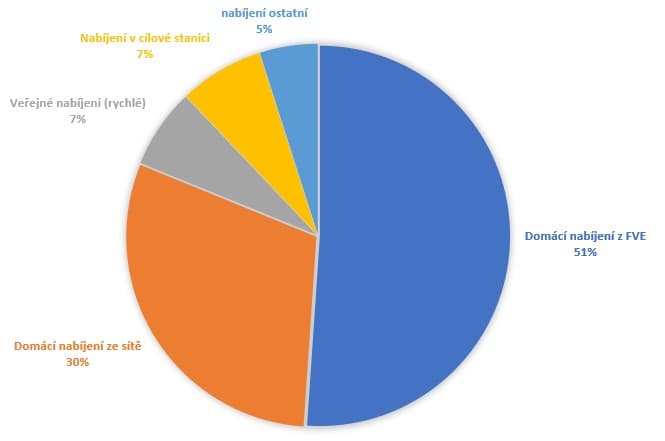
Slow AC charging from an 11kW wallbox or the car's onboard 2kW charger accounts for 93% of the mileage. Fast charging accounts for only 7%. Even on longer trips, fast charging represents only part of the mileage. I set off with a full battery and, for example, it lasts until somewhere beyond Brno on a trip to Prague. In Prague, it can be slowly charged again, and on the way I charge only enough to get home with a reserve and a more or less empty battery. Even on the relatively long trip from Ostrava to Prague and back, it is necessary to charge only around half of the energy en route.
The share of charging from my own PV system is also interesting. The share covering more than 50% of mileage turned out better than expected. The statistics confirm that for around 7 months, from March to October, it is possible to drive more or less solely on energy from one's own source; just under a third comes from home charging from the grid, and only around 20% from charging elsewhere.
The positive results are significantly helped by the option of working from home. Even just two days of home office per week are statistically enough to cover charging for the whole week. However, even without the option of working from home, the result would not be much worse. Weekends alone provide enough time to charge for the week. In addition, there are up to 7 public holidays from March to September, as well as several days of holiday that we partly spend at home. Personally, I sometimes use public transport or a bicycle to get to work, which further extends the time suitable for charging. In practice, it is possible to charge up to 20-25kWh on a sunny summer day. The idea that a full canister of diesel is slowly dripping from the roof at home during the day significantly increases many people's motivation to cycle from time to time.
Conclusion
As for the car, no battery degradation has yet been apparent after two years of operation. The electric car is ideal for suburban use and various shorter trips. The car also warms up very quickly in winter, and consumption falls to the average value after only a few kilometres. However, the car cannot really be recommended for frequent motorway journeys. The aerodynamics of a short SUV are not ideal, and motorway consumption therefore rises to almost 20kWh/100km compared with average values. Longer trips require longer charging stops, which would be inconvenient in the case of frequent travel.
The annual statistics confirmed the possibility of expanding the home installation. Another 4-5kWp can easily fit on the garden shed. With capacity of around 10kWp, the system will cover approximately 70% of the total consumption of the house and car. In this case, a higher share of home charging from PV can also be expected. Over the full year, the property would even achieve a positive generation balance, with the house producing more energy than it consumes.
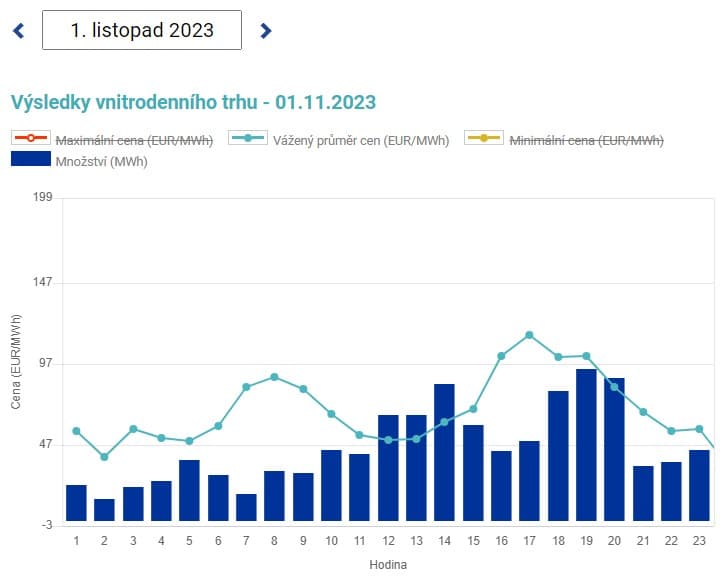
As the relatively broad scope for managing consumption has also been confirmed, I am considering switching to a spot-price tariff. In practice, I would block heating, domestic hot water heating and charging during the morning and afternoon peaks, and would therefore consume either my own electricity or electricity purchased at lower off-peak prices. As can be seen from the example of the intraday trading chart, electricity prices outside peak periods can be a third to a half lower than during the morning and afternoon peaks. Deferring consumption to 10-15h in the morning, overnight or to the weekend can bring further significant savings.
As the annual statistics show, PV cannot cover consumption throughout the entire year in our conditions. However, for around half the year, it can cover almost all consumption of the property, including the car's mileage. Even during winter, PV can cover a non-negligible part of consumption. The same applies to the car's mileage. PV alone cannot cover the car's mileage year-round, but covering half of the kilometres driven solely from PV appears to be an excellent result.
Translation disclaimer
This article is a machine translation of the Czech original and has not yet been fully reviewed. In case of any doubt, please refer to the Czech version.