
23 October 2026, 14:38
Loading...
Some Czech reflections on power generation after the Paris climate conference – Part 1
Vladimír Wagner
7 February 2016, 17:14
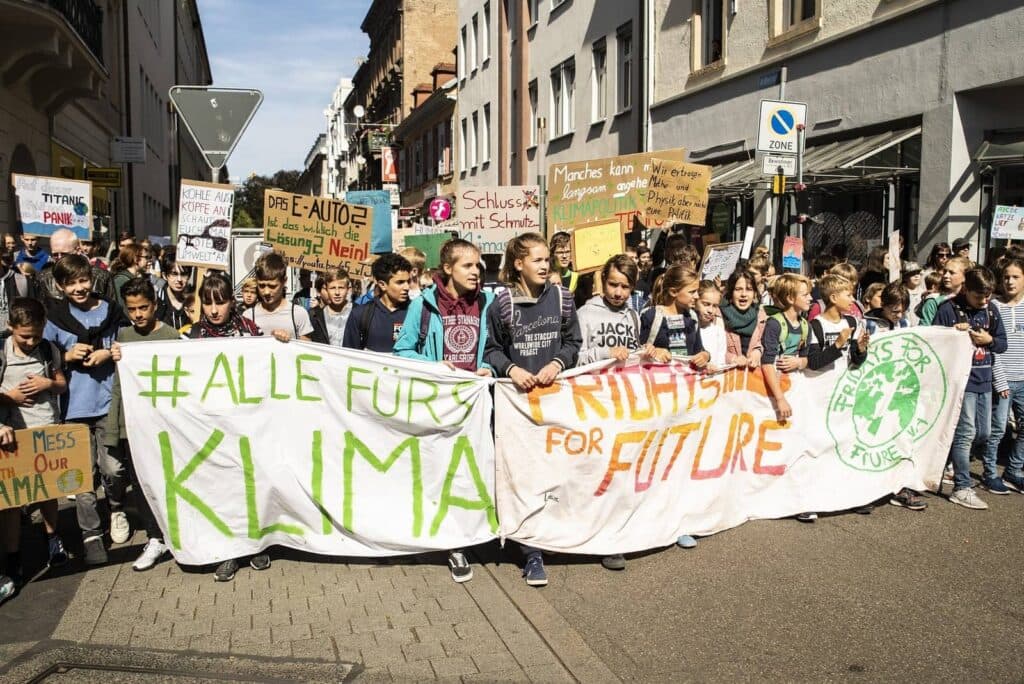
In recent years, I have devoted considerable attention to thinking about ways of meeting energy needs not only in the Czech Republic and the potential risks facing this area. I have also recently started working on the newly established energy commission of the Academy of Sciences. I therefore followed the discussions and outcomes of the COP21 Climate Conference in Paris with interest. And I tried to assess them against my own ideas about different possible paths towards low-emission energy.
This was also why I recently took part in a discussion organised by STUZ, which focused on evaluating the results of the conference from a Czech perspective. A number of its panellists had attended the Paris conference directly. Whether they were people very close to green ideological activism, such as Martin Bursík, or people with a more realistic view, they agreed on two basic points. First, they positively assessed the agreement on the need for a dramatic reduction in greenhouse gas emissions, which would ensure that global temperatures do not rise by more than 2˚C, and preferably by less than 1.5˚C. Second, they marginalised the potential contribution of nuclear power to that goal and, at least in my view, failed to present any more realistic vision of how to achieve low-emission energy. Nor were they able to show a realistic plan for how the Czech Republic could contribute to emissions reductions as effectively and extensively as possible. I have therefore tried to organise my knowledge and ideas in this area in the following text.
Is it necessary to dramatically reduce carbon dioxide production at any cost?
The fact that industrial emissions are increasing the amount of carbon dioxide in the atmosphere quite dramatically has been measured very accurately and reliably demonstrated. Colleagues at the Institute of Nuclear Physics of the Czech Academy of Sciences, where I work, also carry out these measurements and, for example, use comparisons of the ratios of different carbon isotopes to study the origin of carbon and its transport in the environment. I described these measurements in greater detail in several articles (here, here and here).
We also know quite a lot about the evolution of carbon dioxide levels throughout history, although naturally with much less precision (in more detail here). The rise in global temperatures in the past and current centuries has likewise been well confirmed by increasingly precise measurements (in more detail here). Assessing the scale of natural and anthropogenic influences on the climate and its future development, however, is considerably more complex. Climate models are constantly improving and becoming more accurate thanks to advances in climate monitoring, a better understanding of numerous natural processes and climate cycles, and the rapid growth of computing capacity. Nevertheless, they still contain a number of quite significant systematic uncertainties.
Alongside the most likely scenarios for different increases in carbon dioxide concentrations, there are also a number that are less likely but substantially different. It is therefore not entirely excluded that, over a more distant timeframe, anthropogenic emissions could help balance natural cycles and prevent the arrival of a new ice age. However, if I acknowledge this in view of the uncertainties in our knowledge, I must also acknowledge that those uncertainties include scenarios that are far more catastrophic than those presented as the most likely.
Precisely because I also work on modelling and simulations in nuclear physics, I know how cautiously uncertainties must be handled in such cases.
It is necessary to realise that it was precisely the use of fossil resources and the availability of sufficient energy that enabled a dramatic rise in living standards and the ability to face various disasters and address their consequences. They have likewise enabled us to adapt to and confront different changes in weather patterns. The development of technology and science, which would hardly have happened without them, also makes it possible to study and understand climate change. And it gives us the means to shift to other resources and to deal with potential changes in different regions. We can see that social collapses caused in part by a lack of energy resources have impacts orders of magnitude greater than even the largest industrial accidents.
It may therefore prove to have fewer negative impacts to use fossil resources efficiently as well, in order to find and build measures that will enable us to confront the negative impacts of climate change. The advantage of this option is that these tools and technologies will also be useful if the climate changes for natural reasons. Thus, caring for the landscape and strengthening its most natural possible capacity to manage water, developing crop varieties with very good productive qualities that are also resistant to drought, heat or cold and pests, and preparing effective procedures for dealing with the consequences of natural disasters are paths we should certainly support. And this is certainly a better solution than proposals to return to a pre-industrial way of life, which also appear. The order-of-magnitude reduction in population that this would require could certainly not take place humanely.
On the other hand, it is clear that any reduction in dependence on fossil fuels that does not create dramatic risks for social stability is welcome.
Successful paths to low-emission electricity
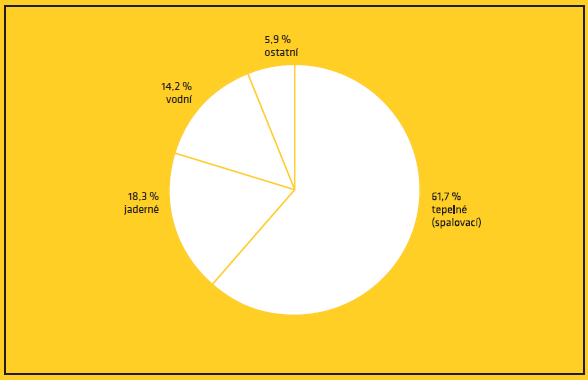
Before looking at examples of paths towards low-emission energy, let us recall the current state of affairs. According to 2013 data, total energy demand was met by 32.9 % oil, 30.1 % coal, 23.7 % gas, 6.7 % hydro, 4.4 % nuclear, 0.9 % biomass, 1.1 % wind and 0.2 % solar. For electricity generation, the shares were 4.4 % oil, 41.3 % coal, 21.7 % gas, 16.3 % hydro, 10.6 % nuclear and only 5.7 % renewable sources (of which 2.7 % was wind and 0.5 % photovoltaics).
The most promising direction for moving away from fossil fuels in transport appears to be electrification, while one of the most environmentally friendly options for eliminating emissions associated with maintaining thermal comfort is also the use of electricity or heat pumps, which likewise need electricity. If the low-emission nature of the power sector can be resolved, the overall path to low-emission energy and society is open to a considerable extent.
In 2014, a historic moment took place entirely outside the attention of green organisations. The Canadian province of Ontario completely eliminated coal-fired sources from its power sector, while the use of gas for electricity generation was also minimal. Yet as recently as 2003, a quarter of its electricity came from coal. It thus became an example of a very successful path towards low-emission electricity. This path had already been embarked upon in the 1970s and 1980s, when Canada built nuclear power based on domestic CANDU heavy-water reactor technology. It was then completed around the turn of the millennium, when Ontario’s leaders decided to secure the near-complete elimination of emissions in the power sector.
Its “Energiewende” was delivered predominantly through the refurbishment of existing CANDU nuclear power plants, which made it possible to increase their electrical output and extend their operation by another quarter of a century. Nuclear capacity—Canada currently has 19 reactors with total capacity of 13.5 GWe—was supplemented by efficiently used renewable sources, based mainly on hydro and biomass, for which Canada has very large potential. In 2014, nuclear units generated 62 % of electricity in the province.
Ontario is a modern, technologically advanced region with 13.4 million inhabitants. This means it is equivalent to a country the size of Czechia or other medium-sized European states. It has thus clearly shown that such countries have an effective and relatively rapid path to an electricity sector entirely without coal and with a negligible share of fossil sources.
Ontario is not the only region that has chosen a combination of nuclear and renewable sources. Sweden, Switzerland and Slovakia have also successfully pursued this path. In all these countries, nuclear and renewable sources complement each other very well. Depending on the specific conditions of a given year, nuclear generates between 40 and 50 % of electricity in them. All these countries make use of geographical conditions ideal for hydropower. In Slovakia, this includes the well-known Váh cascade. Sweden can in turn use extensive forestry as a source of biomass and ideal wind conditions at a number of locations along the coast.
All this means that the use of fossil sources for electricity generation is negligible or very low. In Slovakia, which currently obtains 87 % of its electricity from low-emission sources (the 2014 result), the situation will improve further after two new reactors at Mochovce nuclear power plant enter service. In Sweden, the transition to low-emission energy took place over roughly ten years around the turn of the 1970s and 1980s, and in Switzerland during the 1970s. At that time, carbon dioxide production in these countries was falling by 3 % a year.
However, an electricity sector almost without fossil sources has also been built by one of Europe’s largest countries. Over approximately ten years, France managed to build nuclear capacity that now has 58 reactors with total capacity of 63 GWe and has generated more than 70 % of the country’s electricity since the beginning of the 1990s. During their commissioning period, total carbon dioxide emissions there fell by an average of 2 % a year.
The combination of nuclear and renewable sources has enabled the French power sector to operate for more than a quarter of a century with minimal fossil sources and therefore minimal carbon dioxide production. The very high share of nuclear units has meant that France has had to use reactors not only in baseload operation but also for load following. In practice, this has disproved, and continues to disprove, the myth that nuclear reactors cannot be regulated.
It should be stressed that a single decade was sufficient to build the low-emission power sectors described. A decade was also enough, for example, for nuclear power in Belgium, built around the turn of the 1970s and 1980s, to generate more than 50 % of electricity. Sweden, Switzerland and Belgium are also examples of what follows from the priorities set. Their main priority is not to increase electricity generation from fossil sources. Thus, although these countries announced nuclear phase-outs at different times, they abandoned concrete steps in that direction after finding that nuclear would be replaced by fossil sources.
This most recently happened in Belgium, as was reported on this website. This was despite the fact that the country’s nuclear units had faced a number of problems over the past year.
Unsuccessful (so far?) paths to low-emission electricity
From the perspective of reducing emissions, Germany’s Energiewende is an example of a path that has so far been very unsuccessful. Its fundamental priority is the shutdown of nuclear units, and it has been successful in meeting its targets in that respect. The result, however, is that despite the intensive build-out of renewable sources, the reduction in fossil electricity generation has been very slow. While Ontario has ended coal-fired electricity generation, in Germany, fifteen years after the Energiewende began, 42.2 % of electricity was generated from coal in 2015 (according to Agora).
Germany is thus Europe’s largest producer of emissions and also has high emissions per capita. Low-emission non-fossil sources supplied just 44.1 % in total, while fossil sources accounted for 55.9 %. Renewable sources supplied 30 % and nuclear still accounted for 14.1 %. Wind turbines, mainly along the coast, provided the largest share of renewable electricity, at 13.3 %.
Germany is completing one coal-fired power plant after another. With the completion of two units at Neurath power plant, it became Europe’s second-largest coal-fired power plant after Poland’s Bełchatów plant. Last year, two units at the Moorburg coal-fired power plant with total capacity of 1650 MWe were commissioned, and other coal units are being completed (more here).
In recent years, Germany has seen a major surplus of capacity and pressure to export electricity. It should be recalled that this is an inherent manifestation of the Energiewende. If wind and solar generation is to be maximised, each of these sources must have sufficient total capacity to cover all required demand under conditions favourable to it. At the same time, there must also be enough fossil unit capacity to cover all required demand when the sun is not shining and the wind is not blowing. Thus, three power plants—solar, wind and fossil—are needed for every required megawatt of capacity. At the same time, some stable fossil units must operate at least at part load even during good conditions for solar and wind sources, to maintain grid stability and enable regulation. Therefore, a large capacity surplus and efforts to export surplus renewable as well as fossil electricity are a necessity for such a system.
This can be seen very clearly in Denmark, as was recently presented on this website. To achieve a wind share of more than 40 % of electricity, it sometimes generates 135 % of its needs from wind alone. At such times, many of its fossil power plants are stopped or operating at minimum output. It therefore necessarily has a large capacity surplus and must be able to export excess electricity during windy periods. Conversely, it needs to import electricity from somewhere during periods without wind. Denmark’s energy concept is based on a large surplus of capacity and also on intensive use of its neighbours.
The OEnergetice.cz website contains a detailed description of Germany’s Energiewende plan. Let us recall the targets set for the share of low-emission electricity. The share of electricity from renewable sources in gross electricity consumption is to rise to 35 percent by 2020, 50 percent by 2030, 65 percent by 2040 and 80 percent by 2050. Personally, I consider these targets not very realistic. Yet even if Germany managed to achieve them, it would not reach by 2050 the share of low-emission sources that the countries mentioned in the previous section had already achieved thirty years ago. Germany will not meet, even after half a century of intensive Energiewende, the electricity-sector emissions reduction targets that France managed to achieve in a single decade.
A fundamental condition for securing even the declared targets is construction of the necessary transmission lines from north to south. The main renewable source of the Energiewende is, and is expected to remain, offshore and coastal wind power in the north. Industrial Bavaria, which until now received 50 % of its electricity from nuclear power, lies in the south. Yet there is not even a plan so far for the first key extra-high-voltage transmission line project. There has been very strong opposition to its construction, particularly in Bavaria. In the end, this may perhaps be overcome by a promise that 80% of the line will run underground, although even this remains uncertain. This would, however, mean a considerable increase in costs and technological difficulties.
When the relevant transmission line will be available is therefore a very open question. It certainly will not be in 2022, when the last nuclear unit is disconnected. It is thus highly uncertain how Bavaria will replace nuclear sources. It is also questionable whether this situation will lead to industry relocating from the south to the north, closer to electricity sources. And it will be interesting to see how Bavaria ultimately responds, when it comes to the crunch, to this potential risk of losing the industry that ensures its high standard of living.
Bavaria is very similar to Czechia, and for us it will demonstrate how following Germany’s path would unfold here. More generally, it will be interesting to see whether Germany proves to be a pioneer of a blind alley, or whether it manages to meet at least its declared—and, compared with French reality, very modest—emissions reduction targets.
The article will continue in a second part…
Translation disclaimer
This article is a machine translation of the Czech original and has not yet been fully reviewed. In case of any doubt, please refer to the Czech version.
Sdílejte článek prostřednictvím:
You might also like

23 October 2026, 11:01

23 October 2026, 06:34