23 October 2026, 14:38
Loading...
Some thoughts on the Czech power sector after the Paris climate conference – Part 2
Vladimír Wagner
21 February 2016, 19:06
In recent years, I have devoted considerable attention to reflections on ways of meeting energy needs, not only in the Czech Republic, and the potential risks faced in this area. I recently also began working on the newly established Energy Commission of the Academy of Sciences. I therefore followed the proceedings and outcomes of the COP 21 Climate Conference in Paris with interest. And I sought to assess them against my ideas about the various possible paths towards low-emission energy.
This is the second part of the article Some thoughts on the power sector after the Paris climate conference. You can read the first part of the article here.
What is the real potential for savings?
Environmental activists very often rely on energy savings, decentralised energy and smart grids. The question, however, is whether the savings they assume can actually be achieved. In the recording of the debate mentioned at the beginning of the article, Martin Bursík enthusiastically describes how the entire energy sector will be based on small-scale sources and how everyone will live in a smart home that consumes and produces electricity and exchanges it with other smart homes through smart electronic components.
Most people associated with environmental movements, not only Friends of the Earth Czech Republic or Greenpeace, promote such visions of the energy sector, although admittedly not quite as fairy-tale-like. These visions are very far removed from the reality of the German Energiewende. As mentioned, it is dominated by large centralised sources and transmission lines carrying huge volumes of power across Germany and beyond. Naturally, it also includes decentralised sources and smart grids.
Smart grids and intelligent buildings are certainly an interesting and promising area. It is certainly good to work on their development and strive for their effective use in the future. On the other hand, it remains a very open question what real contribution they will make to electricity savings and the integration of decentralised sources.
The first issue of this year's Vesmír magazine featured an article by Marek Janáč, entitled “Smartly into the future”, which among other things describes experience from testing projects and studies in this area to date.They show that actual reductions in consumption from the use of smart grids ranged from 2 to 4 %, although various theoretical paper studies and visions cite figures between 10 and 40 %. This was also one of the reasons for the very poor outcome of the project in Boulder, Colorado.
The fundamental reason for these failures is that the paper studies in question are based on completely unrealistic assumptions about human behaviour. They assume that residents will constantly monitor electricity consumption and prices and adjust the switching on and use of appliances accordingly. However, if we look at when a family in a house consumes electricity, we find that there are relatively few activities that can be freely shifted. A large share of appliances are used for entertainment or education. It is difficult to assume that a person will read, watch a film or that a child will play at a time when there is surplus electricity and it is cheap.
We do these activities when we feel like it and have time for them. We will also cook when the family gathers for a meal or when one of its members is hungry. It is also hard to imagine a wife ironing on command when there is surplus electricity. Laundry is mentioned most often. Yet it is often necessary to wash something quickly and it cannot always be postponed. Many DIY tasks also need to be done when there is time for them or when they are necessary. Most people are not enthusiasts who enjoy monitoring and setting various electronic meters and control elements.
Another factor is that introducing more economical and efficient appliances often does not lead to overall savings. The introduction of energy-saving lighting in the US did not result in the dramatic reduction in electricity needed for lighting that had been hoped for. Put simply, different lighting fixtures began to be used in greater numbers and more often. People acquire more energy-efficient appliances and use them more. Introducing intelligent elements into buildings leads to further electrification and potentially additional electricity consumption. Their manufacture also consumes energy and resources. Yet various paper studies presented by green activists and organisations are based on maximalist, purely potential and highly unrealistic assumptions. It is naturally important to pursue savings, but estimates of their potential need to be at least somewhat realistic.
To conclude this part, I would mention one contradiction that has appeared in recent statements by environmental activist movements in connection with the change to electricity payments recently being prepared by the Energy Regulatory Office (ERÚ). I am not an expert in this field, so I do not presume to assess the impact of this step. However, one of the biggest problems highlighted by environmental groups such as Friends of the Earth Czech Republic is the replacement of circuit breakers. This is meant to reduce fixed payments for buildings with low consumption.
Friends of the Earth Czech Republic claims that this is technically and financially demanding and burdens lower-income groups. However, in other materials promoting its vision of smart and decentralised energy, it does not regard the installation of a considerable amount of electronics and intelligent elements in a house—which is a change orders of magnitude more complex—as technically and financially demanding.
What does this mean for Czechia?
The possibilities for using energy sources are significantly influenced by geographical and other conditions. The Czech Republic lies in the temperate zone, and weather patterns limit the potential use of solar energy. It is also not in a coastal area with regular winds, and the use of wind energy is therefore limited as well. Moreover, suitable windy areas are often in environmentally valuable mountainous regions far from centres of consumption. Even there, however, capacity factors and thus the economic parameters of potential turbines do not reach the level of, for example, German turbines on the coast.
Germany, where wind generation is strongly promoted, now obtains 13,3 % from this source, but the dominant share of generation is in the north near the coast. In Bavaria, which has roughly the same conditions as Czechia, wind produces only just over one percent of Bavarian electricity. The ideas of Milan Šimoník and the Greens that the transition to low-emission electricity will be achieved through wind power providing one-third of Czech electricity production, along with gas, therefore appear highly naïve in light of the situation in Bavaria. Let us recall that in 2014, wind generated only 0,55 % of electricity.
Our possibilities for using domestic wind- and solar-based sources are further limited by the situation in Germany itself. Stable weather suitable for these sources is generally shared by the entire region, and when it occurs our power system is flooded with surpluses from Germany. When German renewables are not generating, Czech ones generally do not generate either. From an economic perspective, Czech wind sources can hardly compete with German coastal ones.
The potential of hydropower sources in Czechia has already been almost exhausted, and biomass potential is limited as well. The effective and genuinely decentralised approach is to use biowaste from agricultural and timber production locally. However, there is truly no room here on a larger scale for the dedicated cultivation of energy crops, which competes with food production and the ecological function of the landscape. Growing maize for subsidised biogas plants here or in Germany has nothing whatsoever to do with an ecological approach to the landscape and agricultural land.
Of the low-emission sources that can be used on a larger scale and could replace coal in Czechia, only nuclear remains. In 2014, nuclear generated 35,3 % of electricity in the Czech Republic, while coal accounted for 51,6 %. Renewables accounted for 10,6 % in total. This shows that, on the path towards low-emission energy, Czechia needs to replace roughly half of its generation. It is true that around 19,7 % of the electricity generated was exported in 2014. This means that if exports were limited, fewer fossil sources would need to be replaced. Even in this case, however, generation equivalent to almost the entire output of the current nuclear units would have to be replaced. The Dukovany nuclear units, which together have more than 2000 MWe and generate roughly 18 % of electricity output, could operate for fifty to sixty years, i.e. at least another twenty or even thirty years.
However, Greenpeace is not the only organisation promoting the German path and seeking to begin gradually closing individual Dukovany units now, after thirty years of operation. Its Energy [R]evolution document includes this as well. If anti-nuclear activists succeed, then even if all electricity exports are eliminated, more than 60 % of electricity will have to be generated from fossil fuels. And most likely we would no longer be able to avoid breaking the coal mining limits altogether. In further developing coal-fired power, we would thus follow Germany. In my view, however, this is not a good path; I summarised my view of a sensible Czech energy strategy here.
It should be stressed that every nuclear megawatt-hour exported from Czechia displaces a fossil megawatt-hour, usually coal-fired, in Poland or Germany. Given the prevailing wind directions, this improves the environmental situation in Czech territory. Therefore, if the Czech Republic wanted to make a significant contribution to strengthening low-emission energy in the region and reducing global carbon dioxide emissions, it should build nuclear units here and help build nuclear units in neighbouring countries. The experience and industrial capacity available here could be put to use. This is partly happening in Slovakia, where Czech companies are significantly involved in completing two new units at the Mochovce nuclear power plant.
Poland also wanted to develop nuclear power to replace coal-fired units. There, coal-fired plants generate 92 % of electricity. One plant was already under construction, but a campaign by environmental organisations halted the project. Anti-nuclear activists, not only from Poland, are also now successfully blocking efforts to build nuclear units in Poland. The situation in the distorted energy market also helps them. OEnergetice.cz recently wrote about another delay to the project. Instead, as in Germany, old coal units in Poland will be replaced with coal-fired ones, as reported in a recent article.
Czechia approved an update to its State Energy Policy last year, envisaging the gradual replacement of coal-fired electricity sources with nuclear and renewable sources. If all relevant stakeholders could agree on it and jointly support its implementation, low-emission electricity generation could be built through completing Temelín, gradually replacing ageing units at Dukovany, making the most efficient use possible of local renewable potential, predominantly in decentralised form, implementing savings opportunities and smart grids, and using the potential for cooperation with neighbouring countries.
If even a smaller part of the potential for renewables and savings envisaged by environmental movements were fulfilled, the Czech Republic could at least partly contribute to displacing coal from Germany and Poland. It could thus make a significant contribution to fulfilling the objectives declared at the Paris climate conference.
Unfortunately, this vision is most likely unachievable, because local environmental movements also make nuclear phase-out and following the German Energiewende their main priority, rather than implementing an Ontario-style energy strategy. This is apparent not only from the aforementioned STUŽ debate, but also from the discussion held by the Czech section of the R&D Dialogue project on possible pathways to a low-emission society (articles and discussion here, here, here, here, here and here). It is likewise apparent in the interview with Martin Sedlák on this website or in discussion contributions by, for example, Jan Veselý or Milan Vaněček.
Conclusion
As I have sought to show, I am not convinced that drastic cuts in carbon dioxide emissions should be undertaken at any cost. On the other hand, if we decide that this is truly necessary, it cannot be achieved in the foreseeable future without intensive use of every option. This means effective and meaningful savings, decentralised small renewable sources, large renewable systems in locations suitable in geographical, climatic and other respects, as well as nuclear units. It is also necessary to strengthen high-voltage grid interconnections and cooperation between countries in energy, and to introduce smart grids in a meaningful and effective way.
Several medium-sized and large countries managed to achieve a transition to low-emission energy based on a combination of nuclear and renewable sources a quarter of a century ago. Power-sector emissions per unit of electricity generated in these countries are orders of magnitude lower than, for example, in Germany, and carbon dioxide emissions per capita are lower as well. They have thus shown that this path is possible. If transport and other sectors can be electrified, these countries have an open path towards low-emission energy overall. The fact that this did not succeed elsewhere, including globally, has mainly been caused by the very intensive and extremely successful campaign of anti-nuclear activists led by Greenpeace.
For example, Germany, Austria and Italy had also planned to follow the same path in the 1960s and 1970s. There, however, intensive campaigning by green movements forced political decisions to prematurely shut down and not use nuclear units. Nuclear power plants, which require large initial investment and have long operating lives, are highly dependent on the stability of the political and economic environment. Germany will show whether, and if so when, a path to low-emission energy without nuclear power can be achieved under the conditions of the wealthiest country and extreme political and financial commitment. So far, however, it has not been achieved anywhere, apart from a few highly specific cases with special natural conditions, such as Norway or Iceland.
By contrast, the United Kingdom has chosen to follow France, Sweden, Switzerland, Slovakia and Ontario. It adopted a very strict law on reducing emissions and is seeking to move away from fossil sources in the power sector. It should do so precisely by using a combination of renewable and nuclear sources. Given that nuclear power is under extreme pressure from anti-nuclear campaigns not only in the United Kingdom itself but across Europe, I am considerably sceptical about its implementation there.
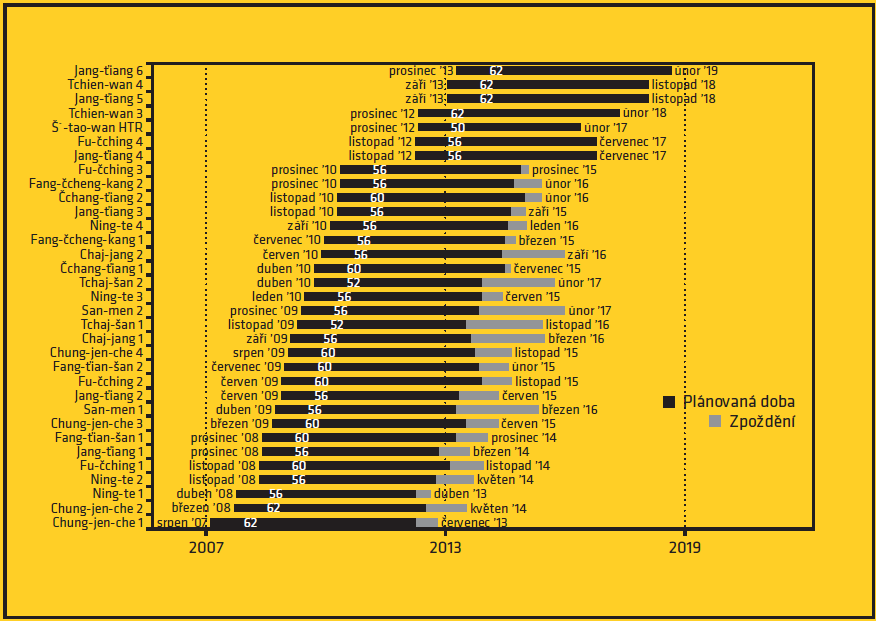
The situation is far more favourable in China. Its change in approach and declaration of a path to reduce emissions were the biggest positive surprise at the Paris conference. In my view, however, this is not an effort to reduce carbon dioxide emissions, but above all to address the catastrophic environmental situation caused by pollutant emissions. China has decided to use every option available to replace coal-fired plants in electricity generation. Three sources will be dominant: hydropower, wind and nuclear. China currently generates roughly the same amount of electricity from nuclear power as from wind. While wind capacity grew faster than nuclear capacity in previous years, the situation has now reversed. Wind faces problems with interconnecting wind and industrial areas, while nuclear construction has reached a pace comparable to what took place in France in the 1970s.
China is beginning to build 1000 MWe units serially and within five years. Eight units were commissioned in the country last year, and the start of this year already indicates that this year will be similar. The launch of new construction projects has also gathered pace. This year, several first units of the new Generation III+ are expected to be completed in China. If they prove successful and China is able to build them as efficiently as Generation II units, there is a realistic prospect that China will regularly complete around six to seven units annually in the coming years. A more detailed analysis of the state of nuclear power at the end of last year and an overview of its development in 2015 can be found in an article from a regular series on the Osel website. Once problems with connecting wind farms are resolved, rapid growth in wind power generation could resume.
According to the plan, China expects wind power production to remain roughly equal to that from nuclear units in the future, with these two sources, together with hydropower, making the dominant contribution to cleaning up China's power sector. China is also intensively building photovoltaic sources, helping to maintain photovoltaic panel manufacturing capacity even during the decline of the global boom in this area. Given their capacity factor, however, output from solar power plants is substantially lower than from the sources named above and will remain so in the future.
While in China the share of generation and its growth are roughly equal for wind and nuclear sources, globally the situation is even worse from the perspective of renewables. If Vladimír Špidla states in the aforementioned STUŽ debate that nuclear power has marginal potential in efforts to reduce emissions because its share of total energy production is only 4,4 %, then he is simultaneously saying that the potential of wind and solar is even more marginal. Wind's share is only 1,1 %, four times lower, while solar accounts for just 0,2 %, more than an order of magnitude lower.
It will therefore be interesting to compare over the next ten years how successful China, as well as South Korea and potentially the United Kingdom and Finland, which are seeking to reduce emissions through a combination of nuclear and renewable sources, will be compared with Germany, Denmark and Italy, which have rejected the use of nuclear power.
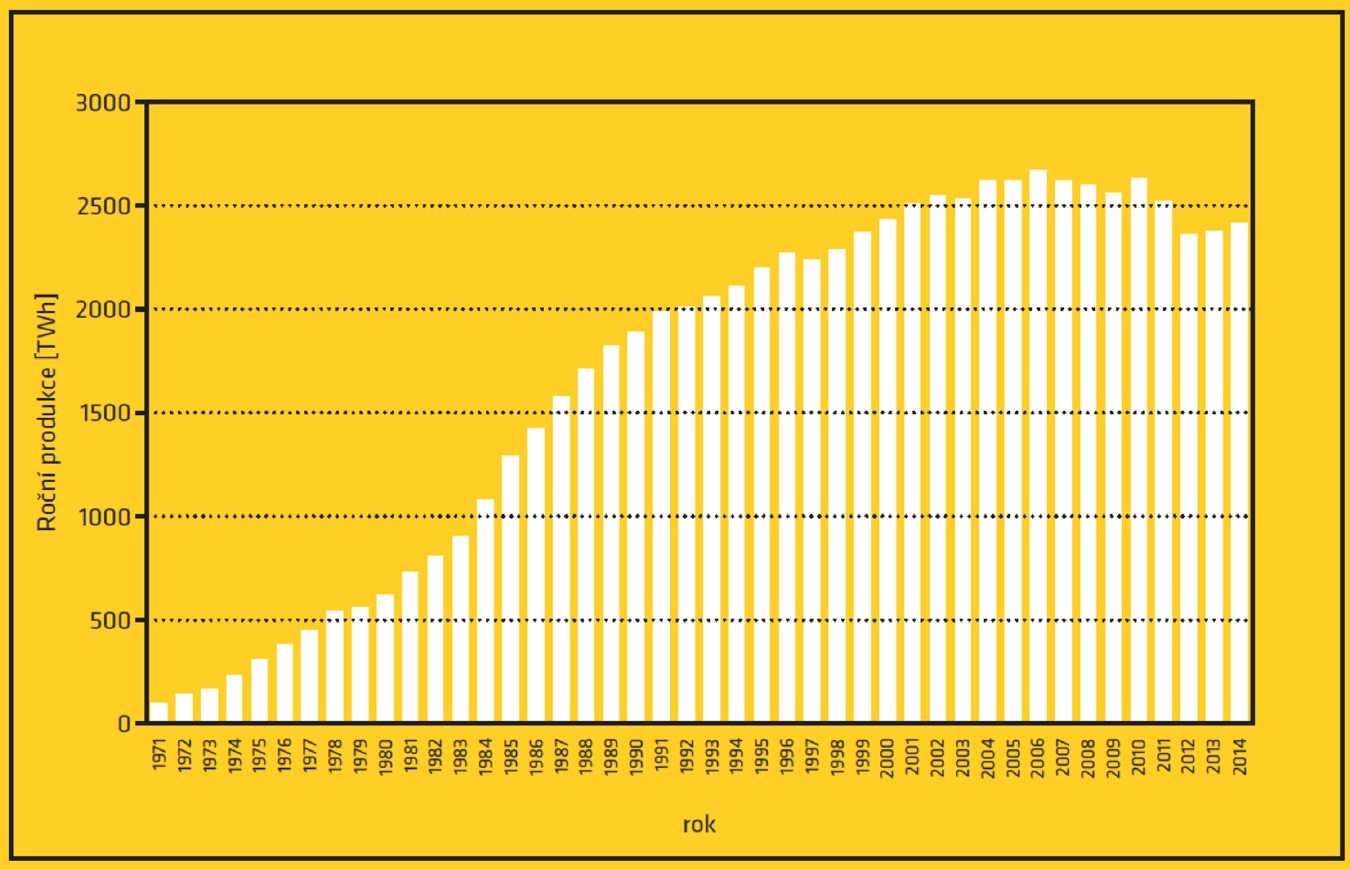
My personal view, the reasons for which I have sought to explain in the preceding text, is that by following the successful model of France, Sweden and Switzerland, adapted to specific conditions, not only Europe but the world could already have been dominated by low-emission electricity generation, and emissions from this sector could be orders of magnitude lower. Achieving this was prevented to a large extent by the very intensive and successful campaign of anti-nuclear activists, which was one of the main reasons why construction of nuclear units was halted in the 1980s and 1990s.
The position of the main environmental organisations, which have always been at the forefront of anti-nuclear activism, has not changed since then. An almost absurd illustration of this is that during the Paris climate conference itself, environmental NGOs awarded the climate “Pinocchio” anti-award to EDF precisely for its use of nuclear energy. Paradoxically, the award thus went to an energy company that predominantly uses low-emission sources and has one of the lowest levels of emissions per unit of electricity generated.
As I have already mentioned, nuclear power, with its high upfront investment costs and long operating life of installations, is highly sensitive to political support and the stability of the economic environment. The current situation in Europe, where politicians seek as much as possible to accommodate voters subjected to ideological campaigns by various activist groups and where energy-sector economic development is extremely distorted by subsidies and political interventions, is highly unfavourable for it.
Moreover, every larger and more demanding construction project in Europe is subject to so many not entirely clearly defined rules and possibilities for obstruction that, if even a small activist group exists which is determined to prevent it at any cost for any reason, there is often only a minimal chance of carrying it out. For this reason, I believe that even now the effective and rapid path to low-emission energy is blocked and can only be implemented with great difficulty, at least in Europe. It is possible that anti-nuclear environmental groups will even succeed in ensuring that ageing nuclear units are not replaced by nuclear power, and will therefore have to be replaced to a significant extent by fossil sources.
Even low-fossil energy systems such as those in Sweden and France could thus move towards German or Danish levels in their share of fossil generation. What is gained by introducing new renewable sources would be lost through shutting down nuclear units, which still generate more than 20 % of electricity in Europe. This is why I am very sceptical about the prospect of achieving the radical emissions cuts declared at the Paris climate conference.
I know that this text is unlikely to convince everyone and that I may be mistaken on some issues. Nevertheless, I would like readers to consider whether it is truly not necessary to use all the sources and options that enable a transition to low-emission energy. I would like them to read my views and those of the proponents of the German Energiewende linked here, and above all for environmental activists to consider whether there might not be something wrong with their prioritisation after all.
Risks are most often cited as the problem with nuclear power, but in this case a rational comparison is needed. In terms of serious health damage or deaths per unit of electricity generated, nuclear is among the safest sources. It has several orders of magnitude fewer than gas, coal or oil. It also has fewer than most renewable sources; for biomass use, the difference is as much as two orders of magnitude. A more detailed analysis of this area can be found, for example, in this article on Ekolist or in articles from a series devoted to the Fukushima accident (the latest is here). The situation concerning accidents in nuclear power and their consequences is also analysed in detail in the book Fukushima and After published by Novela Bohemica.
Translation disclaimer
This article is a machine translation of the Czech original and has not yet been fully reviewed. In case of any doubt, please refer to the Czech version.
Sdílejte článek prostřednictvím:
Topics:Opinion
You might also like
23 October 2026, 11:01
23 October 2026, 06:34