23 October 2026, 14:38
Loading...
The story of Turkey’s Adularya coal power plant – Czech dream 2.0
Beáta Packová
20 December 2019, 07:17
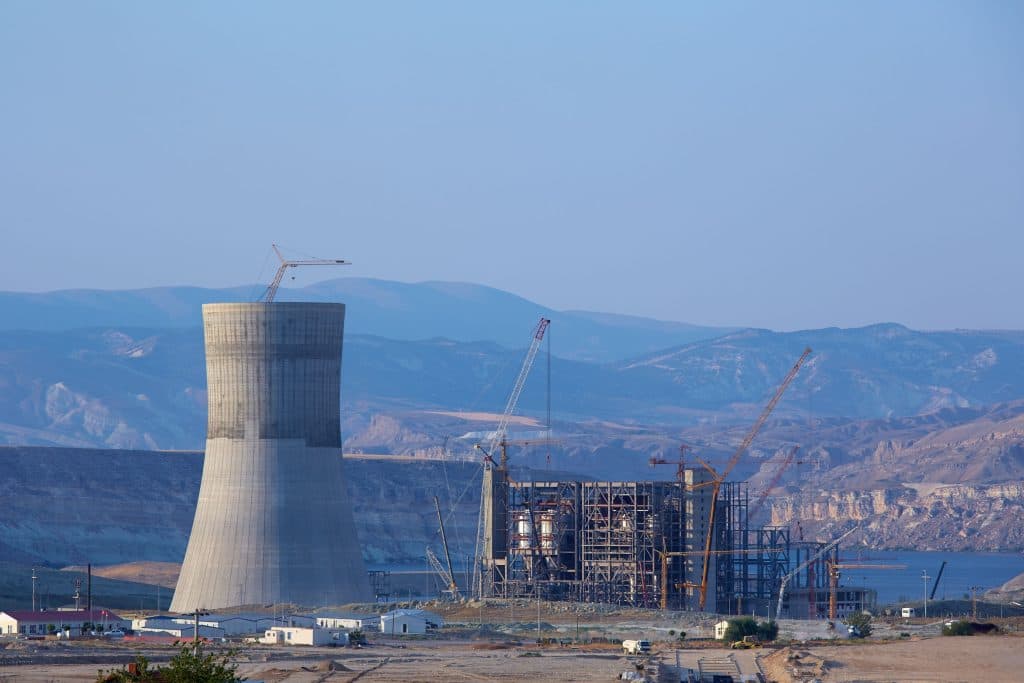
Imagine a spy thriller. It features a charismatic billionaire, the Czech state, an Austrian boiler manufacturer and Turkish politicians. The plot includes falsified coal samples, unfulfilled business dreams, an attempted coup and the Armenian genocide. Sounds crazy? Impossible? Welcome to the story of the Adularya power plant.
Světlík’s empire at its peak
About 50 kilometres west of the Turkish capital Ankara, construction began in 2008 on a thermal power plant intended to burn lignite from a neighbouring mine. The beauty of the project lay in the simplicity of the idea: unlike the EU, energy-hungry Turkey was not worrying about rising CO2 emissions, while the proximity of the mine and the power plant eliminated the need to transport coal over long distances. The world was still recovering from the crisis when the Czech Export Bank (ČEB) decided to support the participation of a Czech consortium (Ferrit, BTG Energy and Vítkovice Power Engineering) with an 11 billion crown loan to Turkish holding company Naksan, guaranteed by the Export Guarantee and Insurance Corporation (EGAP).
The consortium’s leader and the original author of the power plant’s concept was BTG Energy, which was replaced by Vítkovice Power Engineering (VPE) after an audit was initiated within the consortium. Both companies belonged to the Vítkovice Holding group of businessman Jan Světlík, whose empire at the time generated annual revenues of 20 billion crowns. The Turkish side – Naksan holding company – was among Turkey’s largest companies and had big ambitions. What could go wrong?
Falsified coal samples
By taking on the contract, VPE’s managers bit off more than they had expected. Problems had already accompanied the construction, with ČEB repeatedly suspending project financing because the Turkish side failed to meet its commitments. A bigger and decisive blow to the project came when commissioning tests found that the plant’s boilers were unable to burn coal from the neighbouring mine. More specifically, burning coal with a high chlorine content produces deposits that must be mechanically broken up. Continuous operation could also irreversibly damage the boilers.
This was followed by the predictable passing of the “hot potato” – who was to blame for the problem. The initial accusations were directed at Austrian company Andritz, which manufactured the boilers. In the end, however, it emerged that the boiler had been correctly designed, but for burning coal whose samples had been supplied by the Turkish side – and whose composition did not match the coal from the neighbouring mine. Why did this technical problem apparently break the project’s back? A commissioned study by Škoda Praha showed that modifying the power plant would mean pouring several more billion crowns into the project. Half a year after the plant was taken out of operation, an attempted coup took place in Turkey which remains unexplained to this day, after which Naksan was de facto nationalised and further negotiations over the power plant’s fate depended on the Turkish state and politicians.
How tricky such negotiations would be was demonstrated, among other things, by the cancellation of a meeting of top political representatives that had already been planned in 2017. It ultimately fell through because of a resolution by the Czech Chamber of Deputies condemning the Armenian genocide committed by Turkey during the First World War. Turkey still denies responsibility for this event, and its recognition is like a red rag to a bull for Turks. The project, already drowning in financial and technical problems, thus also had to take into account the feelings of Turkey’s political leadership, which has sought to use it to put pressure on the Czech side.
The end of huge loans?
The ending of this already rather crazy story remains open. Turkish state fund TMFS, which became the sole owner after nationalisation, has tried to sell the project three times, but unsuccessfully each time. In September this year, after Prime Minister Babiš’s visit, speculation emerged that the Czech state could take over both the power plant and the mine. However, that only raises further questions – what would it do with the power plant and mine? It would either have to start looking for a buyer, but it is unclear why it would be more successful than the Turkish state fund, which had already tried the same thing three times. The second possibility is that ČEZ or ČPP Transgas would take over operation of the mine and power plant. That would mean injecting several billion more into the project from the Czech state budget, though this would hardly bring political capital to those involved.
Already a tangible consequence is that the state is trying to draw some lessons from this colossal fiasco. Under the new rules, EGAP will no longer be able to insure loans provided by ČEB, but only those provided by commercial banks. The aim is to prevent responsibility for unsuccessful projects from being shifted between the boards of EGAP and ČEB. The export bank should also not provide such large loans in future; instead, it should participate in syndicated loans (loans provided by a group of banks) involving commercial entities. This is intended to prevent multi-billion-crown black holes such as Adularya.
A third strand of the story that an astute observer will notice is a certain media smokescreen surrounding the whole affair. Energy market insiders know well how important political connections are in the Czech energy business. If you have political backing, politicians will very willingly and gladly pull your chestnuts out of the fire. Businessman Jan Světlík, whose group later ended up in insolvency partly because of the failed Adularya project, is known for his good connections with the president, from whom he received the Medal of Merit in 2013. In every country, the energy business lies somewhere on the boundary between the private and public spheres, as capital-intensive projects often need state subsidies. Yet it remains worth considering why the state so willingly takes on certain liabilities – and whether that is in the interests of Czech taxpayers.
Translation disclaimer
This article is a machine translation of the Czech original and has not yet been fully reviewed. In case of any doubt, please refer to the Czech version.
Sdílejte článek prostřednictvím:
You might also like
23 October 2026, 11:01

23 October 2026, 06:34