23 October 2026, 14:38
Loading...
Tritiated water from Fukushima Daiichi will be discharged into the ocean
Vladimír Wagner
14 April 2021, 14:53
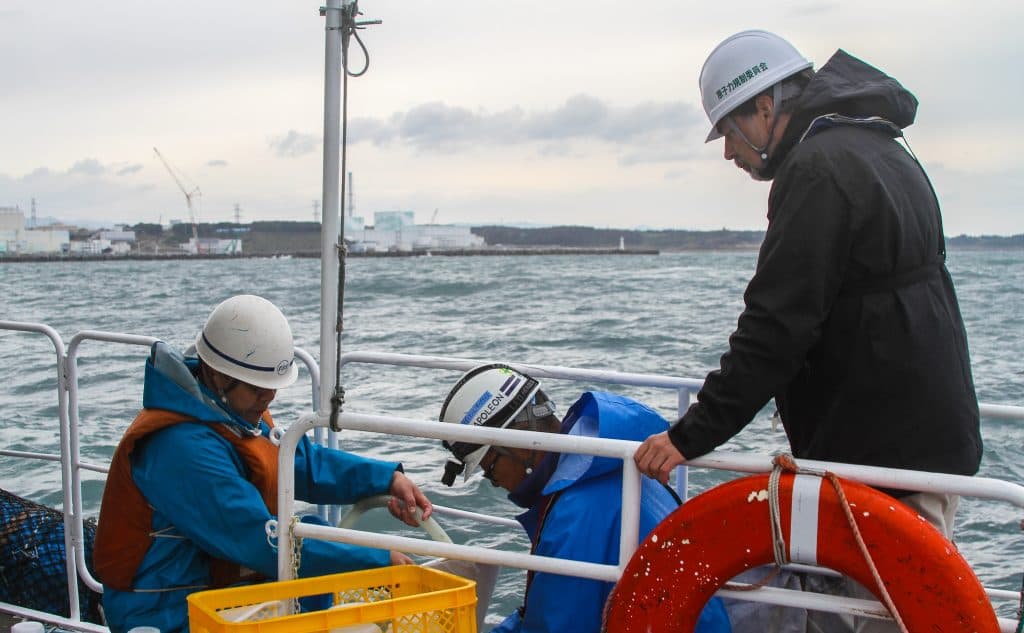
The Japanese government has made a final decision to gradually discharge the accumulated tritiated water into the ocean over a number of years. Ten years have already passed since the accident, during which more and more tanks have been filled. The volume of water continues to grow, and tank capacity is expected to be exhausted in autumn 2022. This is also why a decision on a solution had to be made.
Radioactive water that has gradually accumulated at the Fukushima Daiichi plant since the accident is stripped of all other radionuclides except tritium using the ALPS system. This is because tritium is a heavy isotope of hydrogen and cannot be chemically separated from ordinary hydrogen. Some of the water is used for cooling after treatment, but the remaining volume has so far been stored in large tanks. The sources of the continuously increasing water are groundwater that penetrates heavily contaminated areas around the destroyed reactors and accumulates in building basements. Some rainwater also reaches these areas. It becomes contaminated in the heavily contaminated locations and, after being pumped out, must be treated, apart from the aforementioned tritium, and stored in tanks.
Over the years, it has gradually been possible to reduce the inflow of new water. Buildings, especially roofs, were progressively repaired and rainwater drainage improved. A system of wells was then gradually created inland of the reactors, making it possible to pump out some of the groundwater flowing from mountainous areas before it reached heavily contaminated locations. Following an agreement with fishing industry representatives, this water began to be discharged into the ocean after thorough checks by independent experts and provided health limits were met. Another step to reduce the accumulation of radioactive water was the construction of an ice wall around the destroyed reactors. This further dramatically reduced the penetration of groundwater into the basements of the reactor buildings. Average water inflow was thus cut from more than 500 tonnes per day to below 150 tonnes per day.
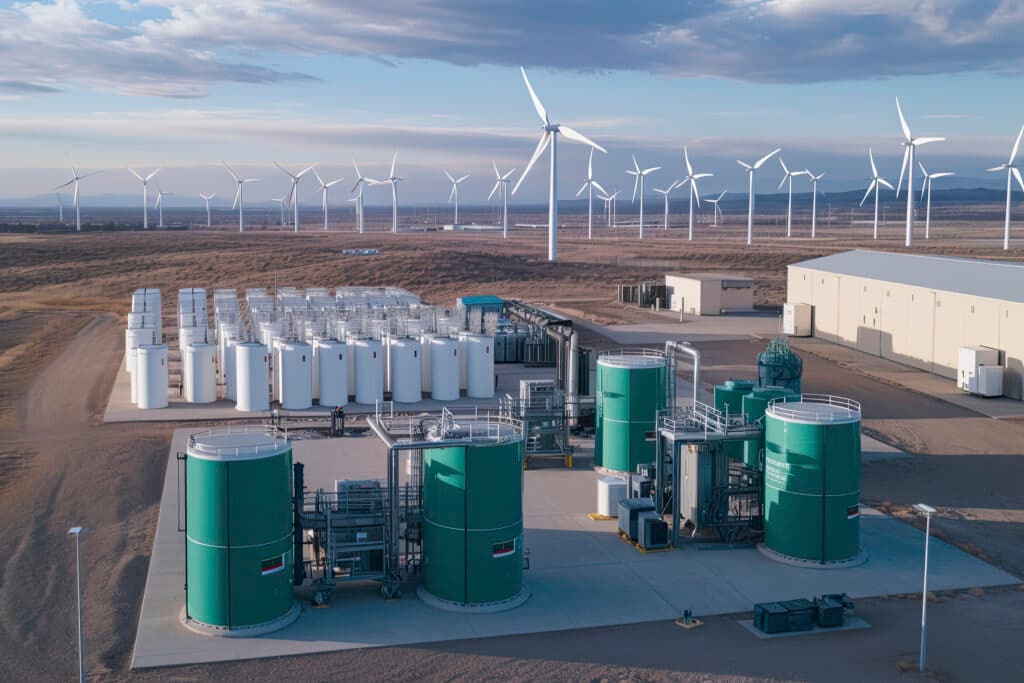
Nevertheless, the volume of tritiated water continues to grow. The plant site is therefore becoming increasingly filled with tanks, and space for new ones is already running short. Total tank capacity currently stands at 1.37 million tonnes of water, and it is expected to be completely filled by autumn 2022. It was therefore clear that a decision had to be made on what would ultimately be done with the treated water containing only tritium.
Tritium is part of the environment. Like radioactive carbon C14, it is produced through the interaction of cosmic radiation in the atmosphere. Its radiological risk is also very low. It is a pure beta emitter, and the emitted electrons have very low energy. In air, they travel no more than 6 mm, while in water they are stopped by a very thin layer. Moreover, it is an element that does not accumulate in the body.
This is also why, in principle, limits on tritium activity do not need to be as strict as those for certain other radionuclides. In surface waters that are also used as sources of drinking water, the limit in most European Union countries has recently been set similarly to that for other radionuclides, at 100 Bq/l; Finland, for example, has set it at 30,000 Bq/l. At Fukushima, water will be discharged only if its tritium activity does not exceed 1500 Bq/l, which is one-fortieth of Japan's safety limits and one-seventh of the World Health Organization's recommendation for drinking water. For nuclear facilities, such as the Czech Temelín and Dukovany nuclear power plants, restrictions are set in relation to annual tritium releases. For the discharge of tritiated water at Fukushima, annual discharged tritium activity is expected not to exceed the levels released by the plant during its operation. This was roughly 22 trillion Bq, or 22 TBq. It is also worth recalling that gaseous tritium is used in some lighting devices employing GTLS (Gaseous Tritium Light Source) technology. Here, activity is around GBq, and even if broken, this tritium does not pose a dosimetric or health risk.
Meeting the aforementioned limits is precisely why the tritiated water needs to be diluted and discharged slowly. The tanks will therefore be emptied over more than ten years. Everything should be prepared by 2022. This mainly concerns facilities for dilution and for monitoring not only tritium activity but also any admixture of other radionuclides. As part of the preparations, limited discharges will be tested and a detailed study of environmental impacts will be carried out. It can be assumed that everything here, too, will be subject to independent scrutiny and oversight by fishing industry representatives, and possibly foreign experts.
Thorough oversight and communication with affected communities are the most important things. As the data above show, these discharges pose no environmental problem. The main issue is therefore fishermen's concern over what impact the fact of the discharges will have on customers' willingness to buy their products, as fishing is now returning to pre-accident levels. Another problem is the negative stance of some of Japan's neighbours, such as South Korea, Taiwan and China. This is the main reason why Japan's decision-making on these discharges took six years. The most important issue, therefore, is how successfully this approach and its implementation can be communicated to fishermen and to the Japanese and foreign public. This is also why Japan involved the International Atomic Energy Agency and foreign experts very intensively in the assessment and discussions. They carefully studied the planned procedure and fully approved it.
The decision on what to do with the accumulated tritiated water is another step towards dealing with the consequences of the accident at the Fukushima Daiichi nuclear power plant. I described the current state of the plant and the reconstruction of affected areas ten years after the accident in a recent article. The second edition of my book Fukushima Daiichi Afterwards has also been published in recent days. At the end of the second edition, an appendix has been added covering everything that happened up to March 2021, along with a calendar at the end of the book. In this case, it is purely an e-book available from the Kosmas online bookstore on this page.
Translation disclaimer
This article is a machine translation of the Czech original and has not yet been fully reviewed. In case of any doubt, please refer to the Czech version.
Sdílejte článek prostřednictvím:
Topics:Opinion
You might also like
23 October 2026, 11:01
23 October 2026, 06:34