23 October 2026, 14:38
Loading...
What is the future of nuclear energy? – Part 1
Vladimír Wagner
1 August 2016, 19:54
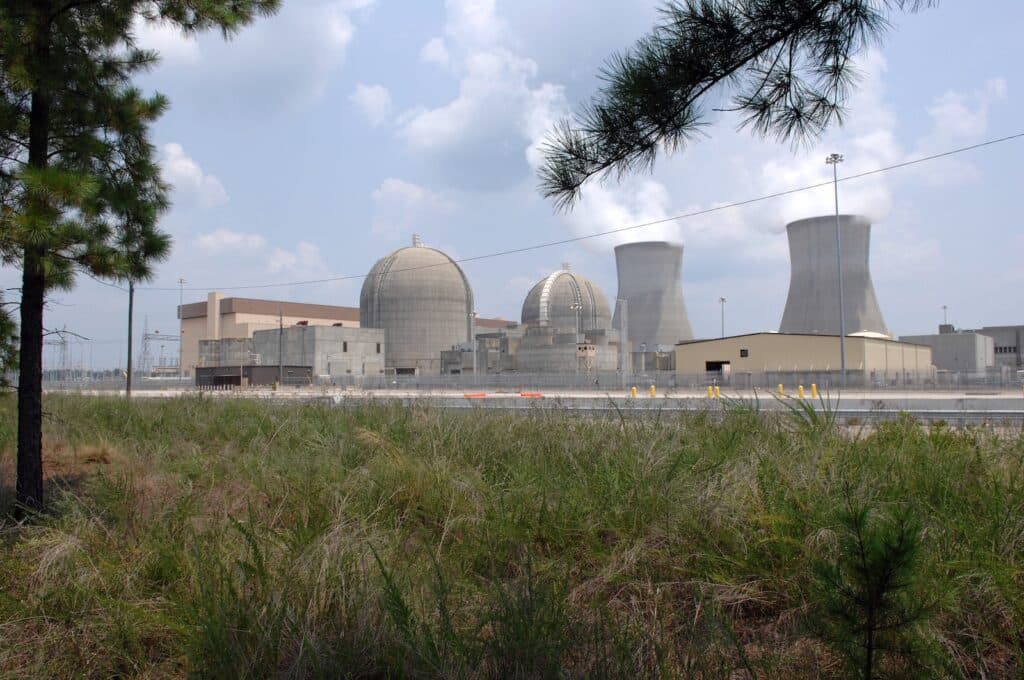
Several articles have recently been published on this website (for example here, here and here) analysing developments in low-carbon energy in recent years and future trends. Here too, especially in the discussions, claims have appeared about the unstoppable rapid development of renewables and the decline of nuclear energy. I would therefore like to look at this area and show that this is far from the case.
As was also mentioned in the links above, the 10 reactors commissioned last year represent a record for recent decades. The last time 10 reactors were brought into operation in a single year was exactly a quarter of a century ago. Let us recall that 5 reactors were commissioned in 2014, and the same number in 2013. Of last year’s 10 new reactors, eight were Chinese and one was in South Korea. The last was an old Russian holdover project: Rostov 3. Construction of this four-reactor plant began in the early 1980s. However, the units were only completed in 2001, 2010 and 2015, while the last one should be commissioned next year.
In the first half of 2016, a further 5 reactors were commissioned (3 Chinese, 1 Korean and 1 American). The US reactor is an old holdover project. After around 20 years, a new reactor was again commissioned in the United States. It is the 1150 MWe Watts Bar 2 unit near Spring City, Tennessee. The previous most recently commissioned unit in the US was the first unit at the same plant, which began operation in 1996. Watts Bar 2 began construction in the 1980s, and its construction was halted in 1986 when it was roughly 55% complete. Construction resumed in 2007, and it began operation this year. The number of nuclear units in the US has thus returned to 100. We will return shortly to the Korean Generation III unit in greater detail.
The second half of 2016 also got off to a good start
The second half of 2016 also got off to a good start, with another Chinese unit, Fang-čcheng-kang 2 (Fangchenggang 2), commissioned in July. In addition to several other Chinese units, Kudankulam 2 in India should also be commissioned. This is an improved Russian VVER1000 model, such as those at Temelín. The two units at this plant are the largest in India and now account for more than 30 % of the installed capacity of nuclear units in the country. This shows that commissioning these units is a welcome boost to low-carbon electricity generation. Immediately before they were commissioned, nuclear power supplied around 3,2 % of electricity in India, hydropower 11,7 % and wind 3,8 %. Fossil sources, dominated by coal, supplied around 80 % of electricity.
Interestingly, these units are partly used for water desalination and supplies to surrounding villages. Large areas of India face problems with access to sufficient quality water. The small desalination plant has a capacity of 426 m3/h. This year, the BN800 fast sodium reactor in Russia will be included among officially operating reactors, while a 500 MWe fast sodium reactor in Kalpakkam, India, will also be commissioned this year or next. It is therefore clear that 10 units, and likely more, will begin operation this year as well. This confirms the rising number of completed units, especially in developing countries.
The current years are to a considerable extent a turning point for nuclear energy
The current years are to a considerable extent a turning point for nuclear energy. They will see the transition from building Generation II reactors to Generation III reactors. South Korea is one example. Last year, the Sin Wolsong 2 (Shin Wolsong 2) reactor was commissioned there; it was the last OPR-1000 type and belongs to Generation II. This year, the Sin Kori 3 (Shin Kori 3) unit was completed, the first APR1400 reactor belonging to Generation III. All further units under construction are Generation III APR1400 reactors. Sin Kori 4 should be completed next year, and Sin Hanul 1 and 2 (Shin Hanul) in 2017 and 2018. The same reactors are also being built in the United Arab Emirates. Barakah units 1 to 4 should be completed successively between 2017 and 2020. It is clear that KEPCO should have an operating Generation III unit both in South Korea and abroad. This is a very good starting position for offering this reactor internationally. Construction of a further four of these units should begin soon, namely Sin Kori 5 and 6 and Sin Hanul 2 and 3. Several further units are planned, which should be more modern and larger.
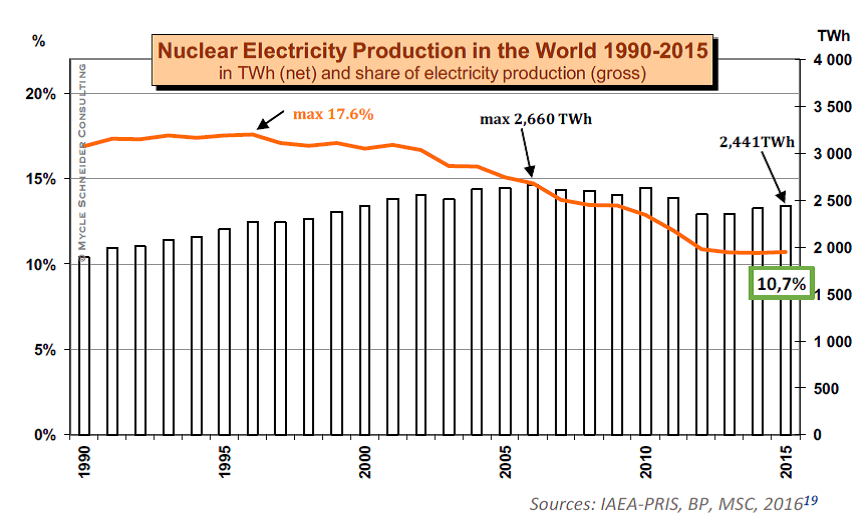
South Korea generated 157 TWh of its electricity from nuclear power in 2015, representing 31,7 % of total generation. The capacity factor of Korean nuclear units is very high, at around 95 %. South Korea is on a peninsula and cannot exchange electricity with its neighbours. These and other geographical conditions limit the use of renewable sources. They supplied roughly 2,5 % of electricity in recent years. The remainder was provided by fossil sources. Their fuel is imported, which is another reason for efforts to limit their use.
South Korea is an industrial export-oriented country dependent on environmentally and economically sound electricity generation. The share of nuclear power should gradually exceed 50 % and, together with the growing share of renewables, should progressively displace fossil sources. It could thus follow the example of France, Ontario, Switzerland and Sweden, which have succeeded in achieving low-carbon power systems through a combination of nuclear power and renewables. South Korea will also be interesting to watch because its energy conditions are very similar to those in Japan. Before the Fukushima I accident, Japan had planned to pursue an energy path similar to that of South Korea. After Fukushima, the situation changed, future developments will differ, and it will be possible to compare the economic and environmental impacts of different energy policies.
Further Generation III reactors should be completed in Russia this year. These include Novovoroněž II – 1 (designated Novovoroněž 6), which will be the first VVER1200 unit. Russia would thus also gain an operating Generation III reference unit. The first Generation III units should also be completed in China this year. These are Westinghouse’s first AP1000 unit at the San-men plant; another three units of this type and two EPR reactors should be connected to the grid next year. A number of further projects involving these reactors are under way or being prepared. The further development of nuclear energy will depend heavily on how these reactors prove themselves in operational practice.
Construction of 8 new units began during 2015
Construction of eight new units began during 2015, six of them in China. I should note that only three reactors started construction in 2014. Such fluctuations result from the small numbers involved. However, this was also largely caused by the start of construction on three new units in China just before the end of last year. Construction of Fu-čching 6 (Fuquing 6) began on 22 December, Fang-čcheng-kang 3 (Fangchenggang 3) on 24 December, and Tchaj-šan 5 (Tianwan 5) a few days later, on 27 December. This is also why no new construction began in the first half of 2016. In contrast, the launch of a number of projects is being prepared for the second half of this year. For example, a decision was recently made this year to build two new Korean Generation III units and two Chinese units. At the same time, China decided to accelerate project approvals and is also moving towards lifting its suspension on starting construction of new units in inland China. Some projects should begin this year, with more in the following years.
Construction of the first of the aforementioned pair of South Korean reactors, Sin Kori 5, began in July 2016, while construction of the other, Sin Kori 6, will begin next year. In total, 62 units are now under construction. This is roughly 10 fewer than in 2013, when the number was at its peak. This shows that units are being completed successfully. On the other hand, new projects are not being started quickly enough. To some extent, this was caused by the safety review following the experience of Fukushima I. China, for example, suspended the start of construction in inland areas, in addition to other measures. The various related restrictions are now being lifted, and an acceleration in project starts can be expected. Work on several projects in China and India should begin this year.
If we assume that the current average time to complete a unit is between five and six years (the figure for units commissioned in recent years, excluding the aforementioned long-standing holdover projects), around 60 units under construction indicates around 10 completions a year. If we want to increase nuclear energy’s share in electricity generation and reduce emissions, the number of both completed and under-construction units needs to be doubled or tripled. From this perspective, it is positive that the number of planned projects is growing; there are around 170. A detailed analysis of the state of nuclear energy at the end of last year is available here.
The article will continue in Part 2…
Translation disclaimer
This article is a machine translation of the Czech original and has not yet been fully reviewed. In case of any doubt, please refer to the Czech version.
Sdílejte článek prostřednictvím:
Topics:Opinion
You might also like
23 October 2026, 11:01
23 October 2026, 06:34