
23 October 2026, 14:38
Loading...
What needs to be known before closing Czech coal power plants?
Vladimír Wagner
22 January 2021, 10:52
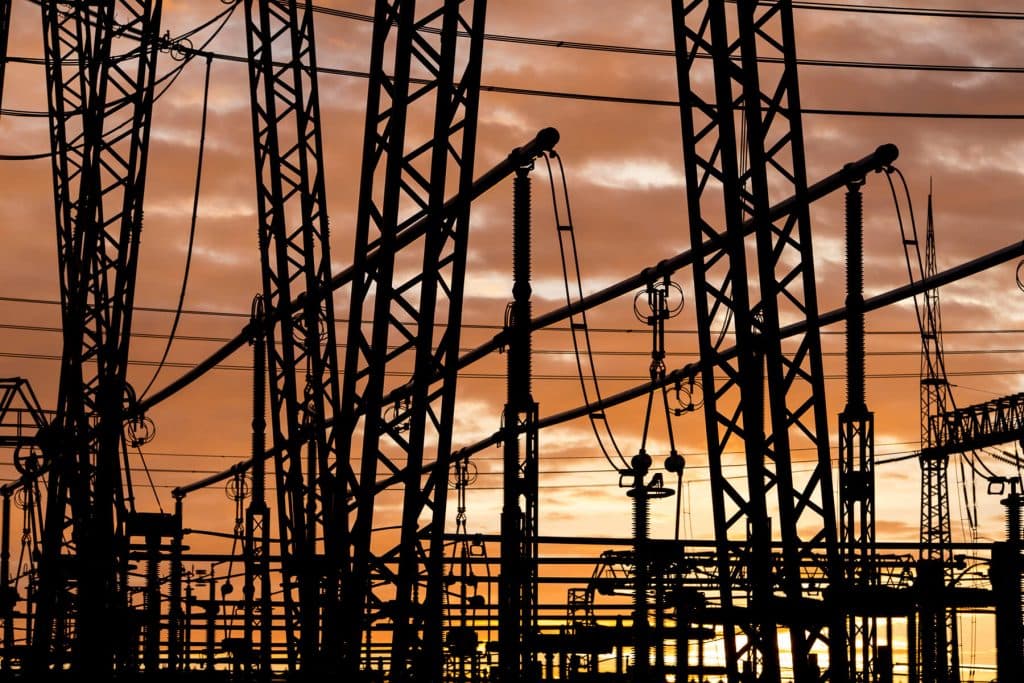
Recent events in the European transmission system show that shutting down stable nuclear and coal-fired units without replacement increases the risk of threatening grid stability and potentially causing a blackout. If our politicians fail to recognise this threat, it could lead to very dangerous developments not only in our energy system.
Setting 2038 as the date for the complete closure of coal power plants sparked considerable debate and, above all, strong criticism from environmental activists. This also led two members of the Coal Commission representing environmental activist organisations to leave the commission. A number of opposition politicians also seized on the issue very actively, focusing primarily on fighting proposed legislation that would enable the construction of one type of low-emission source needed to replace coal. Specifically, this concerns legislation defining the framework for financing and implementing the construction of a new nuclear unit. I covered this in more detail in an article last year.
In December, the opposition Pirates called for a parliamentary debate on the Coal Commission's aforementioned recommendation to end the use of coal for electricity and heat generation in Czechia in 2038. The proposal was specifically made by Dana Balcarová, chair of the parliamentary environment committee. The Pirates adopted the arguments of environmental activist organisations and, together with them, claim that the commission decided without sufficient evidence. In their view, important analyses are missing, for example on the impacts on coal regions, miners, climate protection, public health, public budgets and district heating. According to the Pirates and the aforementioned environmental activists, coal plants producing electricity for export could be closed by 2025, with the remaining ones shut down as early as 2030. And the only acceptable date among those considered by the commission was 2033.
Let us recall that the commission chose from three dates. The first was 2033, the second 2038 and the third 2043. Let us also recall that the commission did not choose even 2038 unconditionally. It made the coal plant closure dates conditional on the completion dates of the low-emission sources intended to replace them. These include the new nuclear unit at Dukovany.
It is certainly possible to agree that a final date should only be decided on the basis of a comprehensive document and knowledge of all the evidence and real facts concerning the impacts of this decision. I fully share this view. From this perspective, however, it becomes an almost absurd paradox that environmental activists and the Pirates also declare specific dates without this evidence, and dates that are dramatically earlier than those proposed by the commission. This leaves even less time to prepare and assess the relevant analyses.
Indeed, even more important than analysing the situation, implementing specific social assistance measures for workers in affected industries, and restructuring and revitalising the regions concerned, is replacing coal-fired sources of electricity and heat. If we do not have enough sources of affordable electricity, this will have dramatic consequences for the living and social standards of people not only in the regions concerned but throughout the Czech Republic.
Rather than squabbling over the declaration of some specific date, it is therefore far more important to take concrete steps to build sources that will replace these coal-fired sources. Let us recall that coal units have two important roles in the current energy mix. The first is that they supply roughly 40 % of annual electricity generation. The second may be even more important: they provide grid regulation and balance changes in electricity consumption and supply. Storage options remain very limited. And solar and wind sources, for example, only supply power in suitable weather conditions. During the current period of winter inversions, for instance, they supply very little both here and in neighbouring countries.
It may therefore be possible to reduce coal-fired electricity generation for export, but the question is how many coal units this would allow to be closed. Capacity must remain sufficient, together with nuclear units and other sources that do not depend on the weather, to ensure electricity supplies during a winter inversion. I should point out that our neighbours also want to close coal and nuclear units, so it will not be possible to rely on electricity imports from abroad at such times. These coal plants may therefore operate only when there is a capacity shortage in Czechia, but they need to be retained as backup. It should also be stressed that such an option must be addressed by legislation and relevant rules for capacity reserves and their financing.
It is therefore genuinely impossible to set a date for closing coal plants without certainty that replacements will be in place by then. At present, it is also impossible to determine with certainty when the required capacity will be completed, whether in nuclear, wind, solar or gas sources. Let us also recall that the argument for shutting down coal sources is that we want to reduce greenhouse gas emissions. However, gas sources are not low-emission. If methane leaks during extraction and transport are included, they are not much better than coal.
If the Pirates and environmental activists genuinely want a rapid closure of coal sources, I would expect them to make intensive efforts to support the construction of low-emission replacements, as well as the implementation of new grid-regulation tools and systems. However, this is not much in evidence. On the contrary, Pirate politicians and environmental activists are those fighting most intensively against nuclear power and its support at both Czech and European level. They are also the ones most often throwing obstacles in the way of specific proposals to implement these low-emission sources. From this perspective, the activity of the Pirates and Dana Balcarová in the Chamber of Deputies is difficult to understand and has nothing to do with a genuine effort to transition to a low-emission mix and replace coal units.
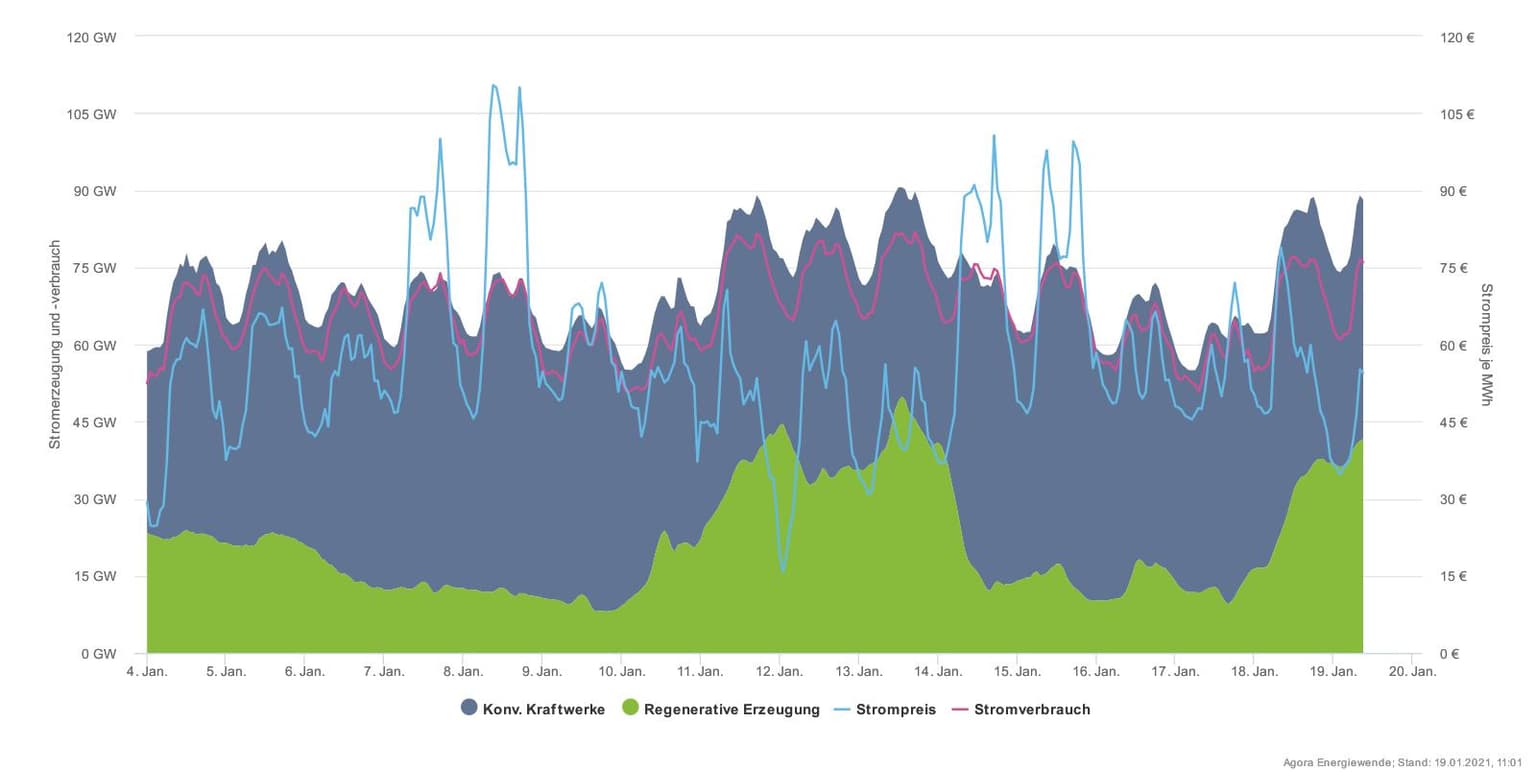
What does the course of this winter in Europe say about this issue?
Perhaps the politicians mentioned should take note of the warning sent by events in the European energy sector at the start of this year. The beginning of the year, its first working days and weeks, were marked by very weak winds across large areas of Europe. As solar sources supply only minimally in winter months, output from renewable sources was very low and the dominant share of electricity had to be supplied by nuclear and fossil-fuel sources. Such periods of inversion weather can also be very cold. This means electricity consumption rises, including its use for heating. In France, where many households heat with electricity thanks to low power prices ensured by a high share of nuclear generation, every additional degree below freezing raises consumption by hundreds of megawatts.
In France, two units at Fessenheim were shut down last year under pressure from environmental activists, mainly from Germany, while the remaining coal units are also being closed. Only renewable sources are being built, yet these provide almost nothing during an inversion. The retired stable capacity was therefore supposed to be replaced by fewer planned outages of the remaining nuclear units during winter than in previous years. However, this was not fully achieved because of delays caused by the coronavirus epidemic. Thus, even though nuclear units provided output of between 48 and 52 GWe at the start of the year despite the missing 1.8 GWe of Fessenheim capacity, the same as in the previous year, the system still approached the limits of its capabilities when there was no wind. The French grid operator therefore had to call on residents and businesses to defer consumption during peak periods amid the inversion. At that time, capacity reserves in France and the surrounding area fell dramatically, and the outage of even a smaller unit posed a serious threat to the grid.
The United Kingdom also faced a critical situation at the start of the year. In addition to windless weather, several other unfavourable circumstances coincided there. Alongside planned outages of two nuclear units at Hinkley Point B (1 GWe) and Dungeness (1.1 GW), the outage of a smaller unit at Heysham 1 (0.5 GWe) was unexpectedly extended. Combined-cycle gas units with a capacity of 2.3 GWe owned by Calon Energy were also mothballed after the company's unexpected collapse. This was compounded by the unplanned outage of the BritNed interconnector linking the United Kingdom and the Netherlands. At the same time, following Brexit, the British electricity market left the single system linking European Union grids. Capacity allocation is therefore carried out explicitly, separately from electricity trading. This generally leads to less efficient use of transmission capacity. At the start of the year, the UK electricity grid thus even faced a situation of anticipated capacity inadequacy: on the previous day, capacity adequacy was forecast to be negative, at -273 MW, between 17:00 and 18:00 on 6 January. The electricity price on the spot market consequently rose as high as 1000.45 GBP/MWh. The overall daily electricity price on the market was 145.08 GBP/MWh.
Then, on 8 January, due to windless weather and the aforementioned shortage of stable sources, the European electricity grid experienced its worst incident in the past 14 years, since the time it actually suffered a blackout. Under current conditions, in which western countries are closing coal and nuclear sources and building predominantly wind and solar capacity, the European transmission system often finds itself during windless winter periods in a situation where its northwestern part has a major generation shortage and its needs must be covered by fossil-fuel and nuclear sources from southeastern regions. The southeast is thus significantly surplus, while the northwest is heavily deficient. In such a situation, with very high electricity flows over long distances and an already tense overall generation situation, even a relatively small outage anywhere can lead to system separation and the threat of a large-scale blackout. And this is precisely what occurred on 8 January. A cascade of local faults in southeastern Europe, involving Croatia, Romania and Serbia, led to the separation of the southeastern part of the European transmission system. The rest of the European system was then left with a major generation shortage and there was a significant deviation in system frequency. It was therefore necessary to connect all possible reserve sources and use available options to increase the output of operating power plants. Rotating sources, namely thermal and hydropower plants, were of enormous importance in resolving the situation and maintaining system frequency stability. Austria found itself in a particularly complicated situation, as it is heavily dependent on electricity imports from neighbouring states during windless winter periods. When supplies from southeastern Europe were interrupted, it was largely saved by nuclear and coal sources from the Czech Republic. Such a situation must be addressed very quickly using automatically spinning units with reserve capacity. Only later does the disconnection of large consumers, with whom a possible reduction in supply has been agreed, come into play. This happened mainly in France and Italy. Alternatively, units that can still be activated are brought online. A more detailed description of the event is provided in the following article by Pavel Farkač. We must wait for a precise analysis of the situation, the possible risks and how to address them. ENTSO-E is working on it. Even so, the event is already a strong warning.
Conclusion
The events described show that the European transmission system is already reaching the limits of its capabilities during windless winter periods. And the intensive closure of stable sources in Europe is only just beginning. In Germany, for example, all nuclear units will be shut down within two years, which will be critical particularly for Bavaria, along with a number of coal units. Nuclear and coal units are likewise expected to be shut down in other parts of the European Union. The situation will then very likely worsen with every subsequent winter. Europe has not yet prepared sufficient construction of stable sources to replace those being retired. It is therefore highly likely that all European countries will face a shortage of stable sources in the coming years and, under conditions such as the current ones, there will be nowhere from which to import electricity. We will therefore be at the edge much more often, and it will not be possible to prevent a blackout.
For now, we have sufficient stable sources here and such a situation does not threaten us as much. However, if Ms Balcarová, the Pirates and others who advocate the rapid shutdown of coal units and fight nuclear power at European and Czech level through their faction in the European Parliament do not recognise this threat, we could face a genuine crisis in Czech and European energy. If they come to power and implement their declared plan to shut down all coal sources by 2030 without guaranteeing that replacement stable sources will be completed when required, they will with a high degree of probability cause the collapse of the Czech energy sector, with all the resulting impacts on living and social standards.
A lecture on the current state of nuclear power, why the Czech path to low-emission energy cannot do without it, and the pitfalls of this path is available here:
Source of the introductory image: ČEPS, a.s.
Translation disclaimer
This article is a machine translation of the Czech original and has not yet been fully reviewed. In case of any doubt, please refer to the Czech version.
Sdílejte článek prostřednictvím:
You might also like
23 October 2026, 11:01
23 October 2026, 06:34