What to do now in Czech energy? – Part one
The shutdown of German nuclear power plants and the closure of a number of coal-fired units in neighbouring countries are approaching. At the same time, our coal commission is discussing recommended dates and conditions for closing coal-fired power plants in the Czech Republic. Pressure is growing in the European Union to transition to low-emission energy, and emissions allowance prices are rising. Czech energy must therefore finally begin building generation capacity to replace coal-fired plants and ageing nuclear and photovoltaic facilities.
The Czech Republic has a state energy policy, whose latest update was carried out in 2015. It sets out a plan for gradually replacing ageing generation sources and implementing a transition to low-emission energy. Its basic idea is a gradual transition to a low-emission mix based on a combination of nuclear and renewable sources, with a progressively declining share of fossil fuels, particularly coal-fired generation.
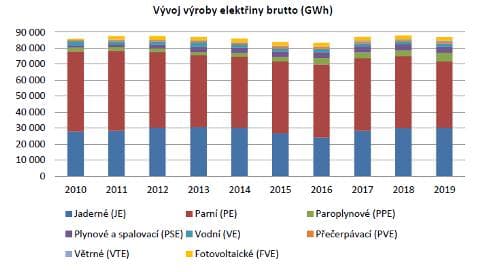
Unfortunately, it must be noted that in the five years since that update, almost nothing has been done in terms of building new generation capacity. On the contrary, the European Union's emphasis on reducing carbon dioxide emissions, and particularly on closing coal-fired facilities, has become even stronger. Coal-fired units are therefore likely to be phased out even faster than expected. The situation around us will also change, with Germany becoming an electricity importer, particularly during periods when there is no wind or sunshine.
In addition, the units at the Dukovany nuclear power plant are slowly approaching the end of their service life. Technically, they could operate for sixty years, i.e. roughly until the mid-2040s. Politically, however, shutdowns in the mid-2030s are probably more realistic. By then, the current photovoltaic and wind power plants will also be reaching the end of their service lives. It is therefore necessary to replace a large part of the current generation capacity. At the same time, replacements will also be needed for their grid-balancing services.
The need to replace the balancing role of coal-fired sources
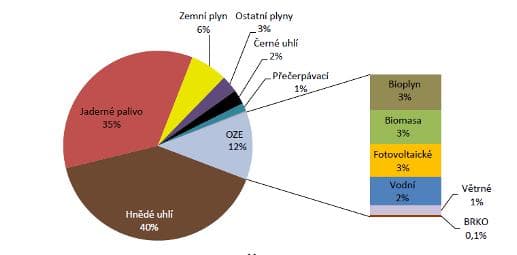
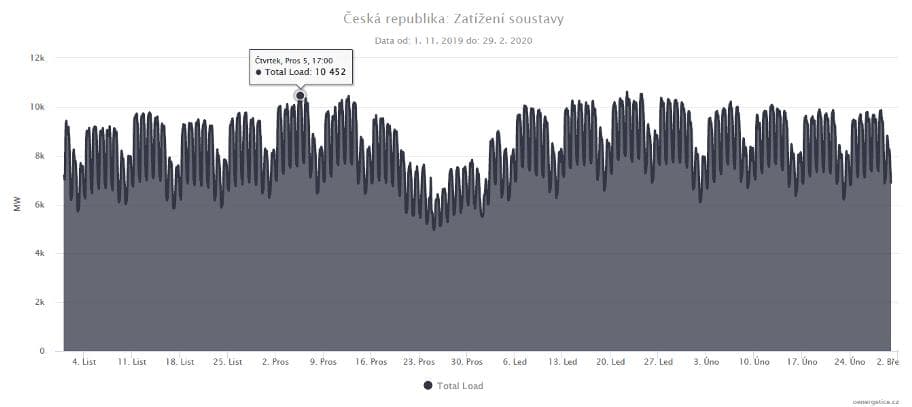
To date, coal-fired sources have played the dominant role in grid balancing. To a considerable extent, our electricity grid and its stability were built around this capability. Czech coal-fired units are generally equipped with turbines of around 200 MW. The nuclear units at Dukovany are also each fitted with two turbines of roughly this capacity. Coal-fired units are relatively flexible. However, for continuous balancing they must be in operation so that they can quickly raise their output when necessary. Naturally, they can also reduce output when consumption declines or generation from other sources increases.
It is clear that operation at reduced output worsens the efficiency and economics of such a source. This is why there is a tendency to use the option of exporting electricity from it when domestic consumption is limited. This particular aspect of using coal-fired sources was one of the reasons for the Czech Republic's high electricity exports in the past.
Balancing with combined-cycle gas units?
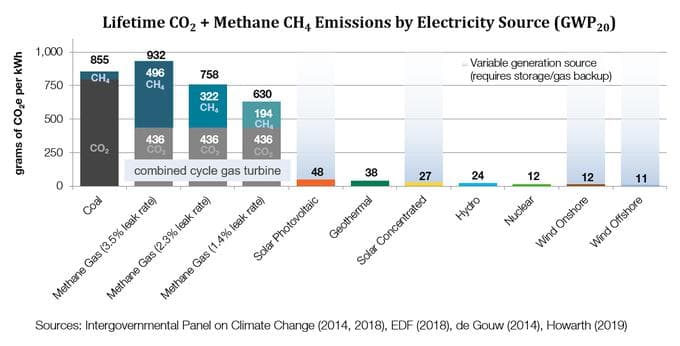
Gas-fired sources can replace coal in balancing, but in this case they are not low-emission sources. Compared with coal-fired sources, gas has greenhouse-gas emissions that are half to one-third as high, depending on coal quality. However, when emissions from extraction and transport are included, the difference from coal is much smaller. If pressure to reduce emissions increases and the price of emissions allowances rises, gas-fired sources will become undesirable. In any case, their use in power generation is incompatible with the goal of achieving carbon neutrality, which the European Union wants to attain by 2050. Construction of large combined-cycle gas units is shorter than for nuclear facilities, but preparing a specific project and then building it still takes five years or more. Conversely, demands for a faster transition to carbon neutrality could lead to calls for earlier shutdowns of combined-cycle gas units, with emissions allowance prices or other economic measures set accordingly.
A potential investor may thus find itself in the situation of Vattenfall, which commissioned the state-of-the-art and very costly Moorburg coal power plant in 2015 and is now, after only five years of operation, entering an auction for compensated early closure of the plant. The plant was built to back up wind generation in northern Germany and balance grid fluctuations caused by the growing share of variable renewable sources. Coal-fired sources being shut down in Germany are being replaced by restarted and entirely new gas-fired sources. When these will come under pressure to close is an open question, but it is certain to happen relatively soon.
Involving low-emission sources in balancing
Another option is to involve low-emission sources in balancing. In principle, nuclear sources can operate like the large combined-cycle gas sources mentioned above. Current units can already participate in balancing, and new ones are designed directly for this capability. France makes intensive use of nuclear unit load-following. In terms of adjustment in the range of tens to hundreds of MWe, the situation is similar to coal-fired and combined-cycle gas units. Nuclear power is similarly flexible in this area. It performs less well when moving to low output or even shutting down and restarting. Nuclear units are already involved in backup and balancing, and their role in this area will increase in the future, as their share in the energy mix is expected to grow.
Hydropower sources can provide very effective support for balancing. One option is to regulate water flow from reservoirs. However, it must be remembered that the scope for this is strongly dependent on the current state of water resources, as well as on the need to ensure sufficient river flow below the dam and the reservoir's other water-management and environmental functions. Pumped-storage power plants can contribute even more effectively to balancing. They are among the best facilities for energy storage. Unfortunately, hydropower potential in the Czech Republic is limited by geographical conditions and has largely already been exhausted. At present, there is most discussion of the potential of newly filled lakes created through the reclamation of land after coal mining.
There are sites suitable for pumped-storage power plants, but they are mostly in ecologically highly valuable mountain areas. It is also possible to use connections between certain existing reservoirs and newly constructed ones to develop this type of storage source. However, there is significant opposition to building any water reservoir and concern over their environmental impacts. Obtaining the necessary permits for these facilities would therefore also be very challenging. In terms of time, their potential development would be no different from nuclear power plants, whose construction sites have been selected and which have already undergone environmental assessment. Opposition to dam construction at potential Czech sites is far greater than opposition to nuclear reactors at the Temelín and Dukovany sites. The question is therefore whether and when new hydropower plants could be developed.
In any event, it would be advisable to protect these sites from this perspective and prepare the necessary studies of their potential development and environmental impacts. It would be appropriate to know which specific sources they would complement in the Czech Republic. Development could then be possible if sufficient public support were secured, their exact place in our energy mix identified, and a suitable financial model designed. In any case, the possibilities are limited. Some ideas about the scale of capacity that can be developed in this area need to be corrected. The scope for water-level fluctuations in a reservoir that has functions other than energy generation and was not built solely for that purpose, as is the case, for example, with the upper reservoir at Dlouhé stráně, is very limited.
Batteries can also be used for storage. However, their capacity and cost are currently at levels that do not even allow them to balance the daily cycle. They are, however, very effective for fast balancing, as demonstrated by the well-known battery supplied by Elon Musk to Australia, which was the largest of its kind at the time. It has an output of 100 MW and a capacity of 124 MWh. It can therefore regulate fluctuations of tens of MW over periods of minutes and hours. Their parameters and price will certainly improve. They will be used increasingly, especially in combination with wind and photovoltaic sources. It would be highly desirable to involve them in balancing in the Czech Republic as well.
It is also clear that wind and photovoltaic sources must also be involved in balancing and backup. With both, it is naturally relatively easy to switch them off when necessary in times of large surpluses. However, this means that under ideal conditions we will lose part of the electricity generated. It is therefore important to consider how to integrate these sources appropriately into the energy mix and to extend their generation period as much as possible, even at the expense of peak output. This can be achieved, for example, by orienting some photovoltaic panels not southwards but eastwards and westwards, and by choosing a different angle suitable for the respective direction. The entire plant will then have lower maximum output than it could otherwise have, but it will deliver more electricity in the morning and early evening. It will therefore fit much better into the daily load profile.
Another option is to combine intermittent sources with other sources or with storage or consumption that operates when there are surpluses. This could be a photovoltaic system with a battery or another form of storage, or with a biogas or gas-fired source. Well-known heating systems or charging equipment for electric vehicles could be intelligently responsive devices that use electricity surpluses. If such a system can operate as a functional whole that guarantees stable delivered output or balancing services, it will place far less burden on the grid and can even effectively help maintain system stability. Another advantage is that such configurations can enable the preservation of resilience and emergency electricity supplies in the event of disasters and a complete grid outage. Financial models for building new renewable sources should primarily support precisely such systems.
Any subsidies should certainly be conditional on equipment quality, its lifetime and its ability to respond to balancing needs. We should certainly prevent the purchase of low-quality panels simply because they are cheap. This then leads to efficiency declining faster and components failing early. Such experience was gained with some photovoltaic plants that were built hurriedly and as cheaply as possible in 2008 and 2009.
A very important task is to strengthen system flexibility through the effective use of current options, such as the ripple control system (HDO), and through the introduction of new measures exploiting the potential of smart grids. Linking centralised grid-balancing tools with newly emerging decentralised ones could help create a new efficient, sustainable, smart and robust energy system.
Using electricity imports
Naturally, imports can be used when necessary, if neighbouring countries have spare capacity available. In such a case, it is best when neighbours have different energy mixes and generate energy surpluses under weather conditions different from ours. All our neighbours are expected to build more and more wind and photovoltaic sources and phase out fossil-fuel sources. Particularly in Germany, installed wind turbine capacity is already approaching the level of required output, and the same applies to photovoltaic plants. Plans are to multiply these figures. Germany already has surpluses on windy and sunny days that it needs to export to its neighbours. These reduce wholesale electricity prices on the energy exchange at such times, even into negative territory. For us, this may be an advantage on the one hand. We can buy cheap electricity from Germany at these times, paid for by German consumers through levies supporting green-source subsidies. However, it represents an enormous problem for expanding wind sources in particular, but also photovoltaic ones, in the Czech Republic. We usually have the same weather as Germany. Our wind turbines can hardly compete economically with turbines on the coast of northern Germany. Even so, it is very important to develop electricity transmission capacity between neighbouring systems and make use of the efficiency of interconnection, mutual assistance and cooperation. Without spreading backup requirements across a larger grid, for example, 1,000 MW units would be too large for our system. Conversely, we help Germany transmit its electricity from north to south. It is therefore sensible to expand the capacity of cross-border interconnections.
On the other hand, Germany will shut down its nuclear units by 2022, and along with Germany, other neighbours also plan to shut down all coal-fired units in the near future. They also want to reduce carbon dioxide emissions, which means they are unlikely to build gas-fired sources for export to neighbouring countries. Germany and our other neighbours therefore plan to rely on electricity imports when there is no wind or sunshine. However, nobody is addressing who will provide the sources for us and our neighbours at those times. The following examples indicate how this lack of planning can end.
A warning from the current situation in Denmark and California
Denmark in the European Union and California in the United States are examples of jurisdictions at the forefront of building renewable sources, closing coal-fired facilities and rejecting certain low-emission sources, namely nuclear power. At the same time, they clearly demonstrate the problems that such an energy policy leads to. However, it must first be stressed that Denmark has incomparably better conditions than the Czech Republic for developing wind sources. California, meanwhile, has excellent conditions particularly for solar sources, but also very good conditions for wind generation. In addition, California has extensive desert areas with such conditions.
Denmark has very favourable conditions for using wind sources. It is a peninsula and an ideal location for building coastal or offshore wind turbines. It has therefore built a large number of them. Their total output significantly exceeds Denmark's needs. The main problem, however, arises in covering consumption when there is no wind. For these periods, Denmark mainly has sources burning gas or biomass, which it even imports from overseas. However, the installed capacity of these sources cannot cover Denmark's needs. Denmark thus alternates between periods when it needs to export very high output to its neighbours and others when it needs to import large quantities of electricity from them. Although Denmark has a large total installed wind capacity, it ultimately remains a net electricity importer. Denmark is therefore very heavily dependent on its neighbours. In 2016, with consumption of 33.3 TWh, total Danish electricity imports were 15 TWh (45 % of consumption), while net imports were 5.0 TWh (15 % of demand). If all surrounding countries switched to an energy mix similar to Denmark's current one, the entire system would cease to function and the electricity grid would collapse.
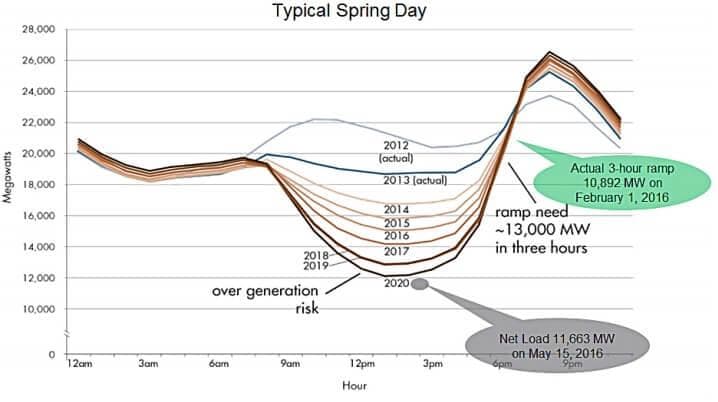
Similarly, California has large surpluses when the sun is shining intensely, but relies on imports when there is no sunshine or wind. However, this is working increasingly poorly because neighbouring states are also being pushed towards the same energy mix. Furthermore, the weather, and thus the potential for solar and wind sources, is similar throughout the region. California relies predominantly on solar sources and therefore has a very high share of photovoltaic capacity. This creates the so-called duck curve in the daily profile. It is caused by very high electricity generation during the midday peak, when the sun is highest above the horizon. This generation can even exceed demand. Conversely, in the early evening, when the sun falls towards the horizon, solar sources stop delivering electricity and do not begin again until the following morning. At the same time, lighting is needed and activity levels keep consumption high. In the early evening, we therefore need sufficient reserve capacity from sources other than solar.
In California's very warm climate, air conditioning is used extensively and therefore represents a major source of consumption. Its demand is naturally strongly dependent on solar radiation and is highest when the sun is high above the horizon. With appropriately sized installed capacity, solar power plants are therefore a very useful means of covering the daytime consumption peak. However, temperatures do not decline as quickly as the height of the sun and electricity generation from solar plants. Moreover, the efficiency of photovoltaic plants is inversely proportional to temperature. Together with the need for lighting and the increase in activity towards evening, this also contributes to the emergence of an evening peak in demand for output from non-solar sources and creates the neck of the swan in the chart. California has struggled with electricity shortages since the start of the century, but until now neighbouring states have always helped. They too, however, are transitioning to a similar energy mix due to the green ideological approach to energy policy. In California itself, the imbalance between periods of electricity surplus and shortage continues to grow. This summer also brought an extremely hot period, when air-conditioning demand increased sharply. Even neighbouring states therefore had no surplus capacity at times when there was no sunshine or wind. It was thus not possible to import electricity into California. Local energy companies had to restrict supply and even proceed with rotating, gradual disconnections of different areas and consumers.
The article will continue in part two…
Translation disclaimer
This article is a machine translation of the Czech original and has not yet been fully reviewed. In case of any doubt, please refer to the Czech version.