23 October 2026, 14:38
Loading...
Who is really greenwashing in Czechia?
Vladimír Wagner
15 July 2022, 12:53
At the beginning of last week, the European Parliament rejected an objection to the taxonomy setting the conditions for classifying nuclear technologies as sustainable and gas as sustainable on a transitional basis. Green anti-nuclear activists immediately launched another intensive campaign against nuclear power, describing its inclusion in the taxonomy as greenwashing.
An example of this approach is an article by Adam Rektor-Polánek in Deník Referendum, or Edvard Sequens's article, “Nuclear greenwashing has ultimately prevailed”, published on Ekolist. Let us recall that Edvard Sequens has been a long-standing campaigner against nuclear power since the 1990s, and was among those who, not only through organisations such as the Calla Association, Greenpeace, Hnutí Duha and others, fought intensely to prevent the completion and commissioning of the first two units at Temelín and to shut down the Dukovany nuclear power plant as soon as possible, no later than after 30 years of operation. Had he succeeded in implementing and pushing through his views, we would have no nuclear units in operation today. I think everyone can imagine for themselves what this would mean for fossil fuel use and carbon dioxide emissions in Czechia. In the European context, the intensive ideological campaign of international organisations of this kind managed to halt the development of nuclear power in the European Union and, in Germany, led to the Energiewende and the nuclear phase-out. In Germany's case, where the final three modern reactors that could still have produced low-carbon electricity for at least another 20 years will be shut down at the end of this year, this has resulted in extreme dependence on natural gas. This was also why Germany built the Nord Stream I and II pipelines and became overwhelmingly dependent on Russian gas in the power sector as well.
The difference between various energy strategies is illustrated by comparing developments in France and Germany. France has had a low-carbon power sector for several decades and, given the intensive use of electricity for heating, its consumption of natural gas and fossil fuels in these areas is low. The energy crisis, which began in the European Union following the intensive closure of nuclear and coal capacity already during this winter and deepened with Russia's invasion of Ukraine, has prompted France to return to developing nuclear power and making full use of the lifetime potential of already built units. This may hopefully bring an end to the debate over whether and when to shut down existing units prematurely, and thus ensure appropriate care for them that will prevent the problems now emerging.
By contrast, more than 40 % of electricity in Germany is generated from fossil sources, which are also used extensively for heating, especially natural gas. Germany insists on shutting down its final nuclear units at the end of this year. It will thereby lose 6 % of its electricity production, which will have to be generated predominantly by fossil sources. Germany does plan to accelerate the construction of renewable sources. However, it will increasingly encounter public opposition to ever greater land coverage, especially inland, by ever larger turbines. This opposition is growing, particularly in Bavaria, as the number of turbines and their environmental impacts increase. There is similarly strong opposition to the construction of the necessary extra-high-voltage lines intended to bring electricity from extremely centralised large wind farms on the North Sea coast to Germany's industrial south. There are also problems because the dominant share of photovoltaic panels is imported from Asia, with disruptions affecting supplies of both the panels themselves and the raw materials for their production, as well as the production of the necessary electronics. A number of recent subsidy auctions for solar and wind capacity have therefore failed to fill the volumes offered. It is also becoming increasingly apparent that the necessary storage technologies, without which these fluctuating sources cannot be used effectively, are not available.
The anti-nuclear campaign of green activists, European politicians' embrace of their ideology, and the rash phase-out of domestic coal without ensuring replacement by low-carbon sources have brought the European Union, and Germany in particular, to extreme dependence on Russian natural gas and the current energy crisis. Unless the European Union begins to confront their greenwashing and restores its capabilities in the field of nuclear power, it will fail to build a low-carbon energy sector and meet its greenhouse gas emissions reduction targets.
The inclusion of nuclear sources in the taxonomy of sustainable sources is only the first small step on this path. In general, I am not entirely convinced of the usefulness of this type of taxonomy, especially when it is based more on ideological and political grounds than on technological and scientific knowledge. It also quite often allows ambiguous or insufficiently comprehensible interpretations of the requirements for approved sources. This leads to a considerable increase in bureaucracy and creates fertile ground for corruption. Naturally, everything will depend on the specific implementation and application of this taxonomy, as well as where it will be required. However, now that this taxonomy has been introduced and is primarily intended to concern financing, inclusion in it is crucial for nuclear power. Major investments are the most dependent on financing and the attainable cost of capital.
It is encouraging that even anti-nuclear MEPs such as Luděk Niedermayer ultimately did not support the objection to including nuclear energy in the taxonomy. By contrast, the governing Pirates proved to be an extremely anti-nuclear party. All of their MEPs, alone among the Czech MEPs, voted for the objection. They sought to obscure this by saying it was primarily motivated by opposition to gas imports from Russia. Yet they did not explain how, after sinking nuclear power, they would produce this low-carbon energy. Nuclear units could replace a significant share of natural gas. The Pirates know well that gas can be imported from sources other than Russia. They also know why gas and nuclear power were linked, and how fragile and problematic the agreement on these issues in the European Parliament is. They also know that the Green parties, whose group they belong to, targeted their objection primarily at nuclear power. Pirate MEPs did not explain how they would address the more difficult and more expensive route to financing nuclear power if the taxonomy were not adopted. This is particularly relevant in Czechia, which envisages building new nuclear units as well as financing the maintenance and upgrading of existing ones, and cannot do without nuclear power on its path to low emissions.
I have the impression that not only Pirate MPs are unable to think through the consequences of their actions. The previous sections present facts that can be clearly demonstrated by figures, for example precisely by comparing the energy sectors of France and Germany. I will now allow myself one personal opinion. I am not a political scientist, so I cannot judge how close it is to reality. However, I believe that if the German energy mix had resembled the French one, and if Germany and the entire European Union had not become so heavily dependent on Russian gas and other fossil commodities, partly as a result of the ideological anti-nuclear campaign of green organisations and green ideology in general, Putin and Russia would not have dared to unleash this war in Ukraine. Putin expected a quick victory in Ukraine, not such a prolonged war. At the same time, he expected that Germany, because of its heavy dependence on Russian fossil fuels needed to implement the Energiewende, would strongly discourage support for Ukraine and ensure a restrained stance across the European Union.
Let us look at what ideologisation and greenwashing look like in Edvard Sequens's contribution. Mr Sequens acknowledges that nuclear sources are low-carbon, but stresses that there may be other environmental impacts that need to be taken into account. Yet not only nuclear power but also renewable sources have various environmental impacts. Some of these have quite dramatic environmental consequences. Coal generation, and partly nuclear generation, is being replaced in some European countries by the massive combustion of biomass. In many cases, this involves large power plants burning wood imported across the ocean. The environmental impacts of extensive biomass combustion are dramatic. Biomass combustion competes with food production and the environmental functions of the landscape. Other renewable sources also have a range of environmental impacts. Let us look at the specific problematic aspects Edvard Sequens mentions in relation to nuclear power.
- “The existing risk of a nuclear accident with dramatic consequences for the environment and human health.” He is right that a major accident involving a release of radioactivity cannot be ruled out at a nuclear unit. However, in the history of nuclear power, there have been only two cases, Chernobyl and Fukushima, with dramatic environmental impacts, and only Chernobyl also had dramatic impacts on human health. Even there, the impacts were quite limited compared with other natural and industrial disasters. A more detailed comparison of the consequences of Chernobyl and Fukushima is described in an article written shortly after the Fukushima accident. It should also be recalled that the Fukushima I accident was the consequence of one of the largest natural disasters, whose impacts far exceeded those of the power plant accident itself. Now, after less than 12 years, revitalisation and the return of residents have begun even in the most severely affected areas near the plant. It should further be recalled that renewable sources, specifically hydropower plants, have experienced more accidents with far greater impacts on both human health and the environment. One example is the largest such accident in a cascade of dams in China. For some sources, the number of deaths in an accident may be low, but the probability of an accident is relatively high. Explosions or other accidents at biogas plants are examples. If the number of casualties or damage over the full lifecycle of a source is calculated per unit of energy produced, nuclear sources perform as well as, or better than, renewable sources.
- “Nuclear power plants require very large quantities of water for operation, especially cooling. Reduced availability of cooling water, which is also the reason for limiting the capacity of the planned new reactor at Dukovany, has periodically led to reduced or even interrupted electricity generation abroad in recent years, while climate change will bring even more drought to Europe.” It should be stressed that this water does not disappear from the landscape, but evaporates and results in more rain elsewhere. It is essentially an artificial small water cycle. Nuclear units need to be built alongside appropriately sized water resources. Naturally, suitable cooling technology must also be used. Cooling towers should therefore be used even when plants are located near large rivers. In that case, some French units would not need to be shut down in summer. Dry cooling can similarly be used. It is more demanding and costly, but it can address a lack of water resources and the potential impact of climate change. However, other thermal sources face a similar problem, including those using biomass or the combustion of green gases.
- “Uranium mining causes significant environmental pollution. The Intergovernmental Panel on Climate Change (IPCC) stated that the impacts of uranium mining and processing are comparable to coal. The remediation of uranium mines in a number of countries around the world remains an unresolved problem. The mining and processing of uranium ore have also left extensive damage in the Czech Republic, which has been forced to spend approximately 50 billion koruna on remediation since 1989 and will spend another 60 billion.” Uranium mining has negative effects. However, the volume of material extracted and the number of such mines are several orders of magnitude lower than for fossil fuels. At the same time, it should be noted that the volumes of extracted materials and environmental impacts in this case are comparable for renewables, or rather even greater for renewable sources. This is especially so when the need for storage is added. It is enough to recall the impact of mining lithium, rare earths, cobalt and other materials necessary for wind and solar power as well as batteries. Spent fuel can also be recycled, significantly reducing the need for uranium mining.
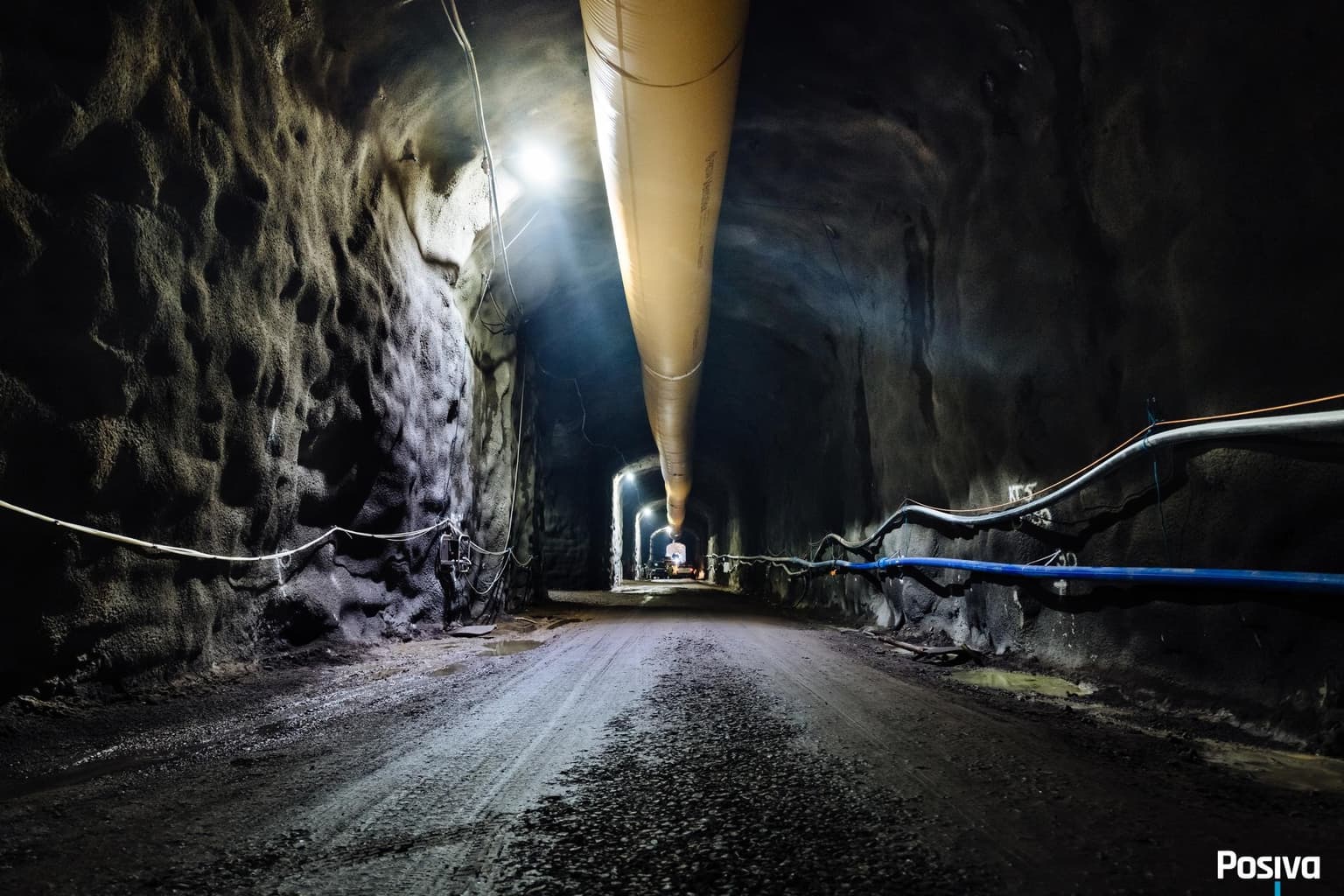
The first permanent geological repository for spent nuclear fuel is coming into operation in Finland (source: Posiva).
- “Despite decades of development of the nuclear sector, the issue of managing spent nuclear fuel and other highly radioactive waste, which will remain dangerous to the biosphere for hundreds of thousands of years, remains problematic. The search for a site for a deep geological repository in the Czech Republic is facing opposition from affected municipalities because of the fundamental impacts on the lives of their residents and risks to groundwater.” There is no technical problem with handling spent nuclear fuel. Its volume is very small. The entire volume produced during the lifetime of a nuclear power plant can be stored in a relatively small interim storage facility on the plant site. There, it is under very strict and careful supervision. There has never been a problem in this area. Moreover, with intensive use of nuclear power, its reprocessing and a reduction in both its volume and radiochemical hazard can be expected. The method of potential final disposal has also been successfully demonstrated in Finland, where a similar final repository is being developed. It can be shown here, and even the remains of the natural reactor in Gabon clearly demonstrate, that such a geological repository is safe. At the same time, the example of such a repository confirms that the taxonomy is heavily based on politics regardless of technological reality. It should be stressed that the media contain numerous misrepresentations concerning the taxonomy as it applies to nuclear sources. I discussed this in more detail in an article on Ekolist. In the case of nuclear sources, for example, this does not concern a transitional period for their use, and the time limits for specific conditions merely ensure stability for investors for the given period. The relevant conditions should be continuously assessed in line with technological developments. They may then remain in place after the given time limit or be changed. Overall, the taxonomy should focus on applying the best possible technology from the perspective of sustainability and environmental impact. This means focusing as much as possible on recycling spent fuel. It should be recalled that spent fuel removed from the reactor core must cool for several years in a pool, then for decades in dry interim storage in a special container, and only then can go for recycling. If spent fuel were to go to a geological repository without recycling, it should remain in dry interim storage even longer. Even current recycled fuels of the MOX and REMIX types can be recycled multiple times, although the total number of recycling cycles is limited. Several decades therefore pass before even unrecycled spent fuel can be placed in a permanent repository. This is why no permanent geological repository was envisaged in Czechia before 2065. If recycling were assumed, the need for it would move much further towards the end of the century. Moreover, recycling could dramatically reduce the volume of highly radioactive waste, and under a common European Union policy, such a repository would not need to exist in every EU state. The requirement for every state using nuclear power to have a completed permanent repository by 2050 is therefore rather absurd in the taxonomy. It was pushed through by anti-nuclear activists who hope in this way to prevent the construction of new nuclear units. If a taxonomy based on real scientific and technological knowledge is developed in the future, this condition should be removed.
- “Nuclear power is associated with the danger of the proliferation of nuclear materials that can be misused for nuclear weapons through civilian nuclear programmes.” It should be stressed that neither fresh nor spent nuclear fuel from power-generating nuclear units can be used to make a nuclear weapon. In spent fuel, after the long residence in the reactor core that occurs in a power reactor, there is a broad mixture of plutonium isotopes that cannot be used to make a nuclear weapon. The contribution of widespread use of nuclear technologies may certainly increase the risk of the proliferation of military nuclear technologies, but this risk is substantially greater elsewhere than in the European Union. Some countries had nuclear weapons before they had nuclear power. Moreover, the development of nuclear power in the European Union will not increase this global danger.
Translation disclaimer
This article is a machine translation of the Czech original and has not yet been fully reviewed. In case of any doubt, please refer to the Czech version.
Sdílejte článek prostřednictvím:
You might also like
23 October 2026, 11:01
23 October 2026, 06:34