
23 October 2026, 14:38
Loading...
Will private fusion facilities overtake ITER?
Vladimír Wagner
15 December 2021, 13:25
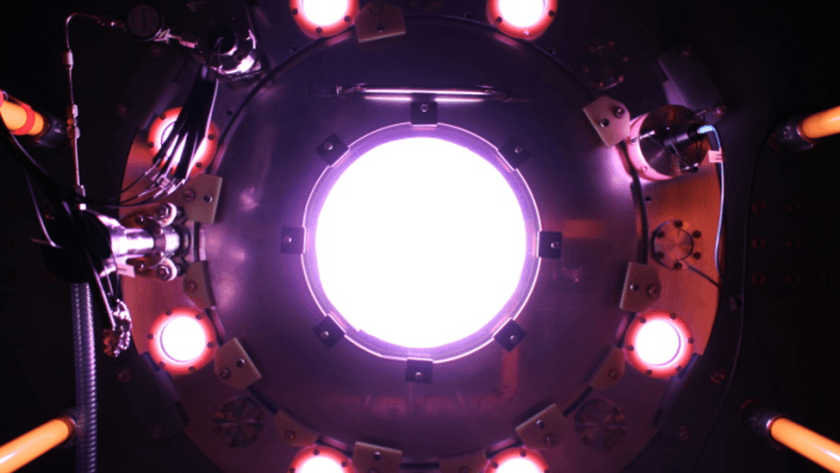
Investors have recently provided significant backing for CFS's private tokamak project. Private companies are working intensively on magnetic-inertial plasma confinement. How do private initiatives compare with public fusion research?
Several comments in the discussion beneath a recent article on a breakthrough in inertial fusion focused on private initiatives seeking to develop a fusion power plant. Most concerned initiatives working on other types of magnetic traps and so-called magnetic-inertial plasma confinement. Companies pursuing this approach include California-based TAE Technologies and HELION. Mr PetrV even expressed the view in the discussion beneath my article that large tokamaks have already been written off and that the companies mentioned are much further along on the path to a fusion power plant. To quote: “The companies tae.com and Helion are further ahead with the spheromak. The swansong of expensive technologies.” It is therefore interesting to examine the reality.
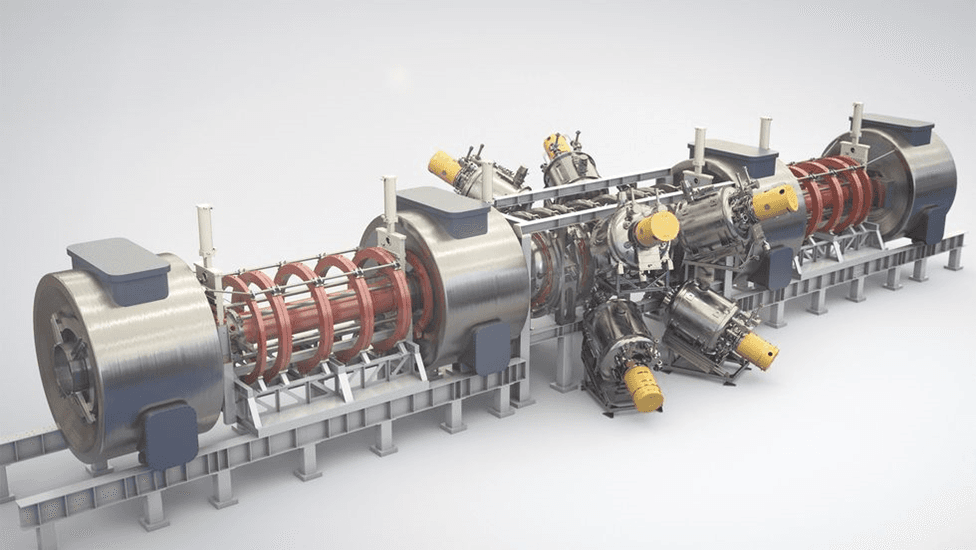
Norman fusion facility. Source: TAE Technologies
Different types of magnetic traps
Private projects are seeking to use types of magnetic traps other than conventional tokamaks. Although the differences between the various types need not be particularly dramatic. These include the spherical tokamak and the aforementioned spheromak. In the latter, plasma is also formed into a toroidal shape. Intense internal electric currents in the plasma create a magnetohydrodynamic force that facilitates plasma confinement. There is therefore no need to create an additional external field, making this type of magnetic trap simpler. Confinement times could reach the order of milliseconds.
Magnetic-inertial plasma confinement
This approach to plasma confinement combines the characteristics of magnetic and inertial plasma confinement. Plasma of a certain density is created in a magnetic trap and then further compressed. It does not reach densities as high as those in conventional inertial confinement, so a longer confinement time must be achieved. However, it need not be as long as in purely magnetic confinement. Compression can be achieved by intense currents, which create magnetic fields and forces that compress the plasma zone. Another option is to accelerate plasmoids, for example from spheromaks, towards each other and collide them. Particle or radiation beams can likewise be used for compression, as in inertial confinement. The two methods are thus combined. Magnetic confinement is supported by inertial confinement.
Direct conversion of particle kinetic energy into electricity
Some projects envisage the direct conversion into electricity of the kinetic energy of moving charged particles, namely the resulting helium-4 nuclei. This is particularly advantageous when using the deuterium-helium-3 and proton-boron-11 reactions, which produce only charged ions. It takes advantage of the fact that moving charged particles create a magnetic field, which generates voltage and electricity. This method is not very suitable for the deuterium-tritium reaction. In this fusion reaction, neutral neutrons carry away the dominant share of the energy.
Thermonuclear reactions
A fusion reactor uses the merging of light nuclei. The most readily available reaction is that of deuterium and tritium. It has the maximum probability (the largest cross-section) at temperatures of 100 million to one billion kelvin. The maxima for other reactions (deuterium and helium-3, deuterium and deuterium) occur at temperatures almost an order of magnitude higher. The required temperature is even higher for the proton-boron-11 reaction, at roughly 8 billion kelvin. At the ideal temperature, the tritium-deuterium reaction also has the highest peak reaction probability. The peak probabilities of the other reactions are nearly an order of magnitude lower. Achieving the necessary product of density and confinement time is therefore more demanding. It is no coincidence that deuterium-tritium fusion is considered the first reaction to be used.
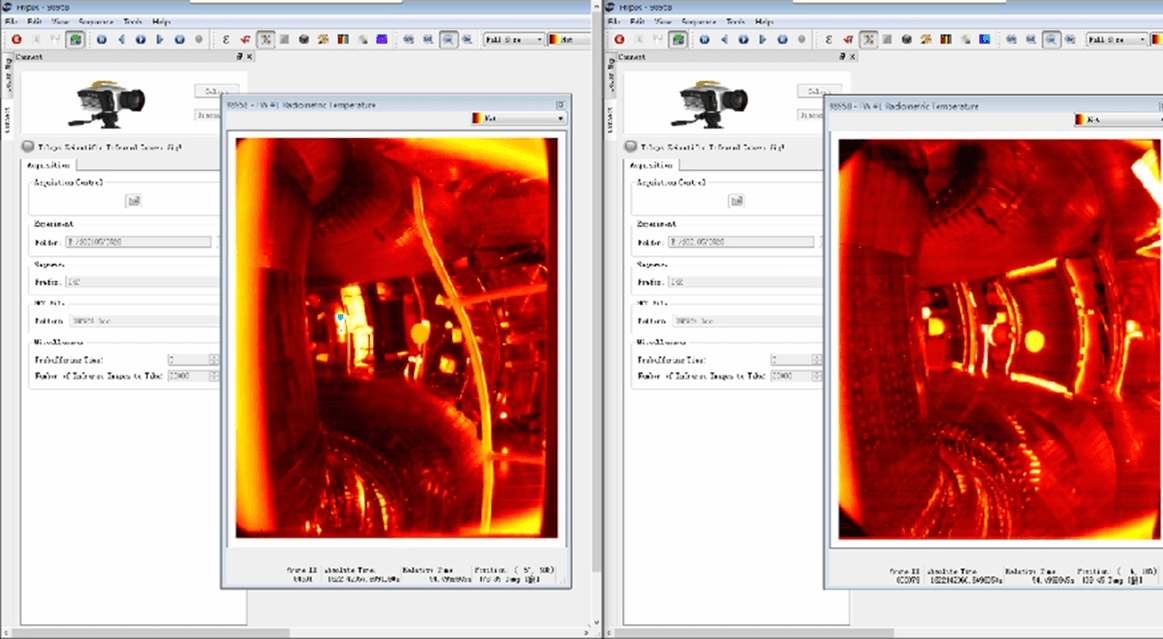
View of the internal components of the EAST tokamak. Source: Xinhua
Required conditions
Let us recall that the Lawson criterion for ignition is roughly 1020 m-3s. At the NIF facility, plasma density reaches 1032 m-3. The confinement time is around 4 nanoseconds. This yields a product of plasma particle density and confinement time of around 1023 m-3s. The temperatures achieved exceed 50 million kelvin.
Tokamaks achieve plasma densities of roughly 1019 to 1020 m-3. Confinement times are currently measured in single seconds and, in leading cases, reach hundreds of seconds. The product thus exceeds 1020 m-3s.
Systems using a combination of magnetic and inertial confinement could, depending on their type and quality, achieve plasma densities between 1024 and 1029 m-3. The confinement times achieved could then be up to microseconds.
Records achieved by tokamaks
A number of tokamaks are currently in operation around the world. Let us look at the plasma parameters they have achieved.
In 2020, the Korean KSTAR tokamak succeeded in confining plasma for 20 seconds at a temperature of 100 million kelvin. In November 2021, it then succeeded in confining plasma at a temperature exceeding 100 million kelvin for 30 seconds.
China's EAST reactor maintained plasma at a temperature of 120 million degrees for 101 seconds in the first half of 2021. It even managed to maintain a temperature of 160 million kelvin for 20 seconds.
Let us recall that temperatures reaching up to 200 million kelvin have been achieved at the European JET facility in the UK. However, such plasma was maintained only for a few seconds.
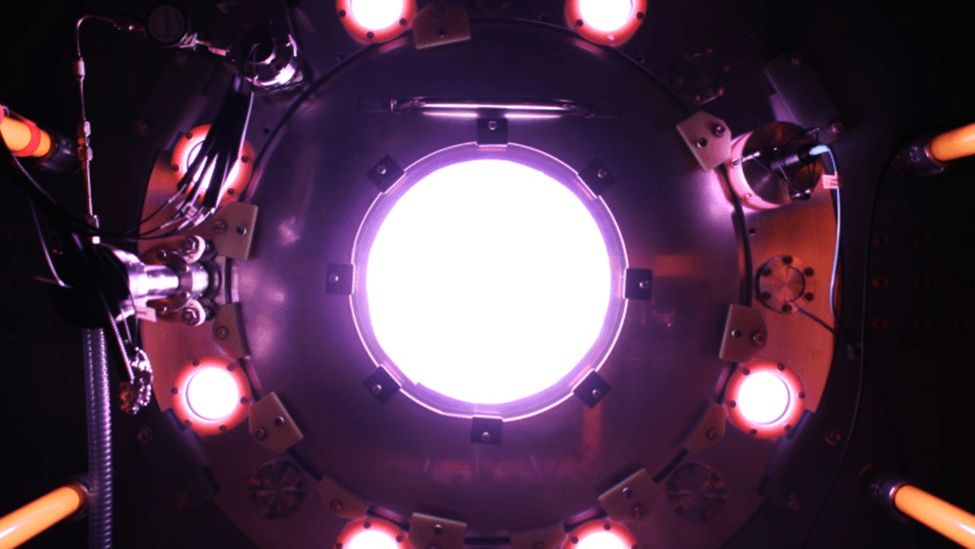
Divertor of Helion's Trento fusion facility. Source: Helion
Private tokamaks
Let us look at the latest records achieved by private facilities. TAE Technologies' Norman fusion facility reached a plasma temperature of 50 million kelvin during confinement. It should be noted that the ion temperature in this case differs from the electron temperature. For electrons, the temperature is 10 million kelvin lower.
Helion's facility has achieved temperatures of several tens of millions of degrees. Plasma density should be on the order of 1022 m-3 and plasma confinement time around 40 microseconds. The product of plasma density and confinement time is therefore on the order of 1018 m-3s. This is still an order of magnitude below the values achieved by tokamaks.
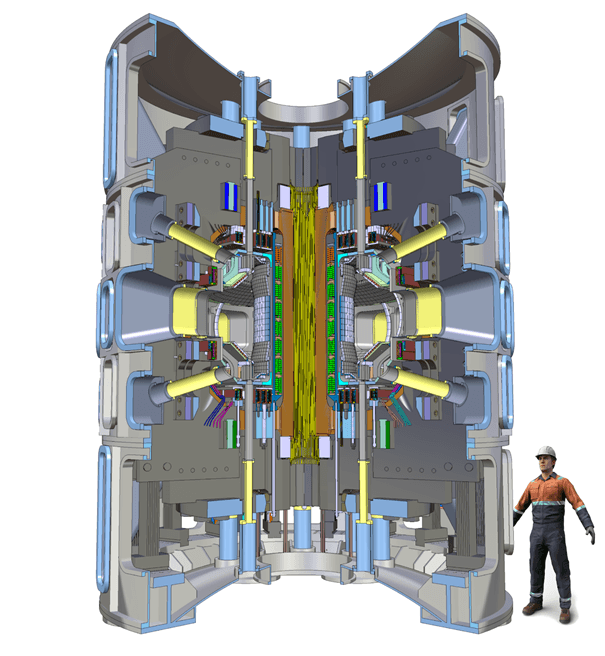
Diagram of the new COMPASS Upgrade tokamak under construction. Source: Institute of Plasma Physics of the Czech Academy of Sciences
Conclusion
As can be seen, today's leading tokamaks still have an advantage in terms of both the temperatures achieved and the product of density and confinement time. As for ITER, many tokamak properties scale with size. The capabilities of the ITER tokamak can therefore be predicted from the parameters of current tokamaks. And it is clear that its temperatures and the product of density and confinement time will reach values exceeding the Lawson criterion for ignition by an order of magnitude. There are still questions about how resilient the design will be, how fuel will be produced, or how efficient the cooling and conversion of neutron energy into heat and subsequently, in a future power plant, into electricity will be. However, it is certain that this tokamak will achieve a substantial surplus of energy from fusion reactions over the energy invested in heating the plasma.
Alternative concepts have not got that far yet. It should be added, however, that their size and complexity do not match those of the largest tokamaks, let alone ITER. A major advantage of these smaller private facilities is greater flexibility and less inclination towards a conservative approach. This makes it possible to immediately use advances in development and new equipment and technologies. For example, the use of the most advanced superconducting magnets. Focusing on directions that do not appear the most promising may end in a blind alley, but it may also lead to a technological breakthrough. Such a breakthrough could cause a less promising direction to overtake the others. Even if such a technological breakthrough does not occur, these facilities can provide highly valuable experience, knowledge and technologies that can be applied in other directions.
For a similar reason, it is important to have a range of smaller tokamaks that test technologies, materials and procedures that will subsequently be used in the large ones. Diversity and flexibility are key characteristics that enable progress. This is probably why the new upgraded COMPASS tokamak is being built at the Institute of Plasma Physics of the Czech Academy of Sciences.
It is very positive that promising private companies focused on fusion technologies are finding investors. It cannot be ruled out that one of them will deliver the technological breakthrough and transition to thermonuclear power. However, judging by the plasma parameters achieved, there is as yet no indication that anything of the kind is on the horizon. It should also be recalled that most results from conventional facilities are known from peer-reviewed publications and are discussed and verified relatively carefully. For private facilities, there are mostly only reports in newspapers or on their websites.
As I have already mentioned, a private company may achieve the technological breakthrough towards fusion power plants. Just as Elon Musk's company introduced reusable rocket launch vehicles. However, this cannot yet be predicted. PetrV's above claim in the discussion beneath my article is completely divorced from reality.
Translation disclaimer
This article is a machine translation of the Czech original and has not yet been fully reviewed. In case of any doubt, please refer to the Czech version.
Sdílejte článek prostřednictvím:
You might also like
23 October 2026, 11:01

23 October 2026, 06:34