
25 September 2026, 09:51
Loading...
EG.D unveils ten-year distribution grid development plan

Jakub Malý
18 March 2026, 13:33
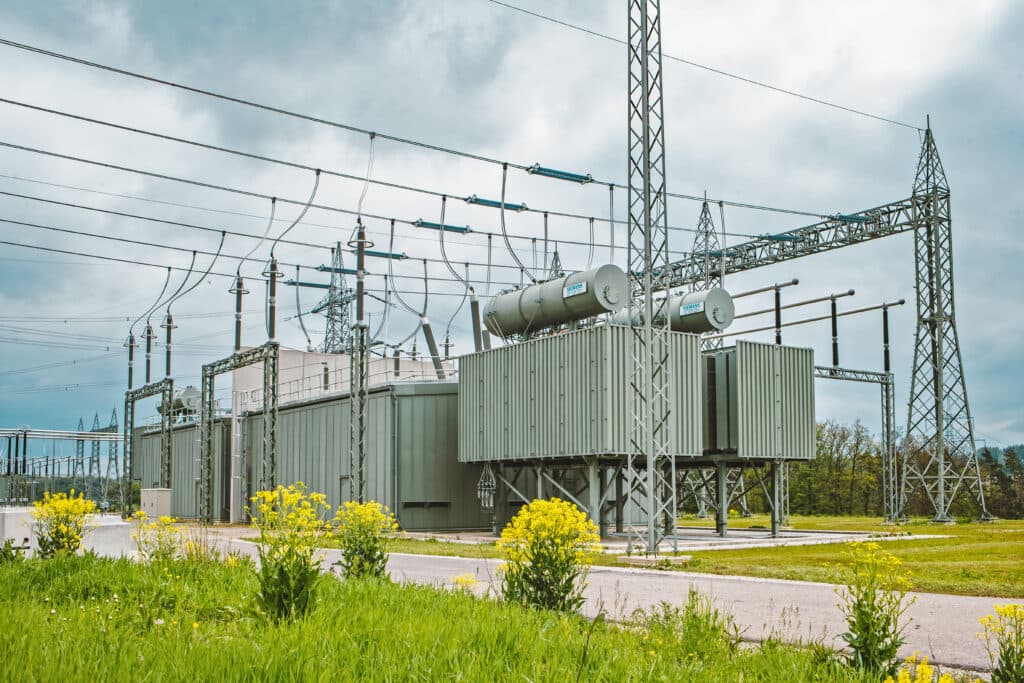
EG.D has published a draft ten-year development plan for its distribution grid for the 2026–2035 period. The document outlines planned investment in power lines, substations and grid modernisation in response to growing demand for the connection of new electricity generation sources, particularly photovoltaic power plants, as well as gradual growth in consumption linked to electric mobility, the electrification of heating and new industrial projects. The plan has been submitted for public consultation, along with the other two plans from distribution companies ČEZ Distribuce and PREdistribuce, before being submitted to the Energy Regulatory Office.
EG.D is the Czech Republic’s second-largest electricity distributor in terms of the area it serves. The company’s distribution grid covers approximately 26,499 km², equivalent to around one-third of the country’s area. The company supplies electricity to more than 1.59 million connection points, the vast majority of which are connected at low voltage.
The total length of power lines in EG.D’s distribution grid is nearly 66 thousand kilometres. Of this, approximately 2,425 km consists of extra-high-voltage lines (110 kV), more than 22 thousand kilometres of high-voltage lines and over 41 thousand kilometres of low-voltage lines. The distribution infrastructure is also complemented by 90 110/22 kV substations and more than 21 thousand 22/0.4 kV distribution transformer stations, which transform electricity for local grids.
Expected load developments are also important for grid planning. According to the scenarios set out in the plan, the maximum load on EG.D’s distribution grid could rise to 3.6–3.8 GW by 2035, compared with approximately 2.4–2.5 GW currently. Growth is primarily linked to the development of electrification in the transport and heating sectors, as well as the connection of new decentralised generation sources.
The plan also includes projects linked to major infrastructure developments. For example, the distribution company expects to reinforce the grid for the Dukovany–Brno hot-water pipeline, the connection of a Czech National Cyber and Information Security Agency (NÚKIB) facility in Brno, and infrastructure for the Brno–Přerov railway line. In some locations, including Blučina and Milotice, the capacity of the distribution grid is set to increase by as much as 40 MW.
A further part of investment is to be directed towards the technological modernisation of the grid. EG.D plans, for example, the gradual rollout of smart meters: approximately 550 thousand smart meters are expected to be installed by 2027, compared with around 158 thousand currently in operation. Monitoring equipment is also set to be installed at thousands of distribution transformer stations, enabling better oversight of grid operations and more efficient load management.
Capacity constraints in some regions
The document also includes an overview of available distribution capacity on extra-high-voltage lines (110 kV), which is crucial for connecting larger electricity generating plants. Relatively high available capacity remains in some parts of the grid – for example, on the Čebín–Bystřice nad Pernštejnem line, where approximately 97 MW is available, and on the Komárov–Teplárna Brno route, where spare capacity is around 81 MW.
By contrast, a number of other lines already show zero available capacity. Restrictions on connecting new generation sources apply, for example, to the Suchohrdly–Přímětice, Hodonín–Pánov and Otrokovice–Kyjov lines, where available capacity has already been exhausted, according to the plan.
The plan also addresses locations where the connection of new demand is restricted. One example is the area around České Velenice in the South Bohemian Region, where EG.D has been preparing to reinforce the distribution grid for more than ten years by building a new 110 kV line and substation. However, implementation of the project has so far been blocked by a complicated permitting process and negotiations over property rights along the line’s route.
Like other distribution companies, the plan also addresses the use of flexibility, meaning managed changes in electricity consumption or supply according to the grid’s current needs. However, EG.D states that flexibility is not yet used as a standard tool for addressing distribution grid capacity issues and cannot be regarded as a full-fledged substitute for investment in infrastructure reinforcement. Within the timeframe of this plan, it may serve primarily as a supplementary and temporary solution in situations where grid load temporarily rises above its technical limits.
Translation disclaimer
This article is a machine translation of the Czech original and has not yet been fully reviewed. In case of any doubt, please refer to the Czech version.
Sdílejte článek prostřednictvím:
You might also like

24 September 2026, 11:23

24 September 2026, 10:30
24 September 2026, 06:56