Expert: Small-group community energy works well, Czech municipalities are getting acquainted with it

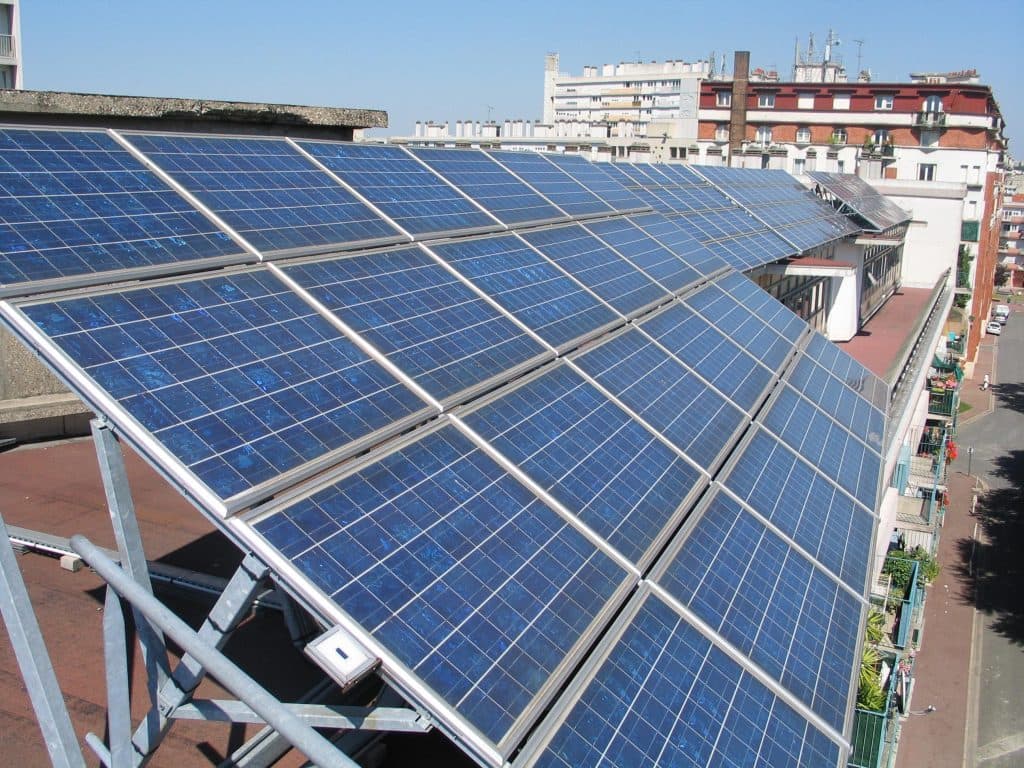
Small-group community energy has got off to a fairly successful start since last August, when it was defined by law. There are fewer energy communities—groups with large numbers of members—so far, and municipalities are still at an early stage. They are learning how it works, and some are trying pilot projects before offering energy sharing to residents, Martin Ander, a community energy project specialist at the Modern Energy Union, told the Czech News Agency (ČTK) today at the Urbis trade fair in Brno.
The fastest and simplest growth is among small groups, so-called active customers. They can have no more than 11 members, including at least one producer who shares electricity with neighbours, friends or family members. “There is no need to set up a legal entity; registering with the Electricity Data Centre (EDC) is enough,” Ander said.
At the end of May, there were around 11.100 groups. However, he stressed that, with electricity prices currently relatively low, sharing cannot be expected to generate major savings, although that could change. Distribution charges must also be paid, even if the consumer is, for example, a neighbour in a detached house. “The only saving is on the price of the electricity itself,” Ander added.
Billing in 15-minute intervals is partly a complication, but also an incentive. Sharing works only when the source is generating electricity—when the sun is shining in the case of solar power—and consumption is taking place at the same time. Another challenge, when there is more than one consumer in a group, is the so-called static allocation key, which divides the electricity generated according to a predetermined ratio.
“Dynamic sharing based on which consumer is using electricity at a given moment is not possible. Any unused electricity is therefore fed into the grid. With a dynamic system, less electricity would be fed into the grid. A dynamic system cannot yet operate in Czechia, but according to assurances from the Energy Regulatory Office (ERÚ), and once the EDC is fully operational, it should be enabled in the middle of next year. A static allocation key could also be combined with a dynamic one,” Ander said, adding that he expects electricity sharing to become more attractive then.
The number of energy communities is an order of magnitude lower, at several hundred, and they can have up to 1000 members. They must be registered with the ERÚ, and the legal relationships among members must be resolved; a larger apartment building or several buildings are typical examples. “And apartment buildings are exempt from distribution charges if the electricity does not pass beyond the building’s connection point. Those charges apply again when electricity is drawn from the grid,” Ander said. Even so, he cautioned against expecting prefabricated or other large apartment blocks to make significant savings on electricity by installing solar panels on their roofs. “If generation capacity is divided among 30 or 50 apartments, it can cover a considerable share of consumption in summer, but over the year solar power can provide around 20 percent of annual consumption,” Ander said.
He also pointed out that the law does not yet allow consumers to be members of more than one group. “We have called for this; it is possible in Austria. It should also be possible to exempt those who invest in solar power from charges for renewable energy sources. Those charges are intended to support new sources, and it makes no sense to pay them when I create a new source myself,” Ander said.
Municipalities are now getting their projects under way, including Hodonín, Lužice and Kostice in South Moravia. “For now, we recommend that they share electricity, for example from solar panels at a school, with a kindergarten, town hall or library. They gain data and practical experience of how it works. Involving residents would be administratively costly at this stage, and there is also a reputational risk that it might not work as expected,” Ander said.
Translation disclaimer
This article is a machine translation of the Czech original and has not yet been fully reviewed. In case of any doubt, please refer to the Czech version.