25 October 2026, 08:20
Loading...
EU approves floating wind farm project

Martin Voříšek
28 April 2015, 08:26
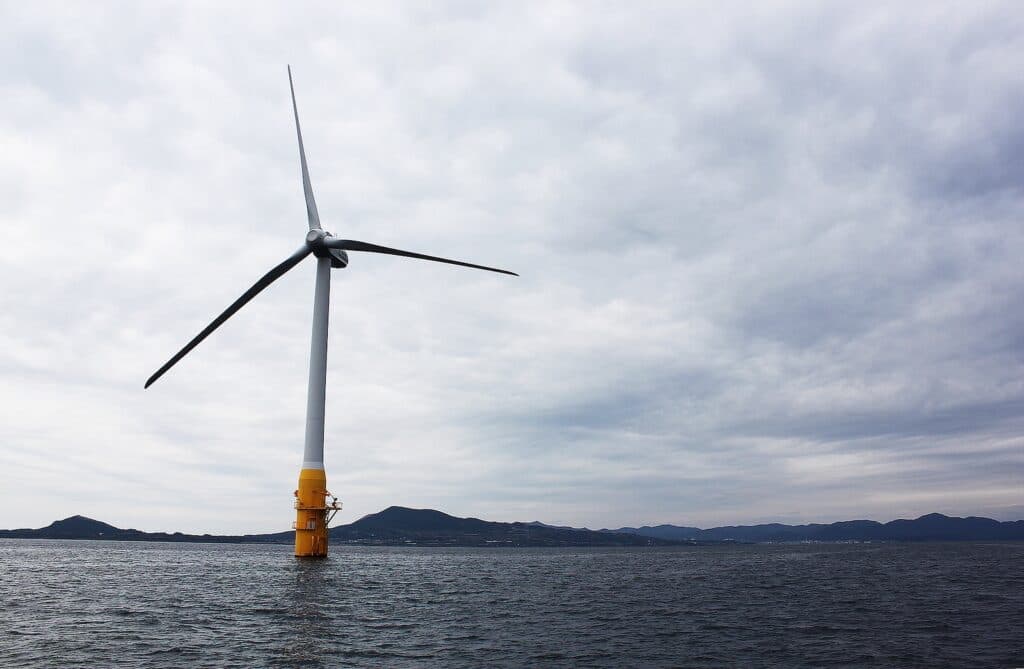
The European Commission last week approved a grant for a floating wind farm project (yes, you heard that right—did you think floating photovoltaics were where it all ended?). It is intended as a research project and is to be located off the coast of Portugal.
The floating wind power plant was approved as part of a broader scheme to support power plants harnessing ocean energy, including wave power plants and offshore wind farms. Under the broader scheme, floating wind power plants became the first recipients of European Commission support. In total, the European Commission will support 50 MW of capacity from these projects. This means that the first half of the support has already been allocated to „floating wind turbines“.
According to the Commission's press release, the project will help Portugal use new technologies to increase the current share of renewable sources in its energy mix. In addition, the associated feed-in tariff will enable the European Commission to monitor whether the projects comply with EU policy and ensure that renewables are not overcompensated (as was the case in the Czech Republic).
„The development of new renewable energy technologies is crucial if the EU is to achieve its environmental goals. Approving support for the Portuguese project is a significant step towards bringing new technologies to market.“
Margrethe Vestager, European Commissioner for Competition
The project, named WindFloat, will be tested under real operating conditions to demonstrate its applicability and benefits for the entire region. Other similar projects have gained popularity primarily because they can be built in locations with considerable sea depth.
The WindFloat project was previously launched for testing, which took place in 2012. It thus became the first offshore wind power plant installed in Portugal.
The following video shows how the wind power plant is brought into operation.
Translation disclaimer
This article is a machine translation of the Czech original and has not yet been fully reviewed. In case of any doubt, please refer to the Czech version.
Sdílejte článek prostřednictvím:
You might also like


23 October 2026, 14:38