
23 October 2026, 14:38
Loading...
Even a week after the power outage in Spain, its cause remains unclear

oEnergetice.cz, ČTK
5 May 2025, 20:54
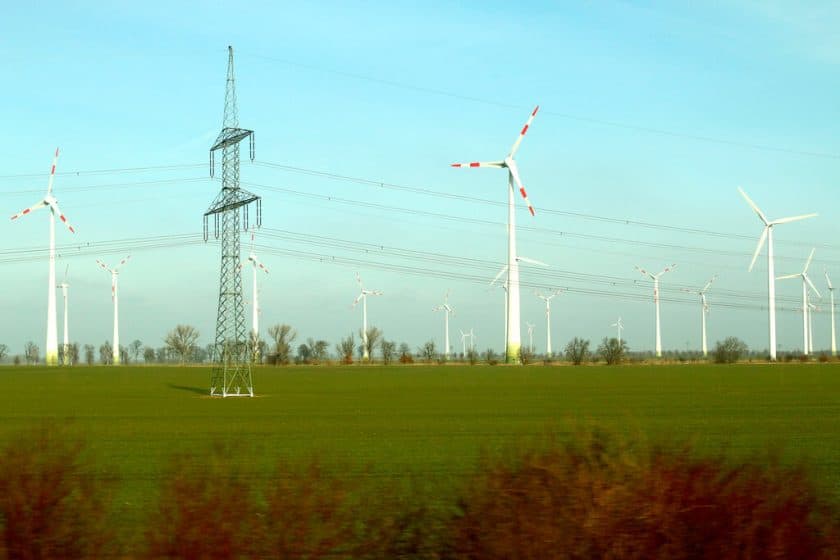
Even a week after the biggest power outage in Spain’s history, which affected the entire Iberian Peninsula on 28 April, it remains unclear exactly what caused it. According to Spanish daily El Economista, the energy company Red Eléctrica (REE) and the Ministry for the Ecological Transition are also in dispute over the issue. Many experts believe that the large share of renewable sources in Spain’s energy generation contributed to the outage.
REE, whose largest shareholder is the Spanish state, presented a document last May proposing an update to the security criteria for protecting electricity infrastructure in light of the growing share of renewable energy. REE warned that areas with a high concentration of renewable generation could see anomalous behaviour in the protection systems.
The Ministry for the Ecological Transition said it did not receive the document until January this year, local media reported today. According to the reports, the current security criteria for electricity infrastructure date from 1996 for mainland Spain and 2011 for the Spanish islands.
The ministry says REE proposed in its report that the new protection mechanisms be introduced within five years, and stated that there was no need for the changes to be implemented “immediately” and that reform was necessary in the “medium to long term”.
Spanish broadcaster La Sexta reported today that a week before the blackout, REE recorded an outage in Spain caused by a combination of incidents that had never before occurred in such synchrony. But while the system was stabilised within minutes on 22 April and the power outage was only local, the blackout on 28 April affected the entire Iberian Peninsula—that is, Spain and Portugal.
Shortly after midday on 28 April, trains across Spain and the metro in Madrid and Barcelona came to a halt, traffic lights stopped working, and the lights went out in homes, shops, schools and factories. Around 50 percent of supply had been restored before midnight, but 99 percent of the Iberian Peninsula only had electricity by the following morning, when problems with rail transport continued for many hours.
The day after the blackout, Red Eléctrica ruled out a cyberattack as the cause, based on a preliminary investigation, but a Madrid court opened an investigation into whether critical infrastructure had been attacked. The incident also reignited debate about renewable energy sources, as REE itself pointed to a loss of photovoltaic generation in the southwest of the country shortly before the blackout. The opposition criticised the government and also called for nuclear power plants not to be shut down.
Spain is one of the world’s leaders in renewable energy. Renewable sources also accounted for the majority of energy generation on the day of the blackout, and just before the outage at 12:32, their share of electricity consumption at that moment was around 70 percent, the newspaper El País wrote last week.
Translation disclaimer
This article is a machine translation of the Czech original and has not yet been fully reviewed. In case of any doubt, please refer to the Czech version.
Sdílejte článek prostřednictvím:
You might also like


23 October 2026, 11:01


23 October 2026, 06:34