
28 October 2026, 15:10
Loading...
Renewables, not gas, will supply electricity to data centers

Lukáš Lepič
11 June 2024, 15:55
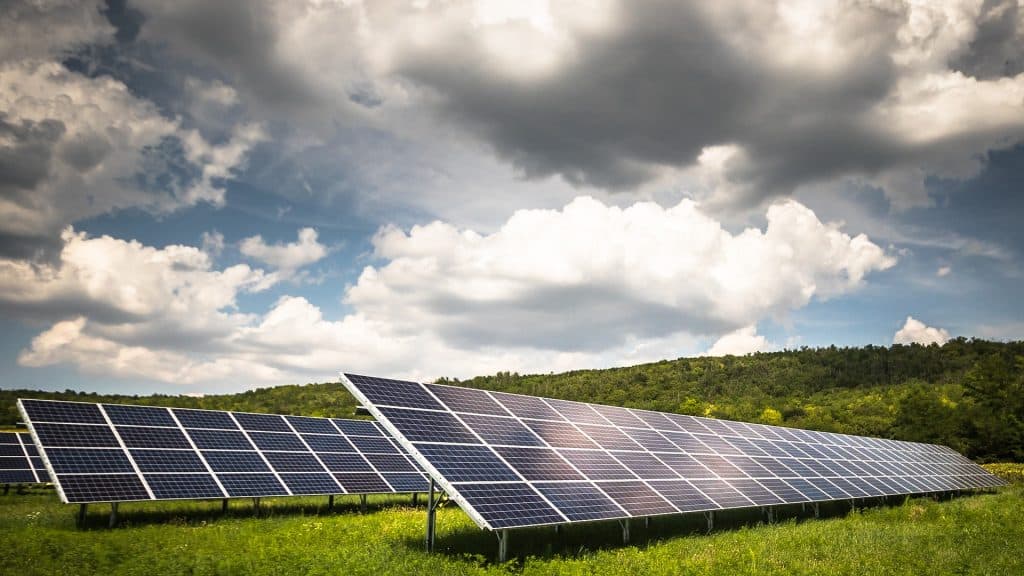
The CEO of US solar company Nextracker believes that demand from data centers will be met primarily by renewable energy. His view runs counter to statements by the gas industry. Its leaders recently claimed that the growing capacity of data centers, driven by the development of artificial intelligence, would be an important factor behind future growth in gas demand. Statements by third-party analysts suggest that gas will remain the dominant source of electricity in the coming years.
According to Dan Shugar, CEO of solar company Nextracker, the growing energy needs of artificial intelligence and data centers will be met primarily by renewable energy—not fossil fuels. Shugar pointed to more than 1500 gigawatts of power generation projects waiting to connect to the grid. According to Lawrence Berkeley National Laboratory, solar power accounts for 70 % of these projects, or 1 028 gigawatts.
Including wind power, about 1 400 gigawatts of renewable energy projects are in development or under construction and seeking a suitable way to connect to the grid. That is more than the entire installed capacity in the US. Gas projects, by contrast, account for 79 gigawatts.
“There will be some gas, but we believe that, particularly based on data published by the DOE, renewable energy will be the dominant source of energy for these data centers,” Shugar said in an interview with CNBC on Thursday. “Our industry is simply a step ahead, however you slice it,” he added.
Industry representatives, on the other hand, point to the intermittent nature of renewable generation, arguing that it is inadequate for operating data centers. “This type of consumption shows that relying on renewable energy as the sole source of power has fatal shortcomings when it comes to meeting the market’s actual requirements,”said Richard Kinder, executive chairman of gas giant Kinder Morgan.
Calculations by external organizations also support the gas industry’s claims. For example, in an analysis published in April 2024, US bank Goldman Sachs modeled that around 60 % of the total capacity needed to power data centers in the US would come from gas-fired and combined-cycle gas plants. The remaining 40 % would come from renewable sources.
Installing renewable energy is one thing; connecting it to the grid is another
As with further gas development, analysts also point to the massive backlog of renewable energy projects waiting to connect to the grid. For gas-fired generation capacity, however, this factor is not expected to become significant until after 2030. The queue of solar and wind projects waiting for grid connections should therefore lead, for now, to greater use of existing gas assets to power data centers and other projects.
“If you want to build a new renewable energy project or any other new project that connects to the grid, it will take at least two to three years to obtain all the interconnection permits,” said Maheep Mandloi, director of clean energy research at Mizuho Securities.
Shugar responded that outstanding issues can pose a problem for some projects, but once a grid connection is secured, construction moves quickly. Fossil fuel power plants have longer development cycles than renewable energy projects, are harder to permit and face the problem of variable fuel costs, he said.
The CEO also rejected the argument that changing weather conditions or intermittent generation pose a problem for renewable energy. Most of the utility-scale solar projects Nextracker is involved in are paired with battery storage, Shugar said.
Battery storage capacity in the US is expected to nearly double this year, increasing by 14.3 gigawatts. According to Lawrence Berkeley National Laboratory, a total of 2 480 gigawatts of solar, wind and storage systems need to be connected to the grid. That is almost double the current capacity of the US power grid.
Big Tech and climate targets—again
Shugar also invoked climate targets, an argument often used by renewable energy representatives in public debate today. The growing demand from data centers is expected to act as a catalyst for demand for renewable energy. “The clients developing these data centers have very serious sustainability targets and don’t want their energy to come from fossil fuel sources,” Shugar said. “Renewables are basically cheaper than gas.”
In its April report, Goldman Sachs estimated that carbon emissions from data centers could more than double by 2030 to approximately 220 million tonnes, or 0.6 % of global energy emissions, assuming that gas supplies most of their power.
However, given estimates of overall growth in electricity demand, it is highly likely that no single source will be sufficient to meet it. According to an analysis published by Wells Fargo in April, US electricity demand is expected to rise by as much as 20 % by 2030. Data centers alone are expected to add up to 323 terawatt-hours to the country’s electricity consumption by 2030, according to the analysis.
Translation disclaimer
This article is a machine translation of the Czech original and has not yet been fully reviewed. In case of any doubt, please refer to the Czech version.
Sdílejte článek prostřednictvím:
You might also like

28 October 2026, 13:08

28 October 2026, 11:10

28 October 2026, 09:08
