
28 October 2026, 15:10
Loading...
Swedish government to explore lifting uranium mining ban

Jiří Salavec
4 March 2024, 06:23
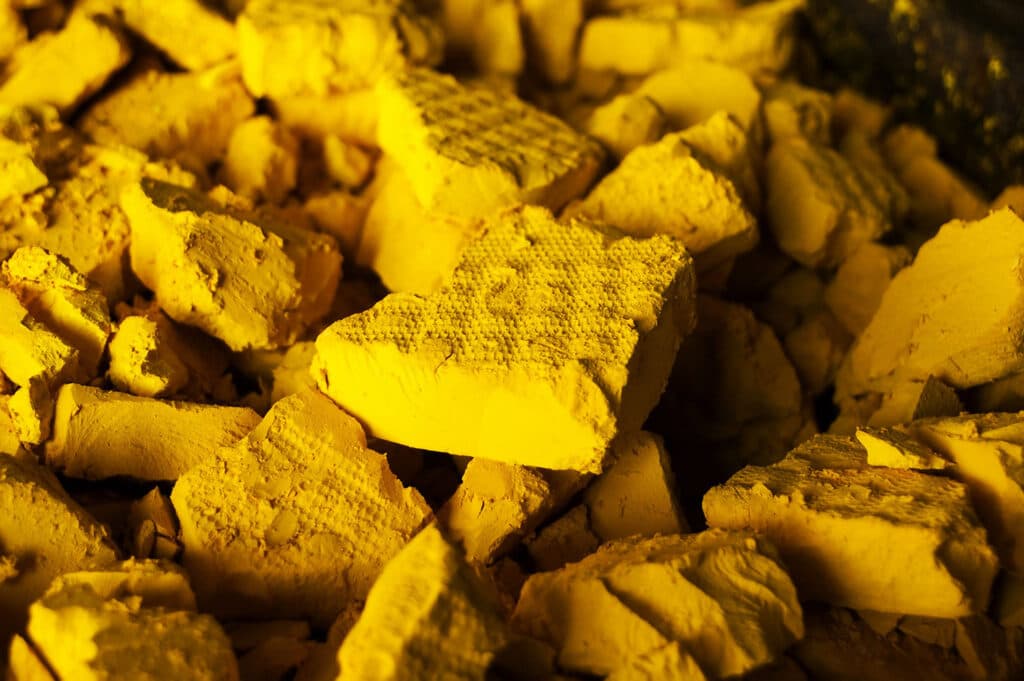
Sweden has launched an inquiry into the possibility of lifting the ban on uranium mining in the country. The aim is to identify all the necessary changes to legislation and regulations related to mining. Sweden holds roughly a quarter of Europe’s known uranium reserves, which could help the EU achieve climate-neutral and energy-independent status.
Sweden’s Minister for Climate and the Environment announced that the ministry will conduct an inquiry to analyse and put forward proposals for the legislative changes needed to allow uranium mining in the country once again. The Swedish parliament banned uranium exploration and mining in 2018.
“If the European Union is to become the world’s first climate-neutral continent, access to sustainable metals and minerals must be secured. We must make use of the uranium we have, rather than sorting it out and treating it as waste, as is currently the case because of the mining ban,” said Swedish Environment Minister Romina Pourmokhtari.
The ministry plans to announce the results of the inquiry by 15 May at the latest. Sweden currently holds roughly a quarter of Europe’s known uranium reserves, estimated at around 9 600 tonnes. The country’s three nuclear power plants use around 1 200 tonnes of uranium oxide (U3O8) each year. However, Sweden plans to build more large nuclear units as well as small modular reactors as part of a “massive expansion” by 2045.
“At present, it is not possible to grant a permit for exploration, a processing concession or an environmental permit relating to uranium. Uranium mining must be assessed under the relevant environmental legislation in the future, which means that the current ban on uranium mining must be lifted,” the ministry said in a press release.
Mining companies welcome the move
Australian mining company Aure Energy, which owns the Häggån project in Sweden, welcomed the news that the ban could be lifted. The company mines other energy metals at the site, with uranium ore as a byproduct. If the ban is lifted, the company expects to obtain around 400 tonnes of uranium oxide, which would significantly improve the economics of mining.
“The Swedish government’s nuclear ambitions go hand in hand with the ability to mine domestic uranium, reducing dependence on foreign sources and strengthening domestic and European energy supplies. Of course, it is essential that uranium is mined in a way that does not threaten the local environment or water resources. I am confident that we will be able to demonstrate this as part of the permitting process,” said Andrew Grove, CEO of Aura Energy.
Translation disclaimer
This article is a machine translation of the Czech original and has not yet been fully reviewed. In case of any doubt, please refer to the Czech version.
Sdílejte článek prostřednictvím:
You might also like

28 October 2026, 13:08

28 October 2026, 11:10

28 October 2026, 09:08
