
23 October 2026, 14:38
Loading...
Analysis: connecting more renewables in Czechia will require billions in investment

oEnergetice.cz, ČTK
16 April 2025, 15:41
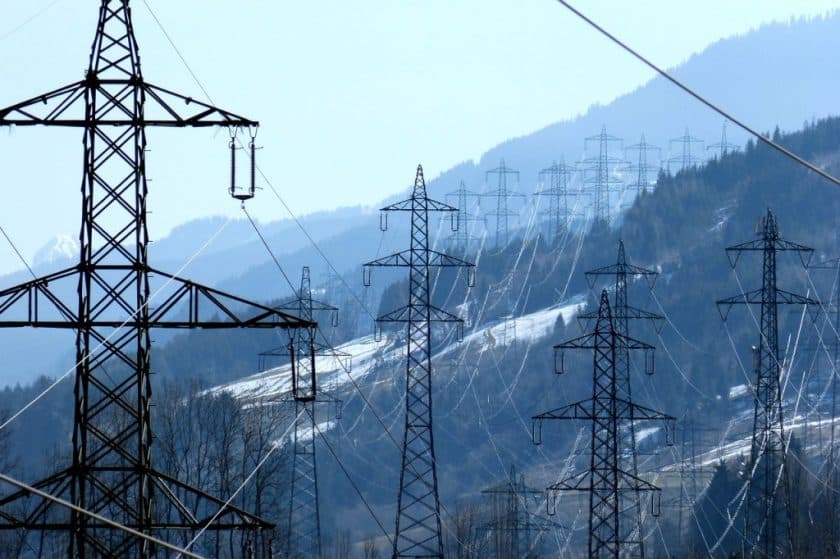
To connect more renewable energy sources to the distribution grid in Czechia, 40 billion korunas a year will need to be invested in distribution grids and the transmission system for ten years. This was stated by Brno-based consultancy EGU in an analysis prepared for the Friends of the Earth Movement.
At the end of last year, 4,8 GW of photovoltaic and wind power plant capacity was connected to the distribution grid, with photovoltaic power plants accounting for 92 percent. „Distribution system operators—ČEZ Distribuce, EG.D and PREdi—currently have around 23 GW of approved applications and approximately 9,6 GW of applications for connecting new sources that have yet to be approved. This interest not only significantly exceeds the state’s current targets, but also places exceptional demands on transmission and distribution infrastructure,“ the consultancy said.
It estimates that around 240 billion korunas will need to be invested in distribution grids and the transmission system by 2030, rising to as much as 475 billion korunas by 2035. „Annual investment costs for grid infrastructure are expected to rise by 38 percent to approximately 40 billion korunas. Grid capacity is not unlimited. If thousands more megawatts are to be connected, we must not only build new lines but also make greater use of existing ones,“ said EGU managing consultant Petr Čambala.
In addition to investment, regulatory measures will also be needed. One of the easiest to implement, EGU recommends, is a tiered connection fee, which is already in place in Poland, for example. Experts propose a simple rule: the more applications there are in a given location, the higher the fee. This could help address the current problem of applications being unevenly distributed geographically, which is causing congestion in some areas while others remain unused.
Introducing a non-refundable deposit when applying for a connection could also be effective, helping to limit speculative projects. According to the consultancy, speculative applications are one of the biggest problems with the current system. They not only block capacity for feasible or genuine projects, EGU says, but also significantly distort expectations of planned development. „There are currently a large number of capacity reservations in the system that will never be used. They block capacity for projects that could realistically be built,“ Čambala added.
The consultancy also proposed several other measures, including so-called non-firm connections. Since June 2024, distribution companies have offered these as an option for connecting to high-voltage grids, allowing them to curtail a source’s output under certain conditions without paying compensation. According to EGU, this solution could increase connectable capacity by up to 25 percent in some locations.
Translation disclaimer
This article is a machine translation of the Czech original and has not yet been fully reviewed. In case of any doubt, please refer to the Czech version.
Sdílejte článek prostřednictvím:
You might also like


23 October 2026, 11:01


23 October 2026, 06:34