23 October 2026, 06:34
Loading...
Analysts: Global markets set to see biggest-ever influx of liquefied natural gas soon

oEnergetice.cz, ČTK
23 October 2024, 17:14
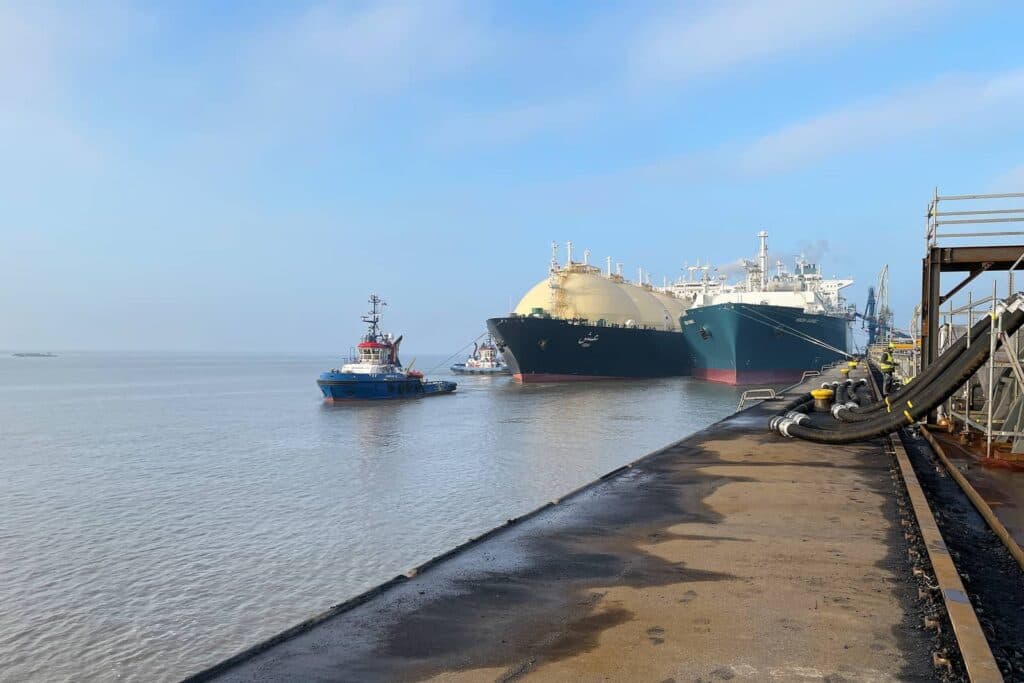
Global markets are set to see the biggest-ever influx of liquefied natural gas (LNG) supplies soon, with far-reaching and lasting effects. New supplies are likely to create a prolonged period of oversupply in the market by the end of 2026, lasting until 2030 and potentially driving prices down significantly. CNBC reported this today, citing a report by investment bank RBC Capital Markets.
„The biggest wave of new LNG supplies to date will reshape the global market in the coming years. The impact will be broader than during the previous expansion, given the growing interconnectedness of regional markets following the Russian-Ukrainian conflict,“ RBC analysts said.
More and more analysts have warned this year that weak demand growth, combined with upcoming waves of new export capacity, could lead to a massive market glut. It remains unclear whether demand will increase enough to absorb the planned new waves of supply.
Oversupply and low prices underscore the bearish mood in the LNG market, Rystad Energy analyst Masanori Odaka said. Suppliers are increasingly prioritising LNG for shipping over arbitrage opportunities. Commodity arbitrage is a trading strategy in which a trader buys and sells commodities in different markets to exploit price differences and make a profit. This means either buying a commodity in one geographical area where it is cheaper and selling it in an area where it is more expensive, or buying it when the price is low and waiting for the price to rise before selling.
Over the past ten years, global LNG trade has doubled. Last year, it rose to more than 400 tonnes from around 240 tonnes in 2014, RBC Capital said. This was largely driven by the disruption of Russian gas supplies to Europe through pipeline networks. Some traders viewed geopolitical risk as a market opportunity.
The bank estimated that global liquefaction capacity—the total amount of LNG that can be produced each year—will increase by around 50 percent by the end of the decade. The United States and Qatar will retain their positions as the largest suppliers, with their combined market share reaching nearly 50 percent in 2030.
Many private companies and state entities plan to increase capacity, not only to support consumption in Europe but also to meet expected growth in Asia. The Asia-Pacific region is the largest LNG importer, and demand there is expected to grow by an average of five percent a year. China, India and South Korea are expected to account for around 70 percent of this growth.
LNG prices have so far avoided significant fluctuations, to the surprise of some traders, despite escalating geopolitical tensions. This may be a sign that there are enough resources around the world to cushion any temporary disruption from the Middle East, Woodside Energy chief executive Meg O’Neill told CNBC.
The International Energy Agency (IEA) has warned that further challenges in the LNG sector could affect global markets. Winter is approaching in the Northern Hemisphere, and existing contracts for Russian gas supplies to Europe via Ukraine will expire at the end of this year. This could mean the end of all Russian gas supplies to Europe via Ukraine and could require higher LNG imports into Europe next year, as well as a tighter global balance.
Translation disclaimer
This article is a machine translation of the Czech original and has not yet been fully reviewed. In case of any doubt, please refer to the Czech version.
Sdílejte článek prostřednictvím:
You might also like


22 October 2026, 10:45