20 October 2026, 15:34
Loading...
Are France's nuclear problems linked to frequent power modulation? Civaux 2 reactor suggests they may be

David Vobořil
7 July 2025, 11:17
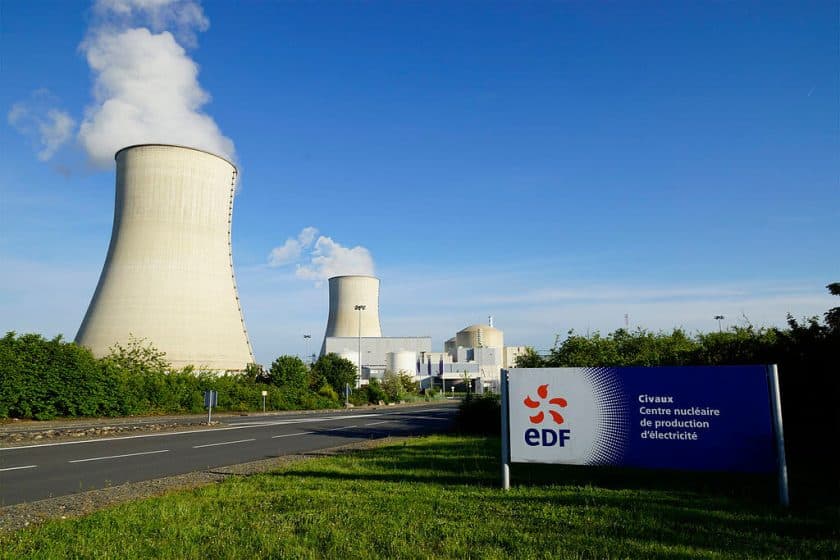
Of the French nuclear reactors where cracks were recently detected again in piping, Civaux 2 had its output modulated more than any other reactor of its type last year.This is according to a study by analytics firm Kpler commissioned by Montel. The French Nuclear Safety Authority (ASN) has warned of the possible risk of increased component wear associated with power modulation.France is now analysing a possible link.
The frequent modulation of nuclear reactor output, which has become increasingly common in France recently due to the growing share of renewables in electricity generation, has raised concerns about a possible link to stress corrosion cracking in nuclear reactor piping.
Civaux 2, where cracks have recently been detected again in piping as a result of stress corrosion, was the 1.5 GW reactor most frequently subjected to power modulation. Its output was reduced by a total of 594 GWh as a result of modulation.
The 1.3 GW Cattenom 3 unit was subjected to power modulation to a greater extent, with its output reduced by 1 511 GWh—the most of any reactor in France. Stress corrosion cracking (SCC) was detected in piping at Cattenom 3 in 2022.
Of the 14 reactors most frequently subjected to power modulation in 2024, seven belong to the 1.3 GW and 1.5 GW capacity categories. According to experts, these reactor types are more susceptible to SCC than older 900MW reactors because of their design. Differences in the design of the safety injection system are often cited as the cause.
Link between modulation and corrosion not yet confirmed
Kpler analyst Alessandro Armenia noted that the study found no direct link between power modulation and the occurrence of SCC. Nevertheless, the hypothesis is being actively investigated—particularly in connection with the extreme outages of 2022, when France recorded its biggest year-on-year decline in nuclear generation in the past 30 years.
French operator EDF and ASN are currently analysing possible factors contributing to the formation of SCC. Factors under consideration include high dissolved oxygen levels in the water, pipe geometry and engineering repairs carried out during construction.
Power modulation of French reactors on the rise
Power modulation across France's entire nuclear fleet is increasing year on year. In 2024, it totalled 27,3 TWh, 18,7 % more than in 2023 (23 TWh) and considerably more than in 2021 (18,9 TWh) or 2019 (19,5 TWh). This trend reflects both the need to adapt to greater grid flexibility as the share of renewables in electricity generation grows, and technical constraints that EDF is gradually identifying.
Translation disclaimer
This article is a machine translation of the Czech original and has not yet been fully reviewed. In case of any doubt, please refer to the Czech version.
Sdílejte článek prostřednictvím:
You might also like
20 October 2026, 12:55
20 October 2026, 10:49
20 October 2026, 06:13