
23 October 2026, 14:38
Loading...
Czech apartment block residents to save by sharing electricity from their own solar PV
Ekonews.cz
22 October 2022, 21:01
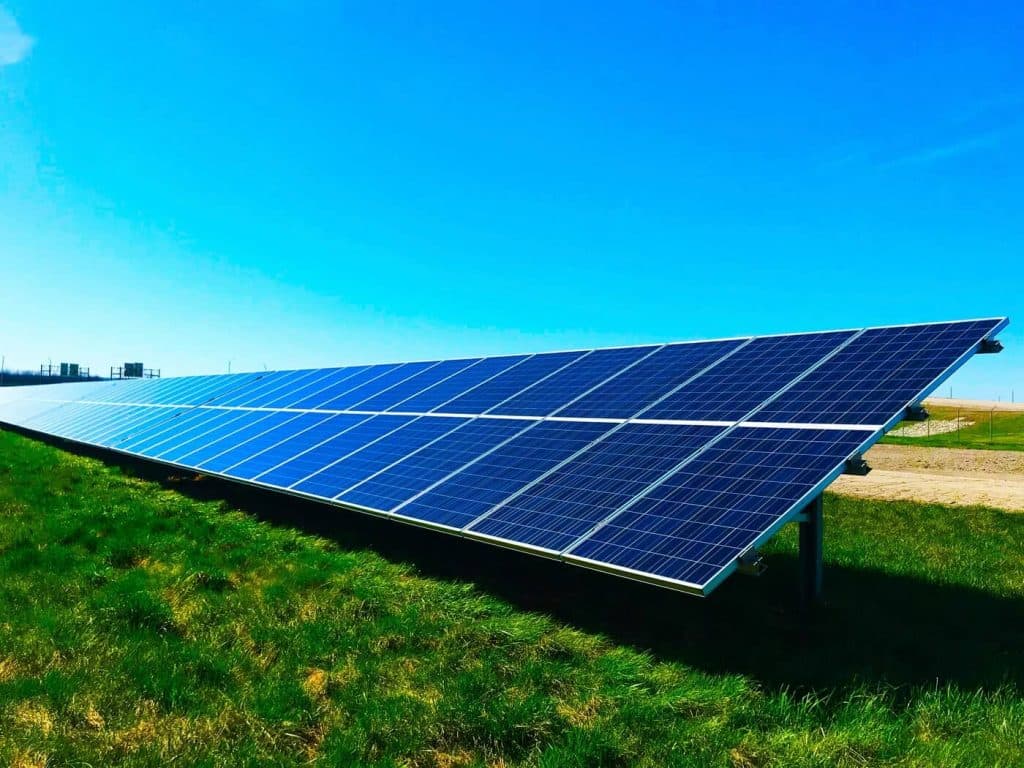
As early as next year, people living in apartment buildings, including prefabricated blocks, should be able to save money if they install solar PV or another shared electricity source on the roof. Until now, solar panels could mainly supply common areas or lifts, rather than reduce electricity bills in individual flats.
The changes are to be enabled by the planned Electricity Market Rules decree, which has already undergone consultation. “It is expected to take effect from January next year,” says Michal Keborg, spokesperson for the Energy Regulatory Office. Comments are now being addressed, and the government’s Legislative Council will still review the document.
Until now, electricity from a shared generating facility in an apartment building could not be supplied to individual flats, meaning residents could not save on electricity drawn from the public grid. For the time being, only a complicated arrangement is possible, in which the building’s connection points are merged, but individual households then lose the option of choosing their energy supplier. This is precisely what the new decree will change.
Residents will agree on how much each person takes
“Sharing is based on the principle of introducing a primary connection point, one for the entire building, and associated connection points for each household taking part in sharing the electricity produced,” says the Energy Regulatory Office spokesperson. The electricity produced will be divided among individual flats, or associated connection points, according to a formula determined by the apartment building’s residents themselves.
Any electricity not consumed by each household can be sold to the grid as surplus, again via the main connection point. While revenue from grid exports used to be negligible, the situation is better today due to high prices.
To share the electricity produced, an apartment building will need to install so-called interval electricity meters at both the main and associated connection points. The distribution company should install these free of charge.
The Community Energy Union website provides a practical example of how electricity can be divided. If a building has ten flats, each invests ten percent in the solar PV installation and will also be entitled to one-tenth of the electricity produced.
Distributors should not raise prices because of this
Distribution companies will also have to respond to and prepare for the change. The electricity generated, for example, by solar PV on the roof of a prefabricated apartment block will be distributed through the distribution grid.
“For us as a distribution system operator, this brings increased requirements for installing interval electricity meters and for the subsequent processing and evaluation of data that we will send to the relevant energy suppliers through OTE (the market operator, editor’s note),” says Martin Chytra, project manager at distribution company EG.D, a member of the E.ON group. This will require significant modifications to the company’s IT systems.
However, the change should not affect tariffs as such, he says. “The installation of interval electricity meters at connection points that want to be part of an energy-sharing group will simply make it possible to split consumption into a conventional supply-from-the-grid portion and a portion shared from a common source,” he adds.
A significant step towards decentralising the energy sector
According to experts, apartment buildings could make a significant contribution to decentralising the energy sector. Under the most optimistic scenario of a study prepared by EGÚ Brno, solar PV on apartment buildings could reach installed capacity of up to 1.9 gigawatts if solar panels were installed on all such buildings in Czechia. That is almost the capacity of the Temelín nuclear power plant. According to the Fakta o klimatu website, the installed capacity of all solar panels in Czechia reached two gigawatts in 2020.
Electricity sharing in apartment buildings is the first step towards developing community energy, meaning the sharing of energy produced within communities. However, it must primarily be enabled by Czech legislation, specifically by aligning laws with a European Commission directive. This has not yet been achieved.
An amendment to the Energy Act that would enable it should already be prepared at the Ministry of Industry and Trade. However, according to available information, it has not yet left the ministry.
Republished from the online portal EkoNews.cz, a website covering business and sustainability.
Translation disclaimer
This article is a machine translation of the Czech original and has not yet been fully reviewed. In case of any doubt, please refer to the Czech version.
Sdílejte článek prostřednictvím:
You might also like
23 October 2026, 11:01
23 October 2026, 06:34