
23 October 2026, 14:38
Loading...
Czech energy law may allow cuts to renewable energy support

oEnergetice.cz, ČTK
24 October 2024, 15:44
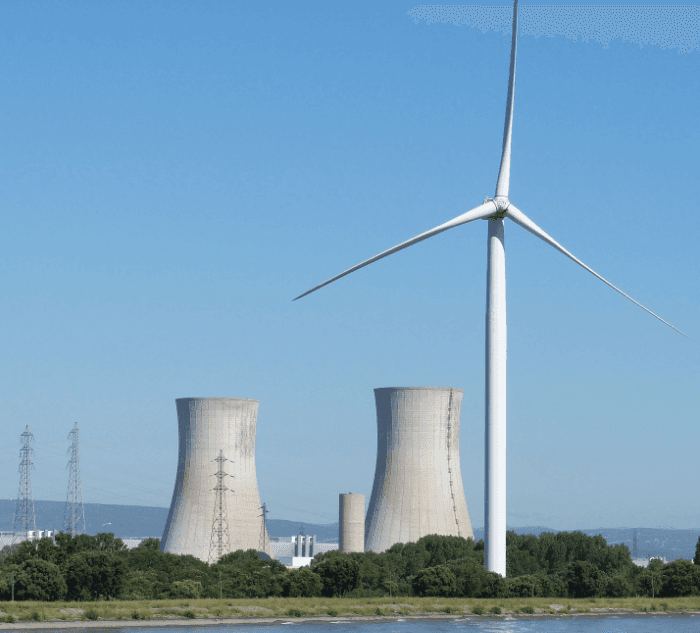
An amendment to the Energy Act debated today by the Chamber of Deputies is likely to allow the state to reduce the amount it pays from the budget to support renewable energy sources. A proposal responding to the government’s plans was put forward for inclusion in the amendment by Ivan Adamec, an ODS MP and chair of the Chamber’s Economic Affairs Committee. However, MPs did not finish today’s second reading. It is not yet clear when they will return to it. MPs can submit their proposed amendments during this stage.
On Wednesday, Finance Minister Zbyněk Stanjura (ODS) spoke about plans to reduce the state’s costs for renewable energy sources. The government wants to assess more precisely and individually the profitability of operating solar power plants, particularly those commissioned in 2009 and 2010. Subsidies will be provided only after this assessment. The state plans to allocate CZK 8.5 billion to renewable energy sources next year, the same amount as this year.
The Energy Act amendment, nicknamed Lex OZE III, sets rules for electricity storage and for aggregating its generation and consumption. MPs have added dozens of amendments to the government bill, which is intended to enable storage and aggregation. Most were submitted to the Chamber’s system on Wednesday and today. The Economic Affairs Committee alone backed around 35 proposals. In 2015, around 350 amendments were submitted to an amendment to this act.
The Act on Supported Energy Sources currently stipulates that electricity support is reasonable if the internal rate of return on investments over the period for which support is granted—in simplified terms, the return on investment—does not exceed a range of 8.4 to 10.6 percent. Support above this level is considered excessive. The government has now proposed, through MP Adamec, that the internal rate of return be determined by the type of energy source and the period in which it was commissioned.
For example, the rate of return for a hydropower plant commissioned between 2013 and 2015 would be 5.7 percent, while for solar power plants commissioned during this period it would be 3.6 percent. For renewable sources commissioned between 2006 and 2012, the government would set the internal rate of return by decree, based on the values in an annex to the act. For solar power plants, for example, the range would be 6.3 to 8.4 percent. Another of Adamec’s proposals would help identify energy sources receiving excessive compensation. They would retain the right to support only up to a level at which they are not overcompensated. According to the explanatory memorandum, the proposal should not be retroactive.
Chamber of Deputies Vice-President and former Deputy Prime Minister Karel Havlíček (ANO) warned against these proposals and this approach, saying they would undermine trust in the state. He cautioned that changing the rules while projects are underway would leave operators who finance their projects through banks unable to make their repayments.
The Economic Affairs Committee recommended adding, for example, a measure governing consumers’ early departure from an electricity or gas supplier when they have a fixed-term contract. In that case, the consumer would have to pay 40 percent of the amount they would otherwise have paid if the contract had run to its end. Consumers would nevertheless retain the right to ask a court to reduce the contractual penalty under the provisions of the Civil Code.
Another measure recommended by the committee would allow the state, if necessary, to order energy companies to operate power plants needed to ensure the security of electricity supply. This could apply, for example, to coal-fired power plants if their premature shutdown threatened electricity supplies. The committee also recommended retaining five seats on the Energy Regulatory Office Council, which the original proposal would have reduced to three.
Translation disclaimer
This article is a machine translation of the Czech original and has not yet been fully reviewed. In case of any doubt, please refer to the Czech version.
Sdílejte článek prostřednictvím:
You might also like


23 October 2026, 11:01


23 October 2026, 06:34