
23 October 2026, 14:38
Loading...
Czech Finance Ministry amendment paves the way for EPC energy-saving projects in state bodies
oEnergetice.cz
14 March 2025, 11:37
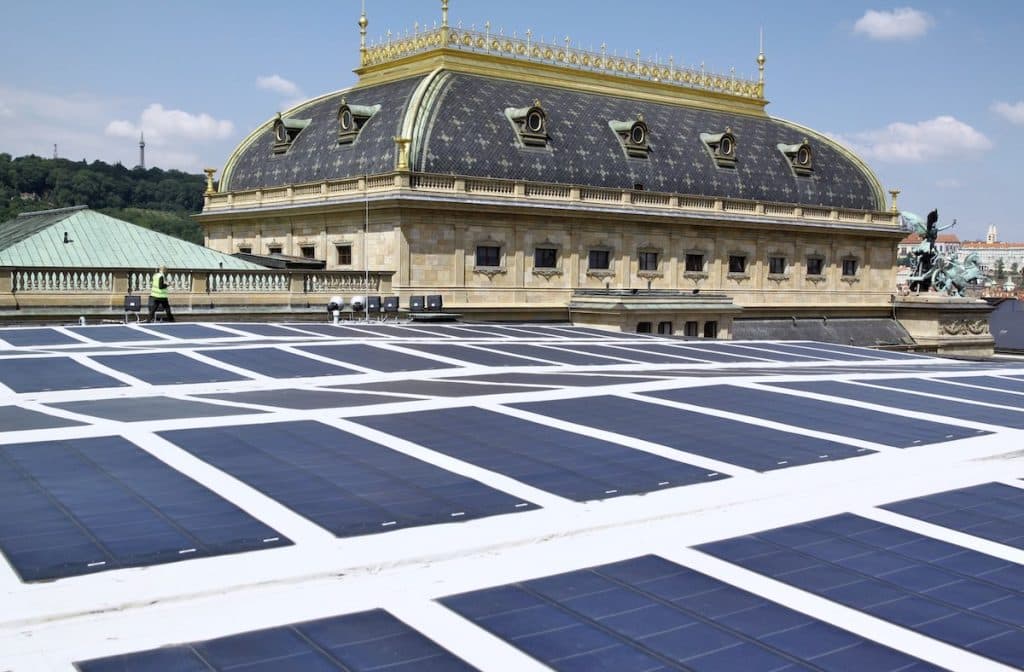
State-owned buildings will have easier access to energy-saving projects with guaranteed savings (EPC), which could save public budgets several billion crowns by 2030. This is provided for in an amendment to the Public Financial Management and Control Act, drafted by the Ministry of Finance and introduced by Civic Democratic Party (ODS) MP Jiří Havránek. With the ministry’s approval, state bodies will also be able to take out supplier loans for energy-saving projects. The Ministry of Finance expects this step to speed up comprehensive renovations and significantly accelerate the gradual reduction in state budget spending on operating buildings owned by state bodies. The essence of energy-saving projects using the EPC (Energy Performance Contracting) method is that savings are clearly measurable, the supplier guarantees they will be achieved, and the supplier also finances all costs associated with investments in energy-saving measures. The energy consumer then repays these costs over time, directly from the energy savings achieved.
EPC projects have saved domestic customers more than CZK 6 billion over the years, and demand for them has been growing steadily—in healthcare, in regions and cities, and in industry. “Energy savings play a very important role in the sustainability of public finances, and this trend will undoubtedly strengthen in the coming years. We therefore want to support this energy sector by amending the law, making it easier and more efficient for state institutions to access these projects,” says Finance Minister Zbyněk Stanjura.
EPC projects undertaken by state bodies will newly be eligible for financing through supplier loans or a combination of supplier loans and grants. Until now, state bodies have financed energy renovation projects mainly from the state budget.
Supplier financing allows renovation investments to be repaid from the savings achieved. Involving private capital will not only speed up the renovation of public buildings, but will also give suppliers a stronger incentive to achieve the greatest possible savings at the lowest possible cost. Supplier loans will require the approval of the Ministry of Finance, which assesses the purpose of investment plans and the cost-effectiveness of financing.
EPC projects also make more efficient use of grants, which supplement private capital and cover only those parts of a project for which market financing is unavailable because of long payback periods. Most grants come from EU funds, which support member states in meeting renovation obligations arising from EU legislation.
Despite growing interest in EPC projects, the potential in public buildings remains enormous. More than three-quarters of public buildings have an energy rating of D or lower. “Tens of thousands of buildings in our country—including schools, government offices and hospitals—are still waiting to be renovated. According to the latest calculations, EPC projects combined with other energy solutions could save the state several billion crowns by 2030. Large hospitals and regional government buildings are examples of facilities already using energy-saving projects in many regions. The legislative change will significantly speed up these projects for state bodies as well,” adds Kamil Čermák, chairman of the board of the Modern Energy Union.
EPC projects have a long history in Czechia. Over the past 30 years, companies have delivered many successful projects in regions across the country using a methodology developed by the Association of Energy Service Providers (APES)—for example, at the Thermal Hotel in Karlovy Vary, Bohnice Psychiatric Hospital, the University of South Bohemia, the Academy of Fine Arts in Prague, and Prague’s public transport company.
EPC is also gaining ground in buildings under heritage protection. Modern energy solutions and significant savings have been achieved, for example, at the National Theatre, Rudolfinum, in the historic centre of Vrchlabí, and at the Prague Congress Centre. Projects are also supported by national and European grant programmes, both for preparation and implementation.
“Buildings in Czechia consume around 35% of energy, which is a significant figure even by international standards. However, the EPC method can reduce consumption significantly and quickly. Energy savings also improve indoor conditions and thermal comfort in buildings. Thanks to their comprehensive nature, EPC projects are suitable for virtually all buildings whose energy performance falls short of 21st-century trends and standards. There is enormous potential for savings in public administration, given the age and low energy standards of its buildings. Changes to legislation and the inclusion of state bodies in EPC projects will further increase this potential significantly,” says Miroslav Marada, chairman of the Association of Energy Service Providers (APES).The Ministry of Finance, the Modern Energy Union and APES are members of an interministerial group at the Ministry of Health that is working to expand EPC projects to hospitals and other healthcare facilities. The group has also developed guidance on effectively planning and implementing energy savings. According to APES, a similar document could be developed for state bodies in the future.
Energy Performance Contracting (EPC) covers the design of energy-saving measures, project preparation and implementation, and, where applicable, the arrangement of financing for projects that reduce energy use in buildings. Customers do not need any of their own funding, as they repay the provider over time from the resulting, contractually guaranteed savings. The provider bears all project risks and, if the savings fall short of the level set out in advance, covers the difference. EPC also includes careful energy management. Investments in EPC projects typically have a payback period of 8 to 12 years.
Translation disclaimer
This article is a machine translation of the Czech original and has not yet been fully reviewed. In case of any doubt, please refer to the Czech version.
Sdílejte článek prostřednictvím:
You might also like


23 October 2026, 11:01


23 October 2026, 06:34