8 November 2026, 08:10
Loading...
Czech government discusses buyout of ČEZ minority shareholders, Rakušan said, then denied it

oEnergetice.cz, ČTK
30 January 2024, 11:31
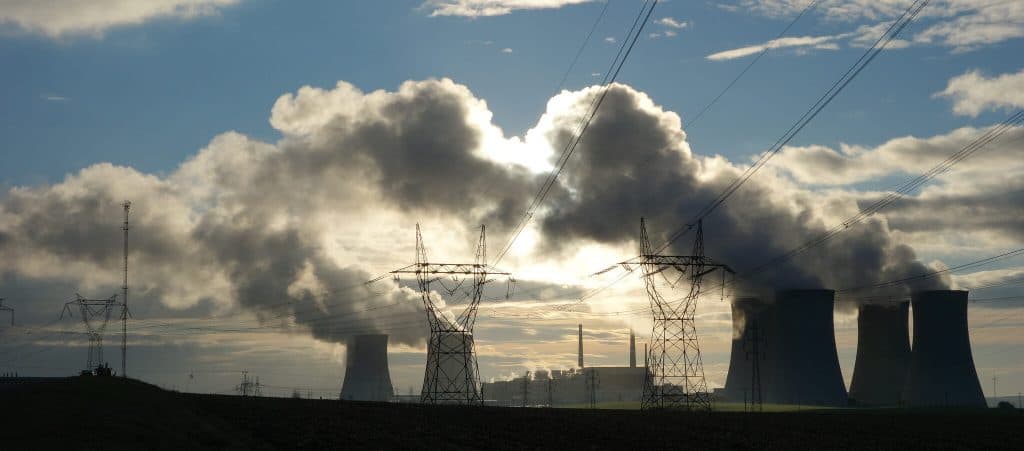
The government of Prime Minister Petr Fiala (ODS) is discussing a buyout of minority shareholders in energy company ČEZ, Interior Minister Vít Rakušan (STAN) said today in Sokolov at a meeting with members of the public as part of Debate Without Censorship. Asked when the Czech state would buy out ČEZ, he said he hoped the current cabinet would still manage to do it. He later wrote on X that he had given incorrect information and that „no such steps are under way“.
At the debate, Rakušan noted that buying out ČEZ would not be a straightforward transaction. „But this is something the government is discussing and preparing. There are minority shareholders who, of course, would have to be bought out in some way. I hope—and have long believed—that our government will still manage to do it,“ he said.
He later retracted the information: „During a debate with members of the public in Sokolov, I said that our government was preparing to take full control of energy company ČEZ. The government considered buying out the company’s generation assets when energy prices were extremely high. No such steps are under way at this time. In the heat of the debate, I gave incorrect information, and I apologize for that,“ he wrote.
In an interview with Hospodářské noviny (HN) last October, Prime Minister Fiala said that transforming energy company ČEZ was essential, among other reasons, to develop nuclear energy. He said the government was looking for a suitable model and timing, but was not planning to squeeze out minority shareholders, nationalize the company or take steps that would disadvantage anyone. The prime minister did not answer at the time when asked whether ČEZ’s generation business would be under the state’s full control by autumn 2025, when Fiala’s government’s term is due to end.
The state currently holds around 70 percent of ČEZ shares. In May, the government approved a draft law on the transformation of commercial companies under which splitting up companies would require 75 percent of the votes cast by shareholders present at a general meeting, instead of the 90 percent of votes of all shareholders required until now. Analysts say the proposal would make it easier to split up and nationalize part of the ČEZ group.
Rakušan also said at the debate that he would ask the government for three billion crowns to strengthen internal security. The money would also go toward restoring the meal allowance for police officers, which they did not receive this January. „On Wednesday, I will take a proposal to the State Security Council to strengthen internal security by three billion crowns. One of the measures is to restore the meal allowance for police officers. This January is the only month when they have not received it,“ he said. He added that the proposed measures also included further steps to strengthen the protection of so-called soft targets—that is, people—as well as operating expenses for the police and firefighters. Rakušan said the government should consider the proposals in February if they receive the Security Council’s backing.
About 70 people fit into the Small Hall of the Mining House in Sokolov today, while roughly the same number remained outside the door. The debate was highly emotional, especially at the beginning. It calmed down after several of the loudest opponents left. Rakušan said the venues had been selected before the debate in Karviná, and the organizers had not expected such strong interest. After the debate, he said the event in Sokolov may have been calmer partly because people were seated and no beer was served.
Questions, often phrased more as statements, concerned, for example, the migration pact and accusations that Rakušan had betrayed his country by signing it. The minister responded that the pact itself had not yet been approved. He personally considers it beneficial that EU states could choose whether to accept migrants, refuse them in return for appropriate financial compensation, or provide logistical assistance at the borders. According to Rakušan, the European Parliament is due to approve the document in two to three months.
Many questions concerned Ukrainians. They centered on why Czechia was supporting Ukrainian migrants at the expense of Czech citizens. Rakušan countered that seven in ten Ukrainian refugees are already working in Czechia and therefore contribute more in taxes than they receive in social assistance from the state.
pnp fsl dr
Translation disclaimer
This article is a machine translation of the Czech original and has not yet been fully reviewed. In case of any doubt, please refer to the Czech version.
Sdílejte článek prostřednictvím:
You might also like

7 November 2026, 17:23
7 November 2026, 13:37