
23 October 2026, 14:38
Loading...
Czechia was among Europe’s leading battery storage markets in 2023

Lukáš Lepič
18 June 2024, 11:09
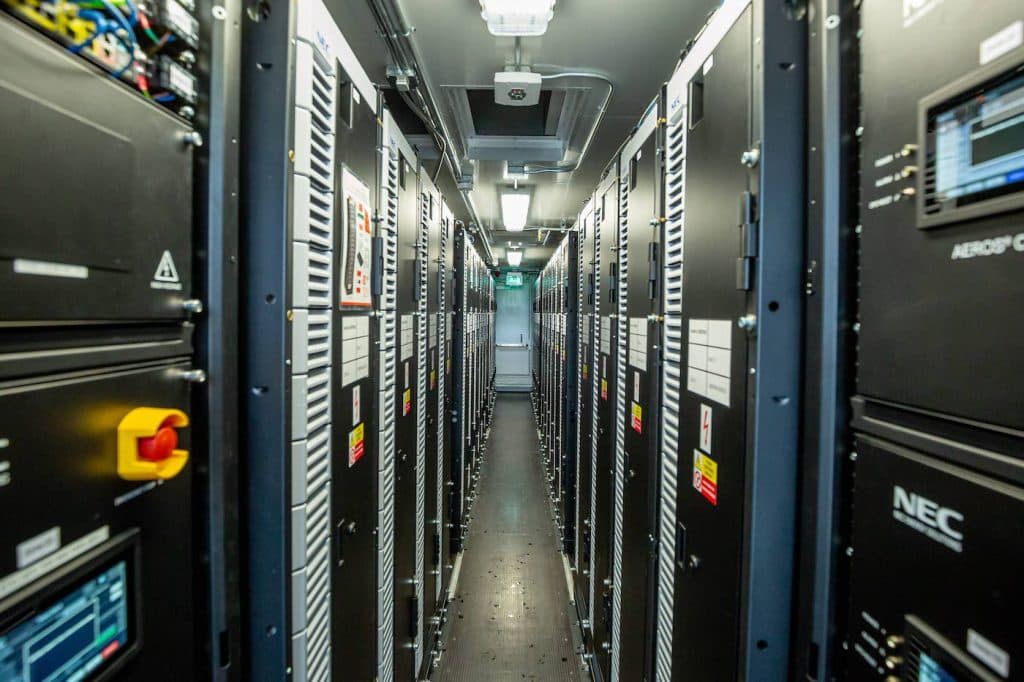
According to an analysis by SolarPower Europe, Europe installed a total of 17.2 GWh of new battery systems in 2023. This represents a 94% increase compared to 2022. It is the third consecutive year in which annual market volume has doubled. As usual, neighbouring Germany contributed the largest volumes to the growth. However, Czechia also made it into the top five markets this year, dominating in the volume of residential photovoltaic systems installed together with battery storage.
Battery markets have experienced an unusual boom, particularly over the past three years. This has been driven mainly by the expansion of renewable energy sources, technological progress and policy support. The growth trend of recent years was also confirmed by a newly published report from SolarPower Europe, an association representing more than 300 companies across the industry.
According to the report, Europe’s total operational fleet of battery systems reached approximately 36 GWh at the end of 2023. The residential segment was traditionally the main growth driver, accounting for 63 % of cumulative capacity. Households thus continued to purchase photovoltaic panels together with battery storage.
“Declining investment costs for battery storage, driven by technological progress, economies of scale and lower raw material prices, have significantly increased the cost competitiveness of solar photovoltaic installations paired with batteries,” said Antonio Arruebo, a market analyst at SolarPower Europe. “This combination already represents an optimal solution to address our energy trilemma of security, sustainability and affordability,” he added.
Czechia among the leaders this year
As usual, Germany took the top three spots in terms of annual installed volume and share of total installed capacity in Europe, with a 34% share, followed by Italy (22 %) and the United Kingdom (15 %).
Czechia has newly joined the leading markets, with 920 MWh installed last year according to SolarPower Europe statistics, representing approximately 5 % of the annual capacity added in Europe and 4 % of total installed capacity. The country thus ranked among the top five key markets, behind fourth-placed Austria.
Czechia also dominates outright in one indicator – the percentage of residential photovoltaic installations combined with battery storage. A total of 94 % of residential solar panel installations included battery storage. This is a level unmatched in other EU countries and demonstrates a very strong demand trend in the residential sector.
According to the report’s authors, this trend is mainly due to the design of subsidy and grant schemes, which do not limit the number of devices eligible for support.
“A clear example of a long-term financing strategy is the Czech Republic, which introduced the Green Savings programme in 2022. Using the Modernisation Fund, this investment grant scheme covers energy-efficient home renovations, including solar power plants and battery storage, without limiting the number of devices eligible for support. The result is an exceptional volume of residential storage installations exceeding 900 MWh,” the report states.
Industry and power sector set to rise in the coming years
While installations in the residential sector have dominated in recent years not only in Czechia but across Europe, a significant boom in large-scale storage in the industrial and power sectors is also expected in the coming years. Combined, these two categories are expected to account for more than 50 % of annual installed volumes in the main markets.
Power-sector and industrial batteries are also expected to increase in Czechia, although the trend is not as pronounced. According to the report’s medium scenario, a further 2.3 GWh should be installed in Czechia over the next two years. Of this, 3-4 % is expected in the power sector and industry, amounting to roughly 70-90 MWh annually.
Such a forecast is significantly more optimistic than the progressive scenario of Czech transmission system operator ČEPS. It models annual additions of between 200-300 MWh for 2024 and 2025, including households, which according to SolarPower Europe forecasts should account for 80-90 % of new capacity over the next five years.
Although added volumes will probably be smaller, representatives of Czech companies and organisations also agree on the growth of the power-sector and industrial segment in the coming years. Growth should be supported in particular by the LEX OZE 3 amendment to the Energy Act, which introduces new support for storage, aggregation and flexibility.
“Energy storage, aggregation and flexibility are tools for more efficient management of energy consumption and generation, allowing both sides to respond better to market conditions. Without Lex OZE 3, the further sensible development of zero-emission sources in Czechia would be very difficult, and I am very pleased that we are finally getting closer to adopting this groundbreaking amendment and removing further barriers,”said Jan Fousek last month, executive director of the AKU-BAT CZ Association and chairman of the board of the Solar Association.
Translation disclaimer
This article is a machine translation of the Czech original and has not yet been fully reviewed. In case of any doubt, please refer to the Czech version.
Sdílejte článek prostřednictvím:
You might also like
23 October 2026, 11:01

23 October 2026, 06:34