Europe’s largest CCS project starts operations: Can it help save heavy industry?
Europe’s largest carbon capture facility was launched in the Netherlands on Monday, 7 September. Can the Norwegian fertiliser giant’s facility spark a revival of a technology that many have written off?
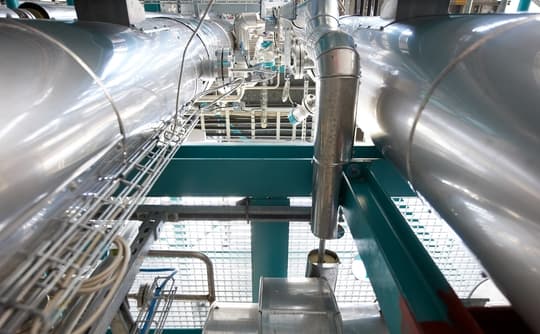
The carbon capture and storage (CCS) facility was opened in the town of Sluiskil in the southern Dutch province of Zeeland. It is operated by Norwegian fertiliser giant Yara International. According to Yara, the facility will help cut emissions at one of Europe’s largest fertiliser production plants. The inauguration ceremony was attended by Climate Commissioner Wopke Hoekstra and Norwegian Prime Minister Jonas Gahr Støre.
From 2026, the Yara Sluiskil plant will capture and liquefy up to 800,000 tonnes of CO₂ a year. The captured carbon is then to be transported and stored 2.6 kilometres beneath the seabed on the Norwegian continental shelf. Transport and storage will be handled by Northern Lights, a joint venture of energy giants Equinor, TotalEnergies and Shell that focuses specifically on CO₂ transport. Over 15 years, the project is expected to capture around 12 million tonnes of CO₂.
Salvation or a dead end
CCS (Carbon Capture and Storage) refers to technologies for capturing and storing carbon dioxide. Their aim is to prevent CO₂ generated by industrial production from escaping into the atmosphere. Carbon dioxide is first captured directly at the source, for example at a cement plant, chemical works or steelworks. It is then processed and compressed so that it can be transported by pipeline or ship.
In the final stage, CO₂ is stored in deep geological formations, where it is expected to remain isolated from the atmosphere for a very long time. These are often depleted oil and gas reservoirs. For instance, in Norway’s Northern Lights project, carbon dioxide is stored around 2.6 kilometres beneath the seabed.
CCS was at one point considered one of the most promising solutions for industrial sectors where decarbonisation is difficult, or even impossible. A typical example is cement production, where CO₂ would be generated even if zero-emission electricity were used. Reality, however, shows that the technology is not as promising as it once appeared.
According to critics, the main problem is high costs. The technology is expensive and energy-intensive. Other critics point out that it has kept fossil fuels in use for unnecessarily long and slowed the energy transition in some sectors.
This is also why some countries that will need the fossil sector in the medium term are relying on CCS. A typical example is India, which wants to reconcile its climate and energy ambitions through CCS.
Norway as a pioneer
Norwegian Prime Minister Jonas Gahr Støre said the Sluiskil project offers a solution that is both technologically advanced and commercially viable. He then praised the Netherlands as a leading country in addressing the “climate challenge”, which he said lies primarily in industry.
Despite growing scepticism at present, the European Union plans to use carbon capture technologies as one of the tools for meeting its climate-neutrality target by 2050. They could play an important role particularly in industrial processes, such as the production of chemicals or the aforementioned cement, and in any other sector where low-carbon alternatives are not yet available.
Norway can boast one of the longest-running projects in this field. Norway’s Sleipner project has been capturing CO₂ and storing it beneath the North Sea for nearly 30 years. Equinor, then still known as Statoil, launched the project in response to the introduction of a carbon tax. Norway can also point to the aforementioned Northern Lights project.
Many projects are supported by the Longship (Langskip) initiative, which backs industrial CO₂ capture and storage projects. This government initiative also gave rise to Brevik CCS, the first commercial CCS system at a cement plant, and the Technology Centre Mongstad (TCM), the world’s largest open-access facility for testing CCS technologies.
Czech footprint
Norwegian experts are also assisting with the Czech CO₂-SPICER project, which focuses on storing carbon in depleted oil and gas reservoirs in south-eastern Moravia. Although the state supports the development of these technologies in Czechia through an action plan, aside from the SPICER project and the CORE project proposed by the Czech Geological Survey, which could theoretically store CO₂ in eastern Czechia, Czechia is preparing to address its CO₂ production primarily through energy-sector transformation and natural carbon capture.
As for the private sector, everything remains mainly at the analytical stage for now. ČEZ is analysing the possibility of deploying CCS at some of its heating plants. Other sectors are in a similar position, including the liquid hydrocarbons industry and cement plants. Some companies owned by foreign groups say they will also introduce in Czechia the technologies used at their western plants.
Translation disclaimer
This article is a machine translation of the Czech original and has not yet been fully reviewed. In case of any doubt, please refer to the Czech version.