
2 October 2026, 15:14
Loading...
Low river levels threaten energy sector. Czechia also faces drought
Vojtěch Kříž
18 August 2026, 06:19
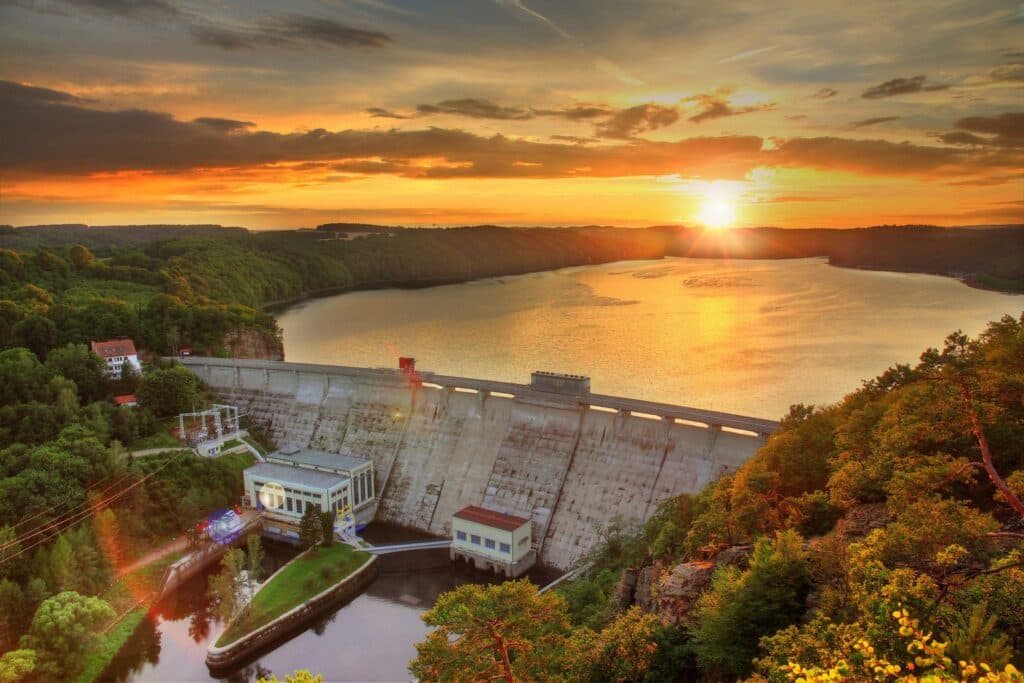
An exceptionally low level of the Danube is complicating electricity generation in central and south-eastern Europe this year. Hydropower plants in Austria, Serbia and Czechia are suffering from water shortages, while low flows threaten the operation of nuclear power plants in Hungary and Romania.
Austrian energy company Verbund stated that the country’s water reserves are at their lowest level in around a hundred years. At the Greifenstein hydropower plant near Vienna, around 700 m³ of water per second is now flowing through the Danube, compared with a typical summer flow of around 2,000 m³. Electricity generation at Verbund’s hydropower plants was 32% below the long-term average in the first half of the year. The drought is thus putting pressure on supplies and, consequently, on electricity prices.
Serbia’s Djerdap 1 power plant, which Serbia operates jointly with Romania, had also previously reported problems. Its output has fallen to around one-third of normal levels. The plant, with installed capacity of 1,140 MW, is now generating around 5,000 MWh per day. The outage is significant for Serbia, as hydropower plants account for roughly one-third of its electricity generation.
The crisis also affects Czechia
The drought situation in Czechia is similarly serious. According to the ČHMÚ, this year is among the driest since records began in 1961, with average rainfall nearly 15 centimetres below normal since the start of the year. Low flows are affecting most of the country, and according to the Elbe River Basin Authority, as of 10 August, 58 of the 133 monitored profiles were already below the Q355 drought indicator threshold.
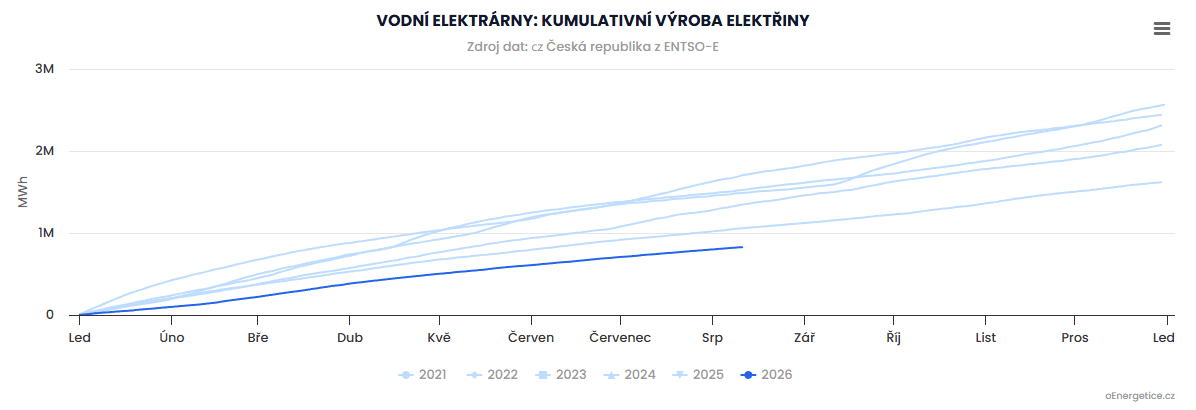
The operation of run-of-river small hydropower plants in the Czech Republic has therefore been significantly curtailed. According to current data, as many as 90% of them have had to halt generation. A decline in hydropower output compared with previous summers can also be observed in the Czech Republic. The government is also preparing further drought measures, including investments in water reservoirs.
Nuclear power under pressure
An even more serious situation has arisen in Hungary and Romania. The Paks nuclear power plant had to reduce output to just over ten percent at the beginning of August and later operated at around one-quarter of its capacity. Romanian company Nuclearelectrica shut down the last operating reactor at the Cernavodă plant on Thursday due to a lack of cooling water. Romania’s two reactors normally generate around one-fifth of the country’s electricity.
The situation also poses a problem for planned nuclear power expansion. Hungary is reviewing cooling solutions for the planned Paks II plant, while Romania, which even had to use explosives to increase water flow for cooling, is preparing more extensive hydrotechnical modifications to the Danube to enable the operation of the planned reactors 3 and 4 at Cernavodă.
This year’s drought thus highlights a broader problem for Europe’s energy sector. Nuclear power plants are an important low-emission source, but their operation can be limited by high temperatures and low flows. Climate models also suggest that central and eastern Europe will likely face a drier climate and greater fluctuations in river flows in the future.
Unlike Paks and Cernavodă, Czech nuclear power plants fortunately have the advantage of water reservoirs and cooling towers, meaning they are not yet threatened by low flows. However, the situation shows that the Czech energy sector will increasingly need to account for water availability and the possibility of adverse conditions when planning new sources.
Translation disclaimer
This article is a machine translation of the Czech original and has not yet been fully reviewed. In case of any doubt, please refer to the Czech version.
Sdílejte článek prostřednictvím:
You might also like
2 October 2026, 10:06
2 October 2026, 06:14
1 October 2026, 18:46