9 October 2026, 06:22
Loading...
More Czech solar plants are being built without grid exports. They still make sense because they cover consumption
Ekonews.cz
19 May 2024, 10:18
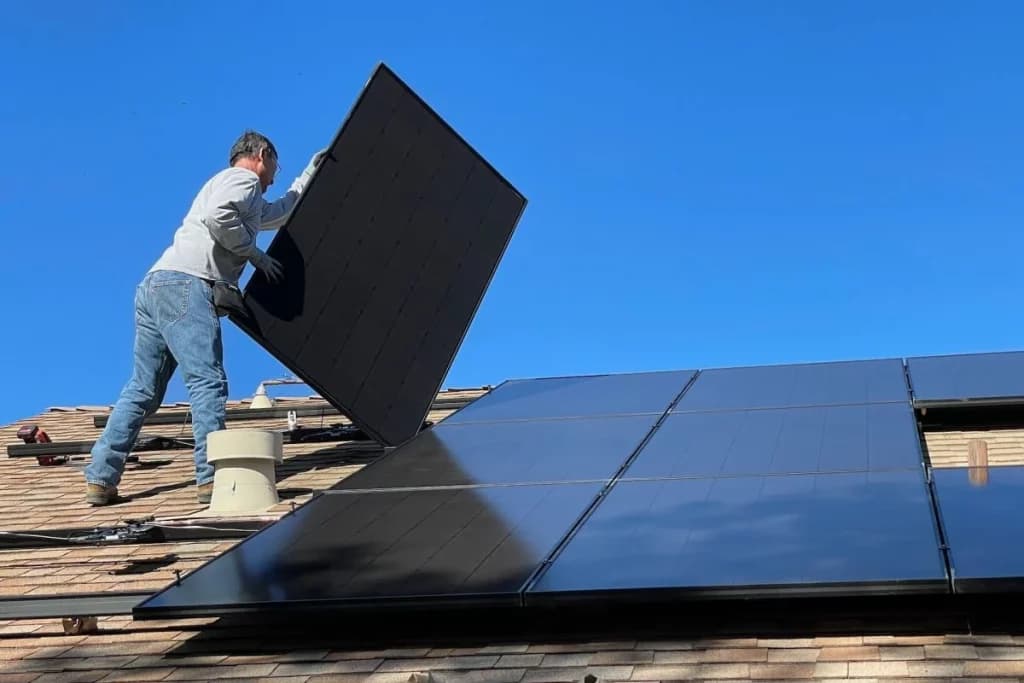
Czechs are increasingly installing so-called zero-export solar power plants, mainly in places where it is not possible to feed surplus power into the grid. The idea that such plants do not make sense is a myth. They generate energy for household consumption, thereby delivering savings. Their economic payback is similar to that of plants with grid exports. However, experts say grid modernisation must be accelerated so that all solar plants can be connected. This will cost trillions.
As the number of photovoltaic panels on rooftops grows, so too does the number of black spots on the map of Czechia where distribution system operators will no longer connect a new plant to the grid. Simply because the grid is overloaded there and cannot handle it technically. Such areas include southern Moravia, as well as other parts of the country, particularly smaller municipalities.
People in these locations often opt for a so-called zero-export solar power plant. It cannot feed surplus electricity into the grid, but generates electricity for self-consumption. “Such a system is suitable for all households with significant electricity consumption. They can cover it with electricity from their solar plant from spring through autumn. That is the period when solar PV generates the most,” says Ondřej Hájek, head of energy solutions for households at E.ON.
Although zero-export systems cannot feed surplus energy into the distribution grid and thus make use of a virtual battery or sales, Hájek says people increase their energy self-sufficiency and save money. “The key to savings from solar PV is primarily how much of their own electricity the owner can consume directly in the household while their plant is generating, or from physical batteries in which surplus energy can be stored and drawn on later. Customers with zero-export systems do not lose this benefit,” Hájek assures.
According to him, any export to the distribution grid is only an additional benefit. “But solar PV makes sense for most customers even without it,” Hájek believes.
Payback can be as little as seven years
However, with these types of plants, people should pay even more attention to choosing the right system capacity, which should be as efficient as possible for the given household. According to Hájek, there is no one-size-fits-all solution; each such plant must be assessed and designed individually.
“That is why it is good to turn to an experienced supplier that can provide such services. A properly designed zero-export system can save its owner a great deal of money with a relatively short payback period,” Hájek notes. According to him, it is absolutely crucial to design the capacity and orientation of the panels so that energy generation is as efficient as possible. “In these cases, we do not recommend oversizing the system. It is also key to consider at what time of day the household has the highest electricity consumption. Depending on the routine of the family living in the house, it may be effective to place photovoltaic panels facing east or, conversely, west,” Hájek explains.
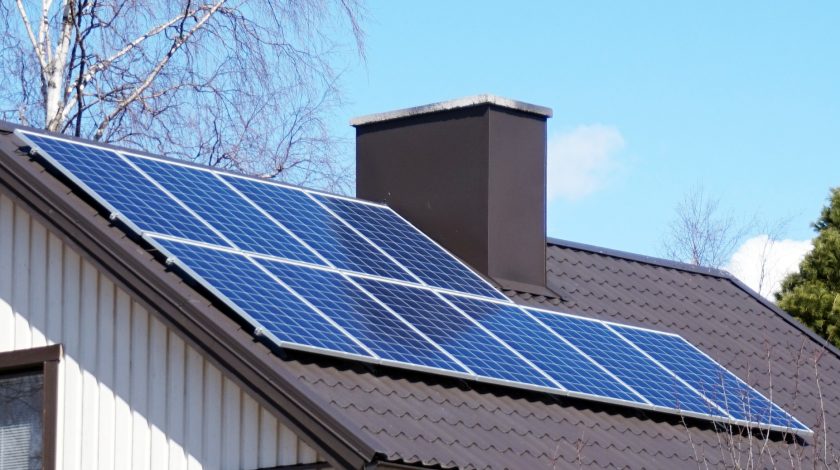
It is good not to forget that the so-called zero-export regime does not have to remain in place forever. If the distribution system operator reinforces the grid in the given area, or someone nearby does not use their reserved capacity, the investor may obtain a connection including the option of feeding exports into the distribution grid.
Even without selling exports, the payback period for such a solar power plant can be relatively short. It can be around seven to nine years, similar to a plant with grid exports. And it certainly does not apply that the more powerful a solar plant someone installs at home, the better.
For a larger and more expensive plant, the payback period may instead lengthen because of its higher price. As with an export-capable plant, subsidies are also available for this type, for example from the New Green Savings programme.
Grid modernisation must accelerate
For example, one in every six solar installations delivered by E.ON is zero-export. “As the number of areas where grid exports are closed increases, so does the number of zero-export systems being installed. There is a widespread myth on the market that solar PV without the option of selling electricity or using a virtual battery does not make sense. Yet the system’s key benefit – self-consumption of generated electricity directly in the household – is retained, and at current electricity prices, this too results in very attractive savings and payback,” Hájek stresses.
Petr Maule, executive director of the Czech Photovoltaic Association, is also convinced that it makes sense to acquire a plant without grid exports. “The best approach is to start with energy savings, meaning also installing a zero-export solar power plant. Moreover, consumption will increase over time in most cases, so the inefficiency of such a solution will decline. And as distribution system operators increase their investment activity in Czechia’s most critical locations, exports will also be permitted at plants where they are currently prohibited,” Maule expects.
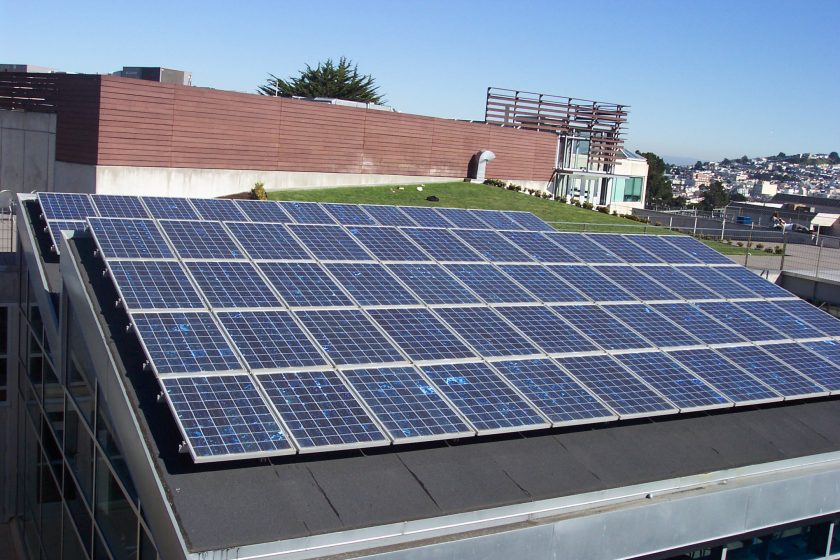
He estimates that over the past two years, the current ratio of plants with grid exports to those without exports has been roughly three to one. “That is, there are three export-capable plants for every zero-export plant. However, this situation is continuously worsening (the number of zero-export plants is growing, editor’s note) due to highly inadequate investment in critical energy infrastructure,” Maule says.
And according to him, investment should begin as soon as possible. If Czechia is to sufficiently expand its grid capacity for connecting new sources, including making use of the essential flexibility, it needs to invest roughly two trillion crowns through its three largest electricity distribution companies, Maule says.
For comparison, this is a value comparable to the annual revenue of the Czech state budget. “However, investments made today are still more in the order of low billions. If the situation were to continue at this underestimated pace, modernisation would take one hundred to two hundred years. That is a little late,” Maule notes.
This article is partnered by E.ONRepublished from the online portal EkoNews.cz, a website covering business and sustainability.
Translation disclaimer
This article is a machine translation of the Czech original and has not yet been fully reviewed. In case of any doubt, please refer to the Czech version.
Sdílejte článek prostřednictvím:
You might also like
8 October 2026, 10:05