Nigeria LNG targets record expansion. Seventh train and three new tankers to boost global gas supplies
Nigerian liquefied natural gas exporter Nigeria LNG (NLNG) is undergoing the biggest expansion in its history. Completion of its seventh liquefaction train and the order for new vessels send a clear signal to markets. Africa is becoming an increasingly important player in the global energy equation and is ready to supplement international supplies.
NLNG’s flagship project—the sixth train at the Bonny LNG terminal—was 92% complete at the end of May 2026, with commissioning expected in 2027. This is a year behind the original schedule. The project, whose final investment decision was made back in December 2019, will increase the Bonny LNG plant’s total production capacity by 35%, specifically from 22 to 30 million metric tons per year.
“Despite global uncertainty, shareholders remain committed to seeing the project through,” project manager Ali Uwais said.
All volumes for the new train have already been contracted, guaranteeing the investment’s economic viability. Nigeria will thus be able to make more effective use of its proven natural gas reserves, estimated at 5.7 trillion cubic meters, the ninth-largest in the world.
New vessels from Chinese shipyards
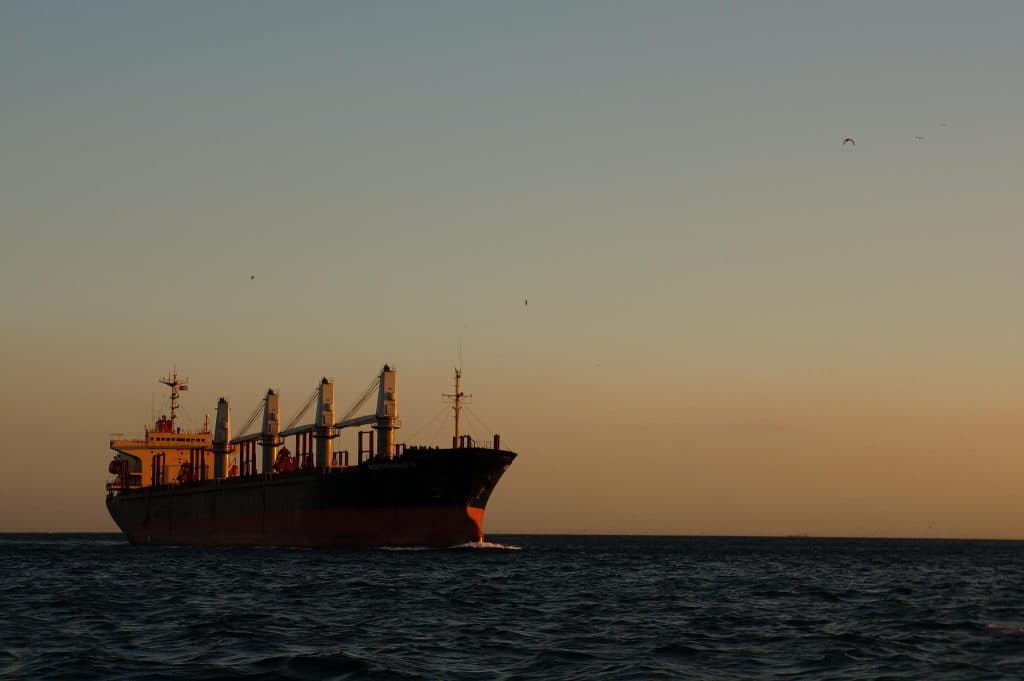
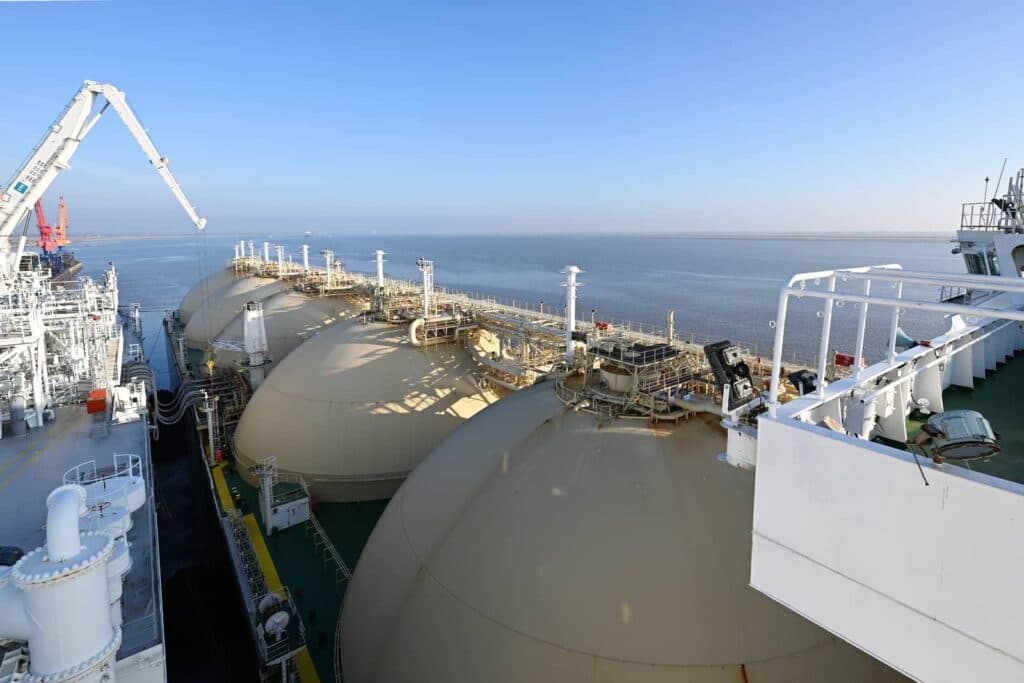
Alongside construction of the terminal, NLNG’s shipping subsidiary Bonny Gas Transport (BGT) announced it had signed contracts with Chinese shipyards Hudong-Zhonghua Shipbuilding and China Shipbuilding Trading to build three new LNG carriers. Each will have a capacity of 174,000 cubic meters, with delivery scheduled for 2029.
BGT currently operates 13 vessels of its own, while parent company NLNG has a total of 23 tankers on long-term charter. The new vessels are part of a fleet renewal and modernization program and will be chartered directly by NLNG upon delivery to serve its growing exports.
Record exports supported by improved supply
NLNG’s increased ambitions are also reflected in current utilization. In April 2026, the Bonny LNG plant operated at 89.2% of capacity, thanks to a significant increase in gas supplies. At the beginning of 2025, following a series of pipeline sabotage attacks, the plant was operating only two of its six production trains.
In the first months of this year, Nigeria exported approximately 9.9 million metric tons of LNG and is on track to exceed last year’s total of 14.6 million tons. In 2026, its largest customer is India, with 2 million tons, followed by China, Portugal and Spain.
Favorable market conditions
NLNG’s expansion comes as global markets face a loss of approximately 20% of international supply due to conflicts in the Middle East and reduced transit through the Strait of Hormuz.
Prices at the key Asian LNG benchmark Platts JKM climbed in March to a monthly high of 25.41 USD/MMBtu following attacks on Iran, but had stabilized at around 18.80 USD/MMBtu by the end of May. Nigeria is thus entering a new production era at a time when global demand for its gas is exceptionally strong.
Translation disclaimer
This article is a machine translation of the Czech original and has not yet been fully reviewed. In case of any doubt, please refer to the Czech version.