8 November 2026, 08:10
Loading...
Protection of maritime energy infrastructure is becoming more important in Europe

Lukáš Lepič
20 February 2024, 09:35
According to a document published by the Florence School of Regulation, a partner organization of the Council of European Energy Regulators, protecting critical energy infrastructure at sea is becoming increasingly important in Europe. The issue has attracted particular attention since the Nord Stream pipeline explosions. Researchers say that the consequences of sabotage and other security incidents in these zones could have a significant impact on European energy markets.
In the 20th century, oil extraction and transportation were key drivers of efforts to improve maritime security. As markets gradually globalized and diversified, it became necessary to secure supply chains. The security of ports and maritime routes subsequently became a central issue following the terrorist attacks of September 11, 2001. The events prompted debate about increasing oversight of ports, maritime trade flows and liquefied natural gas (LNG) facilities.
In Europe, the issue received renewed attention after the explosions on the Nord Stream pipeline in September 2022. The attack on a NATO member state's critical infrastructure further strained already tense relations between European countries and Russia.
In response, debate on maritime security was revived, particularly in the Baltic states. Participants in the debate most often point to the rapid expansion of marine infrastructure in recent years. This has been driven, for example, by the development of offshore wind farms, which has led to investment in transmission infrastructure, ports and other facilities located either at sea or on the coast.
In the summer of 2023, a Lithuanian expert affiliated with NATO's Energy Security Centre of Excellence also highlighted the need for better monitoring mechanisms. The expert acknowledged that critical infrastructure at sea is an integral part of the energy security debate.
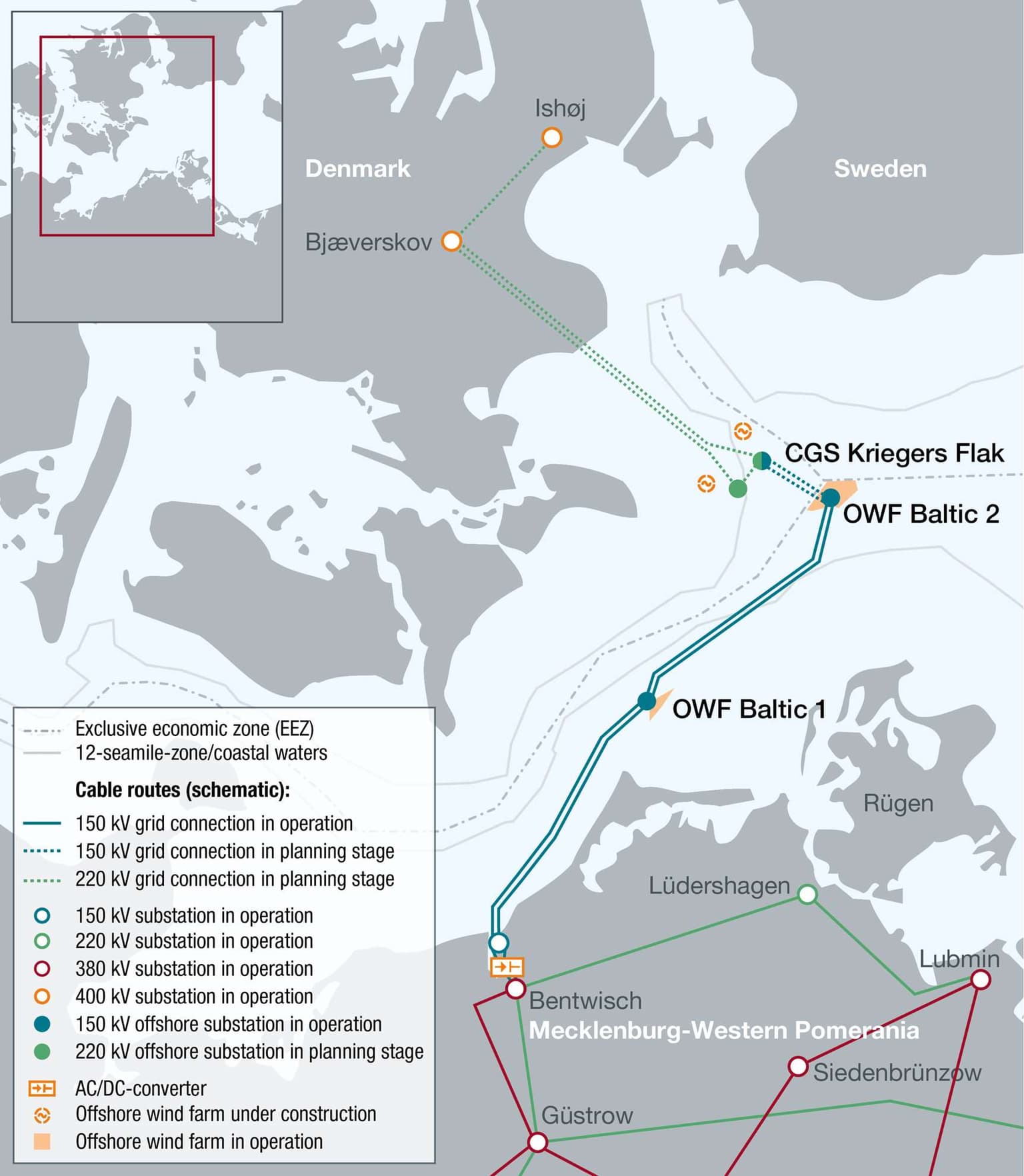
Illustration of emerging infrastructure at sea: Germany-Denmark interconnection via an offshore wind farm
According to research by the Florence School of Regulation, maritime areas are now exposed to greater risks than land-based infrastructure, since they are subject to less oversight. In the authors' view, energy infrastructure on land requires a concentrated effort, particularly at the national level. By contrast, protection at sea needs to be ensured through a coordinated approach at EU or NATO level.
The EU's increased attention to the issue can also be seen in recent developments: the European Union Naval Force (EUNAVFOR) is launching a new maritime mission called "Operation Aspides". Its aim is to address rising instability in the Red Sea.
Although the mission does not take place in areas where European critical infrastructure is directly located, some observers say it shows that the EU is beginning to pay greater attention to maritime security issues that could threaten the energy security of member states.
Translation disclaimer
This article is a machine translation of the Czech original and has not yet been fully reviewed. In case of any doubt, please refer to the Czech version.
Sdílejte článek prostřednictvím:
You might also like

7 November 2026, 17:23

7 November 2026, 13:37