
24 September 2026, 11:23
Loading...
Safety is key when choosing a solar PV system in Czechia, but it is not the only consideration, says Martin Hodek

Jan Budín
12 December 2024, 06:46
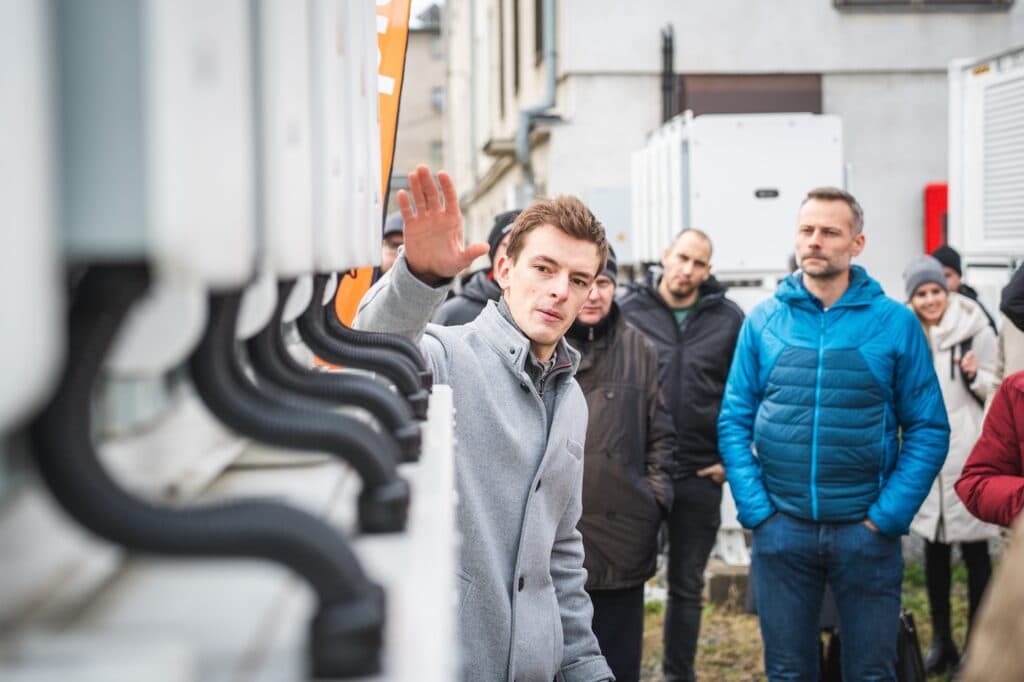
As rooftop solar PV installations boom in the Czech Republic, the number of fires and even explosions at their installation sites is also rising. While 11 cases were recorded in 2015, statistics from the Czech Fire Rescue Service's General Directorate show that there were already 55 last year, and 28 in the first half of this year so far. In addition to economics, fire safety and safety in general are therefore increasingly being discussed in connection with solar PV installations.
In response to the growing number of solar PV system fires, the Czech Fire Rescue Service's General Directorate began tracking the precise causes of fires this year. According to information published by Seznam Zprávy, the most common causes include technical faults and defects in PV systems.
“It is worth remembering that fire risk can be minimised by having the installation carried out by an authorised company with experience and certification for PV system connections, while regular inspections of all components by authorised inspection technicians are also important,” Klára Ochmanová, spokesperson for the Czech Fire Rescue Service's General Directorate, told SeznamZprávy.
We discussed this topic with Martin Hodek from Huawei Technologies in an interview for oEnergetice.cz.
When discussing PV fire safety, do inverters and batteries include active safety features? In other words, features that respond in the event of a fault?
That is an excellent question, and it is also the direction current development is taking. However, there are major differences between individual manufacturers and inverters. From a technological perspective, the market offers both top-tier inverters and batteries, but in many cases active safety remains largely unexplored territory. A PV system needs to be viewed as an energy source and, as such, it should have features that monitor its operation, can identify faults and, last but not least, prevent accidents. In addition to standard short-circuit and overcurrent protection, this is achieved inside the inverter by so-called AFCI and connector temperature monitoring.
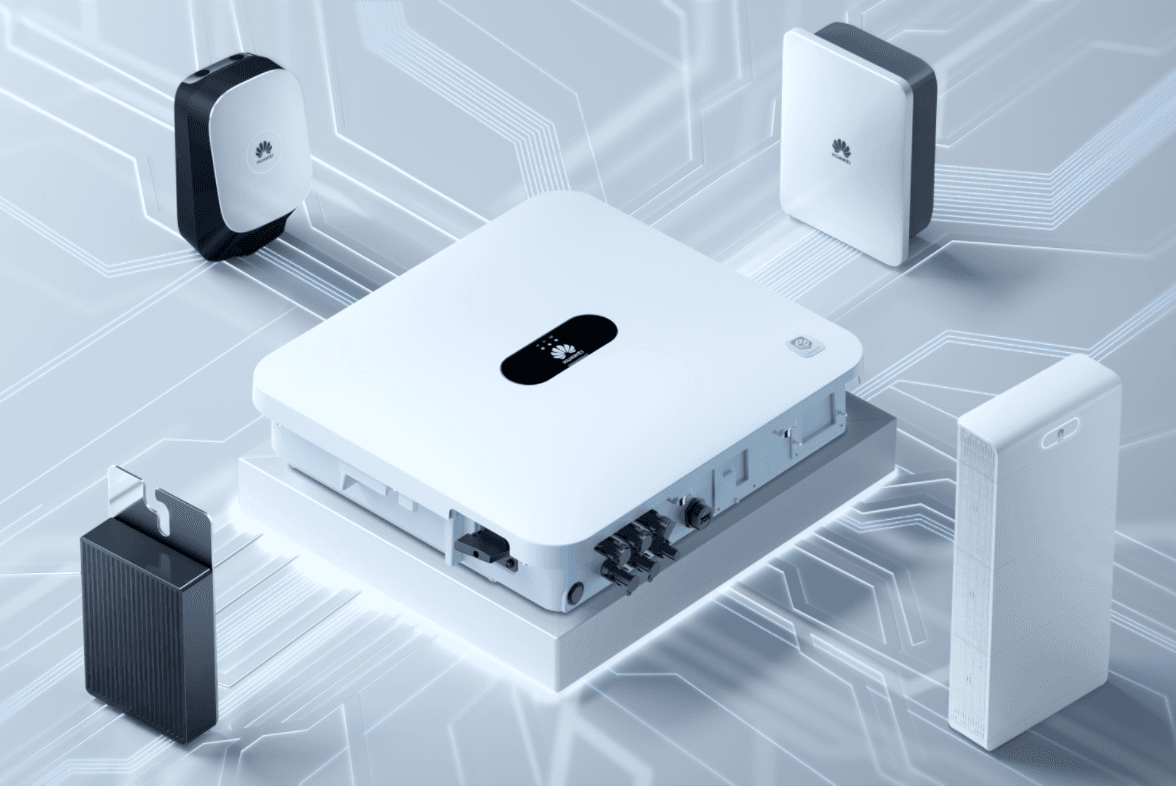
Source: Huawei Technologies
The AFCI function, or Arc Fault Circuit Interrupter, monitors the condition of cable runs in a PV installation. The risk in this respect is an arc fault, which burns at temperatures of several thousand degrees and can therefore potentially cause a roof fire. Arc faults often result from damaged cable insulation or improperly connected connectors.
The first of these shortcomings in particular can arise when unsecured cables outside protective conduits rub or chafe against the roof covering. It is therefore always important to ensure that the installation company does not leave cables loose on the roof, but secures them to the solar panels. However, even if an arc fault occurs, an inverter equipped with AFCI can identify the condition and disconnect the PV system. This extinguishes the fault and prevents a potential accident. From a safety perspective, AFCI is therefore a key function, which fortunately is already available in many inverters on the Czech market. However, it is advisable to look for inverters with AFCI integrated directly into the inverter, rather than as an add-on solution or even a third-party component.
What other safety risks are there?
A PV installation is criss-crossed by countless cable runs, whose interconnections and connections to the inverter are made using PV connectors. The use of incompatible connectors, imperfect connections or loose connectors can create contact resistance at such joints. Heat is then generated where there is resistance, providing an early warning of a potential problem.
If an inverter has connector temperature monitoring and can detect such a fault in time, it informs the end user and can disconnect the PV system if necessary. Again, this is another step towards greater PV system safety that would be unwise to overlook.
Combinations of solar PV systems and battery storage are very common today. Are there any safety risks associated with this combination?
Of course, battery storage safety is no less important. The LUNA2000-7/14/21-S1 ranks among the most advanced systems on the market in this respect. Alongside a 15-year warranty, IP66 rating, flood resistance and an operating temperature range of -20 °C to 55 °C, the LUNA2000-7/14/21-S1 residential storage system is based on industrial and utility-scale battery technologies with installed power and capacities in the order of single megawatts and megawatt-hours, respectively. These storage systems are subject to much higher operating requirements than is usual for residential installations. As a result, the LUNA2000-7/14/21-S1 has higher safety parameters than competing products.
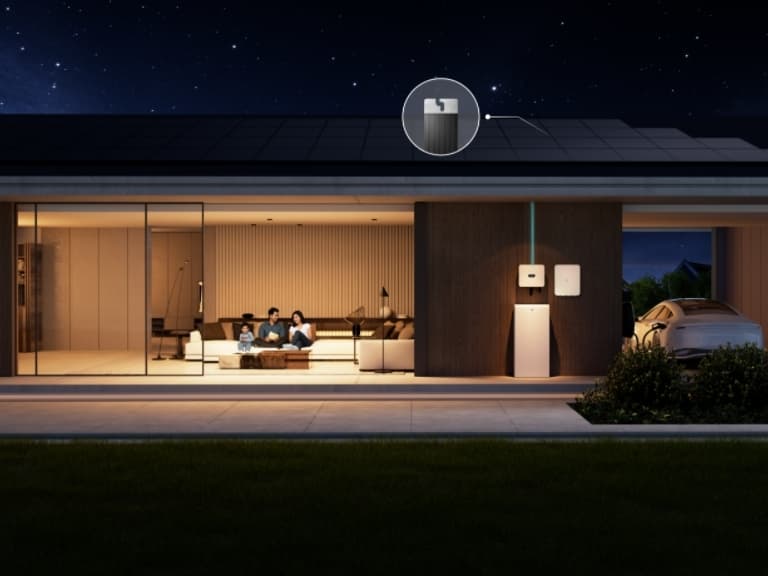
Source: Huawei Technologies
As a result, the LUNA2000-7/14/21-S1 battery system uses 280Ah cell technology, with continuous measurement of temperature and voltage. This means constant monitoring of their condition, which can detect abnormal behaviour early based on the behaviour of individual cells and thus prevent a potential accident.
What obstacles do you encounter most often with residential systems?
As a manufacturer, we do not really deal with obstacles; rather, we receive feedback from suppliers, namely installation companies, as well as firefighters. In general, there tends to be an issue with the placement of the inverter and battery in the home from a fire-safety perspective, so it is better to locate them outside.
A frequent criticism is system noise, and Huawei offers some of the quietest systems on the market, with noise levels of up to 29 dB. With one of the well-known brands on the Czech market, by contrast, inverter overheating occurs – this is addressed by Huawei through a metal casing and advanced passive cooling design.
In some cases, the system may also be unattractive, which matters to some clients given the price. Here, Huawei offers a consistent, clean and elegant design across its residential products.
The final issue is so-called technical export, meaning how precisely the inverter can regulate output to ensure that, when connected as a micro-source, it does not actually feed electricity into the grid. In this respect, we have also verified that Huawei inverters have top-tier control that prevents unauthorised exports to the grid.
How, then, should an investment in a PV system be viewed?
In the Czech Republic, we tend to pursue the cheapest solution relentlessly. Even when we are comparing apples and oranges, even when the saving is only a few thousand on an investment worth hundreds of thousands, we still pursue the lowest price relentlessly. Installation companies have noticed this and adapted both their product portfolios and sales tactics accordingly.
The market therefore features a number of unknown brands as well as better-known manufacturers that attract customers with low prices and, something many customers do not realise, higher margins for installation companies. This is because reselling something cheap at a higher price is much more profitable than selling a more expensive system with a lower margin. End customers are thus offered systems that meet basic PV requirements, generate the highest margin for the installation company and provide a competitive price for the end client. That is somewhat unfortunate.
Yet buying a PV system can very well be compared to buying a car, where customers behave much more responsibly and consider not only price, but also operating characteristics, utility and the safety that is much discussed today. An investment in a car is often only for a few years, whereas you are investing in a PV system for the next 20 years. So imagine that you are buying a car (a PV system) that you will drive for the next twenty years. Will it be the one offering the lowest price?
So what do you recommend? What should prospective PV system owners focus on?
When deciding between individual manufacturers and products, it is important in the long term to focus on quality, safety and, last but not least, ease of operation. In the first few months, clients tend to be enthusiastic about their PV systems, carefully tracking generation in the app and comparing themselves with neighbours to see who has more. However, this gradually fades, and it is entirely common that after the first year a PV system owner only knows it is on the roof and hopes it is working as it should. In this respect, it pays to have a system from one supplier – meaning the inverter, battery, optimisers, electric vehicle charger and smart controls from a single brand. This ensures mutual compatibility, straightforward service support, because no one will claim it was caused by someone else's component, and of course a single app for monitoring and controlling the entire system.
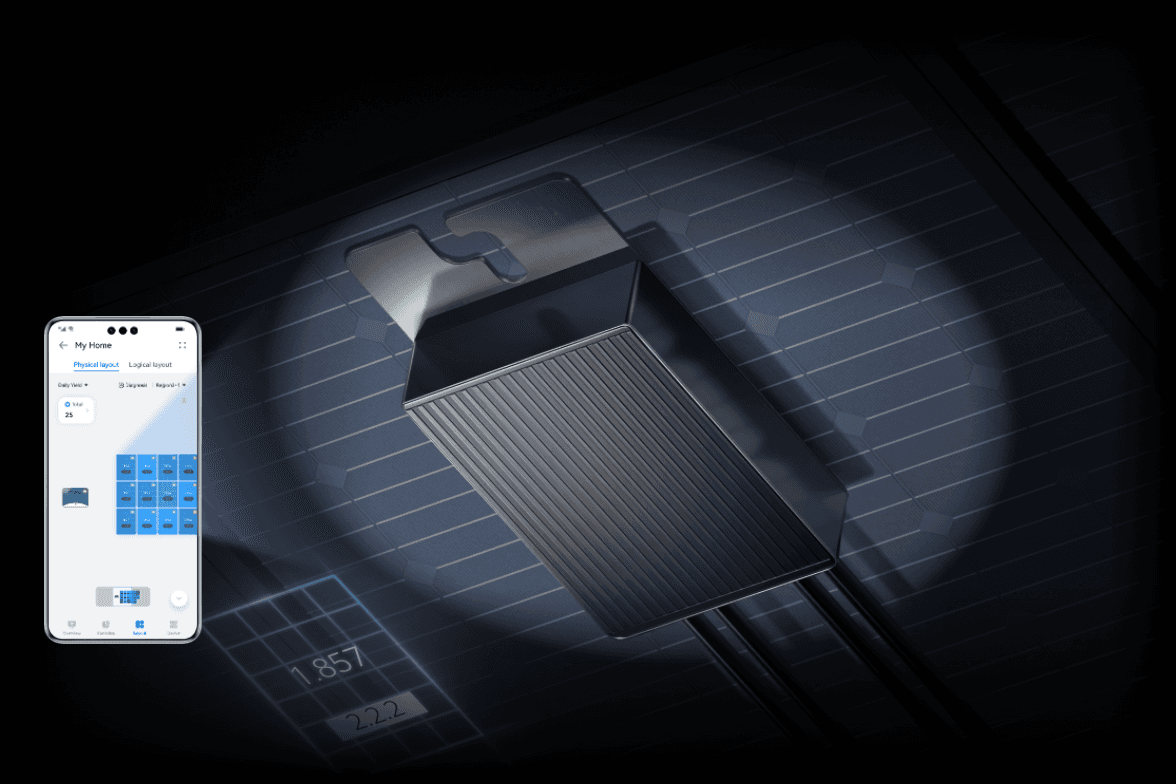
Source: Huawei Technologies
Having one app for the PV system, one for the electric vehicle and another for monitoring optimisers is tedious from day one, let alone for the next 20 years. In this respect, Huawei Technologies is one of the few manufacturers to offer a genuine all-in-one solution from one supplier, in a unified design, with just one app and one service support number. It is invaluable in terms of user convenience.
In your view, what is most important when choosing a solar PV system?
In short, I would like to reiterate that when choosing a solar PV system, the important features are an asymmetric inverter with a sufficient degree of asymmetry and overload capacity, a sufficiently long warranty for the inverter, optimisers and especially the battery, ideally metal construction for both the inverter and battery including battery optimisers, passive cooling, which reduces noise, an IP protection rating and operating conditions in line with the planned location of the technology, and finally, not forgetting safety features: AFCI, connector temperature monitoring, cell temperature and voltage monitoring, and ideally integrated fire suppression within the battery system.
Finally, it is worth considering that saving 20 thousand Kč on the installation of a PV system with a 20-year lifetime corresponds, in very simplified terms, to a saving of 1 thousand Kč per year. If you buy a lower-quality system, the few thousand you save may ultimately result in operating costs due to defects that are significantly higher. It is therefore advisable to consider a PV investment rationally and assess in an informed manner whether a given brand offers the features that matter to you.
Translation disclaimer
This article is a machine translation of the Czech original and has not yet been fully reviewed. In case of any doubt, please refer to the Czech version.
Sdílejte článek prostřednictvím:
You might also like
24 September 2026, 10:30
24 September 2026, 06:56
23 September 2026, 17:27