
28 October 2026, 15:10
Loading...
Wood Mackenzie: Persistent high interest rates threaten renewables' competitiveness

Lukáš Lepič
22 April 2024, 10:38
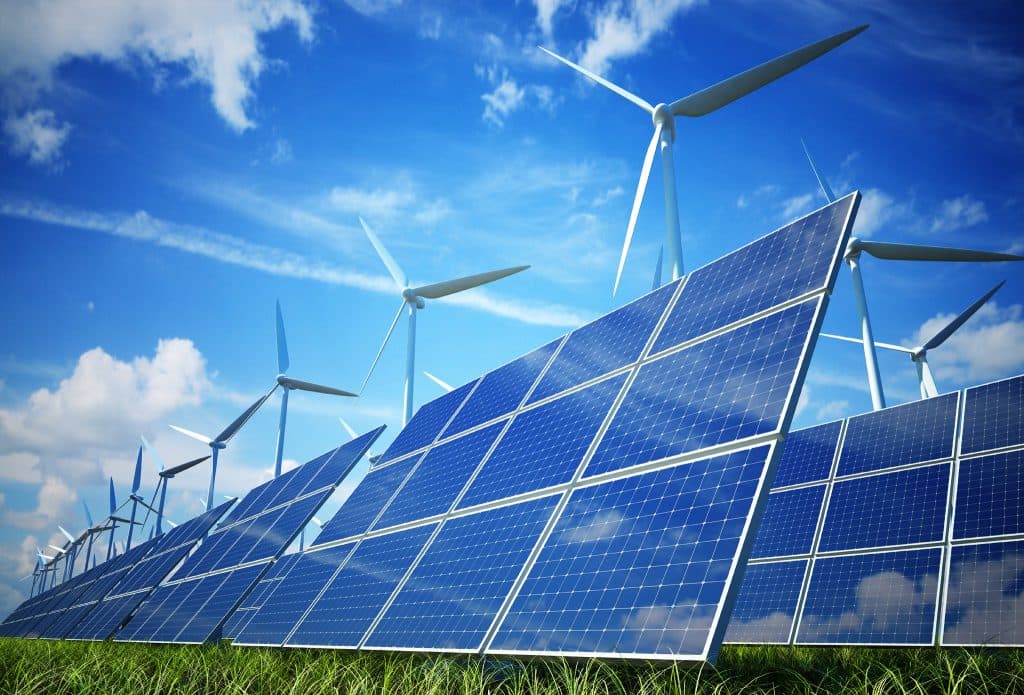
Persistently high interest rates could complicate the transition to a zero-emissions economy. Higher borrowing costs are having a negative impact on the construction of renewable energy projects and the development of new technologies. This is according to an April report by the analytics firm Wood Mackenzie, which says that the more established oil, gas and mining sectors, by contrast, remain in good shape.
Higher interest rates disproportionately affect renewable energy, new technologies and nuclear power. Their high capital requirements and low returns mean that future projects will be at risk at current interest rates.
“Interest rates, which have risen sharply over the past two years, may not fall as far or as quickly as markets expect. These higher costs of capital have profound implications for the energy and natural resources sectors, particularly for the cost and pace of the transition to low-carbon technologies,” said Peter Martin, Wood Mackenzie's director of economics and the report's lead author.
Others have also highlighted the ongoing situation. “Given the capital-intensive nature of renewable energy, projects are naturally more vulnerable to high interest rates,”said Vegard Wiik Vollset, head of renewables and power for EMEA at Rystad Energy. He added that new projects are most at risk, while existing ones that secured financing before interest rates rose remain unaffected.
Higher interest rates push up renewables' LCOE
According to the analysis, in the US a two-percentage-point increase in the risk-free interest rate raises the levelized cost of electricity (LCOE) for renewables by up to 20%. The increase in LCOE for a combined-cycle gas turbine plant is just 11%.
This also affects the competitiveness of renewable energy. In many markets, solar and onshore wind power have an economic advantage over fossil fuel sources. In some cases, even without subsidies. In the US, onshore wind can generate electricity at an LCOE of USD 40/MWh, just 50% of the cost of gas-fired power. Higher interest rates, however, erode this advantage.
“Renewables with subsidies and price and offtake certainty can access cheaper financing, but it is precisely low borrowing costs and low required returns that make projects sensitive to interest rates. Higher interest rates affect required returns and the cost of capital more than they do for other power generation projects, which primarily need higher returns,” Martin said.
Levelized cost of energy (LCOE)
The levelized cost of energy (LCOE) is a metric for comparing the economic viability of different energy sources. It is calculated as the total costs associated with building, operating and decommissioning a power plant (including any fuel purchases) divided by the amount of energy the plant generates over its lifetime. In Europe, it is most commonly expressed in EUR/MWh. The figures exclude subsidies and emissions allowance prices.
Oil and gas have healthy balance sheets, while hydrogen loses out
By contrast, the oil and gas sector need not fear a higher-interest-rate environment, according to the report. After record debt repayments in recent years, average balance sheets are healthy and debt levels are low.
The net debt of the 25 largest international and national oil companies fell to USD 150 billion in 2023 from USD 390 billion in 2020. A debt-to-capital ratio of between 10% and 20% has already become the “new normal” for many in an era of high interest rates.
On the other hand, high levels of capital investment are also characteristic of technologies that are only just reaching the market, and these projects are often backed by oil and gas companies. Examples include green hydrogen production and carbon capture and storage technologies.
In this case, however, there are few commercial projects on the market, and high interest rates are just one of many barriers. Even so, there are countries that are actively investing in development despite the high costs.
“The lack of economic incentives for carbon capture and the absence of a hydrogen market are the most significant barriers to investment in these sectors, but for projects that do go ahead, higher interest rates undermine their economics.” Martin said.“This applies both to smaller developers struggling to access loans and to larger, creditworthy issuers that rely on low-interest leverage to make projects attractive to shareholders,” he added.
Translation disclaimer
This article is a machine translation of the Czech original and has not yet been fully reviewed. In case of any doubt, please refer to the Czech version.
Sdílejte článek prostřednictvím:
You might also like

28 October 2026, 13:08

28 October 2026, 11:10

28 October 2026, 09:08
