China is crushing the world in renewables, building twice as much solar and wind capacity

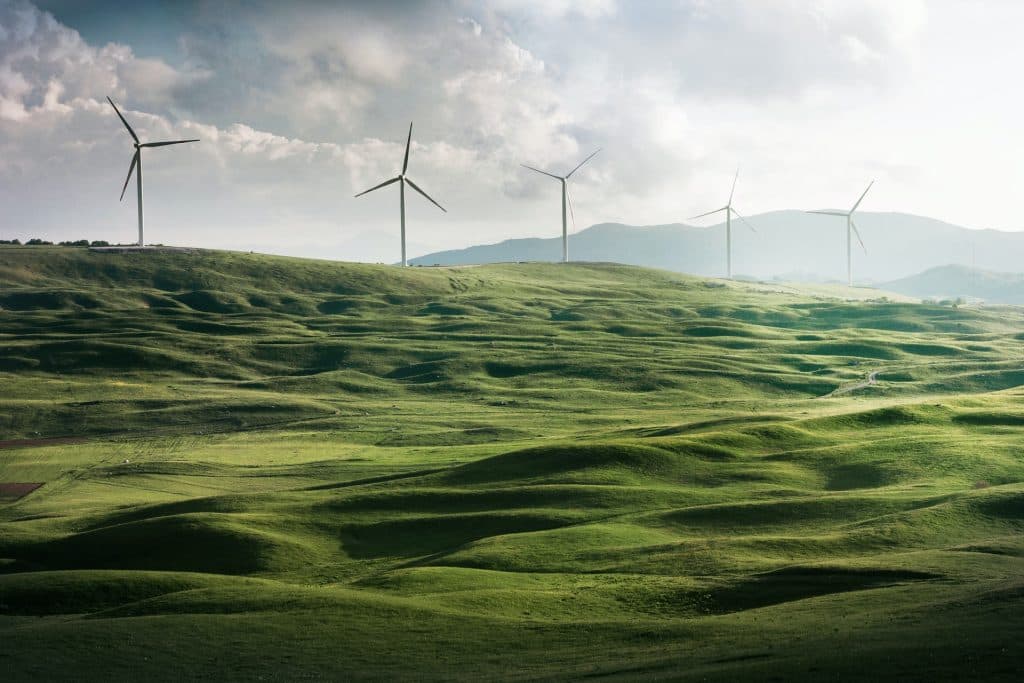
The amount of solar and wind capacity under construction in China is almost twice as much as in the rest of the world, The Guardian reports, citing research by the non-governmental organisation Global Energy Monitor (GEM). China is thus consolidating its leading position in the global development of renewable energy and demonstrating its determination to maintain it.
In concrete figures, this amounts to 180 GW of solar capacity and 159 GW of wind capacity, for a combined total of 339 GW, far exceeding the rest of the world. A distant second is the United States, which the GEM report puts at around 40 GW for both types of source combined.
Although coal-fired power plants are more often associated with China, the objective reality is that the Asian hegemon has recently been experiencing a boom in renewables. The reason is clear: renewables are receiving strong support from government policy.
Chinese President Xi Jinping has established a fairly clear discourse, championing the slogan “new quality productive forces” (new quality productive forces). This chiefly refers to innovative, advanced productivity, whose key features are high quality and a substantial increase in the overall productivity of factors of production. Innovation plays a central role, so new quality productive forces are characterised by cutting-edge technology, high efficiency and quality.
The reality in China may therefore surprise many.
“Wind and solar power now account for 37% of the country’s total installed capacity, an increase of 8% since 2022, and are widely expected to surpass coal in 2024, when coal accounts for 39% of total capacity,”according to GEM’s research.
This forecast goes hand in hand with the possibility that China could reach 1200 GW of wind and solar capacity as early as this year, beating by six years the target set by President Xi Jinping, who announced a series of climate goals in 2020.
In addition to the aforementioned target of 1200 GW by 2030, he also spoke of reducing carbon dioxide emissions per unit of GDP by 65% compared with 2004 levels. He also pledged to increase the share of non-fossil fuels in primary energy consumption to around 25% by 2030 and to support an increase in forest cover by 6 billion cubic metres compared with 2005.
Translation disclaimer
This article is a machine translation of the Czech original and has not yet been fully reviewed. In case of any doubt, please refer to the Czech version.




