
23 October 2026, 14:38
Loading...
Copenhagen to become the world’s first carbon-neutral city, aided by energy-efficient lighting
Adam Mareš
25 October 2016, 07:45

At every turn, one can sense the unique atmosphere of a Nordic city that regularly ranks among the top cities in international quality-of-life rankings. Yes, we are talking about Copenhagen. Besides being the capital of the Kingdom of Denmark, it is also a major regional hub for business, culture, media and science. Copenhagen also prides itself on its environmentally friendly approach, for which it was awarded the title of “Green City” in 2014.
However, the City of Copenhagen remains aware of its contribution to climate change caused by CO2 emissions in the atmosphere. To further improve residents’ living conditions, Copenhagen has drawn up a plan to become the world’s first so-called carbon-neutral city. To become carbon-neutral, the city must use less electricity while sourcing the electricity it needs from zero-emission sources. Any surplus “green energy” must then offset other sources of emissions, for example in transport.
The city aims to achieve carbon neutrality by 2025 by reducing carbon dioxide emissions to the lowest possible level. In 2013, the city’s CO2 emissions were reported at 1.9 million tonnes. The use of renewable electricity sources, more efficient heating of homes and office buildings, and improved investment in public transport and cycling infrastructure should reduce emissions to 1.2 million tonnes of CO2 by 2025.
Intelligent energy-efficient lighting
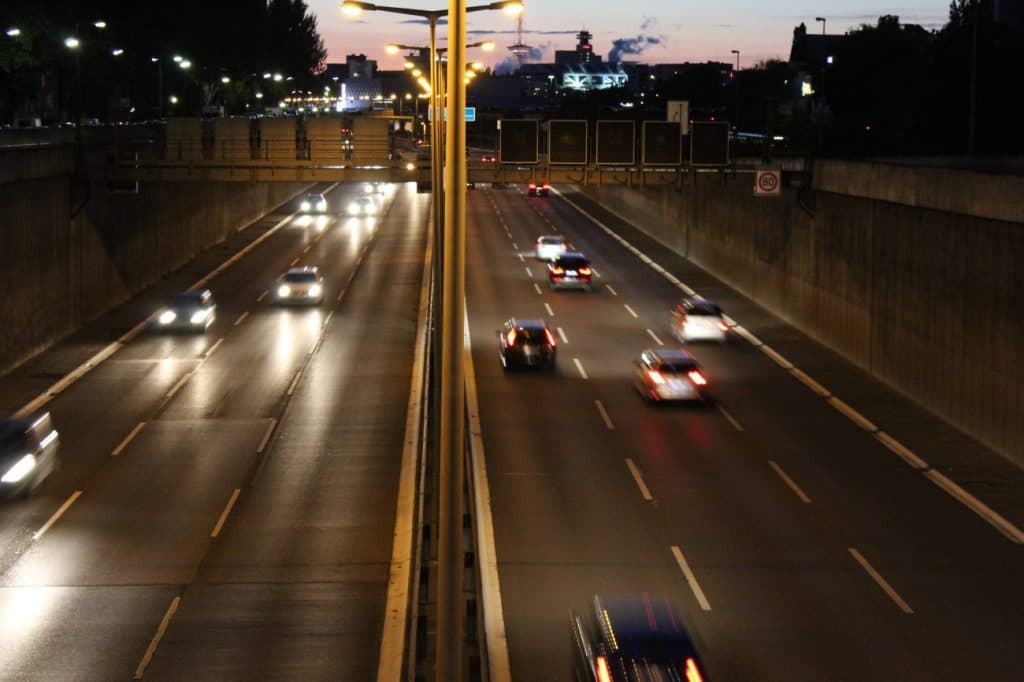
Another solution for reducing electricity consumption is to cut the use of public lighting. In 2013, the city authorities therefore launched a project to renovate public lighting, under which up to 20 thousand outdated light sources were to be replaced by more efficient LED-based light sources by 2016. As part of the project, a fully integrated wireless control system was installed in public lighting fixtures, which should deliver further energy savings by dimming the luminaires. Everything is controlled through an internet application, which also clearly displays all equipment faults. This simplifies luminaire servicing and reduces replacement costs.
Initially, light intensity will vary according to a pre-set schedule. In the future, however, the system’s capabilities can be expanded to adjust light output according to daylight levels and the presence of people or traffic. This will increase the efficiency of public lighting without adversely affecting safety. This modernisation will place Copenhagen among the first cities able to make full use of intelligent lighting, while also creating an entirely new platform for further Smart City technologies and applications that can bring additional benefits to Copenhagen’s residents.
Energy savings of more than half
During the first phase of the public lighting refurbishment, the most energy-intensive luminaires using high-pressure sodium and mercury-vapour lamps were replaced. This involved replacing approximately 20 thousand luminaires, half of Copenhagen’s total number of street lamps, while the public lighting system consumed approximately 20 GWh of electricity annually. To achieve high electricity savings while maintaining the required lighting levels in line with the specified standards, a unique lighting calculation was prepared for each street under the project, determining the power settings of the luminaires on that street.
Introducing LED luminaires into the public lighting system and managing them efficiently is expected to deliver electricity savings of 57 %, which could instead cover the consumption of more than 4,500 households.
Lead photograph: bjoern
Translation disclaimer
This article is a machine translation of the Czech original and has not yet been fully reviewed. In case of any doubt, please refer to the Czech version.
Sdílejte článek prostřednictvím:
You might also like

23 October 2026, 11:01
23 October 2026, 06:34