9 October 2026, 06:22
Loading...
Czech electricity sharing between neighbours to be possible as early as next year. Some communities began two years ago and are ready
Ekonews.cz
3 July 2023, 14:27
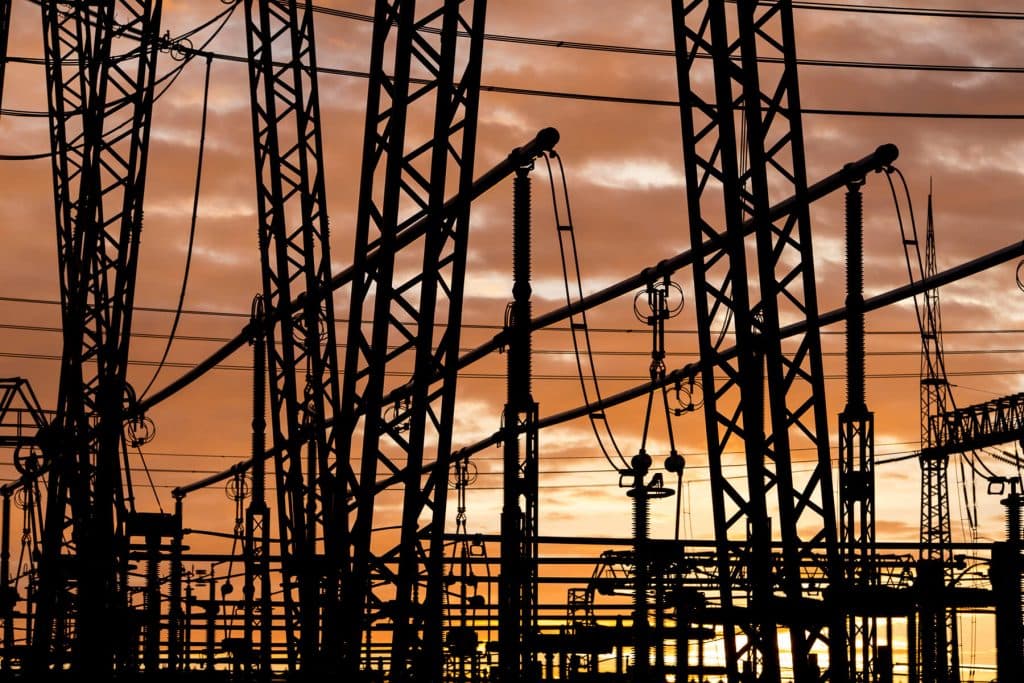
Although Czechs are not yet able to share electricity, the first energy communities have been emerging in the country for several years. Joint generation for municipal buildings, businesses and family homes could soon start operating. The government sent the necessary amendment to Parliament last week.
One of the first Czech energy communities was established two years ago in the Opava region. Its preparations for community energy are further advanced than in the rest of the country. While its members often have to sell surplus electricity to the grid at unfavourable prices today, they will most likely be able to send the kilowatts they generate to one another next year.
“Four years ago, we were already obtaining almost a third of the region’s electricity from zero-emission sources. That is an above-average figure for the Czech Republic,” says Jiří Krist, chairman of the Opava community. On average, only 12 percent of electricity in the country comes from solar, hydro or wind power.
The north of the Moravian-Silesian Region has favourable conditions for community energy. “We have watched a huge base of green energy sources emerge here. You can find every technology here, from small solar installations and wind turbines to large hydroelectric power plants,” Krist adds.
Municipalities, companies and sole traders join forces
Municipalities began building their own energy sources in northern Silesia. In the small village of Mikolajice near the Polish border, which has fewer than a hundred houses, a wood-pellet boiler supplies heat and electricity to the municipal office, fire station and shop. A similar unit powers the primary school, town hall and cultural centre in nearby Budišov nad Budišovkou. In Litultovice, just over the hill from Mikolajice, the kindergarten has solar panels.
The logical step was to connect all the projects into one. Local mayors and companies therefore established Enerkom Opavsko in 2021. The original 17 founding members have grown to 50. They include villages and larger towns, small businesses and sole traders. Increasing numbers of people began joining the community over the course of last year. “The crisis caused by Russian aggression in Ukraine did our marketing for us,” Krist says. However, although prices have fallen again, that may not last.
From a cottage to a flat without forming a community
Sharing within Enerkom Opavsko and other similar projects is still pending, as Czech law does not yet permit it. However, Petr Fiala’s cabinet approved an amendment known as LEX OZE II last Wednesday, which will enable the launch of community energy. Compared with the original proposal presented by the Ministry of Industry and Trade last November, the current version brings several changes.
Besides the basic definition of two different types of community (an energy community and a renewable energy community), the proposed law also sets out their rights and obligations. Interested parties will establish an association, cooperative or legal entity, while also registering with the Energy Regulatory Office.
Under LEX OZE II, everyone will only be able to belong to one community at a time. At the same time, each member will be able to hold a maximum of 10 percent of voting rights regardless of their initial investment. Members will also only be able to divide one-third of the profit among themselves.
The proposal also introduces new rules for those who send the kilowatts they generate, for example, from solar panels in Šumava to a Prague flat. Active customers, as LEX OZE II calls them, will be able to supply electricity to up to ten additional connection points without having to establish a community. Sharing among an extended family or between several branches of a company will be possible from the middle of next year, provided the amendment passes Parliament in time.
Larger projects to come in three years
Communities will newly be able to involve no more than 1,000 members. The area in which people can join a community is also limited. Sharing will only be possible within three municipalities with extended powers, or within the territory of the capital city of Prague.
However, these two restrictions should cease to apply from July 2026. Larger projects could therefore begin to emerge in three years’ time. By then, Czechia should be sufficiently prepared for community energy.
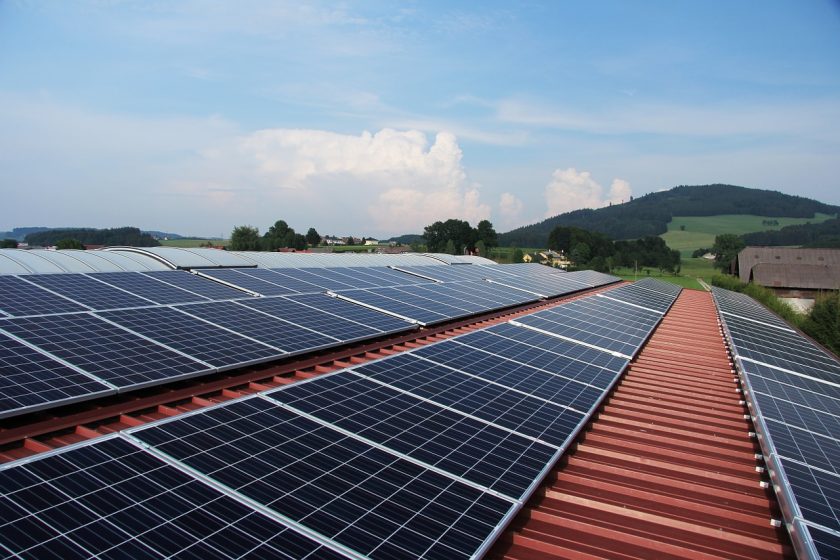
Sharing must above all be accommodated by the distribution grid. A larger number of small power plants is likely to be added, and the current infrastructure may not be able to cope with the strain.
An Electricity Data Centre will also be established, making it clear who pays how much for electricity. It will be built by the operators of regional distribution systems together with transmission system operator ČEPS.
A thousand members is too few for the Opava region
Enerkom Opavsko welcomes LEX OZE II, although it believes some of the newly introduced conditions will create problems. “As we operate in the territory of four municipalities with extended powers (Opava, Ostrava, Vítkov and Bruntál), we will have to divide electricity sharing among Enerkom members into two zones in order to comply with the law,” chairman Krist explains.
“In my view, this is an unnecessary bureaucratic requirement that will hopefully be removed during the further legislative process. If necessary, we will cope with it, as we will with the limit of one thousand connection points, which is too low for an association of our size,” he adds.
He does not see the other new rules as a complication. “We do not mind the cap on one member’s voting rights at 10 percent or the restriction on distributable profit. We have had these provisions in our statutes since the association was founded,” Krist explains.
A major step with a few shortcomings
The amendment is due to take effect from the beginning of next year. However, it still has to go from the government to the Chamber of Deputies, then be discussed by the Senate and finally signed by the president. Given that Parliament is due to recess, it is unlikely that the proposal will be approved in time.
“We involved the widest possible range of stakeholders in drafting the amendment, from experts at non-governmental organisations and distributors to the Energy Regulatory Office and transmission system operator ČEPS. The resulting version represents a functional and, above all, stable model for the future operation of community energy in Czechia,” said Minister of Industry and Trade Josef Síkela.
The Community Energy Union, together with expert group Frank Bold, points to bureaucratic problems related to restrictions on voting rights and profit-sharing, but says the amendment will nevertheless represent a major step forward.
“Although a number of provisions in the proposal can be criticised, it provides a basis to build on, and MPs now have the opportunity to eliminate the remaining fundamental shortcomings. Just like community gardens, bike-sharing or neighbourhood communities, energy communities will soon be a common way to become more efficient, save money and connect the local community,” says Laura Otýpková, a lawyer and energy expert at Frank Bold.
The Modern Energy Association recommends introducing sharing in individual phases, an approach also taken by neighbouring Austria. “A sensible solution is to build community energy in Czechia gradually and evolutionarily, so that the system undergoes a stress test and we can then draw on the first experience in building a more robust system. Within one to two years, however, it would be good for the state to remove the limit on the number of community members and leave the management of membership numbers directly to the communities,” says Martin Sedlák, programme director of the Modern Energy Association, in his assessment of LEX OZE II.
Republished from the online portal EkoNews.cz, a website covering business and sustainability.
Translation disclaimer
This article is a machine translation of the Czech original and has not yet been fully reviewed. In case of any doubt, please refer to the Czech version.
Sdílejte článek prostřednictvím:
You might also like
8 October 2026, 10:05