
23 October 2026, 14:38
Loading...
Czech Senate approves zones to facilitate solar and wind development

oEnergetice.cz, ČTK
2 July 2025, 20:27
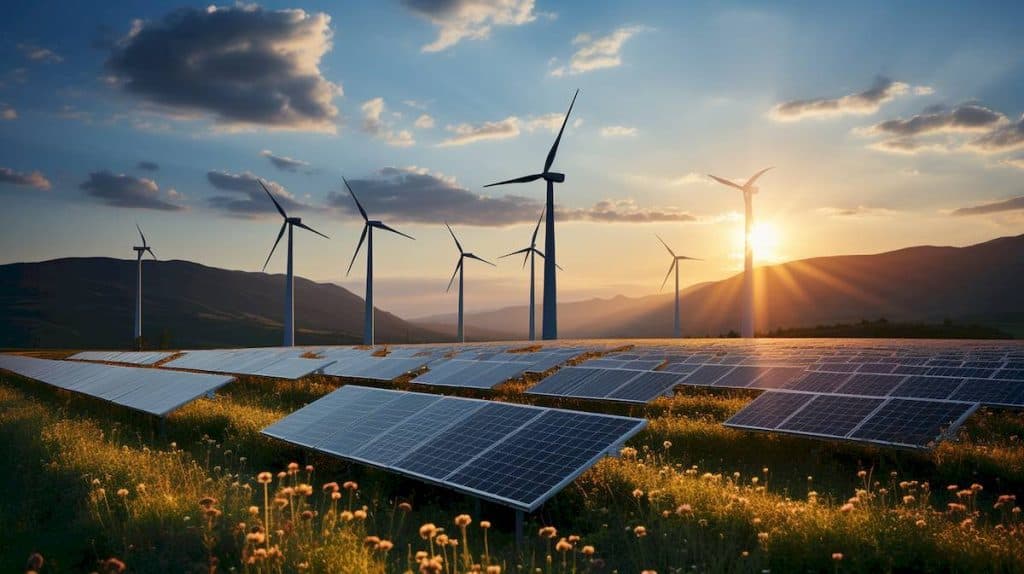
The introduction of zones where authorities will approve projects under a simplified regime is intended to make it easier to build solar and wind power plants. This is provided for in a bill to accelerate the use of certain renewable energy sources, which the Senate adopted today. It will now be sent to the president for signature. Industry Minister Lukáš Vlček (STAN) told senators that the bill provides what he called a framework for further legislation and related permitting processes for renewable energy sources.
So-called acceleration zones for solar power plants are expected to be established mainly on former industrial sites, while the government will still discuss locations for wind power plants with the regions. The law also introduces a fee on wind power plants, payable to municipalities.
The law introduces so-called acceleration areas where renewable energy sources will be approved under a simplified regime. According to the Ministry of the Environment, predefined conditions in these acceleration zones are intended to reduce the administrative burden on investors. Projects that comply with the European directive will not be subject to an environmental impact assessment (EIA). Simplified approval will apply not only to the electricity generation facilities themselves, but also to related infrastructure such as transformers, power lines and storage facilities.
Acceleration areas will be designated at three levels: in municipal spatial plans, in regional spatial development plans and, at the national level, through a spatial development plan. Conflicts between the creation of acceleration zones and municipalities’ development plans are not expected, as areas for renewable energy sources will have to be located at least 500 metres from built-up areas.
According to the Ministry of the Environment, the aim is to increase energy self-sufficiency. Given the expected rise in industrial electricity consumption, strengthening generation in Czechia—particularly through the construction of nuclear and renewable energy sources—is in the country’s security interests, the ministry says.
The law also introduces a fee on wind power plants, payable to municipalities. It will be based on the amount of electricity generated, minus the facility’s technological self-consumption. Operators will pay 50 crowns for each megawatt-hour of electricity generated in this way, multiplied by a local coefficient. The law sets the coefficient at one, but municipalities will be able to lower it to zero. The fee rate and coefficient must then remain unchanged throughout the wind power plant’s operating life.
According to an earlier statement by the Modern Energy Union, the law’s approval is an important step towards strengthening Czech competitiveness and energy security.
At the suggestion of fellow senator Hana Žáková (STAN), senators also approved an accompanying resolution concerning mobile coverage gaps in Czechia. According to the senator, the aim is to allow foundations for mobile signal transmitters to be built where these uncovered areas overlap with acceleration zones.
In the adopted resolution, the Senate therefore called on the government to take into account the possibility of using designated necessary and acceleration areas to build electronic communications infrastructure. The aim is to improve coverage in areas with poor signal and make efficient use of the land for multiple purposes.
Since the Senate approved the bill, it did not vote on an amendment proposed by its deputy president, Ladislav Václavec (ANO), who believes the state is not defending citizens’ interests in the proposal. Among other things, he wanted to propose that a wind power plant could not be built within three kilometres of the nearest building used for residential purposes or family recreation. He pointed out that a similar rule applies, for example, in Slovakia.
Translation disclaimer
This article is a machine translation of the Czech original and has not yet been fully reviewed. In case of any doubt, please refer to the Czech version.
Sdílejte článek prostřednictvím:
You might also like


23 October 2026, 11:01


23 October 2026, 06:34