Czech solar power plants generated 20% more electricity in 2025, but growth slowed

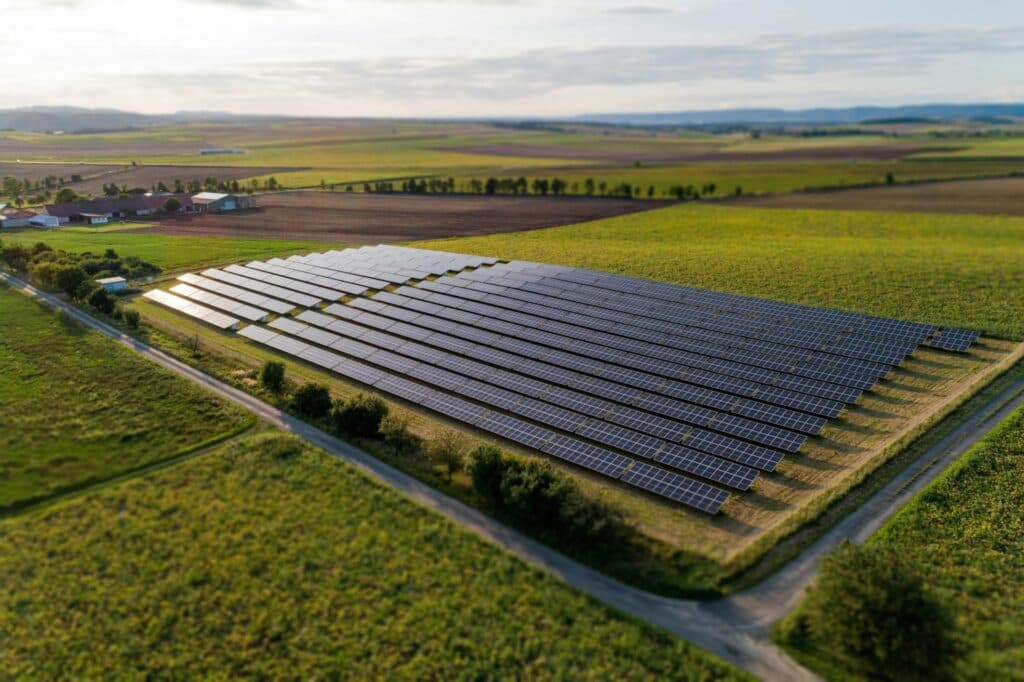
Solar power plants in Czechia generated a total of 4.7 TWh of electricity in 2025, up 20.5% year on year. Their share of total electricity generation reached 6.6%, while total installed capacity approached 5 GW. Although solar energy remains the fastest-growing type of generation source, the pace of construction is slowing, with newly installed capacity nearly 20% lower year on year.
In recent years, solar energy has once again become one of the key pillars of the transformation of the Czech energy sector. Following a hiatus of more than a decade caused by the solar boom of 2010 and 2011, photovoltaic sources have returned among the fastest-growing sources of electricity in the Czech Republic.
However, the sector's growth is gradually slowing, and solar energy is beginning to face new challenges, particularly economic ones. Nevertheless, photovoltaics continues to strengthen its role in meeting domestic electricity consumption and remains the most dynamically developing source in the Czech energy mix.
Electricity generation: up by one-fifth year on year
Electricity generation from solar power plants increased by 20.5% year on year in 2025, specifically from 3.9 TWh to 4.7 TWh. The total volume of electricity generated thus corresponded to the approximate annual consumption of 1.3 million Czech households.

Solar power plants are currently virtually the only source of electricity in the Czech Republic whose generation has been rising steadily in recent years. However, this trend is beginning to slow. The residential photovoltaic installations segment, which was the main driver of growth in both generation and installed capacity in 2023 and 2024, is gradually becoming exhausted. While some of the slowdown is being offset by the development of photovoltaics on the roofs of commercial buildings and apartment blocks, this segment has not yet been able to fully replace the decline in construction in the residential sector.
A more detailed look at the course of the year shows that higher generation was evident mainly in the first half of 2025. While solar power generation rose by 31.5% in the first half of the year, the year-on-year increase in the second half was only 9%. In the second half of the year, generation therefore came close to the level of the previous year, indicating a gradual slowdown in additions of new capacity.

Solar power plants' share of electricity generation
The share of electricity generation from solar power plants in total generation in the Czech Republic reached 6.6% in 2025. This makes it the country's third most significant source of electricity after nuclear and coal-fired power plants. However, compared with coal-fired power plants, which still account for roughly one-third of electricity generation, solar sources trail by more than 25 percentage points.

Generation from solar power plants is also highly seasonal. Solar sources start to account for a more significant share of electricity generation in the second half of April, while their output begins to decline during August as conditions for harnessing solar radiation deteriorate.

The strongest month of 2025 was June, when solar power plants accounted for approximately 14.5% of total electricity generation and generated a total of 654 GWh of electricity. This was both the highest monthly generation from solar power plants on record and the highest monthly share of solar generation in total electricity output. By contrast, the share of solar sources was only around 1% in January and December.

Based on daily data, the strongest day for solar energy in 2025 was 14 June, when solar power plants covered 20.55% of total electricity generation in the Czech Republic and generated a total of 27 GWh of electricity.
New installed capacity is gradually declining
Installed solar capacity in the Czech Republic continues to grow, and the trend that began in 2022 continued in 2025. However, data from mid-year show that the pace of installations is gradually declining. According to data from the Solar Association, only 356 MWp of new installed capacity was added in the first half of 2025, compared with 484 MWp in the same period of 2024.
Over the full year, electricity distribution companies' data show that a total of 696.8 MW of installed capacity was commissioned. The largest share of new installations was in the ČEZ Distribuce distribution area, where 491.6 MW was connected. Newly connected capacity in EG.D's distribution system amounted to 184 MW, while 21.2 MW was connected in the PRE Distribuce area. Newly connected capacity was thus down by just under 20% year on year. Total installed solar capacity stood at around 5 000 MW in 2025.

Only a smaller share of new installed capacity came from large solar parks, which had barely been built in the Czech Republic for a long time. The main reason was the absence of operating support and the associated uncertainty over investment returns. However, 2025 may mark a turning point. Twenty large photovoltaic plants with capacity of 1 MW and above were commissioned, with two of them – FVE Nové Sedlo and FVE Dolní Litvínov – exceeding 10 MW of installed capacity.

Solar power economics under pressure
The economics of solar power plants in the Czech Republic have changed significantly in recent years. While the energy crisis and high electricity prices led to rapid investment payback and a construction boom, the return of electricity prices to a more long-term normal level has resulted in weaker returns and higher investment risk.
The key problem remains the mismatch between the generation profile of solar power plants and the development of electricity prices during the day. Peak generation occurs around midday, when day-ahead market prices are often at their lowest. This leads to low realised electricity prices and a cannibalisation effect that reduces the actual revenues of solar plant operators.

Deteriorating market conditions are also affecting the availability of bank financing. Banks take a highly conservative approach to financing solar projects, particularly where projects do not have secured long-term fixed revenues, for example through PPA agreements.
The economic challenges facing solar energy are closely linked to the so-called duck curve phenomenon, which reflects a lack of flexibility in the electricity system. Without more substantial development of storage, demand-side management and smart grids, this effect will continue to dampen the economic attractiveness of new solar projects.
Translation disclaimer
This article is a machine translation of the Czech original and has not yet been fully reviewed. In case of any doubt, please refer to the Czech version.