
17 October 2026, 13:09
Loading...
Denmark to set aside billions to support offshore wind. Model requiring developers to pay has failed

Eduard Majling
28 May 2025, 06:57
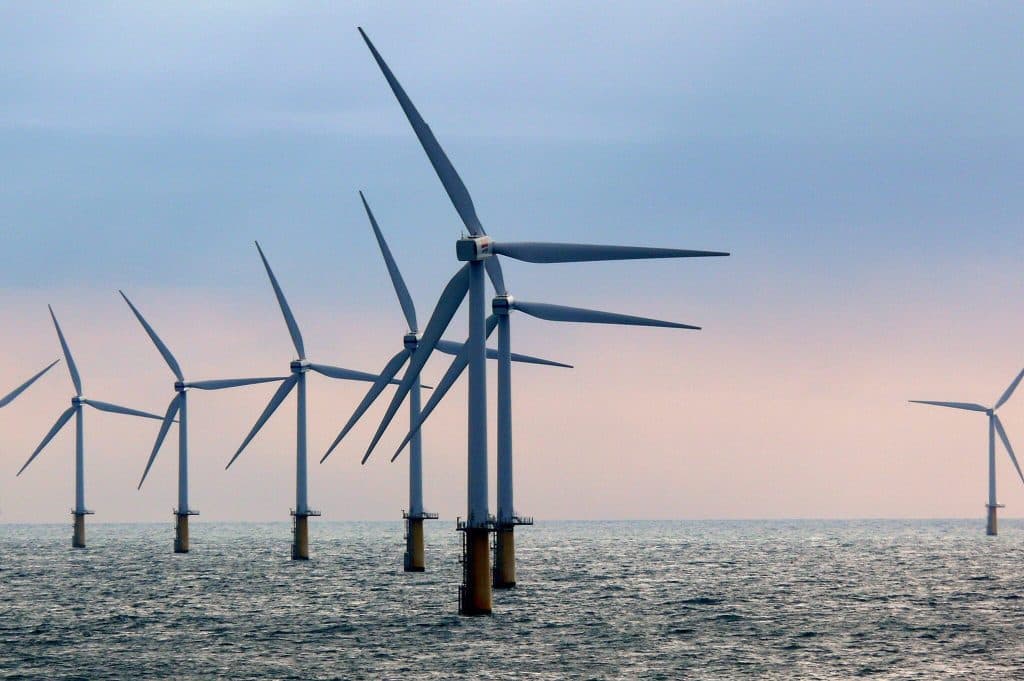
Denmark plans to restart auctions this autumn to support the construction of offshore wind farms. At the start of the year, however, the country cancelled an auction that had originally been planned, in light of recent market developments. Last year’s auction ended badly, with developers submitting not a single project. The government has therefore revamped the auction system and abandoned its original plan, under which offshore wind farm developers would have had to pay for the sites. The country is now returning to the previous system, under which projects will receive subsidies for up to 20 years.
Denmark is one of Europe’s leaders in using wind power to generate electricity, including offshore wind. Like many other countries, Denmark plans to increase its renewable energy capacity in the coming years. Auctions, in which developers compete with their projects, are one of the main tools for expanding renewable energy.
While a few years ago it seemed developers would compete to pay the most for sites for offshore wind farms, the situation has recently shifted again, and developers are instead seeking financial support for their projects.
This trend is also evident in Denmark, where last year’s offshore wind auction produced no winning projects. Developers did not submit any projects to the auction. According to the Danish government agency, rising costs and uncertain returns were behind the debacle. The companies consulted said offshore projects were not economically viable under auction terms that required developers to pay the state for the sites.
From payments to the state back to payments to developers
The Danish government initially responded to last year’s failure by cancelling this year’s auction and promising to present a new auction format. It did so in May. Denmark is now expected to hold three auctions for a total of 3 GW of installed capacity. The government will allocate up to 55.2 billion Danish kroner, or around CZK 184 billion, to support the new projects.
The three auctions—two for areas in the North Sea and one in the Baltic Sea—are expected to open this autumn. Two will remain open until spring next year, while the third will stay open until autumn 2027. The wind farms resulting from these auctions are expected to begin operating in 2032 and 2033, respectively. According to Reuters, the level of support paid over 20 years will depend on the bids submitted, although the total budget is the aforementioned 55.2 billion Danish kroner.
“We need more secure green electricity and energy to make Denmark and Europe independent of energy from Russia,” Danish Energy Minister Lars Aagaard said, according to the news agency.
Translation disclaimer
This article is a machine translation of the Czech original and has not yet been fully reviewed. In case of any doubt, please refer to the Czech version.
Sdílejte článek prostřednictvím:
You might also like




16 October 2026, 10:16