25 October 2026, 21:21
Loading...
European companies cut renewable energy development targets

David Vobořil
25 May 2024, 12:33
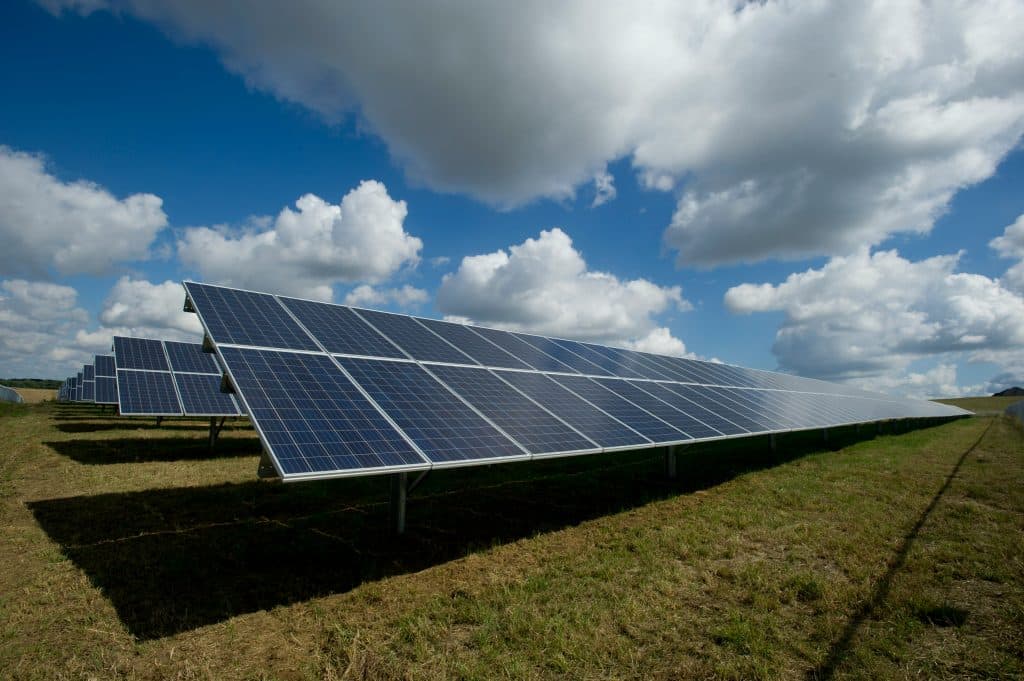
Many European energy companies are cutting their renewable energy targets because of the high costs of financing and construction, and low electricity prices. The trend of scaling back and reassessing plans highlights the challenging economics of the energy transition away from fossil fuels.
A number of large European energy companies have cut or are reassessing their renewable energy development targets because of high financing costs and low electricity prices. These companies include Statkraft, Europe's largest renewable energy producer; Portuguese energy company EDP; and Danish company Ørsted, the world's largest offshore wind developer.
"There has been a major reckoning with reality in renewable energy development. The cost environment has changed dramatically," said Norman Valentine, head of renewables research at consultancy Wood Mackenzie.
Ørsted cut its renewable energy targets for 2030 by more than 10 GW after the company was forced to cancel two major projects in the US due to rising costs.
"We are seeing continued growth [in renewables], but at a slower pace," Statkraft chief executive Birgitte Ringstad Vartdal, whose company is owned by the Norwegian state, told the Financial Times.

Construction of the Anholt offshore wind farm.
Source: Ørsted
Spanish energy giant Iberdrola said in April that it would take a "more selective" approach to renewable energy. Italian energy company Enel announced in November that it would cut its investment in renewable energy from 17 billion euros in 2023-2025 to 12.1 billion euros in 2024-2026. However, the company said it planned to continue increasing its installed renewable capacity with partners, aiming to reach its target of 73 GW by 2026.
Some companies are still increasing their renewable energy targets. German company RWE significantly raised its target last November, from 50 GW by 2030 to 65 GW of installed renewable capacity.
Political attention is increasingly focused on the need to decarbonise the energy sector and the associated development of renewable energy. At the COP28 climate summit in December, countries agreed to work towards tripling global installed renewable capacity to 11 000 GW by 2030.
Despite the current challenges, Vartdal is convinced that project economics will improve. Ralph Ibendahl, head of energy transition for the EMEA region at RBC Capital Markets, agrees.
"These things happen in waves. We are currently more on the downswing, but it will turn around," Ibendahl said.
Rising interest rates drive up developers' costs
Rising interest rates over the past few years have increased the cost of financing new projects. Combined with rising costs for raw materials and components and falling electricity prices, this is causing difficulties for some developers. The often slow process of obtaining project approvals from regulators is also a challenge. Ibendahl noted that high interest rates mean developers have to compete harder for investors.
"Project-level returns of 7-9% look less attractive when base rates are 5%. Many energy companies also have the option of investing in other areas of their business instead," Ibendahl said.
Investment in grids
Some companies, including Enel and Iberdrola, have said they want to invest more in modernising electricity grids, which will be crucial to the energy transition. Iberdrola plans to allocate around 60% of its planned 41 billion euros in investment to electricity grids.
Deepa Venkateswaran, head of utilities at Bernstein, said companies are investing more in grids in anticipation of higher returns, given their importance to the energy transition.
Translation disclaimer
This article is a machine translation of the Czech original and has not yet been fully reviewed. In case of any doubt, please refer to the Czech version.
Sdílejte článek prostřednictvím:
You might also like

25 October 2026, 08:20