Experts issue guide to speeding up renewable permitting. Czechia can also take inspiration

Martin Voříšek
Martin Voříšek
19 September 2023, 09:19
experti-vydali-navod-jak-rychle-povolit-vetrne-elektrarny-na-mori-inspirovat-se-muzeme-i-v-cesku

IRENA has issued recommendations on how to speed up the permitting of offshore wind farms. In recent years, permitting renewable energy projects has emerged as a major obstacle to their faster deployment and the transition to carbon neutrality. Although the recommendations are primarily aimed at offshore wind farms, most of them can also be applied to permitting processes in the Czech Republic.  

A number of coastal countries rely on offshore wind farms. Although these countries seek to support their construction as much as possible, the sector has delivered one negative piece of news after another in recent months. These reports show that the future of offshore wind may not be as straightforward as it might initially have appeared.

In addition to higher construction costs, developers are also struggling with lengthy permitting processes. It is not uncommon for the permitting of offshore wind farms to take several years.

IRENA has therefore issued recommendations containing eight measures intended to accelerate the construction of offshore wind farms. Although these measures may at first glance appear entirely irrelevant to the Czech Republic, the opposite is true. Below, we have selected five measures that can also be used to speed up the permitting of renewable energy projects in the Czech Republic.

1. One-stop shop: One authority for all permits

One of the main problems cited by IRENA experts is the complexity of permitting processes. Developers often have to obtain dozens of permits, frequently from different authorities.

Although this may appear to be a minor issue, a fragmented permitting process leads to frequent problems in practice. The requirements of different authorities may be uncoordinated or even contradictory. If such requirements are identified only at a later stage of the process, permitting may be delayed or even sent back several steps.

Permitting for renewable energy projects should therefore be handled by a single authority. This does not mean that the authority itself would prepare and issue all permits. A single authority could merely coordinate the issuance of individual permits so that the developer has only one point of contact responsible for the process and its proper completion. The authority could continue to request individual permits from specialist state bodies.

This requirement is already included in the European Union Renewable Energy Directive (Directive of the European Parliament and of the Council 2018/2001). It requires the Czech Republic to establish or designate a single contact point to lead and facilitate renewable energy permitting procedures. The developer should only be in contact with this point.

The above directive was partially transposed into Czech law through an amendment to the Energy Act known as Lex OZE I. A further part will be transposed through Lex OZE II.

2. Maximum deadlines for issuing final permits

According to IRENA experts, permits should either be issued or refused within pre-defined maximum deadlines. For offshore wind farms, IRENA proposes a maximum of three years.

Permitting onshore wind and solar power plants is substantially less complex, and the deadline for their approval should therefore probably be shorter. For example, the Renewable Energy Directive, which applies among other countries to the Czech Republic, sets a two-year deadline for their permitting, and only one year in simpler cases.

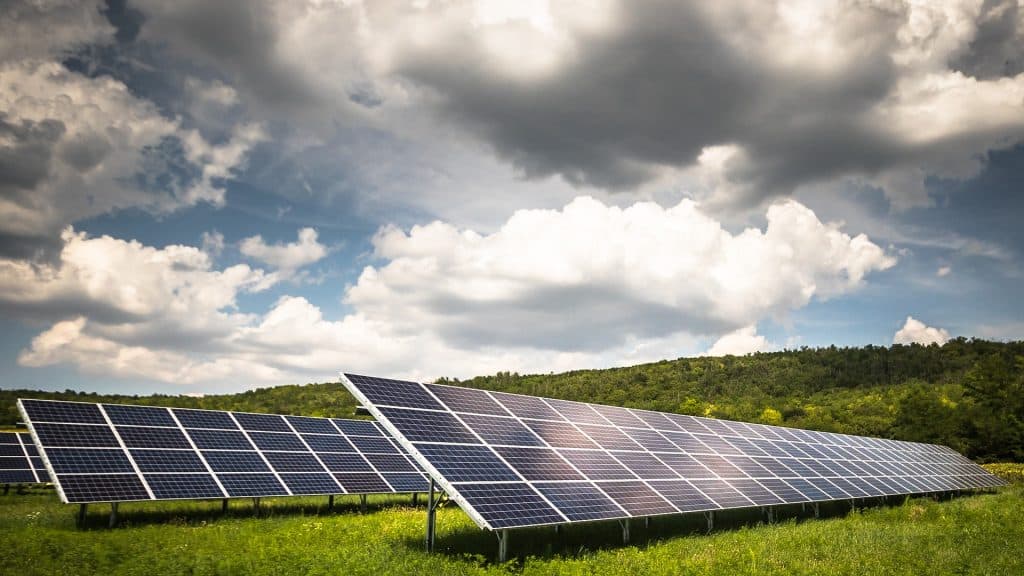
Solární elektrárna
Solar power plant. Source: Pixabay

In practice, permitting processes usually take much longer, although the reasons are not always attributable to the permitting authority. In such cases, delays not caused by the authority should not count towards the permitting deadline.

3. Faster resolution of disputes

Permitting procedures are often delayed by legal disputes. These are frequently initiated by individuals or associations defending environmental interests. This is not a problem limited to offshore wind farms, but affects virtually all public infrastructure projects.

In the Czech Republic, the construction of the Chotíkov waste-to-energy plant is an example. Although it obtained a building permit and was built on that basis, the permit was subsequently annulled by administrative courts.

IRENA experts propose that similar cases be handled as a priority and within shortened deadlines. Such a system already exists in Czechia for the construction of energy and transport infrastructure (Act No. 416/2009 Coll.). If anyone challenges a building or zoning decision in court, the court must rule within 90 days.

4. Digitalisation - a comprehensive database of projects and suitable locations

To accelerate the construction of renewable energy projects, there should be a comprehensive database containing all permits for projects already implemented. The database should also include conditions for locating renewable energy facilities in a given area, local ordinances and other regulations that may affect renewable energy construction.

The database would enable investors to obtain information on projects already implemented and on environmental impact assessments, which are an important part of the permitting process.

If local opposition is known in a particular area, data from the database on earlier permitting processes can be used to prepare measures that respond to residents' concerns in a timely manner.

5. Speeding up permitting for related infrastructure

The construction of related, usually technical, infrastructure is no less important. Although the Czech Republic has not yet seen major renewable energy development, despite this being expected under the European Union's increased targets, developers are already complaining that their projects cannot be connected to the grid because of capacity constraints.

Permitting technical infrastructure in the Czech Republic takes several years, more often closer to ten years. An example from transport infrastructure is the D35 road project, for which local residents have been waiting for more than twenty years. However, its building permit was challenged two weeks ago, further extending the wait for local residents.

The same problem applies to the construction of overhead lines. While the permitting process takes several years, the actual construction itself is generally a matter of months.

Translation disclaimer

This article is a machine translation of the Czech original and has not yet been fully reviewed. In case of any doubt, please refer to the Czech version.